

China’s new 800-cycle lithium-sulfur battery could nearly double drone flight time
- Published
- Source
- InterestingEngineering.com
Chinese researchers have unveiled a groundbreaking lithium-sulfur battery design that has the potential to dramatically enhance drone flight durations. This innovative development, announced in October 2023, aims to address the limitations of current battery technologies, which often restrict the operational time of drones. By utilizing lithium-sulfur chemistry, the researchers believe they can achieve higher energy densities compared to traditional lithium-ion batteries, making it possible for drones to fly longer distances without the need for frequent recharging. The research was conducted at a leading university in China, where scientists focused on optimizing the battery's performance and stability. This advancement not only promises to improve commercial drone applications but could also have significant implications for various industries, including logistics, agriculture, and surveillance, where extended flight times are crucial. The researchers are now looking to further refine the technology and explore its practical applications in real-world scenarios.
Original report
China’s new 800-cycle lithium-sulfur battery could nearly double drone flight time
InterestingEngineering.com · Neetika WalterThis briefing is an independently written summary based on publicly available reporting and is provided for industry information and news discovery. The original report and source publication are credited and linked where applicable. RobotToday does not claim ownership of third-party source material.
Rights concerns? Contact [email protected] with the relevant URL and details. We will review the matter and take appropriate action where warranted.
More related news
- 1
- 2
- 3
- 4
- 5
- 6
-
7
RO-MAN 2027 – Waterloo, Aug 23–27, 2027 RobotToday · 1 day ago
-
8
ERF 2027 – Birmingham, Mar 2–4, 2027 RobotToday · 1 day ago
-
9
Suzy Teele’s Mission at ARM Institute RobotToday · 2 days ago
- 10
- 11
- 12
Related Suppliers

BioRobotics Laboratory, Korea University of Technology and Education
Korea, Republic of (South)
South Korean university research laboratory focusing on haptics, exoskeletons, rehabilitation robotics, and autonomous ground vehicles.

McMaster Manufacturing Research Institute
Canada
Hamilton, Ontario applied manufacturing research center at McMaster University; runs a 21,000 sq ft facility with seven research labs.
Robotics Education & Competition Foundation
United States
The REC Foundation is a US nonprofit that runs VEX-based robotics and drone competitions reaching 1.1 million students across 70 countries.
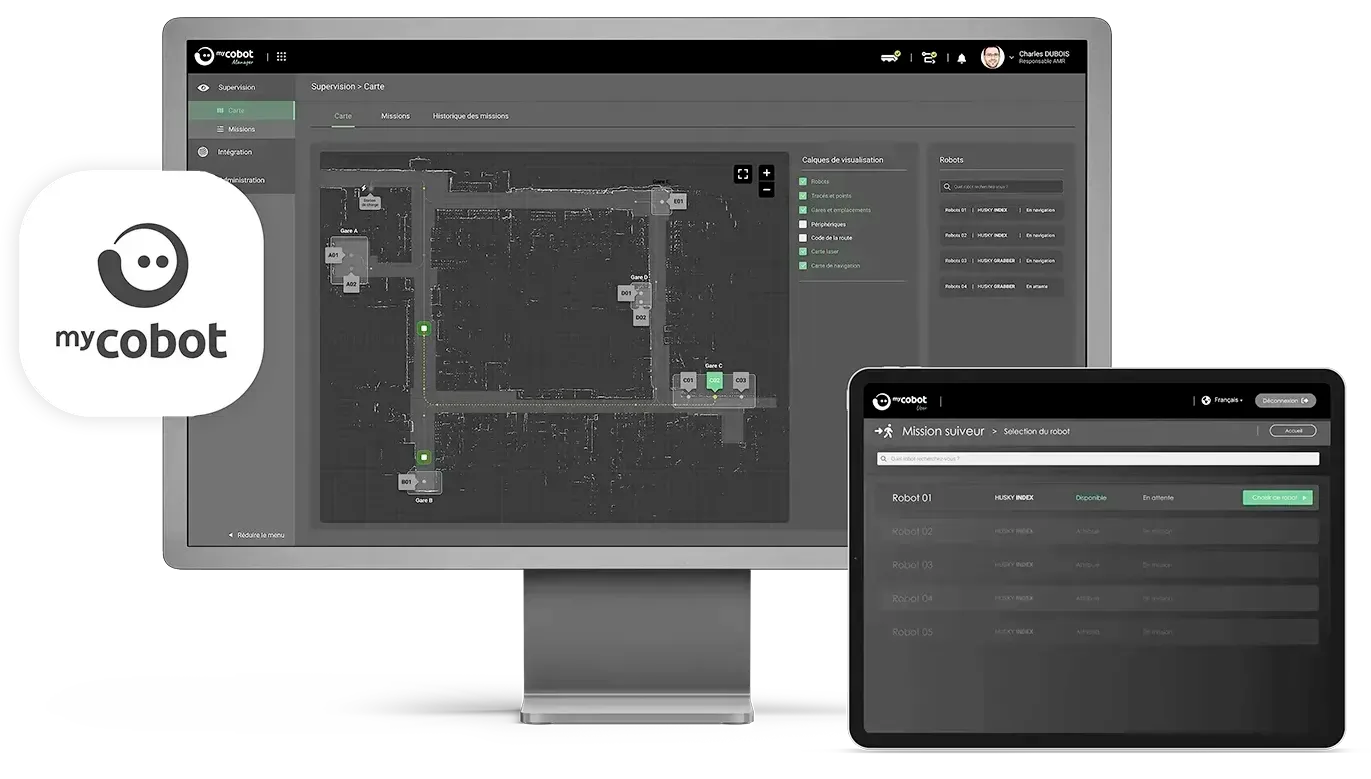
E-COBOT
France
French AMR manufacturer and system integrator offering the HUSKY robot range and MyCobot fleet management software.
EasyMile
France
Toulouse, France autonomous-vehicle software company founded 2014; EZTow and EZDolly systems automate industrial tow tractors and cargo movers at airports.

Filics
Germany
Munich-based robotics startup making ultra-flat omnidirectional AMRs that drive under Euro pallets for space-efficient intralogistics.

New Holland Agriculture
United Kingdom
Global agricultural machinery brand of CNH Industrial (founded 1895) making tractors, combine harvesters, and precision farming equipment worldwide.

Osiris Agriculture
France
French agtech startup developing Oscar, an autonomous irrigation and fertigation robot for potato and vegetable producers in northern Europe.

Tensorfield Agriculture
United States
California-based agri-robotics company deploying semi-autonomous robots that use superheated vegetable oil to eliminate weeds without herbicides.

Alkadur RobotSystems GmbH
Germany
German manufacturer of robotic doner kebab preparation systems, producing the automated 'der Geraet' commercial food service robot based in Aalen, Germany.
RobotLAB Inc.
United States
Southlake, Texas robotics dealer and integrator founded 2007, with a franchise network and 22 service-robot brands plus its own ServeSwift and RobotLAB lines.

ATOUN
Japan
ATOUN was a JPN Panasonic subsidiary that developed and commercialized power-assisted wearable exoskeletons for logistics, construction, and caregiving.
Robotics needs a service framework.
RSF defines a common language for robot service capability, lifecycle operations, certification pathways, and service-provider networks.
Join the RobotToday community on LinkedIn
Daily robotics news, in-depth analysis, conference highlights, and discussions with professionals worldwide.


