


Project CETI deploys autonomous underwater gliders to better observe sperm whales
- Published
- Source
- RoboticsBusinessReview.com
Project CETI has introduced an innovative underwater glider designed to enhance the monitoring of sperm whales, significantly extending the duration of observation compared to previous techniques. This advancement aims to improve the understanding of whale behavior and ecology, contributing to conservation efforts. The deployment of the autonomous glider marks a pivotal step in marine research, allowing scientists to gather more comprehensive data on these majestic creatures. The initiative reflects Project CETI's commitment to leveraging technology for wildlife observation and protection, ultimately fostering a deeper connection between humans and marine life.
Original report
Project CETI deploys autonomous underwater gliders to better observe sperm whales
RoboticsBusinessReview.com · Brianna WesslingThis briefing is an independently written summary based on publicly available reporting and is provided for industry information and news discovery. The original report and source publication are credited and linked where applicable. RobotToday does not claim ownership of third-party source material.
Rights concerns? Contact [email protected] with the relevant URL and details. We will review the matter and take appropriate action where warranted.
More related news
- 1
- 2
- 3
- 4
- 5
- 6
- 7
- 8
-
9
RobotToday Weekly November 2 – 6, 2026 RobotToday · 2 weeks ago
- 10
- 11
- 12
Related Suppliers

DRT Co.,Ltd.
Korea, Republic of (South)
South Korean drone manufacturer specializing in cleaning drones, defense drones, and drone software for safety-critical environments.

Easy Aerial
United States
US drone-in-a-box maker delivering NDAA-compliant tethered and free-flight autonomous UAS for defense, security, and critical infrastructure.

Eelume
Norway
Norwegian AUV startup offering snake-like autonomous underwater robots for subsea inspection, maintenance, and mine countermeasures.

BioRobotics Laboratory, Korea University of Technology and Education
Korea, Republic of (South)
South Korean university research laboratory focusing on haptics, exoskeletons, rehabilitation robotics, and autonomous ground vehicles.

McMaster Manufacturing Research Institute
Canada
Hamilton, Ontario applied manufacturing research center at McMaster University; runs a 21,000 sq ft facility with seven research labs.
Robotics Education & Competition Foundation
United States
The REC Foundation is a US nonprofit that runs VEX-based robotics and drone competitions reaching 1.1 million students across 70 countries.

Industrial Technology Research Institute (ITRI) 工業技術研究院
Taiwan
Hsinchu County, Taiwan applied-technology research institute founded 1973; over 6,500 staff developing autonomous mobile robots and AI perception systems.

Korea Aerospace Research Institute
Korea, Republic of (South)
Daejeon, South Korea national aerospace research institute founded 1989; develops the NURI orbital launch vehicle, KOMPSAT satellites, and lunar probes.

Korea Research Institute of Ships & Ocean Engineering (KRISO)
Korea, Republic of (South)
Daejeon government ship and ocean research institute behind the Crabster seabed walking robot, an R&D USV and a 3,500 m deep-sea ROV/AUV coring system.

Drone Delivery Canada
Canada
Vaughan, Ontario drone logistics developer merged with Volatus Aerospace in August 2024; the combined company trades as FLT in Toronto.
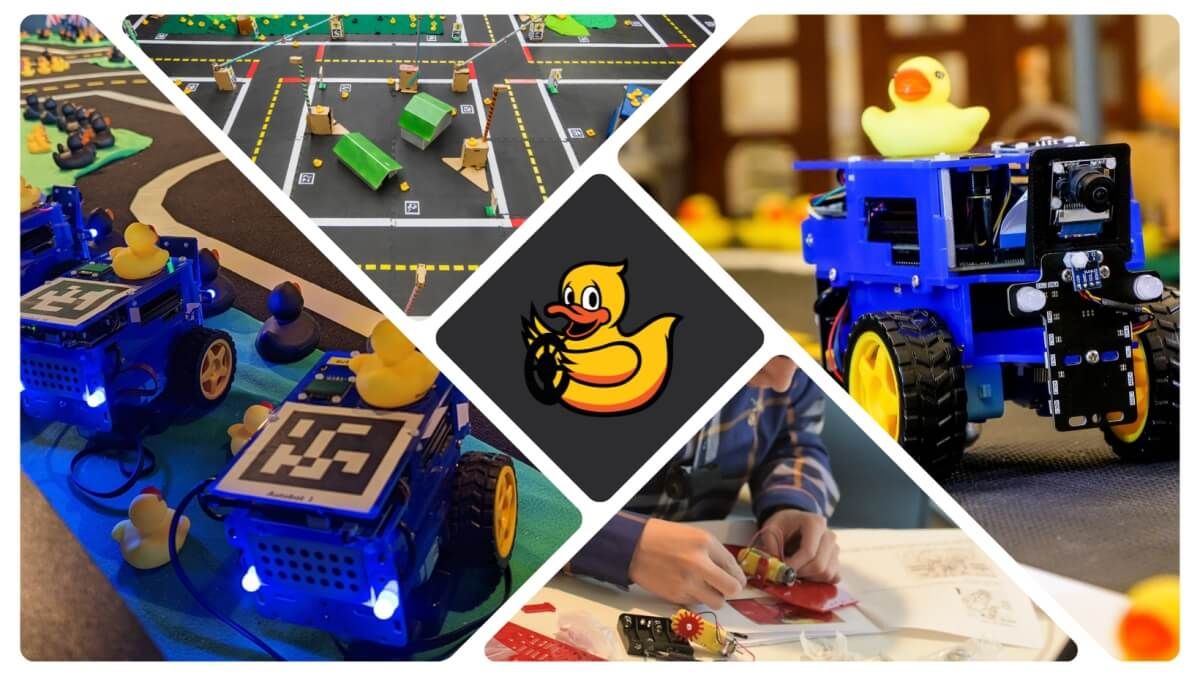
Duckietown Robotics
United States
Educational robotics platform provider offering autonomous vehicle kits and AI curricula used by 250+ universities worldwide.
EasyMile
France
Toulouse, France autonomous-vehicle software company founded 2014; EZTow and EZDolly systems automate industrial tow tractors and cargo movers at airports.
Robotics needs a service framework.
RSF defines a common language for robot service capability, lifecycle operations, certification pathways, and service-provider networks.
Join the RobotToday community on LinkedIn
Daily robotics news, in-depth analysis, conference highlights, and discussions with professionals worldwide.


