


Eelume
"Pioneering All-Terrain AUVs"
Norwegian AUV startup offering snake-like autonomous underwater robots for subsea inspection, maintenance, and mine countermeasures.
Contact Eelume
WEBSITE
https://eelume.comPHONE
+47 46 500 700HEADQUARTERS
Norway

Company Facts
Founded
2015
Primary Role
Manufacturer
Company Size
-
Primary Region
Europe
Annual Sales
-
Funding Stage
-
Funding Total
-

Hyundai's Louisiana Steel Mill to Supply Materials for Robots and SpaceX Rockets
Hyundai Motor Group Executive Chair Chung Euisun announced that steel from the upcoming Hyundai Steel mill in Louisiana could be utilized beyond automotive applications, potentially in Atlas humanoid robots and SpaceX rockets. This vision was shared during the groundbreaking ceremony for the Hyundai-Posco Louisiana Steel plant, which will initially focus on automotive steel production. The $5.8 billion electric arc furnace facility is set to be Hyundai Steel's first production base in the U.S., with an annual capacity of 2.7 million metric tons, including 1.8 million tons dedicated to automotive steel and 900,000 tons for other uses. Chung's comments reflect a long-term strategy to diversify the mill's output, aligning with Hyundai's plans to deploy Atlas robots in U.S. manufacturing operations by 2028. Looking ahead, Hyundai is cautious about deploying Atlas within the steel mill, emphasizing the need for extensive testing. Chung also highlighted the company's efforts to enhance Atlas' development by reorganizing its structure to accelerate technology adoption and improve capabilities in critical components like actuators and grippers. No further timeline was disclosed at the time of publication.
All News
XDOF Engages in Series B Funding Talks at $1.2 Billion Valuation
XDOF, a startup specializing in real-world teleoperation data for training robots, is in advanced discussions for a Series B funding round, aiming for a valuation of approximately $1.2 billion. The funding is reportedly led by 8VC, following the company's rapid growth and annualized revenue nearing $50 million. The significance of this funding round lies in XDOF's role in addressing a critical bottleneck in robotics: the lack of large-scale real-world datasets. Co-founded by UC Berkeley researchers Philipp Wu and Fred Shentu, XDOF aims to provide outsourced data solutions for the robotics industry, similar to what Scale AI offers for AI applications. Looking ahead, XDOF is set to release what it claims is the largest collection of high-quality robot training data, known as ABC, in collaboration with UC Berkeley's AI Research lab. The startup is also planning to expand its workforce of data collectors globally, which will enhance its capabilities in generating essential training data for robots. No further timeline was disclosed at the time of publication.
AI Robotics Startups 8VC
Monumental's CEO Discusses Robotics Potential in Construction Industry
In a recent episode of Lexicon, Salar al Khafaji, founder and CEO of Monumental, highlighted the overlooked potential of robotics in the construction industry. He emphasized the challenges of deploying autonomous robots on unpredictable building sites and the need for specialized machines to address rising construction costs and housing shortages. Al Khafaji pointed out that construction has not received the technological attention it deserves, despite its significant economic and social impact. He believes that the industry is vast and underappreciated by tech founders, which is why he pivoted from data visualization to focus on tangible impacts in construction. Monumental has developed autonomous robots capable of transporting materials and constructing brick walls on commercial sites. However, al Khafaji noted that real-world deployment presents unique challenges, such as varying environmental conditions that affect sensors and computer vision systems. No further timeline was disclosed at the time of publication.
AI and Robotics Innovation
Exploring the Role of FPGAs in Enhancing Physical AI Security
In Episode 260 of The Robot Report Podcast, Eric Sivertson, vice president of security at Lattice Semiconductor, discusses the significance of FPGAs in physical AI security. He highlights how these field-programmable gate arrays are crucial for building safe and secure robots, emphasizing their role in enhancing trust in embedded systems. The conversation underscores the growing importance of security in robotics, particularly as the industry shifts towards more advanced AI applications. Sivertson's extensive experience in developing technologies for security and connectivity positions him to provide valuable insights into the challenges and opportunities within this sector. Listeners should pay attention to the evolving landscape of physical AI security and the potential for FPGAs to serve as foundational elements in safeguarding robotic systems. No further timeline was disclosed at the time of publication.
Artificial Intelligence Autonomous Mobile Robots (AMRs) Humanoids Manufacturing Markets / Industries Microprocessors / SoC
Pentagon Reports 11 Percent Cost Increase for F-35 Joint Strike Fighter Variants
The Pentagon has announced that the costs for all three variants of the F-35 Joint Strike Fighter are rising by approximately 11 percent. The average flyaway cost for the F-35A has increased to $92 million for production lots 18 and 19, up from $82.5 million, while the F-35B and F-35C have also seen price hikes to $121.4 million and $110.8 million, respectively. This increase in costs is significant as it reflects ongoing challenges faced by the F-35 program, including inflation, rising raw material prices, and supply chain issues. Lockheed Martin, the manufacturer, has indicated that these factors have contributed to the rising costs, which are projected to exceed $50 billion over the program's lifespan due to upgrades and increased spare parts. Looking ahead, the Pentagon plans to acquire 148 aircraft each in lots 18 and 19, totaling 296 aircraft. The F-35 program continues to evolve with modernization efforts, including enhancements to the engine and a new power management system, although some upgrades are behind schedule. No further timeline was disclosed at the time of publication.
Air Warfare Pentagon Air Force Europe F-35 F-35 Joint Strike Fighter
Tesla Reveals New Details About Cybercab, Including Age Restrictions for Passengers
Tesla's recent private event for the Cybercab showcased a stark departure from its typical large-scale launches, with CEO Elon Musk notably absent. The Cybercab promises to be a fully autonomous vehicle utilizing cameras and AI, but details were sparse, primarily shared through PDFs and updates to the 'Robotaxi' app. A significant point of contention is the restriction on minors under 13 from riding in the Cybercab, while those aged 8 to 17 can use the Model Y SUVs, albeit with adult supervision. The implications of these restrictions highlight Tesla's cautious approach to safety amid ongoing investigations by the National Highway Traffic Safety Administration into the Cybercab's rollout. The absence of standard child seat anchors in the Cybercab raises concerns, especially as Tesla aims to ensure the safety of all passengers. The vehicle's safety features, including automatic crash responses, are designed to mitigate risks, but the decision to limit child passengers reflects the company's hesitance to fully embrace its autonomous technology in all scenarios. Looking ahead, Tesla must navigate regulatory scrutiny and public perception as it seeks to validate the safety of the Cybercab. The company's commitment to innovation in autonomous driving will be closely monitored, particularly in light of recent recalls related to electronic door latches. No further timeline was disclosed at the time of publication.
Transportation autonomous vehicles avs cybercab robotaxis Tesla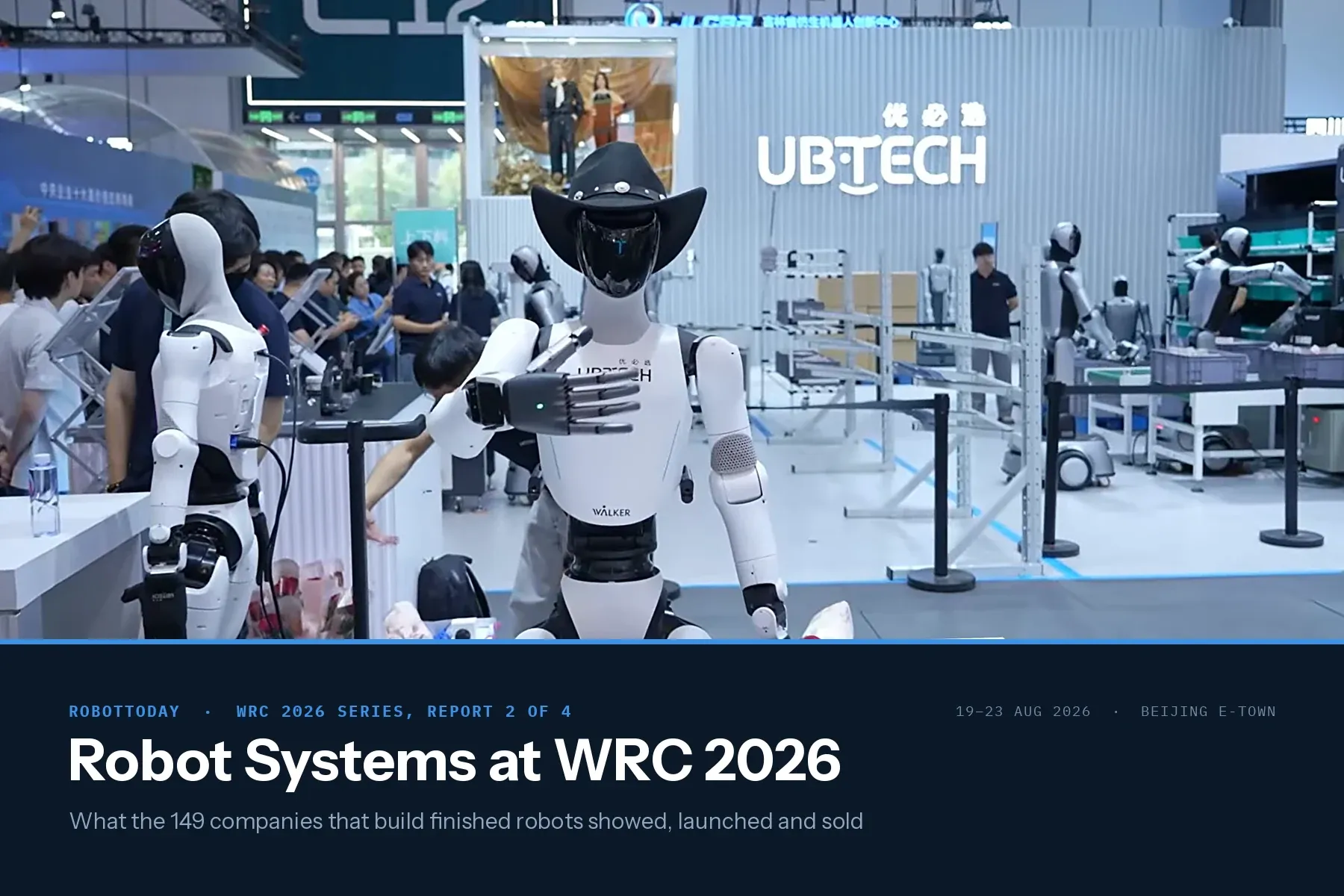
WRC 2026 Robot Systems: 149 Companies That Build Robots
149 of the 248 classified WRC 2026 exhibitors build finished robots. 93 build humanoid or legged machines. The audited humanoid sales number is one unit.

WRC 2026 Exhibitor Map: 248 Robotics Companies Mapped
We classified 248 WRC 2026 exhibitors with the RobotToday taxonomy. Motion & Actuation leads at 75 companies, Humanoid at 72, and compute stays thin at 12. (Modified 2026-08-27)
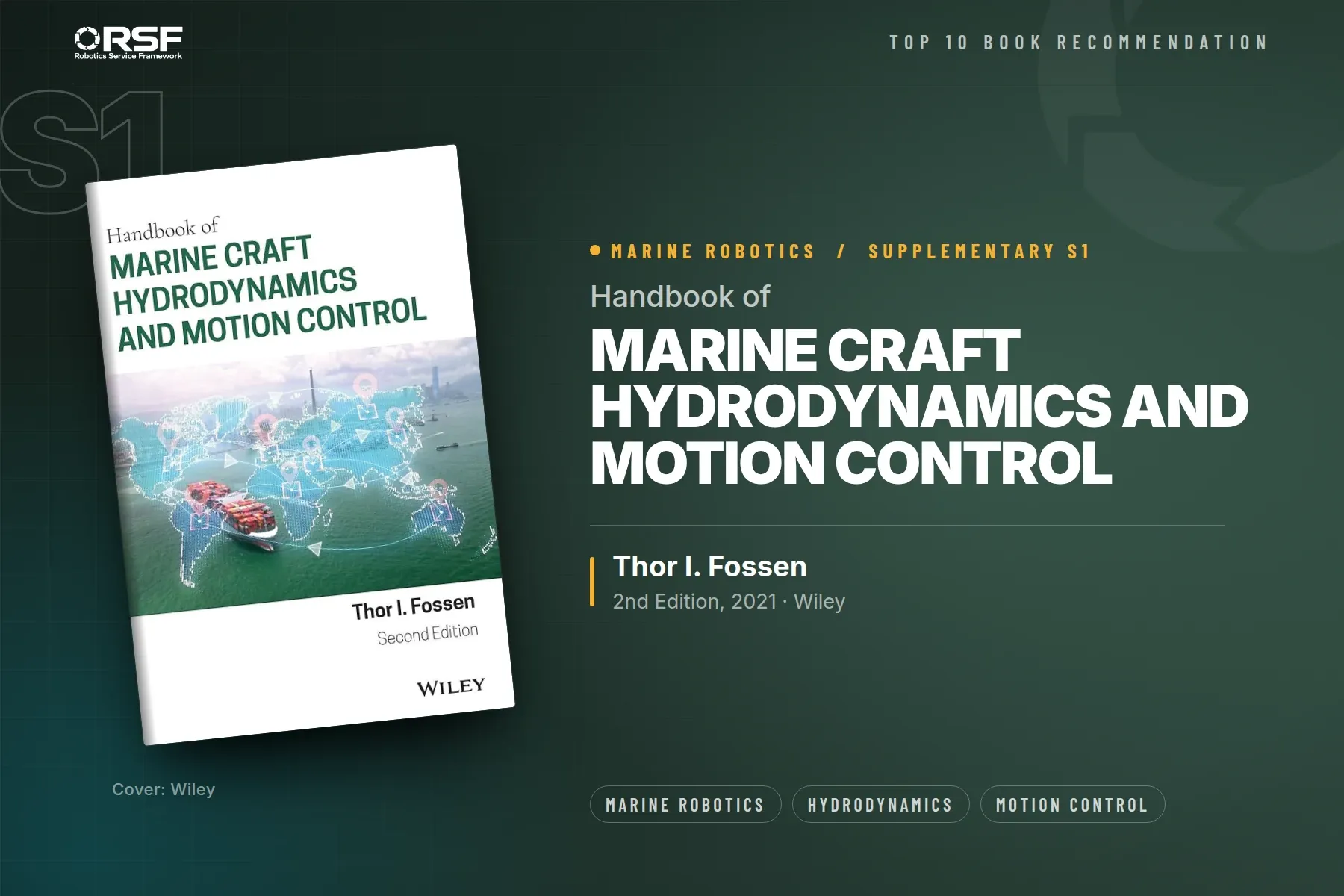
Handbook of Marine Craft Hydrodynamics and Motion Control Thor I. Fossen — RSF Specialist Shelf · Book S1 of 6
Added mass, wave loading, DVL navigation: the marine GNC reference for USV, ROV and AUV service engineers. The hardest book on the RSF list, 5/5.
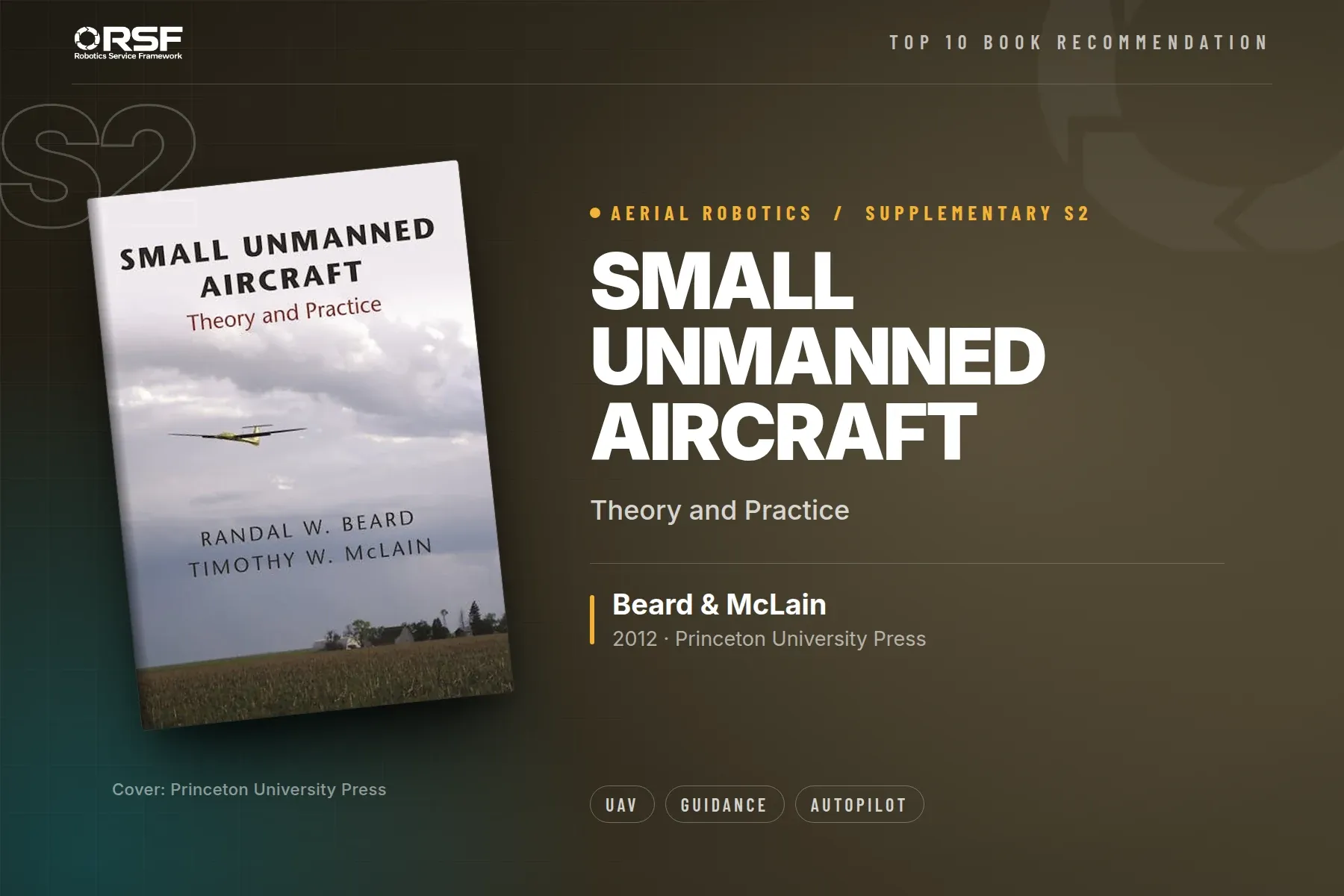
Small Unmanned Aircraft: Theory and Practice Beard & McLain — RSF Specialist Shelf · Book S2 of 6
Beard & McLain derive the fixed-wing autopilot the RSF Top 10 never does: successive loop closure on roll, pitch, altitude and airspeed. 4/5.
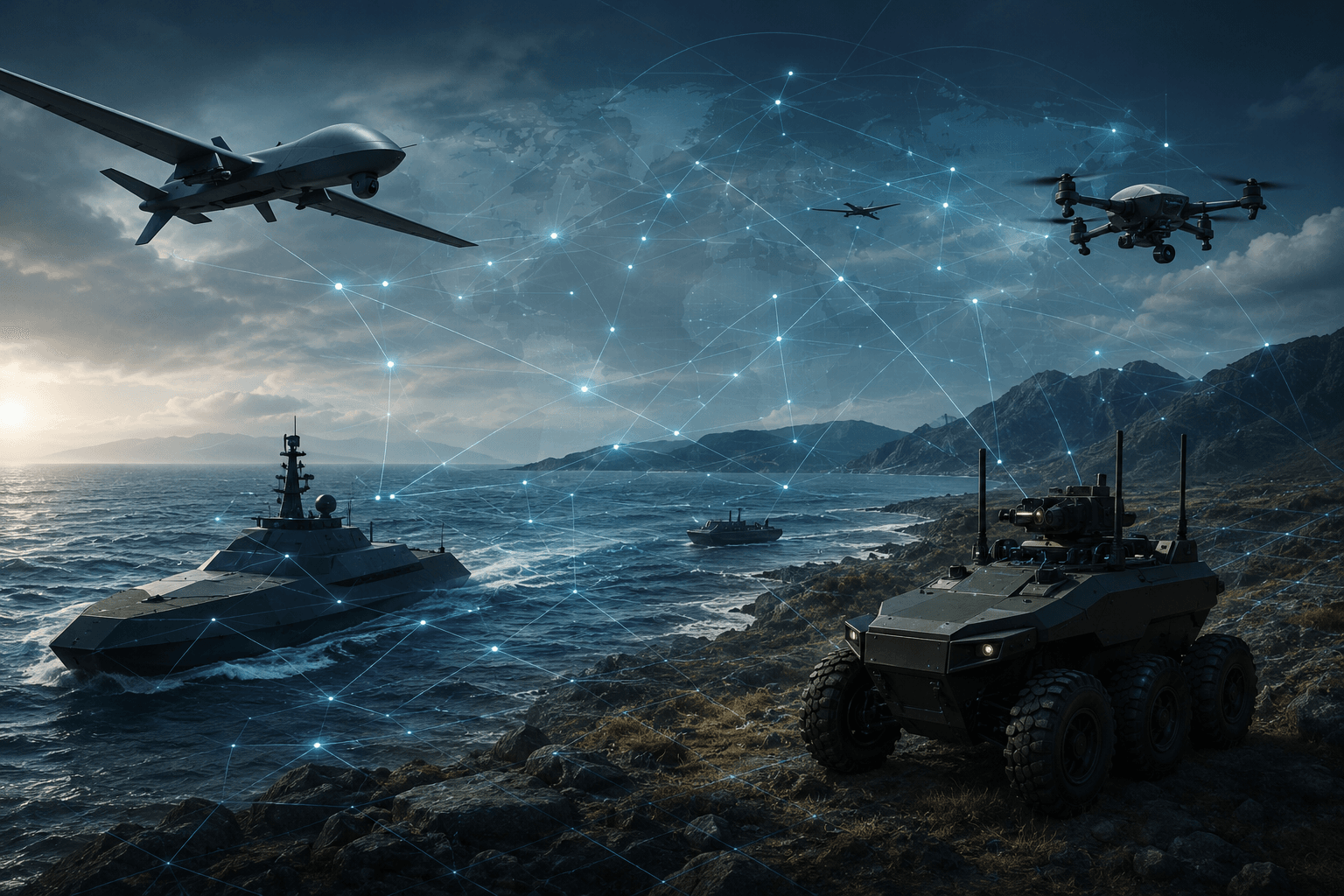
FUTURE WARFARE | Cross-Domain Integration - Integration How Land, Sea, Air and Software Are Converging Into a Single Kill Chain
Cross-domain robotics is reshaping modern warfare as drones, UGVs, AI targeting systems, and autonomous logistics converge into a single networked kill chain across land, sea, air, and software.

GLOBAL ROBOTICS INDUSTRY Comprehensive Sector Overview
A comprehensive global robotics industry overview for 2025, analyzing 14 key market segments — from industrial and humanoid robots to logistics AMRs, military systems, and service robots — with expert market sizing, US case studies, five-year forecasts, and bilingual English-Chinese analysis for executives and investors.
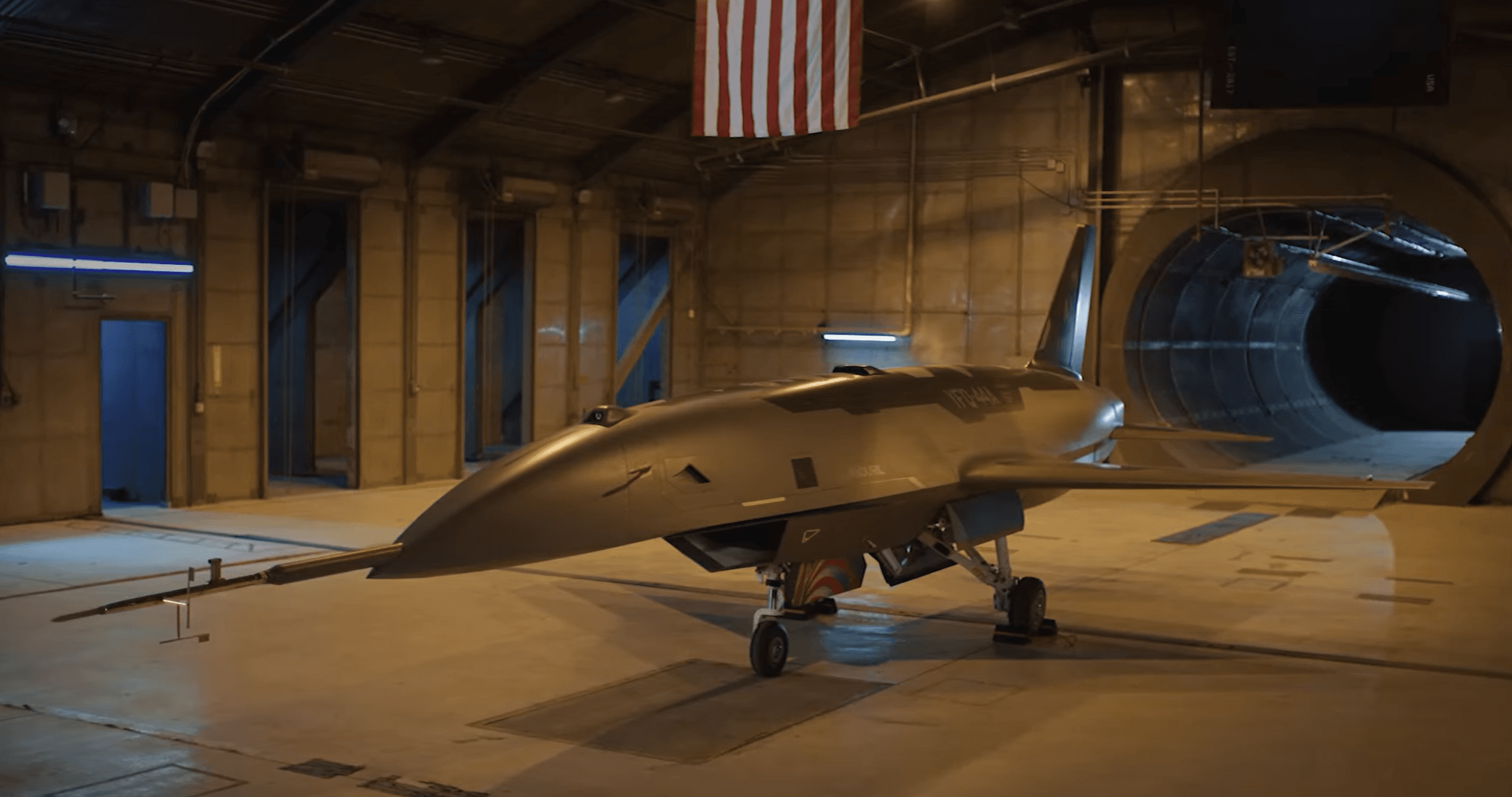
FUTURE WARFARE | Air - Collaborative Combat Aircraft, Drone Motherships & the Autonomy Race Above the Battlefield
Anduril’s YFQ-44A Fury flew its first semi-autonomous mission on 31 October 2025 — 556 days from contract to flight. By February 2026 it was carrying live missiles and swapping autonomy software mid-flight. China’s Jiutian drone mothership flew on 11 December 2025, capable of releasing over 100 loitering munitions from its internal bay at 15,000 metres. And the U.S. Air Force is standing up its second experimental one-way attack drone unit for mid-2026. This article maps the most consequential aerial autonomous systems competition in history: the CCA programme that will determine U.S. air dominance in the 2030s, the Valkyrie’s surprising rebirth, the A-GRA open-architecture breakthrough, and the Chinese drone mothership that has no Western equivalent.
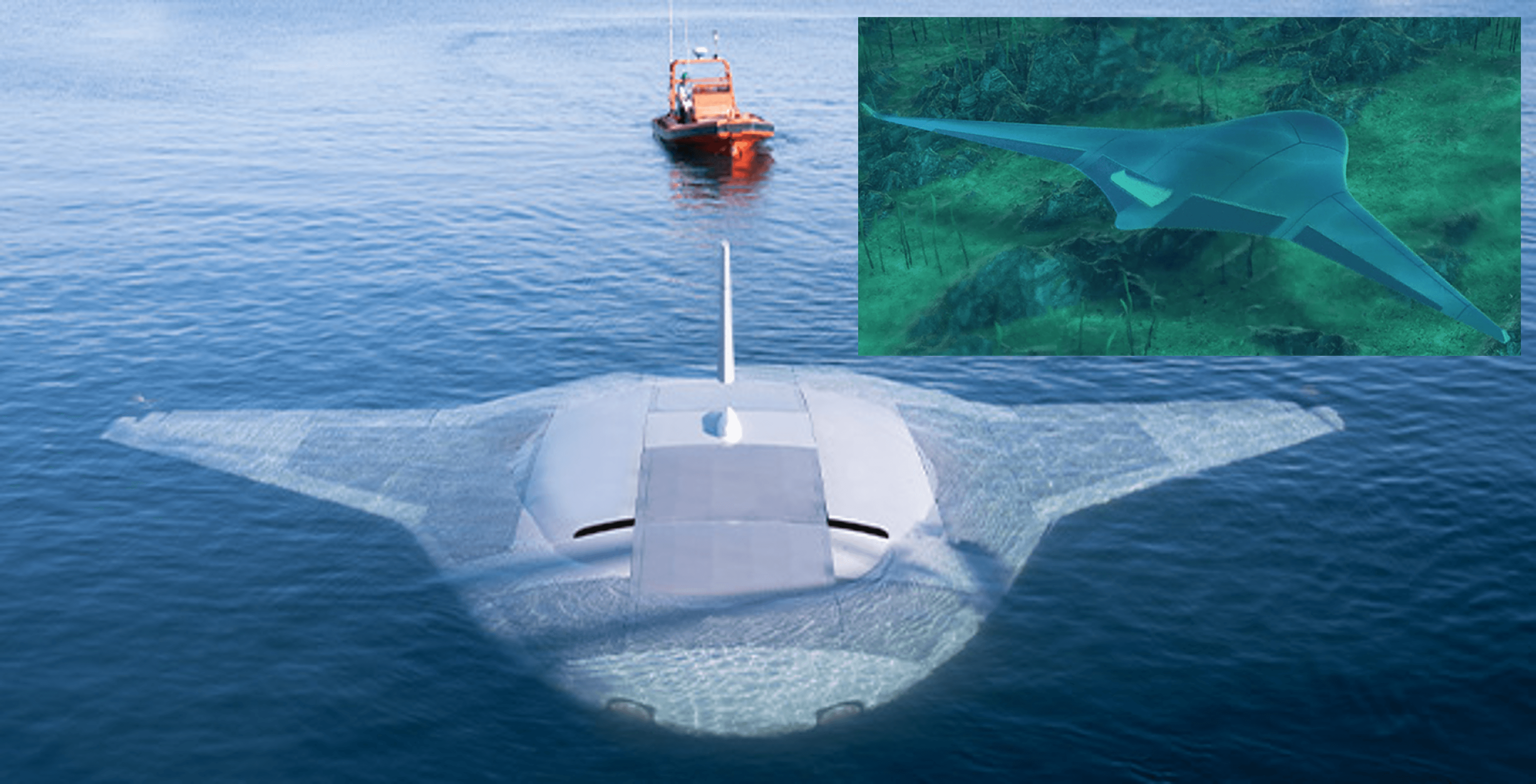
FUTURE WARFARE | Sea - Autonomous Surface Vessels & Unmanned Underwater Vehicles — The Hybrid Fleet Takes Shape
Ukraine’s ‘Sub Sea Baby’ autonomous torpedo struck a Russian Kilo-class submarine inside Novorossiysk harbour in December 2025 — the first confirmed underwater drone attack on a submarine in history. The U.S. Navy is requesting $5.3 billion for unmanned maritime systems in FY2026, a 70 percent year-on-year increase. Saronic Technologies went from prototype to $392 million production contract in under 12 months. And DARPA’s Manta Ray XL-UUV completed full-scale sea trials. This article maps the maritime autonomous systems revolution — from Ukraine’s improvised Black Sea fleet to the Pentagon’s hybrid manned–unmanned force of the 2030s, and from Saronic’s Franklin, Louisiana shipyard to Boeing’s 85-tonne robot submarine.
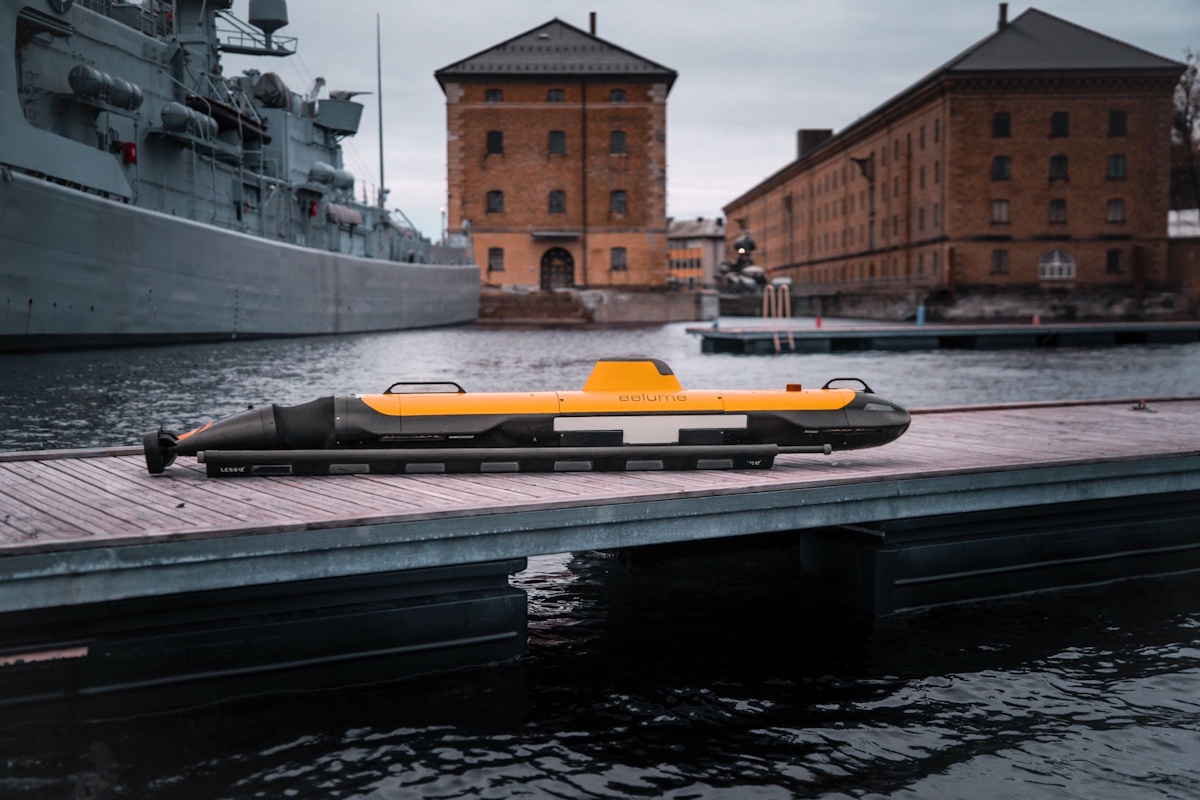
Eelume Awarded a 3-year Contract by the Norwegian Ministry of Defence
The Norwegian Ministry of Defence has awarded a three-year contract to Eelume AS for the development of the All-Terrain Autonomous Underwater Vehicle, known as the Eelume S. This contract aims to enhance Norway's underwater capabilities, reflecting the country's commitment to advancing its defense technology. The partnership is expected to leverage Eelume's expertise in autonomous systems to create a versatile underwater vehicle capable of operating in various environments. The contract signifies a strategic investment in innovative defense solutions, ensuring that Norway remains at the forefront of maritime security.
eelume contract award norwegian ministry of defence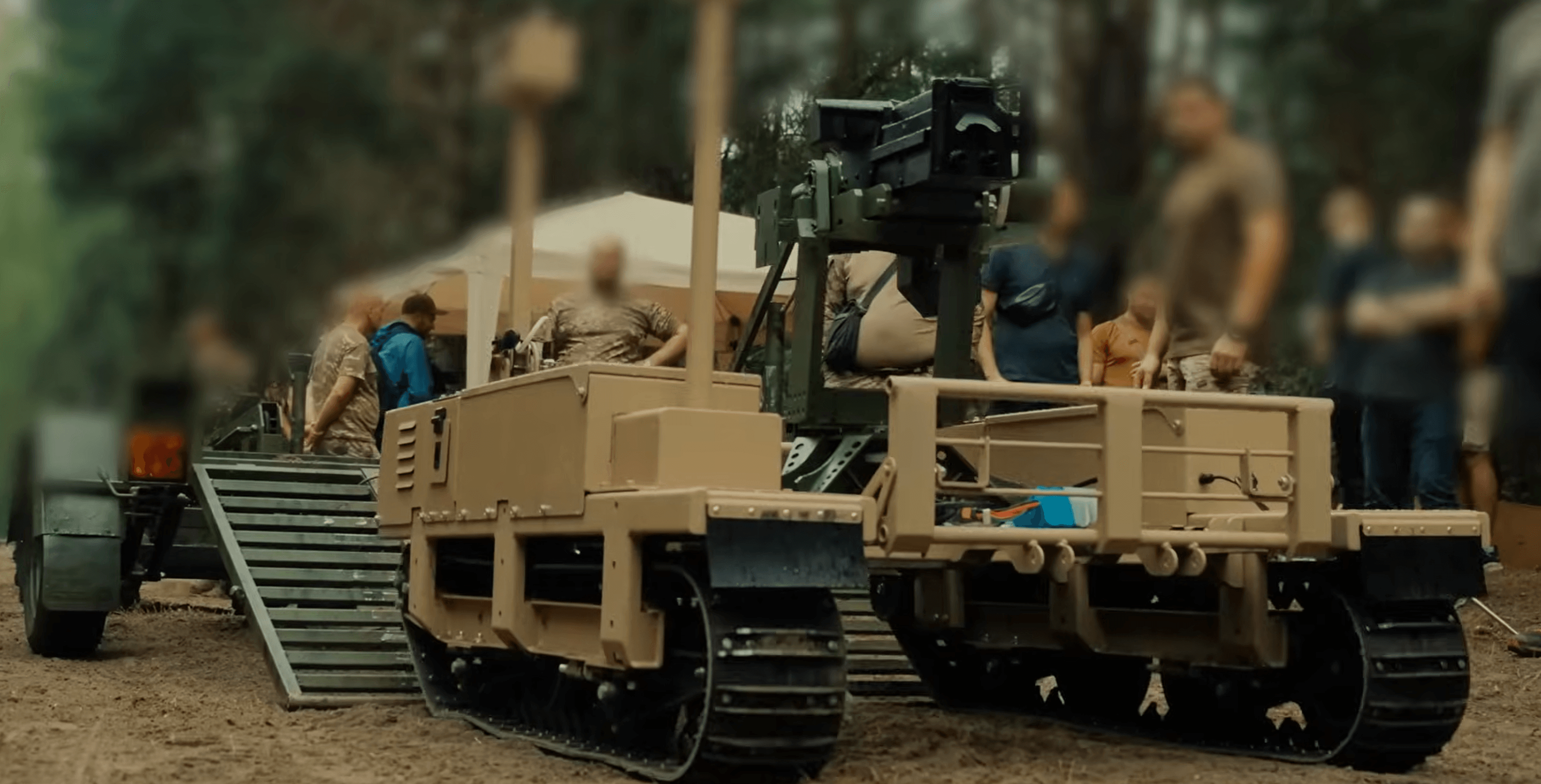
FUTURE WARFARE | Land - Unmanned Ground Vehicles — From Logistics Mules to Front-Line Robots
Ukraine fielded 15,000 unmanned ground vehicles in 2025 — surpassing its own procurement targets by over 100 percent. A single UGV held a front-line position for 45 days. Up to 90 percent of supplies to Pokrovsk now move by robot, not truck. The U.S. Army cancelled its $3 million Robotic Combat Vehicle and is starting over. China is deploying $3,000 robot dogs in PLA urban-warfare exercises. This article maps the emerging UGV battlefield — from Ukraine’s garage-built logistics fleet to the Pentagon’s stalled combat-vehicle ambitions, and from Ghost Robotics’ Vision 60 to the quadruped proliferation problem no treaty has yet addressed.

Launching a new unmanned surface vessel for mine countermeasures
Eelume and Maritime Robotics have announced a partnership to develop an innovative mine countermeasures solution that integrates current maritime platforms with autonomous systems, aimed at enhancing operational effectiveness. The centerpiece of this collaboration is the Eelume WP960, an unmanned surface vessel (USV) designed to meet the standards of the Norwegian Armed Forces’ vessel strategy. This initiative reflects a growing trend in military operations to leverage advanced technology for improved safety and efficiency in maritime environments. The collaboration is set to advance the capabilities of naval forces in addressing underwater threats, marking a significant step forward in defense technology.
maritime robotics
Kraken Robotics Revenue Surges as the Global USV Market Accelerates
Kraken Robotics posts record revenue growth as subsea sensing and autonomy demand surges, highlighting strong momentum in the global USV market.
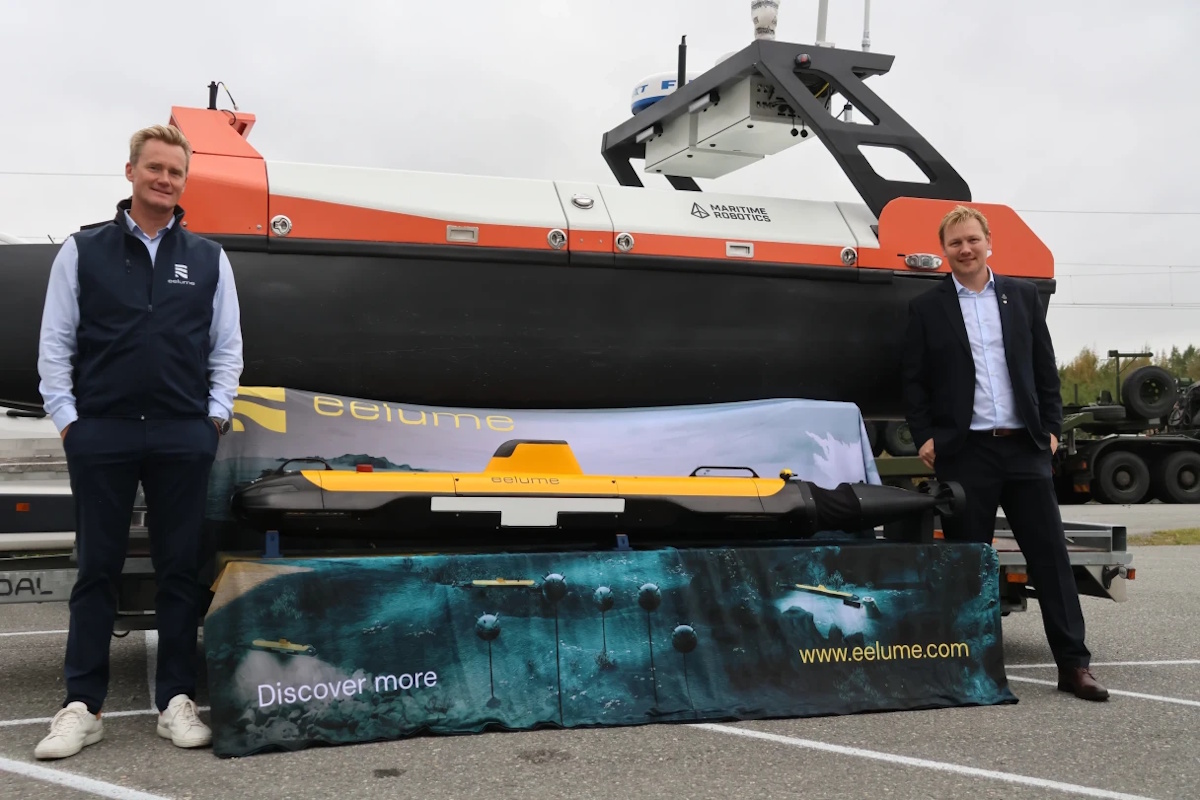
Maritime Robotics and Eelume Enter into Partnership for Ocean Surveillance and Security
Norway's Maritime Robotics and Eelume, two prominent companies in autonomous systems technology, have announced a strategic partnership aimed at enhancing maritime operations. This collaboration focuses on integrating unmanned surface vessels (USVs) with agile underwater vehicles (AUVs) to improve the efficiency and sustainability of exploration, surveillance, and security activities at sea. The partnership reflects a growing trend in the maritime industry to leverage advanced technologies for better operational outcomes.
maritime robotics eelume partnership ocean surveillance and security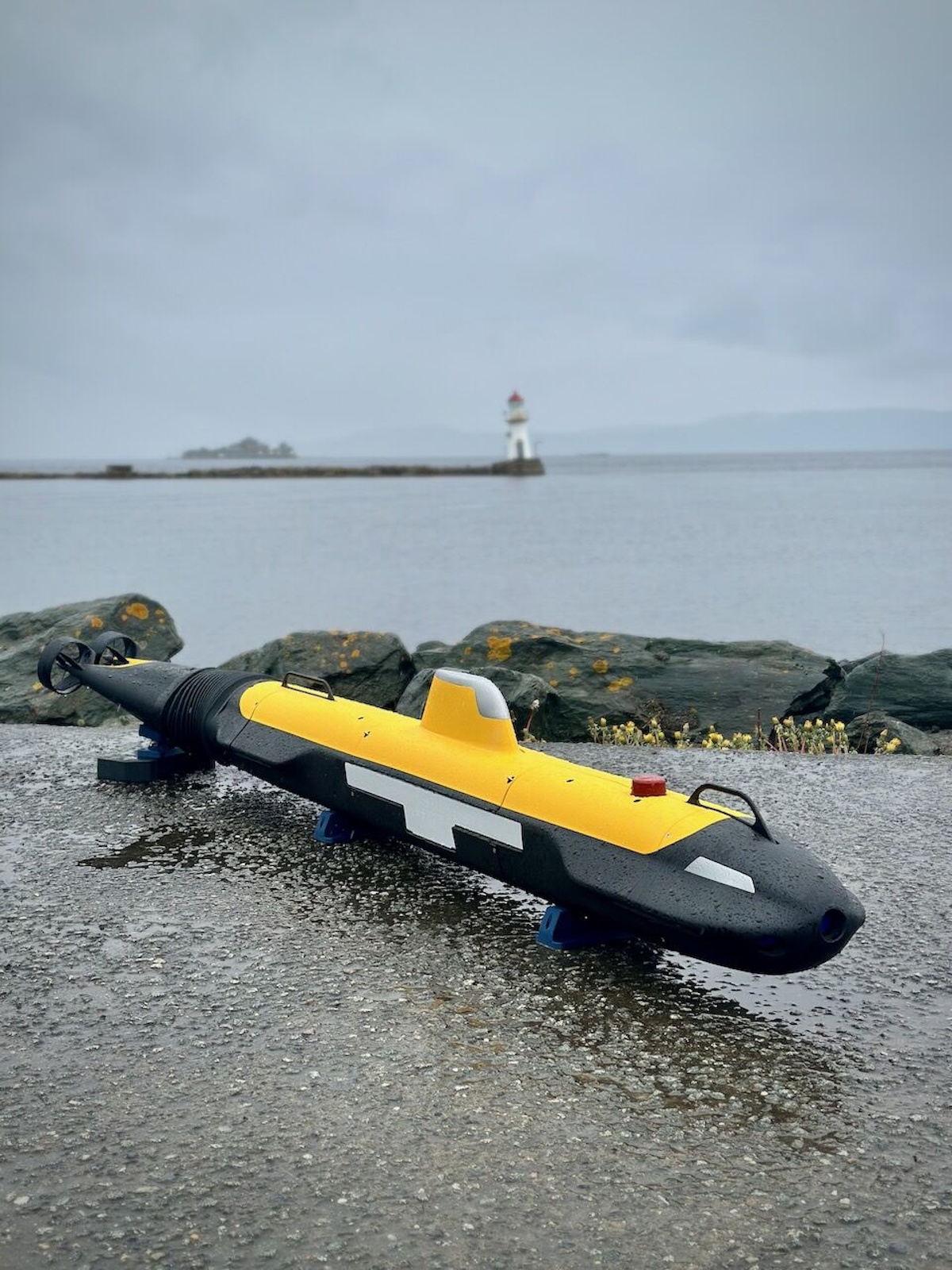
Eelume collaborates with PETRONAS’ Research Arm
Eelume and PETRONAS Research Sdn. Bhd. (PRSB) have announced an expansion of their partnership aimed at enhancing innovation, operational efficiency, and sustainability within the offshore energy sector. This collaboration, which has been ongoing, seeks to leverage advanced technologies and research to address the evolving challenges faced by the industry. The initiative underscores both companies' commitment to driving progress in energy solutions while minimizing environmental impact. The strengthened alliance is expected to lead to the development of new methodologies and tools that will improve operational practices and contribute to a more sustainable future in offshore energy production.


