

Assessing Robot Sustainability: The Robotics Eco-Label Initiative and Its Impact
- Published
- Source
- Robohub.org
The Robotics Eco-Label project, led by Bram Vanderborght at Vrije Universiteit Brussel, aims to quantify the sustainability of robots through a web-based Toolkit. This initiative evaluates robots based on metrics such as resource conservation and carbon footprint, providing a 0–100 Eco-Score. The project seeks to make environmental trade-offs visible early in the design process, promoting sustainable choices in robotics.
This initiative is crucial as it addresses the environmental impact of robotics throughout its lifecycle, from material extraction to end-of-life. By offering a structured assessment, the Robotics Eco-Label Toolkit enables developers to make informed decisions that enhance sustainability, potentially giving companies a competitive edge in the market.
Looking ahead, the Robotics Eco-Label project, along with other IEEE RAS Sustainability Grant-funded initiatives, will continue to shape the future of sustainable robotics. No further timeline was disclosed at the time of publication.
Original report
How green is your robot? And other awkward questions
Robohub.org · IEEE Robotics and Automation Society (RAS)This briefing is an independently written summary based on publicly available reporting and is provided for industry information and news discovery. The original report and source publication are credited and linked where applicable. RobotToday does not claim ownership of third-party source material.
Rights concerns? Contact [email protected] with the relevant URL and details. We will review the matter and take appropriate action where warranted.
More related news
-
1
SRS 2027 – Rome, Jun 23–27, 2027 RobotToday · 11 months from now
- 2
- 3
- 4
- 5
-
6
WHC 2027 – Boston, Jul 13–16, 2027 RobotToday · 1 day ago
- 7
-
8
RO-MAN 2027 – Waterloo, Aug 23–27, 2027 RobotToday · 1 day ago
-
9
ERF 2027 – Birmingham, Mar 2–4, 2027 RobotToday · 1 day ago
- 10
- 11
- 12
Related Suppliers

BruBotics — Vrije Universiteit Brussel
Belgium
Brussels, Belgium human-robotics research center of Vrije Universiteit Brussel founded 2015; eight research groups and over 100 scientists work on exoskeletons.
IEEE
United States
World's largest technical professional organization for electrical and electronics engineers; develops key robotics and automation standards.

Kinetix AI 超维动力
China
Shenzhen embodied-AI startup building ultra-human-like humanoid robots powered by a physical world model for whole-body control.

LaundroBot LLC
United States
Orlando, Florida startup developing app-controlled laundromat machines with deep-learning wash optimization for consumer and hospitality clients.
Robot Advisors
United States
US-based robotics consulting firm founded 2023 in Rye, NH; provides objective, data-driven guidance for warehouse and supply chain robotic automation selection.
Peppermint Robotics
India
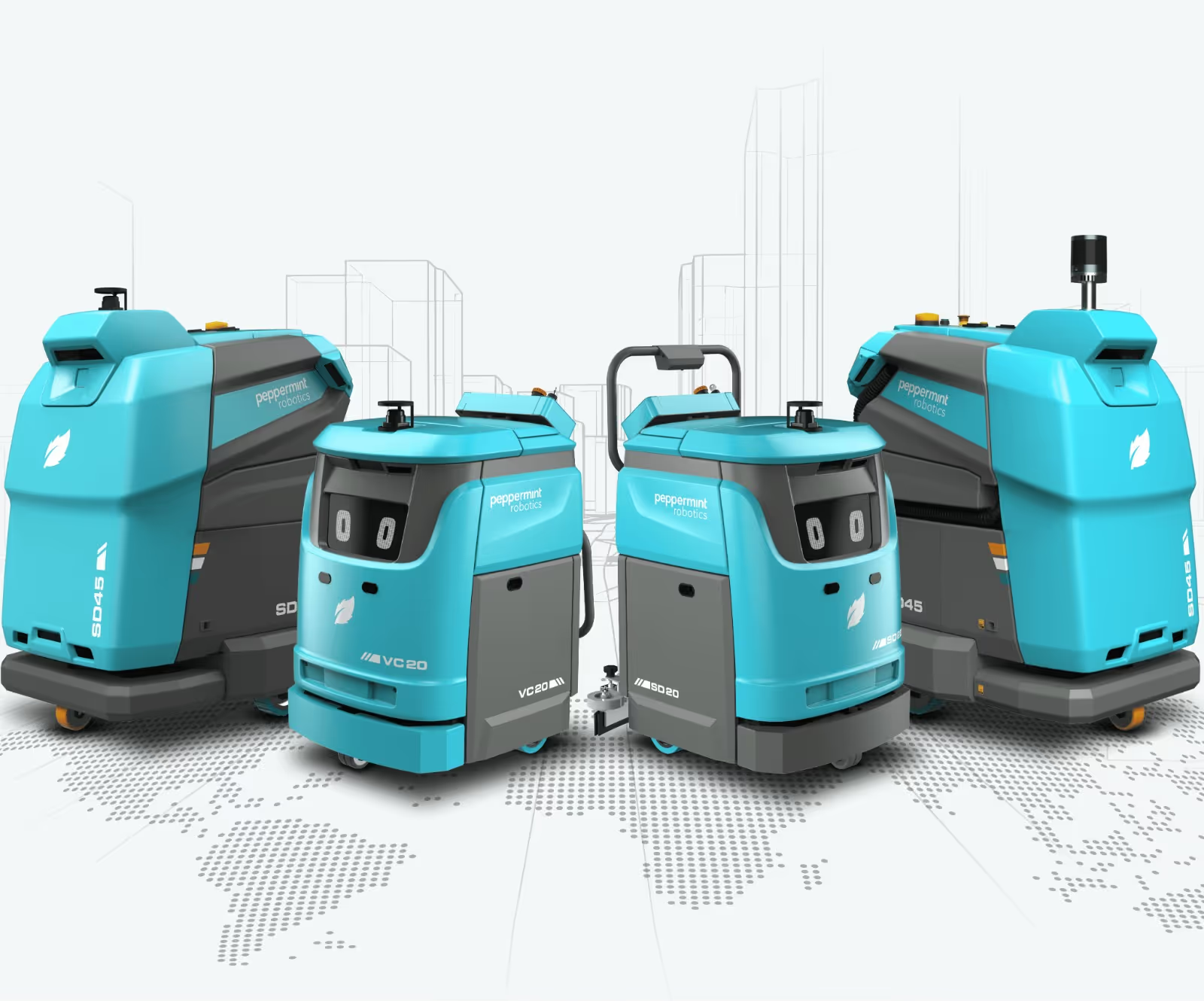
India-based robotics startup building autonomous floor-cleaning and material-handling robots for commercial and industrial environments.

BouMatic
United States
Madison, Wisconsin dairy equipment manufacturer with 80+ years' experience offering robotic milking systems, herd management, and automated equipment.

EMANOR
France
EMANOR, a Normandy electrical and automation firm, integrates Universal Robots cobots for gluing and palletizing, including its PE20 palletizing cell.

Applied Impact Robotics
United States
Sterling, VA startup (2019) developing tethered robotic systems for in-service inspection of crude oil pipelines without shutdown or product removal.
NEWGREEN Inc.
Japan
Koganei, Tokyo agritech firm founded 2019 behind Aigamo Robot, an autonomous paddy weed-suppression robot with about 4,000 units installed in Japan.

University of Birmingham — Extreme Robotics Lab (ERL)
United Kingdom
University of Birmingham's Extreme Robotics Lab leads the UK National Centre for Nuclear Robotics; specialises in AI-driven manipulation for nuclear and.

Blue River Technology
United States
Sunnyvale-based agricultural robotics company founded in 2011; acquired by John Deere in 2017 for $305M; makes See & Spray systems for precision weed control.
Robotics needs a service framework.
RSF defines a common language for robot service capability, lifecycle operations, certification pathways, and service-provider networks.
Join the RobotToday community on LinkedIn
Daily robotics news, in-depth analysis, conference highlights, and discussions with professionals worldwide.


