

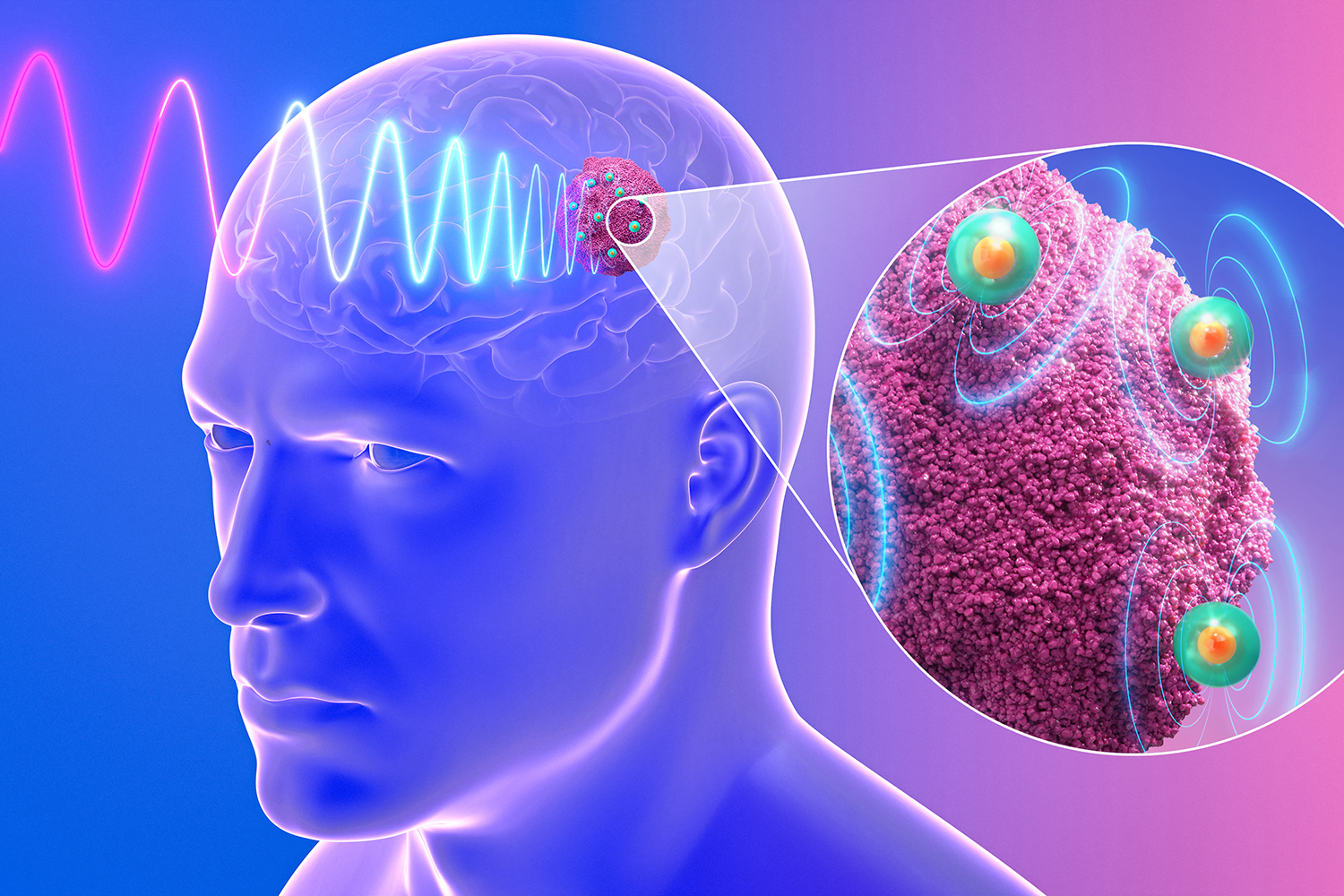
Researchers at the MIT Media Lab have created injectable nanoantennas designed to treat glioblastoma, a highly aggressive brain cancer. These nanoantennas can be magnetically activated to generate localized electric fields that effectively target and kill cancer cells while sparing healthy tissue. In studies, this method significantly reduced tumor growth and extended survival rates in animal models without causing detectable side effects.
The significance of this development lies in its potential to overcome the limitations of current glioblastoma treatments, which often yield poor outcomes. The HITMAN technology, which stands for highly-localized electric-field-induced tumor therapy using magnetically actuated nanoantennas, demonstrated a 52.2% elimination rate of drug-resistant cancer cells, outperforming the standard chemotherapy drug temozolomide by more than five times.
Looking ahead, the researchers aim to translate this technology into clinical applications, potentially allowing for non-invasive treatments administered through the skull. Future developments may include integrating the nanoantennas with circulatronics technology, enabling them to be injected via the arm and travel to the brain, enhancing treatment accessibility and effectiveness.
Editor's Note
The advancement of injectable nanoantennas represents a significant leap in the treatment of glioblastoma, a notoriously difficult cancer to manage. This innovation could reshape therapeutic strategies in oncology, particularly for drug-resistant cases. As the industry continues to explore nanotechnology in medicine, the implications for patient outcomes and treatment methodologies are profound.



































Leave a comment