

Data Collection Challenges in Robotics: Addressing Physical Limitations and Gaps
- Published
- Source
- leaderobot.com
Since the beginning of the year, major companies and startups have significantly increased their investment in data collection. Companies like Qianxun Intelligent, Lingqiao Intelligent, and Lingchu Intelligent have announced ambitious targets for collecting millions of hours of data. Meanwhile, Guanglun Intelligent has completed a financing round of 1 billion yuan, becoming the world's first embodied data unicorn. JD.com has unveiled a comprehensive infrastructure for embodied intelligent data collection, planning to mobilize 600,000 people for crowdsourced data gathering across 64 training sites in 27 cities.
This surge in data collection efforts highlights the industry's focus on building data sets, annotation teams, and simulation environments. However, a critical physical limitation is being overlooked: most teams simplify data collection to perception-level image and point cloud gathering, neglecting the essential motion data from the interaction between robots and physical environments. According to the Guizhou Provincial Big Data Bureau, only 500,000 hours of compliant data from real physical interactions currently exist in China, while the China Electromechanical Integration Technology Application Association estimates that commercializing robotics requires at least tens of millions of hours of data support, indicating a gap exceeding 99% based on a conservative estimate of 10 million hours.
The current challenges in real-world data collection stem from structural constraints that create a physical ceiling. While virtual environments can generate training data at low cost, the gap between simulation and reality is widening as model complexity increases. The AI Index Report 2026 from Stanford HAI reveals that robot manipulation success rates drop from 89.4% in simulated environments to just 12% in real home settings. This discrepancy underscores the need for real physical interaction data, as many robots struggle in unstructured environments like stairs and uneven surfaces, which are crucial for embodied intelligence applications. Continuous data collection is necessary for iterative algorithm development, yet many data collection vehicles are designed for specific scenarios, leading to high costs and inefficiencies in cross-environment deployments.
Original report
The Year of Data Collection: Confronting Physical Limitations in Robotics
leaderobot.com · LeaderobotThis briefing is an independently written summary based on publicly available reporting and is provided for industry information and news discovery. The original report and source publication are credited and linked where applicable. RobotToday does not claim ownership of third-party source material.
Rights concerns? Contact [email protected] with the relevant URL and details. We will review the matter and take appropriate action where warranted.
More related news
- 1
- 2
- 3
- 4
- 5
- 6
- 7
- 8
- 9
- 10
- 11
- 12
Related Suppliers
Banner Engineering
United States
Global industrial automation maker of sensors, machine vision, machine safety, lighting/indicators and IIoT wireless, with 10,000+ products since 1966.
Teledyne Marine
United States
Teledyne Marine supplies subsea sonar, ROV/AUV and hydrographic instruments, and partners in an Indian Navy mine-countermeasure technology alliance.

Quarero Robotics
Switzerland
Swiss autonomous security robot company offering AI-powered outdoor patrol robots as RaaS for industrial perimeters and critical infrastructure in DACH.

Construction Automation
United Kingdom
Develops ABLR for automated bricklaying with mortar dispensing and block placement. Constructs house shells using robotic arms for precision in residential masonry.

INFOFLA
Korea, Republic of (South)
Seoul-based Korean AI automation startup building Vision Language Model-powered software for workflow automation, including its Selto AI agent platform.

ATOUN
Japan
ATOUN was a JPN Panasonic subsidiary that developed and commercialized power-assisted wearable exoskeletons for logistics, construction, and caregiving.
Hubei Optics Valley Dongzhi Embodied Intelligence Technology Co., Ltd. 湖北光谷东智具身智能技术有限公司
China
Wuhan, China embodied-intelligence firm founded 2025, backed by HEC Group, Zhiyuan Robotics, and Peking University; makes Lumen humanoid and service robots.
Insight Intelligence 具识智能
China
Shanghai developer of insightOS, an embodied-AI robot operating system spanning dev, runtime and fleet ops; HIT spin-out with deployments at BYD.
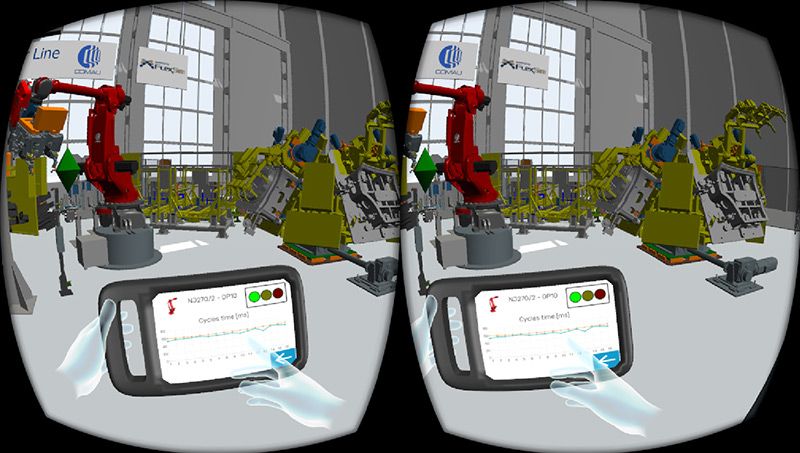
FlexSim Software Products
United States
Orem, Utah simulation software maker founded 1993 as F&H Simulations; its FlexSim platform models factory and logistics operations, acquired by Autodesk 2023.

Yeppar
India
India AR/VR/XR solutions firm by RAMS Creative Technologies, delivering immersive training, remote assistance, and digital twin apps for manufacturing.

MetOcean Telematics (MetOcean Data Systems)
Canada
Canadian developer of oceanographic data collection systems, telemetry buoys, and communication solutions for AUVs, ASVs, and marine environmental monitoring.

Maniformer 觅觅科技
China
AgiBot-incubated Chinese platform supplying embodied-AI training data, real and simulation datasets, and the MEgo data-collection hardware line.
Robotics needs a service framework.
RSF defines a common language for robot service capability, lifecycle operations, certification pathways, and service-provider networks.
Join the RobotToday community on LinkedIn
Daily robotics news, in-depth analysis, conference highlights, and discussions with professionals worldwide.


