

INFOFLA
Infofla develops industrial automation and robotic integration systems. Its solutions combine PLC-based control, motion systems, and machine vision to support custom manufacturing cells, process automation, and equipment modernization in production environments.

RobotToday Initiative
Robotics needs a service framework.
RSF defines a common language for robot service capability, lifecycle operations, certification pathways, and service-provider networks.
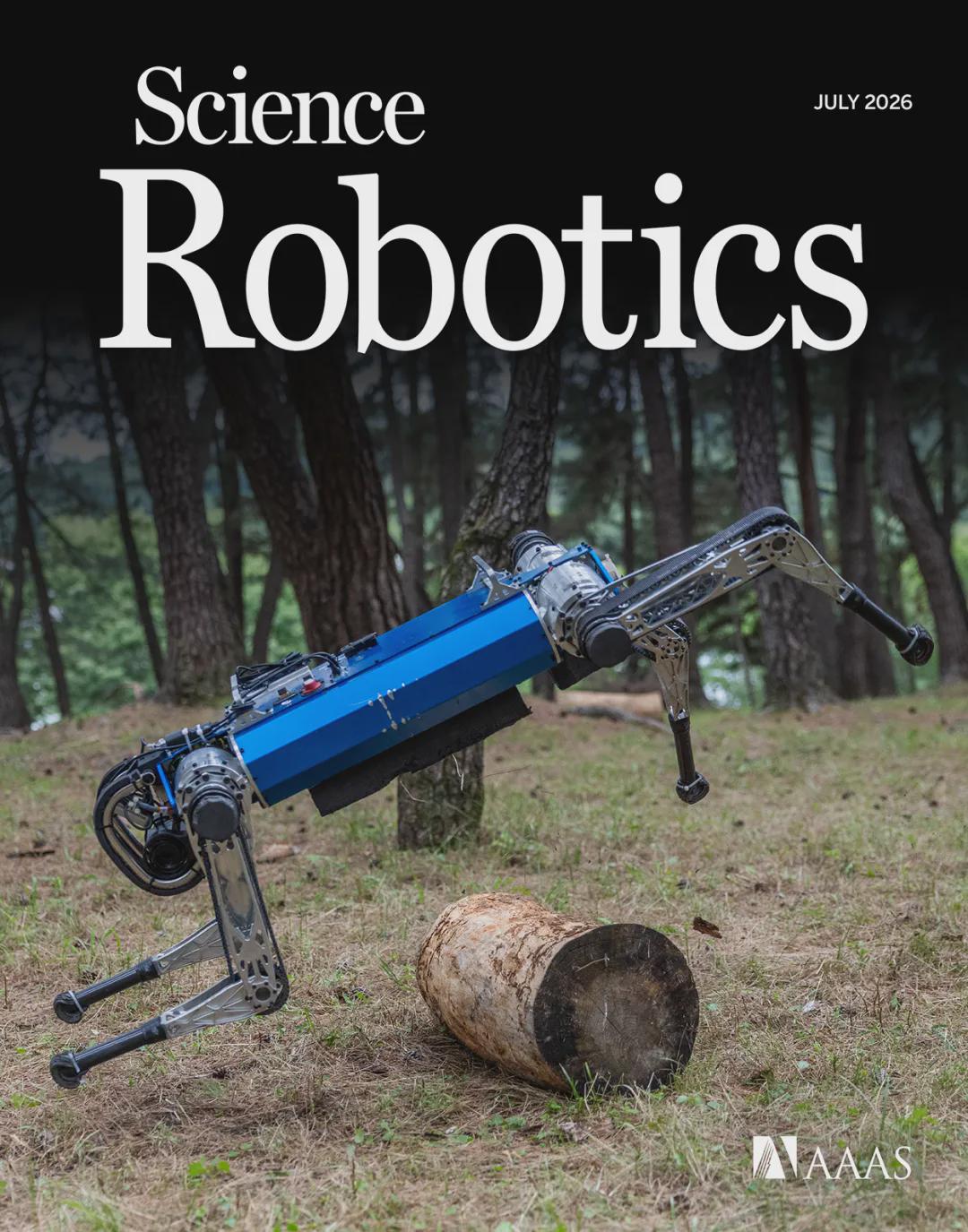
KAIST's HOUND Robot Reaches 6m/s Speed Using 2D Data for Advanced Parkour Skills
KAIST and Korea University researchers have developed the KAIST HOUND robot, achieving a peak speed of 6m/s while autonomously navigating complex terrains. This advancement showcases the robot's ability to seamlessly switch gaits, such as trotting and bounding, based on environmental conditions without external support. The significance of this achievement lies in the innovative APT-RL framework, which utilizes a simplified 2D dynamics model to generate extensive motion data. This approach allows the robot to learn and adapt its movements in real-world 3D environments, overcoming traditional limitations of motion capture and reinforcement learning strategies. Looking ahead, the research team has demonstrated the robot's capability to handle various scenarios, including jumping and maintaining balance under challenging conditions. Future developments may focus on enhancing the perception system to support high-speed operations, as the current sensing technology has limitations in effective range.
Quadrupedal Robots Robotics Research Reinforcement Learning AI Autonomous Systems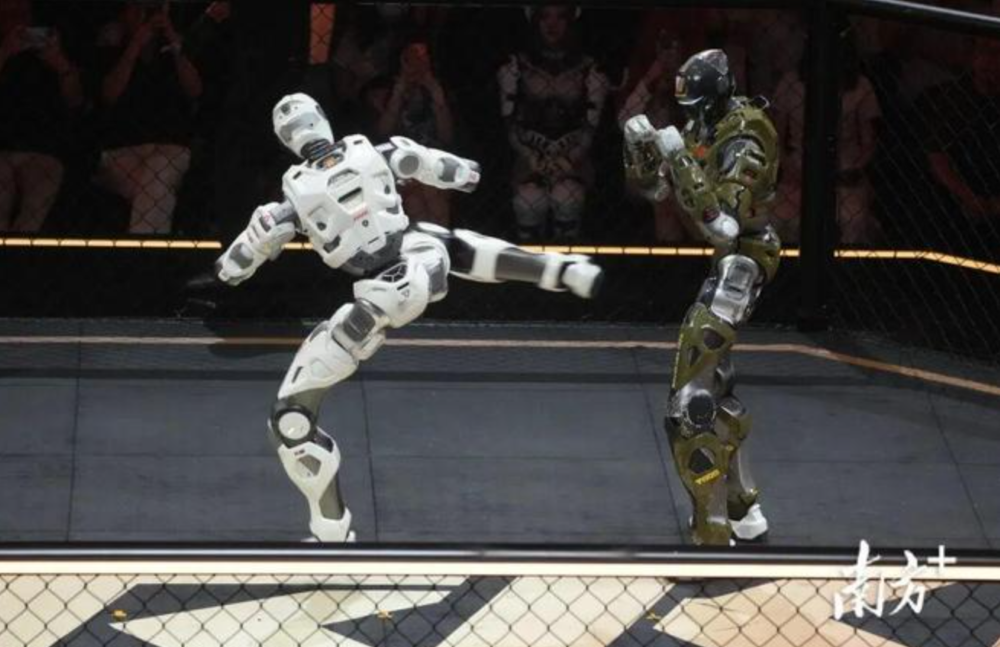
Humanoid Robots Compete for Championship Belt in Global Fighting League
On July 16, the inaugural match of the Universal Robot Combat League (URKL) took place at the Nanshan Sports Center in Shenzhen, featuring 32 teams from around the world competing with the T800 humanoid robot. The championship belt, weighing 10 kilograms and valued at approximately 10 million yuan, is awarded to the winning team. This event is significant as it showcases the advanced capabilities of humanoid robots in dynamic combat scenarios, where they must accurately perceive, predict, and respond to opponents in real-time. The competition serves as a testing ground for the robots' structural integrity and algorithm efficiency, allowing developers to refine their designs and reduce potential failure rates in commercial applications. Looking ahead, the data collected from these matches will enhance AI decision-making capabilities, pushing humanoid robots beyond static demonstrations to dynamic autonomous responses. As the competition concludes, it will contribute to the evolution of foundational technologies and commercial frameworks, positioning Guangdong as a leading hub in the global robotics industry.
Humanoid Robots Robotics Competitions AI Technology Robotics Development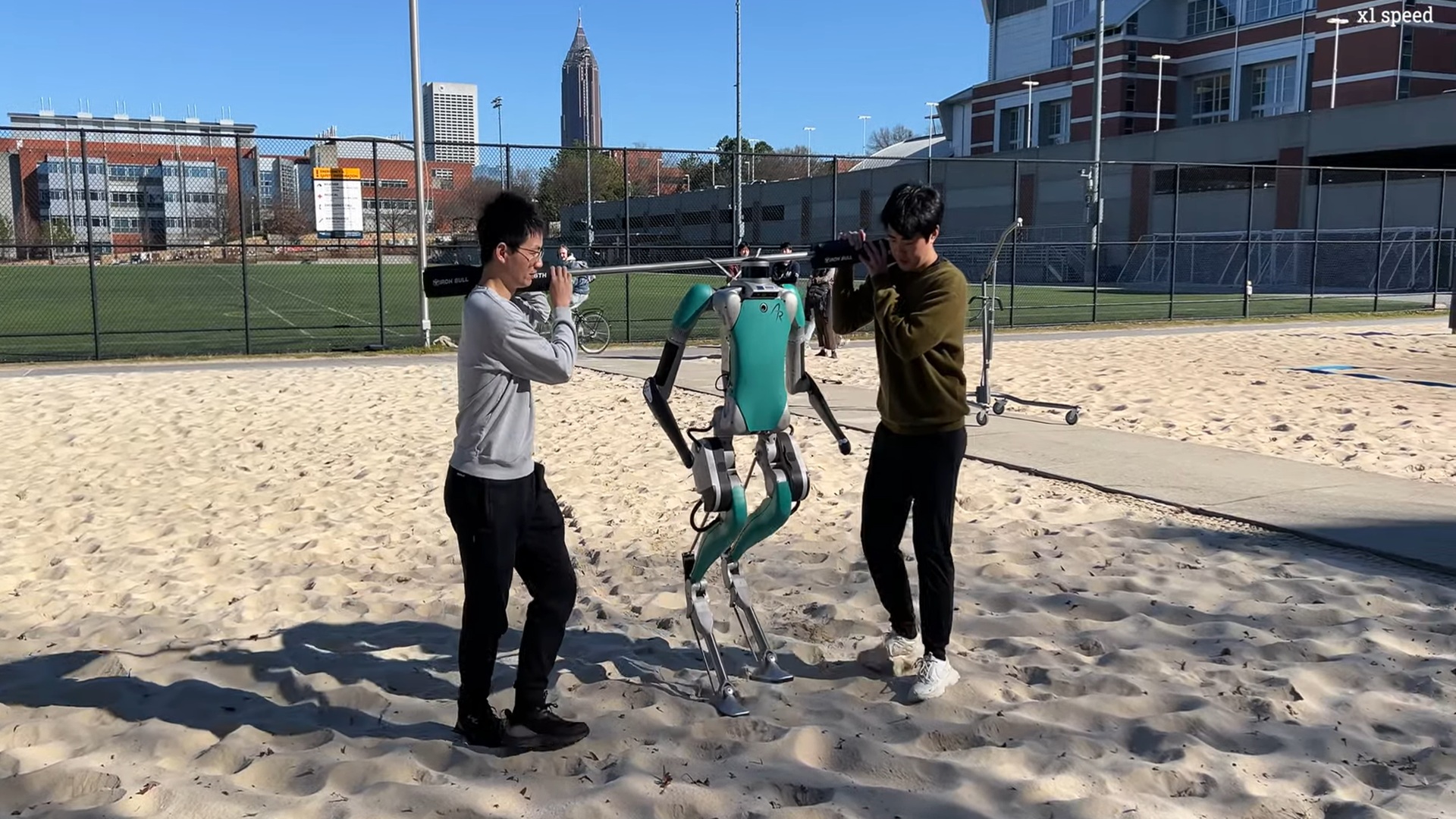
Georgia Tech Researchers Develop Framework for Humanoid Robot to Walk on Varied Terrain
Researchers at Georgia Tech have created a novel machine-learning framework that allows a humanoid robot to traverse diverse terrains, including sand, gravel, and slopes. This framework, named 'Learn to Teach,' enhances the traditional teacher-student reinforcement learning method by enabling simultaneous training of both agents, significantly reducing the time and computational resources required. The significance of this development lies in its ability to equip the robot with a controller capable of adapting to unfamiliar terrains without extensive prior training. The humanoid robot successfully navigated various challenging surfaces, demonstrating stability even when pushed or pulled during tests. This advancement could have broader implications for robotics, as the framework can be adapted for other robotic tasks beyond walking. Looking ahead, the potential for this training framework to be applied to different robots and tasks is promising. The researchers highlighted that their approach not only streamlines the training process but also allows for real-time knowledge transfer between the teacher and student models. No further timeline was disclosed at the time of publication.
AI and Robotics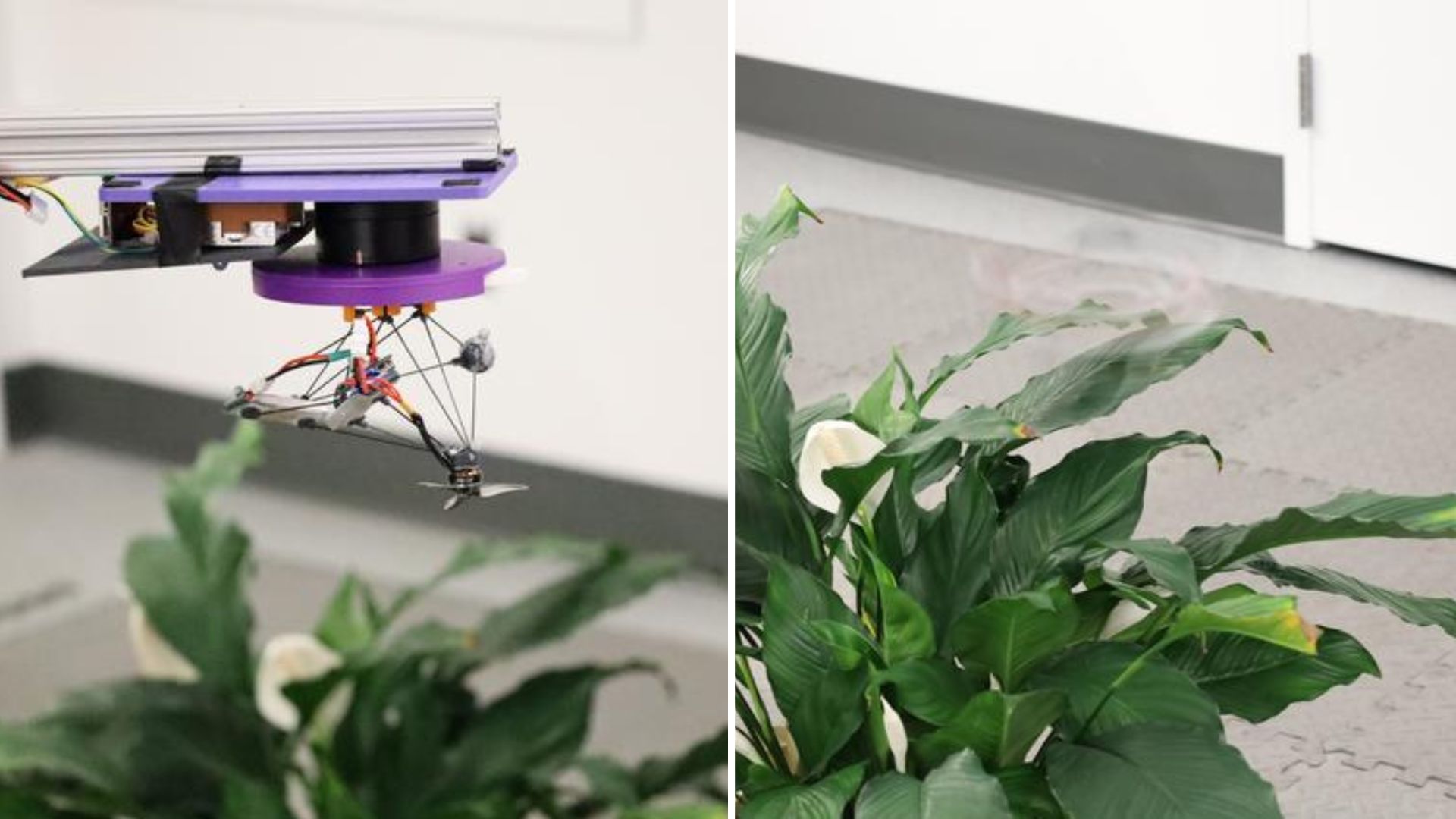
Northwestern University Develops 'Phantom Twist' Drone for Enhanced Low Visibility
Northwestern University has unveiled the 'Phantom Twist,' a drone designed to achieve low visibility by spinning at speeds of up to 25 times per second. This innovative approach creates a motion blur that allows the drone to blend into its surroundings, rather than achieving complete invisibility. Michael Rubenstein, who led the project, emphasized the unique design strategy focused on human perception of motion. The significance of the 'Phantom Twist' lies in its potential to minimize disruption caused by conventional drones, which are often highly visible and can disturb wildlife and human activities. Traditional methods to conceal drones have included advanced optics and camouflage, but this new design shifts the focus to altering the drone's physical characteristics to change its perceived visibility. The drone's spinning mechanism allows it to appear as a semi-transparent disc, effectively reducing its visual footprint. Looking ahead, the development team faced challenges in ensuring the drone's stability during flight, which they addressed by integrating artificial intelligence into the design process. No further timeline was disclosed at the time of publication.
Innovation
Northwestern University Unveils Phantom Twist, an Almost Invisible Drone
At the RSS 2026 conference in Sydney, Northwestern University showcased the Phantom Twist drone, which is significantly harder to see in flight compared to traditional quadrotors. This drone achieves its stealthy appearance by spinning rapidly at 15 to 25 Hz, leveraging the limitations of human vision to create a motion blur that renders it nearly invisible. The development of Phantom Twist is significant as it represents a leap in drone design, utilizing computational optimization to minimize visibility. The drone's unique design allows it to maintain stability and control with just a single motor, making it an innovative solution in the field of robotics. Its design was generated through an iterative process aimed at reducing the visual overlap of components during flight. Looking ahead, Phantom Twist's design could lead to advancements in drone technology, particularly in applications requiring stealth. While currently controlled via an optical tracking system, further optimizations may enhance its capabilities. No further timeline was disclosed at the time of publication.
Robotics Drones Spinning-drones Invisible-drones Ai-design-optimization Uav
Drone as First Responder Programs Transform Police Situational Awareness and Response
Drone as First Responder (DFR) programs are revolutionizing how law enforcement agencies collect information and respond to emergencies. Former police chief Mike Moulton emphasizes that DFR represents a significant advancement in police situational awareness, akin to the introduction of the police radio. DFR allows for real-time aerial insights, enabling officers to arrive at scenes with a clearer understanding of the situation. The importance of DFR lies in its ability to enhance situational awareness and improve response outcomes. Unlike traditional methods that rely on limited information from callers, DFR provides live video feeds, allowing officers to assess situations more accurately before arriving on the scene. This capability has led to a reduction in unnecessary officer deployments, as evidenced by the Chula Vista model, which has resolved a quarter of its drone missions without dispatching officers. Looking ahead, the continued adoption of DFR programs will likely reshape police operations, particularly for agencies that previously lacked access to aerial support. However, challenges remain, such as operational limitations in terms of launch radius and weather conditions. No further timeline was disclosed at the time of publication.
Applications Drone News Drone News Feeds emergency response Featured – Safety and Security News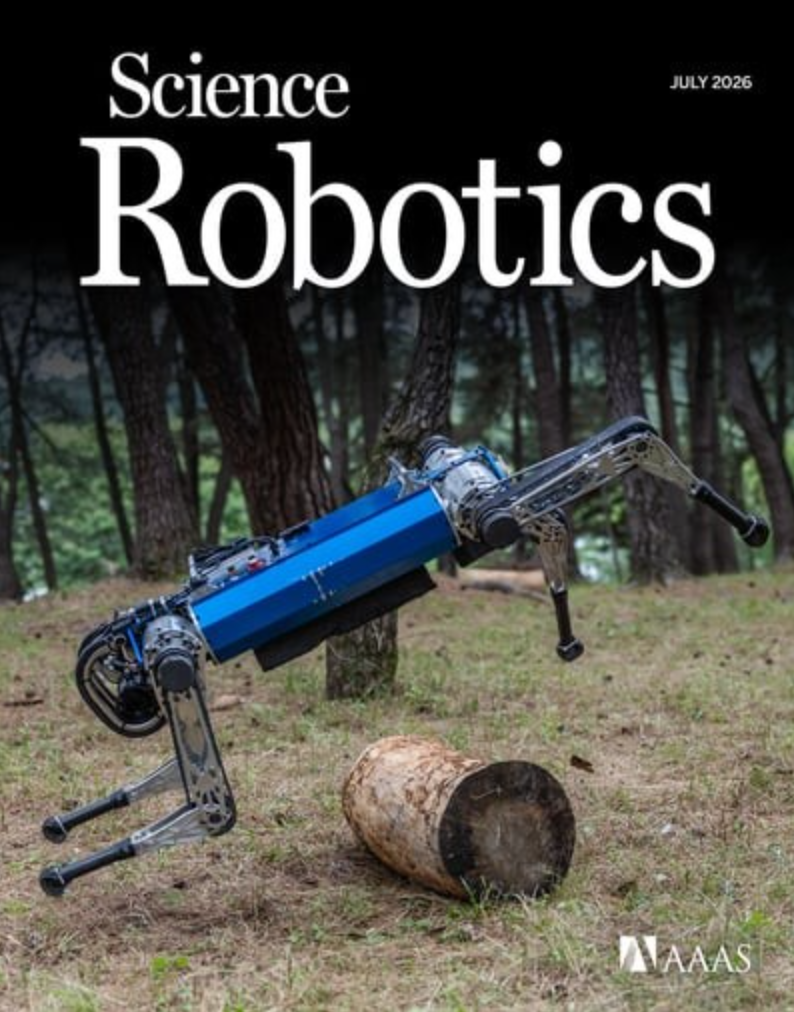
KAIST Unveils Advanced Four-Legged Robot with Autonomous Navigation Technology
KAIST's mechanical engineering team, led by Professor Park Hai-won, announced a breakthrough in robotic technology on July 16. They developed a four-legged robot capable of autonomously selecting and switching between various gaits in real-time, enabling it to navigate complex outdoor environments with speed and stability. This innovation is significant as it integrates a new control architecture called APT-RL (Action Pre-training Reinforcement Learning based on Transformers), which allows the robot to learn movement through computer simulations rather than traditional motion capture. The robot, named KAIST HOUND, demonstrated its capabilities by traversing diverse terrains, achieving peak speeds of 6 meters per second, faster than an average cyclist. Future developments to watch include the potential applications of this technology in disaster response, defense tasks, and industrial inspections. The research was published in the July issue of the journal Science Robotics, highlighting its importance in advancing the field of robotic control and physical AI.
Four-Legged Robots Robotics Technology AI Autonomous Navigation
Engineers Create Autonomous Four-Legged Robot That Adapts Gait to Environment
Engineers have developed a groundbreaking four-legged robot capable of autonomously determining its walking strategy based on its environment. This innovative robot can adjust its gait when navigating stairs, leap over gaps, and maintain balance on uneven forest trails. The significance of this development lies in its potential applications across various fields, including search and rescue operations, outdoor exploration, and even entertainment. By mimicking the adaptive movement of animals and humans, this robot represents a significant advancement in robotics, enhancing mobility and versatility in challenging terrains. Looking ahead, the focus will be on further refining the robot's capabilities and exploring its deployment in real-world scenarios. No further timeline was disclosed at the time of publication.
Robotics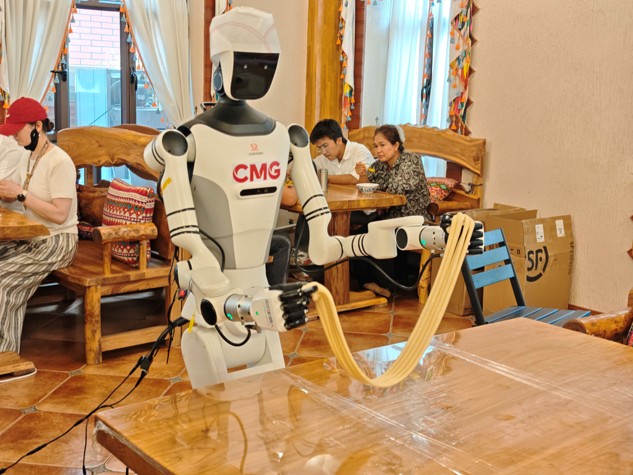
RealBOT Robot Excels in Culinary Tasks as a 'Xinjiang Chef
On July 15, 2026, the World Humanoid Robot Sports Championship's domestic third stop launched simultaneously in Yining, Xinjiang, and Sai Lake, Bozhou. RealBOT, a wheeled humanoid robot by Ruierman, previously provided logistical support at the 2026 Chinese Dragon Boat Race in Bazhong, Sichuan. In this event, the robot transitioned from a service role to that of a 'Xinjiang chef' in a real kitchen environment, successfully completing intricate tasks such as noodle pulling, meat skewering, grilling, and vegetable cutting. This demonstration is significant as it showcases the robot's ability to adapt to unpredictable physical variables in real-world scenarios, aligning with Ruierman's philosophy that robots must be deployed in authentic environments to truly understand and perform tasks. The challenges faced by the robot, including precise force control and real-time tactile feedback, highlight the advanced capabilities of Ruierman's technology, including a mechanical arm with ±0.05mm repeatability and millisecond-level force feedback. Looking ahead, the successful execution of these culinary tasks emphasizes the importance of robust hardware and data capabilities in robotics. No further timeline was disclosed at the time of publication, but the ongoing development of integrated joint modules and high operational reliability positions Ruierman to address industry challenges related to traditional robots' limitations in various environments.
Humanoid Robots Culinary Robotics AI Automation Technology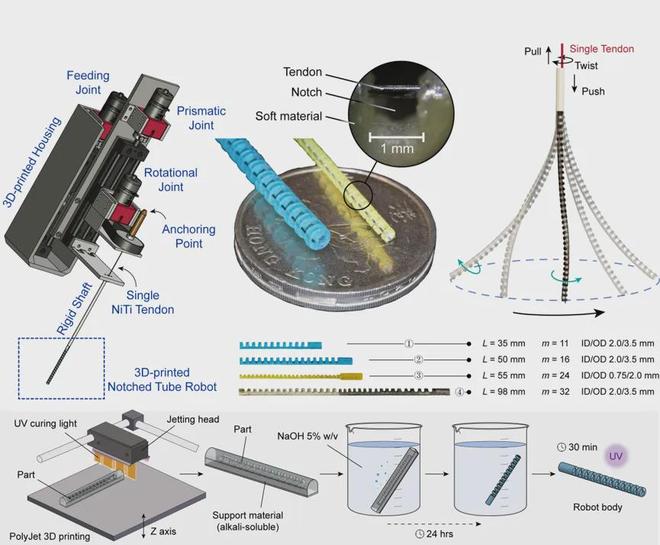
CUHK Introduces Innovative Single-Tendon Continuum Robots for Enhanced Motion Control
The Chinese University of Hong Kong (CUHK) has developed a groundbreaking single-tendon-driven continuum robot, addressing the longstanding challenges in minimally invasive medical applications. This innovative design utilizes a single eccentrically arranged tendon to achieve near omnidirectional motion control, significantly simplifying the actuator and transmission system while maintaining a compact size. This advancement is crucial as traditional tendon-driven continuum robots (TDCRs) rely on multiple tendons for three-dimensional motion, leading to increased complexity and limitations in miniaturization. The new paradigm proposed by CUHK's research team not only enhances spatial manipulation capabilities but also improves force transmission efficiency, paving the way for next-generation minimally invasive surgical robots. Looking ahead, the research, published in Nature Communications, offers a new design and technological pathway for continuum robots, inspired by the flexible movement observed in biological systems. No further timeline was disclosed at the time of publication.
Continuum Robots Medical Robotics Robotic Motion Control Tendon-Driven Robotics






Leave a comment