

Challenges of Integrating Robots into Factories Despite Technological Progress
- Published
- Source
- leaderobot.com
The KUAVO-VLA1.0 model can perceive images, follow instructions, and understand environments, but it must adapt to specific factory conditions such as arm length and joint movement before being deployed. This adaptation process involves retraining for new tasks, which increases costs and learning time for factories.
The complexity arises from the need for robots to relearn basic operations when faced with new tasks, despite the fundamental actions remaining unchanged. The KUAVO-VLA1.0 has utilized over 600 hours of high-quality data to cover 100 industrial tasks, allowing it to continuously learn and refine its operational capabilities.
Looking ahead, the integration of domain-specific models alongside general models represents a shift in the development of embodied intelligence. The focus is on reusing learned capabilities to minimize retraining, which is crucial for enhancing efficiency in industrial applications. No further timeline was disclosed at the time of publication.
Original report
Why Robots Struggle to Enter Factories Despite Advancements
leaderobot.com · LeaderobotThis briefing is an independently written summary based on publicly available reporting and is provided for industry information and news discovery. The original report and source publication are credited and linked where applicable. RobotToday does not claim ownership of third-party source material.
Rights concerns? Contact [email protected] with the relevant URL and details. We will review the matter and take appropriate action where warranted.
More related news
- 1
- 2
- 3
- 4
- 5
- 6
- 7
- 8
-
9
RobotToday Weekly October 5 – 9, 2026 RobotToday · 2 days ago
- 10
- 11
- 12
Related Suppliers

Leju (Shenzhen) Robotics Co., Ltd. 乐聚(深圳)机器人技术有限公司
China
Shenzhen humanoid robotics company founded 2016; makes full-size KUAVO (170 cm, 4.6 km/h) and educational AELOS robots; raised RMB 1.5B in pre-IPO funding.
BodenAI 宁波博登智能科技有限公司
China
Ningbo training-data firm founded 2019 that teleoperates humanoids and arms in its Physical AI Dojo and sells annotated robot datasets and data tooling.
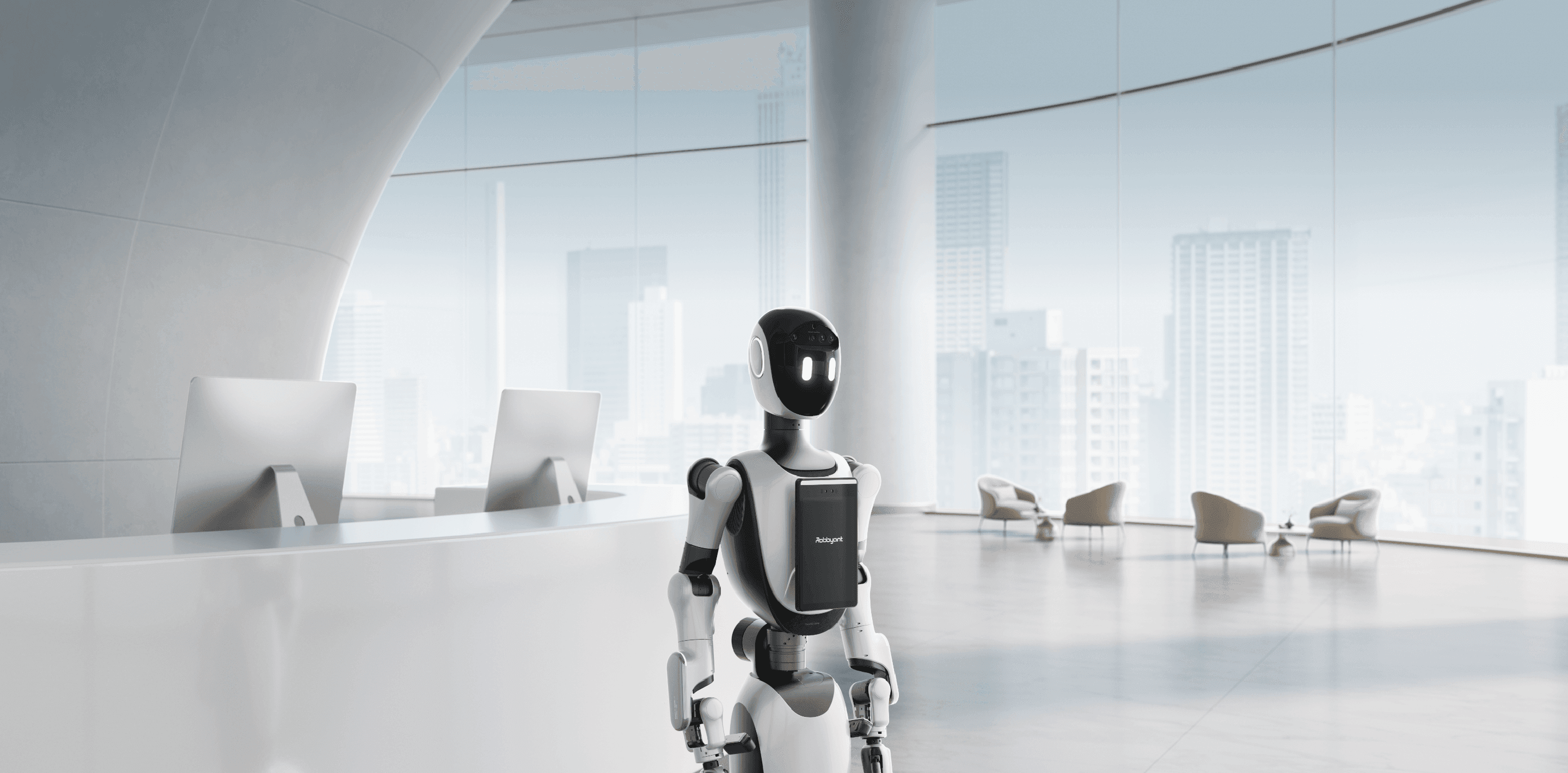
Robbyant 蚂蚁灵波科技
China
Ant Group's embodied intelligence unit building the R1 wheeled humanoid service robot and LingBot spatial-perception AI models.

Florian Bauer Sondermaschinen GmbH
Germany
German custom special-machine builder in Hürth, integrating robots and automation since 1994 for industrial production processes.

Indricon, LLC
United States
Beavercreek, Ohio controls and robotics engineering firm; veteran-owned small business founded by ex-Army engineer Brian Hale; MCMA- and IEEE-certified.

Robotics & Drives
Ireland
Mullingar, Ireland robotics integrator founded 2005; part of Automated Industrial Robotics Inc. since October 2024, with about 50 staff and a 32,000 sq ft site.

CESI Ecole d'Ingenieurs
France
French private engineering school founded 1958; 26 campuses, 28,000 students; CTI-accredited five-year degrees in industrial and digital engineering.

Luminous Robotics
United States
Boston-based robotics startup building LUMI, a tracked robot that installs 80 lb solar panels 3.5x faster than manual labor at utility-scale solar farms.

Vitec Group
United Kingdom
Vitec Group (now Videndum plc, LSE:VID) manufactures robotic broadcast camera pedestals and remote pan-tilt heads under the Vinten brand for global.
Hubei Optics Valley Dongzhi Embodied Intelligence Technology Co., Ltd. 湖北光谷东智具身智能技术有限公司
China
Wuhan, China embodied-intelligence firm founded 2025, backed by HEC Group, Zhiyuan Robotics, and Peking University; makes Lumen humanoid and service robots.
Insight Intelligence 具识智能
China
Shanghai developer of insightOS, an embodied-AI robot operating system spanning dev, runtime and fleet ops; HIT spin-out with deployments at BYD.
Frinks Digital Technologies Private Limited (Frinks AI)
India
Indian vision-AI startup offering a no-code machine-vision platform for real-time quality control and visual inspection on production lines.
Robotics needs a service framework.
RSF defines a common language for robot service capability, lifecycle operations, certification pathways, and service-provider networks.
Join the RobotToday community on LinkedIn
Daily robotics news, in-depth analysis, conference highlights, and discussions with professionals worldwide.


