

Industry Briefing
A single destination for timely, editor-curated robotics news from around the world.

Intrinsic Open Sources Core Robotics Technology for Developers at ROSCon 2026
Intrinsic, Google's industrial robotics and physical AI software company, has announced the open sourcing of foundational components of its robotics platform at ROSCon 2026 in Toronto. This initiative provides developers with access to essential technologies for robot control, motion planning, vision, simulation, and hardware integration, significantly reducing the software and integration workload for robotics teams. The release, known as Intrinsic Core, is designed to enhance the development of industrial robotics and physical AI applications by offering a set of ROS-compatible capabilities. By leveraging the technology used in manufacturing deployments, Intrinsic aims to streamline the development process, allowing developers to utilize components individually or in combination to create new systems or improve existing applications. Key features of the open-source release include a hardware-agnostic real-time control framework, motion planning technology, and pose estimation capabilities. Developers can expect to see advancements in robot behavior adaptability and dynamic part manipulation, making it easier to integrate various hardware configurations without extensive rewrites. No further timeline was disclosed at the time of publication.
Computing News Robot simulation Software cnc automation fanuc
CATL Backs RoboParty in 500 Million Yuan Funding for Open-Source Bipedal Humanoid Development
RoboParty has successfully raised nearly 500 million yuan through angel and Pre-A funding rounds, with CATL exclusively participating in the Pre-A round. The startup, founded by 22-year-old Huang Yi from Harbin Institute of Technology, focuses on developing an open-source embodied platform featuring the RPO robot. This investment is significant as it highlights the growing interest in robotics and humanoid technology, particularly in the context of open-source development. CATL's involvement underscores the potential for collaboration between battery technology and robotics, which could lead to innovative solutions in the field. Looking ahead, the emphasis will be on how RoboParty leverages this funding to advance its RPO robot and expand its open-source platform. No further timeline was disclosed at the time of publication.
Industry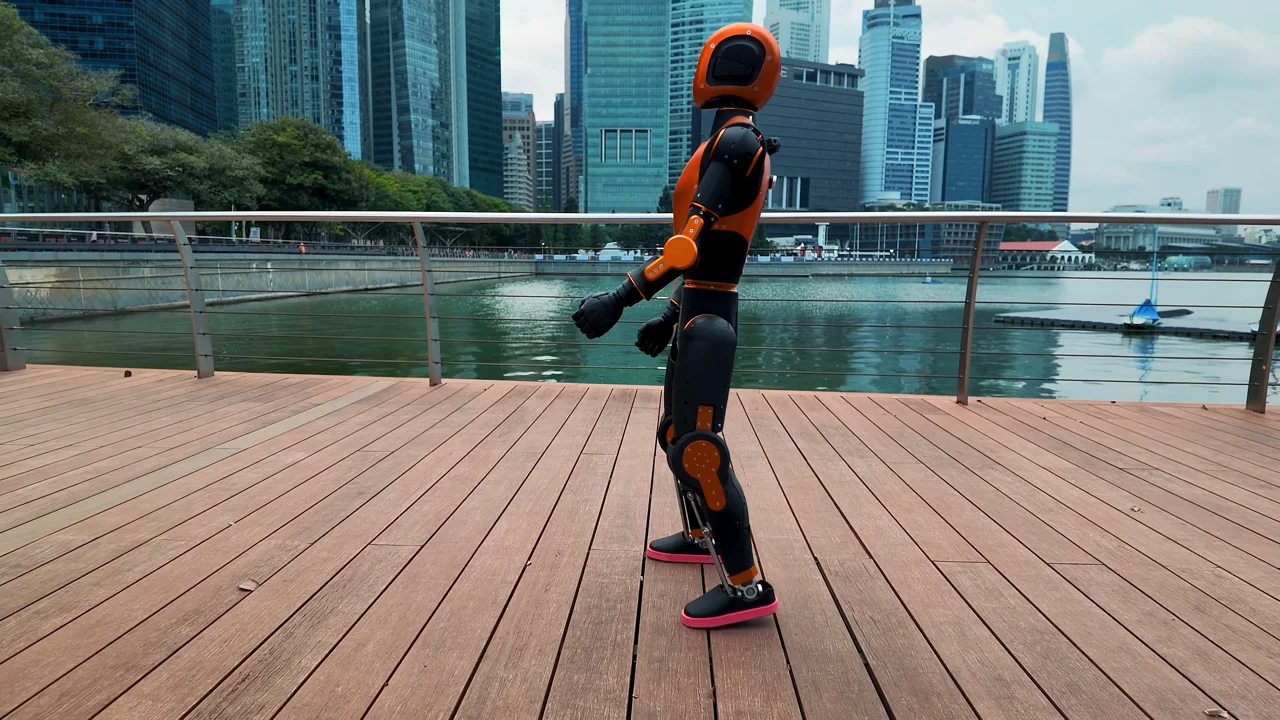
Asimov Releases Open-Source Training Code for Humanoid Robot Locomotion
Asimov has announced the open-source release of the training code for its humanoid robot's walking capabilities. This initiative, revealed on September 25, allows developers to inspect and modify the locomotion policy of Asimov 1, providing a foundation for adapting the robot's controller to different hardware and exploring various walking styles. This development is significant as it enhances the accessibility of robotics technology, enabling a broader community of developers to contribute to the evolution of humanoid robotics. By providing the isaac_asimov repository built on NVIDIA’s Isaac Lab simulation framework, Asimov encourages innovation in training methodologies, which could lead to improved humanoid performance and capabilities. Looking ahead, developers will be able to utilize the released training framework to bridge the simulation-to-hardware gap, although no further timeline was disclosed at the time of publication. The community's engagement with this open-source initiative could accelerate advancements in humanoid locomotion and related technologies.
open-source Asimov locomotion
Intrinsic Announces Open Source Release of Intrinsic Core for Physical AI Development
Intrinsic, a robotics group at Google, has announced the open-source release of parts of its platform, Intrinsic Core™, aimed at enhancing physical AI applications. This platform includes capabilities such as a hardware-agnostic control framework, pose estimation, motion planning, and grasp planning, all designed to facilitate the development of sophisticated robotic applications. The significance of this open-source initiative lies in its potential to democratize access to advanced robotics technologies, allowing developers to customize solutions without starting from scratch. The release includes the Open Machine Tending Solution (OMTS), providing a reference design for real-world applications, which can accelerate innovation in the robotics field. Looking ahead, developers and organizations interested in robotics can leverage these open-source tools to create more adaptable and efficient robotic systems. No further timeline was disclosed at the time of publication.
Robotiq Launches Open-Source Software Tools for Enhanced Adaptive Grippers
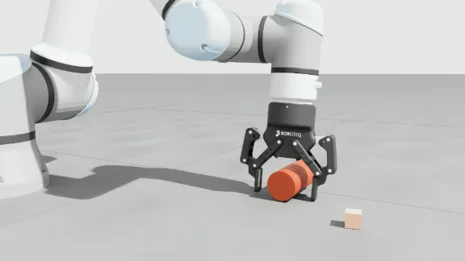
Robotiq has introduced three open-source software tools for its adaptive grippers, aimed at enhancing robotics development. These tools include a ROS 2 package, a standalone C++ SDK, and updated Isaac Sim assets, all available on Robotiq’s GitHub repository. This release marks the initial components of Robotiq’s Contact Core software layer for physical AI, with further advancements expected in the fourth quarter. The significance of this release lies in the growing demand for higher fidelity in simulation and tighter control loops for physical AI applications. According to Robotiq's CTO, Vincent Duchaine, conventional grippers do not meet the requirements of modern applications, which necessitate detailed reporting and continuous data collection across numerous cycles. The new tools are designed to support developers in creating more sophisticated robotics solutions. Looking ahead, Robotiq plans to introduce embedded intelligence at the point of contact, anticipated for release in the fourth quarter. The company will showcase this technology at the upcoming IEEE/RSJ International Conference on Intelligent Robots & Systems (IROS 2026) in Pittsburgh on September 28, 2026, at booth 427.
AI AI Funding & Investment AI Infrastructure & Compute Robotics C++ grippers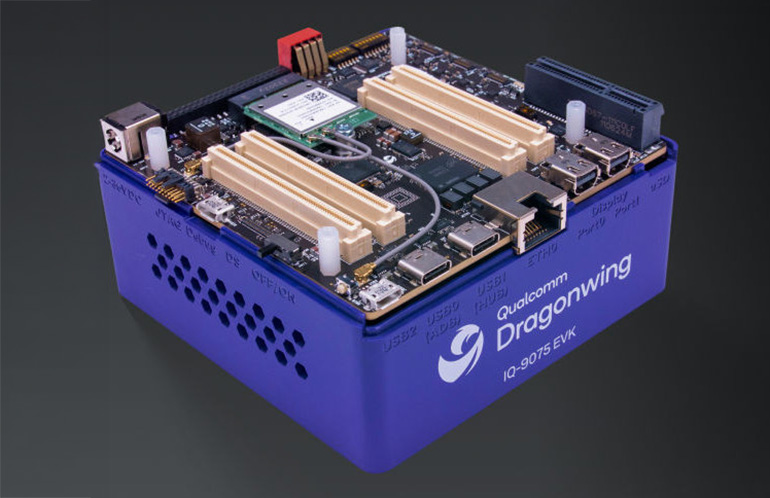
Qualcomm to Acquire PickNik Robotics, Enhancing MoveIt Open-Source Framework
Qualcomm Technologies Inc. has announced its agreement to acquire PickNik Inc., known for its MoveIt open-source manipulation framework. This acquisition aims to integrate PickNik’s MoveIt with Qualcomm's Dragonwing platform, facilitating a smoother transition for developers from AI models to real-time control and manipulation. The significance of this acquisition lies in Qualcomm's commitment to advancing robotics innovation. By enhancing MoveIt, Qualcomm intends to provide developers with robust tools and frameworks, fostering an open robotics ecosystem that supports collaboration and community-driven development. Looking ahead, Qualcomm plans to maintain the open-source nature of MoveIt 1 and 2, ensuring continued support for developers and researchers. No further timeline was disclosed at the time of publication.
6-Axis Artificial Intelligence / Cognition Controllers Development Tools / SDKs / Libraries Grippers Mergers & Acquisitions
Robotiq Introduces Open-Source Software for Enhanced Robot Manipulation and Physical AI
Robotiq has unveiled three open-source software tools for its adaptive grippers, including a C++ SDK, an official ROS 2 package, and updated Nvidia Isaac Sim assets. These tools are now available on GitHub and are optimized by Robotiq to enhance the functionality of their grippers in physical AI applications. The significance of these releases lies in their response to the increasing demands of physical AI, which requires advanced capabilities from robotic grippers. According to Vincent Duchaine, CTO AI at Robotiq, the new tools support higher fidelity in simulation and tighter control loops, enabling better data collection and reporting from the grippers during operation. Looking ahead, Robotiq plans to introduce embedded intelligence at the point of contact, with an expected release in Q4. This innovation will be showcased at the IEEE/RSJ International Conference on Intelligent Robots & Systems (IROS) 2026 in Pittsburgh, highlighting Robotiq's commitment to advancing robot manipulation technologies.
Components News adaptive grippers end-of-arm tooling nvidia isaac sim open source robotics
Google's Intrinsic Launches Open-Source Robotics Software for Industrial AI Applications
Intrinsic, a subsidiary of Google, has released Intrinsic Core as open-source robotics software, enabling developers to create AI-enabled industrial robot applications from prototype to production. This software includes features such as real-time robot control, pose estimation, and motion planning, available on GitHub under an Apache 2.0 license. The significance of this release lies in its potential to streamline the development process for robotics applications, reducing the infrastructure developers need to build independently. Intrinsic Core is designed to work seamlessly with existing products like Intrinsic Flowstate and supports various hardware configurations, enhancing its adaptability in manufacturing environments. Looking ahead, Intrinsic plans to introduce additional open reference solutions for industrial automation, further expanding the capabilities of Intrinsic Core. The Open Machine Tending Solution, which runs on Intrinsic Core, serves as a reference design for CNC machine tending, showcasing practical applications of the software in real-world scenarios. No further timeline was disclosed at the time of publication.
AI AI Funding & Investment AI Infrastructure & Compute Robotics Google industrial roboticcs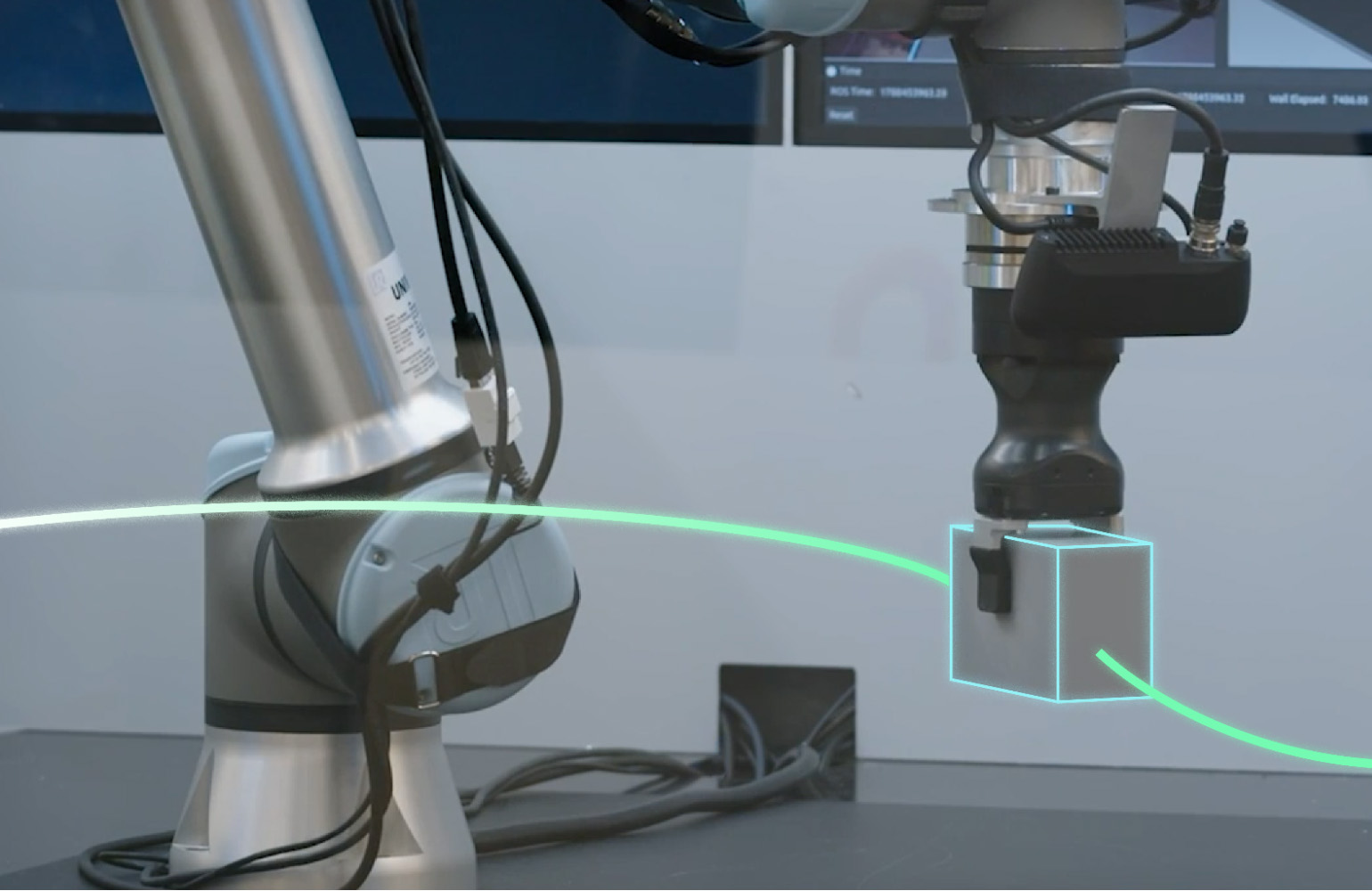
Intrinsic Launches Open-Source Intrinsic Core for Enhanced Robotics Development
Intrinsic has unveiled Intrinsic Core, an open-source set of Robot Operating System-compatible capabilities aimed at simplifying robotic application development. This initiative is designed to reduce the extensive coding time currently required by robotics teams, allowing developers to leverage pre-configured software environments based on real manufacturing deployments. The release of Intrinsic Core is significant as it represents a commitment from Intrinsic to foster community collaboration in robotics. By providing foundational building blocks for robot behavior, the platform enables users to create adaptive AI systems more efficiently. According to Brian Gerkey, CTO of Intrinsic, this move is not just about sharing code but about enhancing the overall robotics ecosystem. Looking ahead, the introduction of Intrinsic Core is expected to accelerate robotics development, making it easier to produce robots. Geoffrey Biggs, CTO of the Open Source Robotics Foundation, emphasized that such platforms will lead to a new era in robotics, where development processes are streamlined and innovation is accelerated. No further timeline was disclosed at the time of publication.
Artificial Intelligence Artificial Intelligence / Cognition Cobot Arms Collaborative Robots Design / Development Industrial Robots
NVIDIA Launches Isaac ROS 5.0 to Enhance Open Source Robotics Development
NVIDIA has released Isaac ROS 5.0, which introduces advanced AI agent capabilities to the ROS developer ecosystem. This latest version also expands open source physical AI libraries and enhances deployment options across the NVIDIA Jetson platform. The significance of this release lies in its provision of new physical AI models and tools that enable developers to create and deploy sophisticated robotics applications. These applications are designed to perceive, reason, and act within dynamic environments, addressing the growing demand for advanced robotics solutions. Looking ahead, developers will likely focus on leveraging the capabilities of Isaac ROS 5.0 to innovate in robotics applications. No further timeline was disclosed at the time of publication.

Robotiq Unveils Open-Source Software for Physical AI Ecosystem Development
Robotiq has launched three open-source software packages aimed at enhancing its adaptive grippers. These releases include a C++ SDK, an official ROS 2 package, and updated NVIDIA Isaac Sim assets, all designed to facilitate the training of manipulation models on Robotiq components and their deployment on real robots. This initiative is significant as it represents the first components of Robotiq's physical AI software layer, which is intended to streamline the integration of AI in robotic manipulation tasks. By providing these tools, Robotiq aims to empower developers and engineers to create more effective and efficient robotic solutions. Looking ahead, Robotiq's commitment to maintaining and optimizing these software packages suggests ongoing support for the developer community. No further timeline was disclosed at the time of publication.

Xiaomi Releases Open-Source MiMo-V2.6 Models Following Reinforcement Learning Advancements
Xiaomi has announced the open-source release of its MiMo-V2.6 series, which includes the MiMo-V2.6-Pro and MiMo-V2.6-Flash models. Additionally, the company has introduced MiMo-V2.6-Distill-Qwen-9B and provided research resources focused on reinforcement learning. The MiMo-V2.6-Pro achieved a score of 46 on the Artificial Analysis Intelligence Index, surpassing competitors Kimi K3 and GLM-5.3. This development is significant as Xiaomi claims the MiMo-V2.6-Pro is the highest-ranked open-weight model on the index, despite leading closed-source models scoring higher at 53. The models underwent 30 reinforcement-learning steps in under six days, utilizing approximately 750,000 trajectories, with costs reported at $2.62 million for the Pro model and $850,000 for the Flash model. The release enhances capabilities in 3D spatial reasoning and multimodal perception. Looking ahead, the introduction of these models may influence the competitive landscape of AI and reinforcement learning technologies. No further timeline was disclosed at the time of publication.
News Feed
Light Origins Launches Open-Source Light-O1-Preview 6B Whole-Body Model for Robotics
Light Origins has unveiled the Light-O1-Preview, a 6B model licensed under Apache-2.0. This innovative model is designed to convert human-video action priors into comprehensive robot whole-body trajectories, marking a significant advancement in robotic motion capabilities. The introduction of Light-O1-Preview is important as it differentiates itself from the existing LightNav-0 navigation stack, showcasing Light Origins' commitment to enhancing robotic functionalities. By leveraging human-video data, this model aims to improve the adaptability and precision of robotic movements in various applications. Looking ahead, industry observers should monitor how the adoption of the Light-O1-Preview model influences the development of robotics that require sophisticated motion planning. No further timeline was disclosed at the time of publication.
NVIDIA Launches Isaac ROS 5.0 to Enhance Open Source Robotics Development
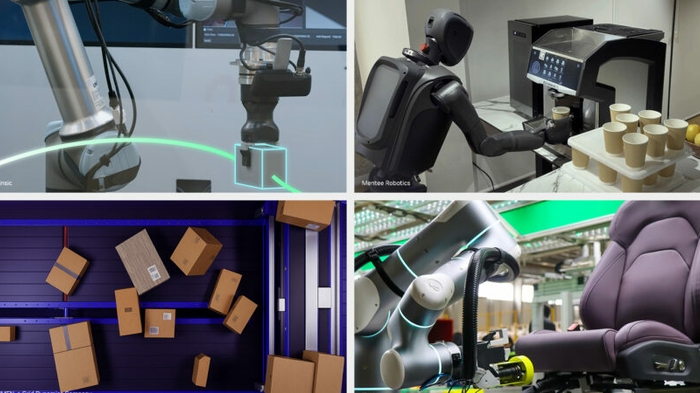
NVIDIA has unveiled Isaac ROS 5.0 at the ROSCon conference in Toronto, Canada, aimed at advancing robotics applications. This release introduces new agentic workflows and platform support, enabling developers to build and deploy robotics applications more efficiently. With nearly 1.3 million ROS users, NVIDIA Isaac ROS integrates accelerated computing and physical AI models to enhance the development process. The significance of this release lies in its ability to streamline robotics development through the introduction of reusable workflows and agent-ready documentation. These features allow developers and AI agents to collaborate effectively, automating repetitive tasks and accelerating the transition from concepts to functional applications. The integration with ROS Lyrical and Ubuntu 24.04 further supports the adoption of the latest ROS platform while leveraging NVIDIA's computing capabilities. Looking ahead, the robotics community is expected to embrace the agentic approach introduced by Isaac ROS 5.0, which includes new skills for setup and manipulation. The introduction of advanced features, such as the FoundationStereo fine-tuning skill and FoundationPose model, will likely enhance perception and tracking capabilities in robotics applications. No further timeline was disclosed at the time of publication.

Alibaba DAMO Academy Publishes Open-Source Abdominal CT AI Model DAMO RADAR in Science
Alibaba DAMO Academy has introduced DAMO RADAR, an open-weight abdominal CT AI model, which has been published in the journal Science. This model is capable of identifying 146 findings across 18 different organs, achieving an area under the curve (AUC) of approximately 0.913, alongside expert-level reader-study results. The significance of DAMO RADAR lies in its potential to enhance diagnostic accuracy in medical imaging, providing a valuable tool for healthcare professionals. With its high AUC score, the model demonstrates a strong ability to detect various conditions, which could lead to improved patient outcomes and more efficient healthcare delivery. Looking ahead, the impact of DAMO RADAR on the medical imaging field will be closely monitored. Its open-source nature may encourage further research and development in AI-driven diagnostics, fostering innovation and collaboration among researchers and healthcare providers. No further timeline was disclosed at the time of publication.

Open-source Benchmark Evaluates AI Agents' Ability to Engineer Functional Robots
An open-source benchmark has been developed to assess the capabilities of AI agents in engineering functional robots. This initiative comes in response to the increasing automation of software coding, where AI systems can autonomously write and revise programs. The significance of this benchmark lies in its potential to bridge the gap between digital coding and physical robotics. As AI continues to evolve, understanding how these agents can interact with and manipulate the physical world is crucial for advancing robotics technology. Looking ahead, the outcomes of this benchmark could influence future developments in AI and robotics integration. No further timeline was disclosed at the time of publication.
Robotics
Light Origins Releases Open-Source LightNav-0 Navigation Model for Monocular Systems
Light Origins has announced the open-sourcing of LightNav-0, a navigation model based on Qwen3-VL-4B. This model was trained using the Real2Sim2Real methodology, incorporating over 2,000 scenes and more than 4,000 hours of Visual Language Annotation (VLA) data. It excels in leading 10 monocular navigation benchmarks with zero-shot body transfer capabilities. The significance of this development lies in its potential to enhance navigation systems across various applications. By leveraging extensive training data and advanced methodologies, LightNav-0 aims to provide robust performance in real-world scenarios, making it a valuable resource for researchers and developers in the field of navigation technology. Looking ahead, stakeholders in the robotics and AI sectors should monitor the adoption and performance of LightNav-0 in practical applications. The open-source nature of this model may encourage further innovation and collaboration, potentially leading to advancements in navigation solutions that utilize monocular systems. No further timeline was disclosed at the time of publication.

Xiaomi Releases Open-Source Robotics-U0 Model and Training Tools with Significant Speedups
Xiaomi has open-sourced the Xiaomi-Robotics-U0, an autoregressive embodied world foundation model featuring approximately 4 billion parameters and full-scale weight lines of around 38 billion. This release includes training and inference tools designed to enhance robotic applications. The significance of this development lies in Xiaomi's claim of achieving FlashAR+ speedups nearing 83 times, which positions the Robotics-U0 model at the forefront of robot-centric scene, transfer, and video synthesis tasks, as evidenced by its top ranking in WorldArena. Looking ahead, the impact of Xiaomi-Robotics-U0 on the robotics landscape will be noteworthy, particularly in applications requiring advanced scene understanding and video synthesis capabilities. No further timeline was disclosed at the time of publication.
Shangpin Home Introduces Open-source WorldSimReady-Home Dataset for Robotics Training
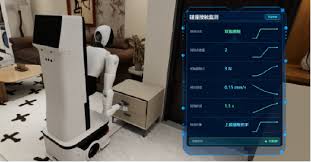
Shangpin Home, in collaboration with Tangyuan Technology, has launched the WorldSimReady-Home simulation dataset aimed at addressing the challenges of robotic training in complex home environments. This open-source dataset includes 100,000 square meters of high-fidelity home scenes, 10,000 interactive assets, and 1,000 standardized robotic simulation task examples, allowing for extensive training and testing of various robotic forms. The significance of this initiative lies in its potential to bridge the Sim2Real gap, where robots struggle to perform in real homes despite successful laboratory tests. By providing a diverse range of simulated environments, the dataset enables developers to train robots for navigation, object manipulation, and complex household tasks without the risks associated with real-world trials. Looking ahead, the WorldSimReady-Home dataset represents a foundational step in Shangpin Home's strategy for embodied intelligence. As more teams engage with this open-source initiative, the development of additional datasets for industrial, commercial, and specialized scenarios is anticipated. The effectiveness of this approach will depend on the practical application of the dataset and the successful transfer of learned strategies to real-world settings.
Robotics Training Simulation Data Home Automation AI Digital Twins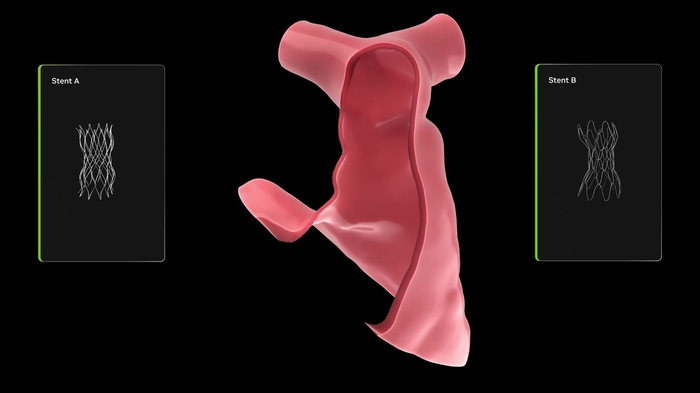
Major Children's Hospital Implements Open Source NVIDIA AI for Enhanced Cardiac Care
A prominent children's hospital has adopted open source NVIDIA AI technology to improve its cardiac care services. This integration allows for advanced data processing and analysis, enhancing the hospital's ability to provide accurate diagnoses and treatment plans for pediatric patients. The use of NVIDIA AI is significant as it enables healthcare professionals to leverage powerful computational resources while ensuring patient data remains secure on local devices. This approach not only streamlines workflows but also enhances the overall quality of care provided to young patients with cardiac conditions. Looking ahead, the hospital plans to further expand its use of AI technologies in various departments, aiming to improve patient outcomes across the board. No further timeline was disclosed at the time of publication.

AGIBOT Launches Open-Source GE-Act 2.0, Competing with Unitree in Humanoid Robotics
AGIBOT has officially released Genie Envisioner Act 2.0 (GE-Act 2.0), an open-source World-Action Model designed for training generalist manipulation policies. This release comes just after Unitree Robotics open-sourced its UnifoLM-WLA-1.0, marking a significant shift in the humanoid robotics landscape towards open-source models. The introduction of GE-Act 2.0 highlights a competitive dynamic between AGIBOT and Unitree, particularly as AGIBOT recently achieved a manufacturing milestone of 15,000 units and leads in global shipments for the first half of 2026. Both companies are now focused on establishing a dominant open operating stack for robotic intelligence, moving away from traditional proprietary systems. As AGIBOT's GE-Act 2.0 aims to enhance real-time robot control through modular stages, it addresses the limitations of existing Vision-Language-Action models. The methodology allows for faster processing and independent training of visual and action systems, which could redefine how robots learn from physical interactions. No further timeline was disclosed at the time of publication.
open-source China AGIBOT
ACE Robotics and NTU S-Lab Release Open-Source Puffin-World Multimodal Model
ACE Robotics and NTU S-Lab have announced the open-source release of Puffin-World, a multimodal world model that integrates physics, geometry, and appearance. This model utilizes the Puffin-16M dataset and achieves state-of-the-art camera absolute pose errors, reporting sub-degree accuracy across four public benchmarks. The significance of this release lies in its potential to enhance various applications in robotics and computer vision by providing a unified framework for understanding complex environments. By achieving such high accuracy in pose estimation, Puffin-World could facilitate advancements in autonomous navigation and scene understanding. Looking ahead, the impact of Puffin-World on the robotics community will be closely monitored, particularly in how it influences future research and development in multimodal models. No further timeline was disclosed at the time of publication.

Household Robots Face Challenges: Market Growth and Open Source Solutions Ahead
The shipment of humanoid robots is surging, with IDC projecting around 18,000 units globally by 2025, a 508% increase. However, the penetration of these robots into households remains minimal, as most are still used in entertainment, education, and data collection. Ecovacs Group Chairman Qian Dongqi noted that it may take three to five years for humanoid robots to enter homes, citing a decade-long journey for their vacuum robots to achieve household integration. Despite technological advancements, the industry faces significant challenges, particularly high component costs and the lack of a robust supply chain. The performance of humanoid robots drops dramatically in real home environments, with a success rate of only 12% compared to 89.4% in simulated settings. This disparity highlights the complexities of domestic environments, which present unpredictable variables that robots struggle to navigate. To address these issues, leading companies are shifting towards open-source ecosystems. Ecovacs launched the “Eight Realms” open-source robot platform, allowing community contributions to improve functionality. Similarly, Lexiang Technology is focusing on community-driven product development. While the widespread adoption of household robots may take longer than anticipated, the path forward is becoming clearer as companies seek to engage users in defining practical applications.
Humanoid Robots Open Source Robotics Household Automation AI Robotics Development
NVIDIA Acquires Hugging Face for $12.93 Billion to Enhance Open-Source Robotics
NVIDIA has announced its acquisition of Hugging Face for $12.93 billion, marking a significant milestone in artificial intelligence history. This acquisition combines NVIDIA's leadership in AI computing with Hugging Face's extensive platform, which supports over 18 million developers and 3 million models, while maintaining its independence as an open platform. The importance of this acquisition lies in its potential to scale open-source AI alternatives to proprietary systems. Hugging Face CEO Clément Delangue emphasized the need for increased compute and collaboration to enhance open-source AI's visibility and capabilities. This move aligns with NVIDIA's ambitions in robotics, particularly as Hugging Face has become a key player in physical AI development. Looking ahead, the integration of Hugging Face into NVIDIA's ecosystem could redefine workflows in robotics research. The recent partnership to standardize open-source robotics workflows indicates a strategic alignment that may lead to enhanced capabilities in embodied AI, particularly through Hugging Face's LeRobot library and its hardware initiatives. No further timeline was disclosed at the time of publication.
NVIDIA Le Robot US Europe pollen-robotics hugging-face
OPEN MIND Partners with FANUC to Enhance 5-Axis Technology for Aerospace Manufacturing
OPEN MIND has joined the FANUC 5-Axis Integrated Technology Initiative, aimed at enhancing manufacturing processes. This collaboration focuses on improving efficiency, accuracy, and repeatability in the production of complex parts. The initiative is particularly significant for the U.S. aerospace market, where precision and reliability are critical. By leveraging advanced 5-axis technology, manufacturers can achieve better outcomes in their production lines, ultimately leading to higher quality products. As the initiative progresses, stakeholders should monitor developments in technology integration and its impact on manufacturing practices. No further timeline was disclosed at the time of publication.

OpenLoong Master Series Launches to Advance Embodied Intelligence Technology
The OpenLoong Master Series has officially opened registration, aimed at promoting embodied intelligence technology and talent development. Guided by the OpenAtom Open Source Foundation and hosted by the OpenLoong open-source community, this initiative is supported by the National and Local Joint Innovation Center for Humanoid Robots, marking a significant step in addressing technical challenges in the robotics industry. This competition provides a premier platform for developers in the robotics field, focusing on real-world technical barriers in humanoid robot development. The first phase of the competition will center on two core topics: 'Motion Capture and Replication' and 'Embodied Navigation and Perception,' allowing teams to choose one or participate in both, addressing industry pain points such as the scarcity of motion data and poor motion generalization. Participants will utilize monocular cameras to extract human motion features and replicate them in simulation environments. The National and Local Joint Innovation Center will provide high-performance robot models to facilitate deep integration of algorithms with real hardware characteristics. Developers can register through the OpenLoong community website, with dedicated channels for technical support and resources available for participants.
Robotics Open Source Embodied Intelligence Innovation Technical Challenges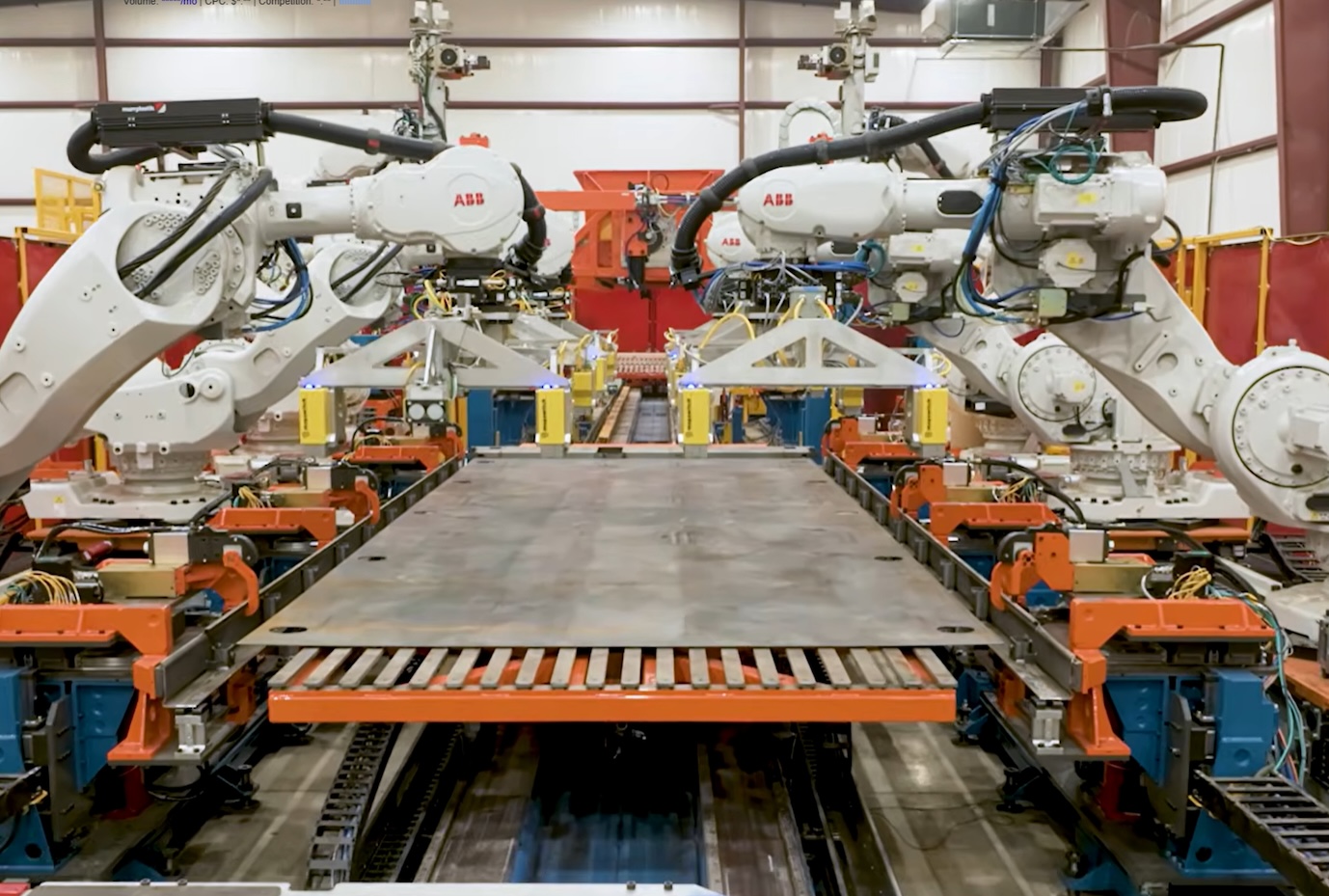
Hugging Face Launches MicroDuck, an Open-Source Robot Amid Nvidia Acquisition Rumors
Hugging Face has introduced MicroDuck, an innovative open-source robot capable of walking, talking, and roller-skating. Co-founder Thomas Wolf highlighted the increasing demand for robotics and open-source AI, noting that the company is selling approximately one MicroDuck every four seconds. The launch of MicroDuck is significant as it reflects the growing interest in robotics and AI technologies. Hugging Face's focus on open-source solutions positions it well in a competitive landscape, attracting attention from various investors and companies looking to expand their portfolios in AI and robotics. Looking ahead, the market will be keen to observe any developments regarding Hugging Face's potential acquisition by Nvidia, which has been reported to be nearing a $13 billion deal. No further timeline was disclosed at the time of publication.

Hugging Face Launches $399 Open-Source Microduck Robot Ahead of Christmas
Hugging Face introduced the Microduck, a $399 open-source duck robot, on Thursday, with shipping expected before Christmas. CEO Clem Delangue described the Microduck as a robot that can be taught new tricks through reinforcement learning, featuring capabilities such as waddling, picking up objects, and roller skating. The Microduck, measuring 25 centimeters tall, is designed to democratize physical AI and world models. It is equipped with a camera, lidar sensors, and inertial measurement units (IMUs) for perception. Developers can train the robot's behaviors in simulation and deploy them directly, with an SDK and full reinforcement learning training stack available on GitHub. As Hugging Face prepares for a potential acquisition by Nvidia at a $13 billion valuation, the launch of the Microduck highlights the company's commitment to open-source AI. The partnership with Nvidia has been ongoing since at least 2023, emphasizing the importance of open-source models in ensuring privacy and control for developers and users alike. No further timeline was disclosed at the time of publication.
AI Robotics Hugging Face open source pollen robotics robots
NVIDIA Celebrates Local AI Advancements with Open Source Models and Intelligent Agents
NVIDIA is highlighting the contributions of partners and open source communities to local AI development throughout August. The company is showcasing its latest open models, software, and developer tools that facilitate the creation and customization of intelligent agents. New models like GLM 5.2 and DeepSeek V4 Flash are enabling advanced workloads, although they may require multiple GPUs or DGX Spark systems for optimal performance. The significance of these developments lies in the enhanced capabilities they provide to developers and AI enthusiasts. NVIDIA Sync app updates simplify the clustering of multiple DGX Spark systems, allowing for improved memory capacity and training throughput. This is crucial for running larger models efficiently, thereby advancing the local AI ecosystem and making sophisticated AI applications more accessible. Looking ahead, NVIDIA plans to introduce new features for developers later in August, including a native ARM64 Linux build of Google Chrome for DGX Spark. This will enhance user experience by enabling seamless access to the full extension ecosystem and cross-device continuity. No further timeline was disclosed at the time of publication.

Mila Team Develops $2,000 Open-Source Robot Dog as Alternative to $50,000 Guide Dogs
A team from Mila and École Polytechnique de Montréal has developed an open-source robot dog named Milo, which costs approximately $2,000. This innovative solution addresses the high costs and long wait times associated with traditional guide dogs, which can exceed $50,000 and require 2-4 years for matching. Milo is designed to operate both indoors and outdoors without needing prior environmental scans or external computing power. It can navigate obstacles and recognize nearby individuals, making it a collaborative tool for visually impaired users. This robot dog integrates advanced technologies, including an NVIDIA Jetson Orin Nano for processing, and features a flexible handle that allows users to adjust their relative position to the robot. The development of Milo represents a significant advancement in assistive technology, providing a more affordable and accessible option for those in need of guide dogs. As the technology evolves, it will be important to monitor its adoption and effectiveness in real-world scenarios. No further timeline was disclosed at the time of publication.
Robot Guide Dogs Assistive Technology AI Navigation Open-Source Robotics
Xiaomi Open-Sources Its Embodied-AI Foundation Model Xiaomi-Robotics-1 for Developers
Xiaomi has announced the open-source release of its embodied-AI foundation model, Xiaomi-Robotics-1, on August 5. This release encompasses the entire process from real-robot post-training to model deployment, along with code for benchmark evaluations. The model was pretrained on over 100,000 hours of UMI data and underwent post-training on more than 10,000 hours of cross-embodiment data. The significance of this release lies in its potential to enhance the development of embodied AI applications. By providing access to the full training and deployment process, Xiaomi aims to foster innovation and collaboration within the AI community. The model, first introduced in July as an “out-of-the-box” solution, is designed to streamline the integration of AI into robotic systems. Looking ahead, developers and researchers will likely explore the capabilities of Xiaomi-Robotics-1 in various applications. The open-source nature of the project, which includes links to the project website, GitHub repository, and Hugging Face page, is expected to encourage widespread adoption and experimentation. No further timeline was disclosed at the time of publication.
News Feed
Digua Robot Unveils Open Source X-Lens for Real-Time Depth Estimation with 40 Million Parameters
Digua Robot has introduced the X-Lens depth estimation model, which features 40 million parameters, significantly fewer than traditional models. This innovative solution can process mixed inputs from both fisheye and pinhole cameras, producing dense depth maps with real-world scale. On the Digua Xuri S600 chip, it achieves over 20 FPS with six-camera input and 41 FPS with a single fisheye camera. The importance of X-Lens lies in its ability to provide absolute depth measurements, unlike many existing models that only offer relative depth. This capability is crucial for robotic applications, enabling precise interactions with objects in the environment. By translating each pixel into a light ray direction, X-Lens overcomes the challenges posed by camera distortion, allowing for accurate depth estimation across different camera types. Looking ahead, the adaptability of X-Lens to various camera inputs without requiring extensive model adjustments is noteworthy. This flexibility could lead to broader applications in robotics and automation. No further timeline was disclosed at the time of publication.
Depth Estimation Computer Vision Robotics AI Camera Technology
Tencent Open-Sources Three Embodied Foundation Models for Enhanced Robot Performance
Tencent has announced the open-source release of three embodied foundation models during the WAIC 2026 event. These models include a Visual Language Model (VLM) designed for scene understanding, the RxBrain cognitive model that facilitates planning with visual states, and the VLA model, which supports continuous action at frequencies between 500 to 1000Hz. This development is significant as it aims to enhance robot reaction speed and cognitive capabilities, addressing critical challenges in robotic performance. The introduction of these models is expected to advance the field of robotics by providing developers with powerful tools to improve the efficiency and effectiveness of robotic systems. Looking ahead, the industry will be keen to observe how these open-source models are adopted and integrated into various robotic applications. No further timeline was disclosed at the time of publication.
Technology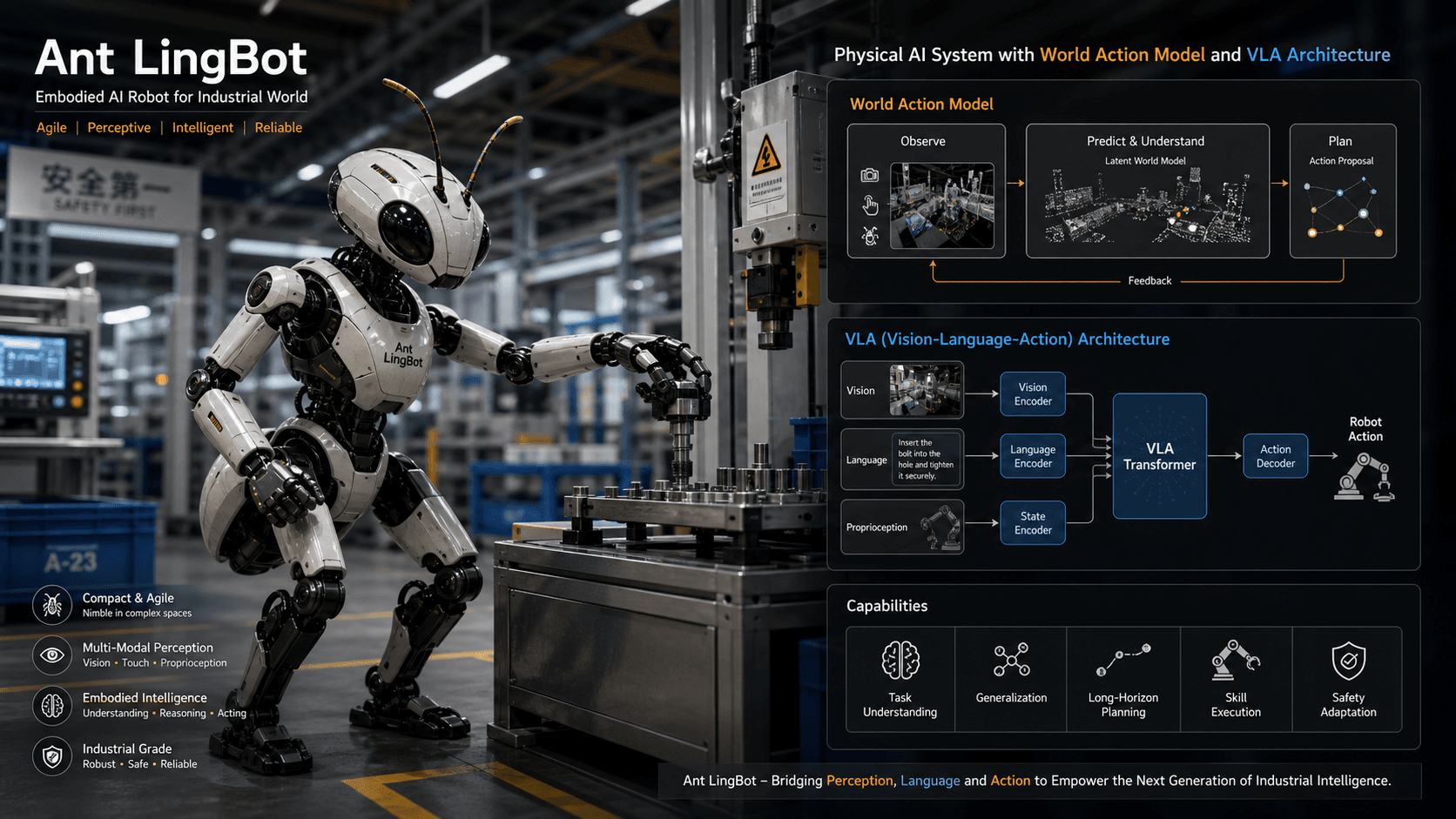
Ant LingBot Unveils Six Open-Source AI Models Amid Data Challenges
Ant LingBot, a subsidiary of Ant Group, has launched six open-source embodied AI models as part of its dual-track strategy focusing on Visual Language Agents (VLA) and world models. This initiative aims to enhance AI capabilities while addressing the growing demand for advanced AI solutions. The significance of this release lies in Ant LingBot's commitment to fostering an open-source ecosystem, which is crucial for collaboration and innovation in the AI field. However, the company is contending with challenges related to data scarcity and competition within the ecosystem, which could impact its development and deployment efforts. Looking ahead, it will be important to monitor how Ant LingBot navigates these challenges and whether it can successfully leverage its dual-track strategy to establish a strong presence in the AI landscape. No further timeline was disclosed at the time of publication.
Technology
NVIDIA Launches Open Source GPU-Accelerated Medical Physics Simulation Framework for Healthcare Robotics
NVIDIA has introduced the Medical Physics Simulation framework, an open-source, GPU-accelerated tool designed to aid healthcare robotics developers. This framework allows for the modeling of anatomy-device interactions and the generation of complex scenarios that are difficult to capture in real-world settings. By facilitating in silico testing and training, it aims to streamline the development process and enhance robot behavior. The significance of this framework lies in its ability to provide healthcare robotics developers with a reusable simulation environment, reducing the time needed for custom scene creation. With the integration of anatomy and medical device behavior, along with sensor simulation, developers can more efficiently train and evaluate robot policies. The open-source nature of the framework ensures transparency, enabling teams to adapt it to their specific needs and contribute to its evolution. Looking ahead, the Medical Physics Simulation framework is expected to extend its capabilities to various devices and healthcare robotics domains. The framework's ability to run hundreds of parallel simulations significantly accelerates training times, allowing developers to explore a wider range of scenarios and identify potential failure modes earlier in the development cycle. No further timeline was disclosed at the time of publication.

Xiaomi Robotics Launches Open Source U0 Model with Significant Performance Enhancements
On July 15, Xiaomi Robotics unveiled the open-source Xiaomi-Robotics-U0, a multimodal autoregressive foundational model with 38 billion parameters. This release follows the introduction of the VLA model Xiaomi-Robotics-0 in February, marking a significant advancement in embodied intelligence. The code and model weights are now available on GitHub, HuggingFace, and the Modao community. The importance of the U0 model lies in its ability to generate vast amounts of training data in virtual environments while receiving high-density validation feedback from real-world factory lines. The model achieved a success rate of 98% in dual-side operations at a car factory, just 1% shy of human performance. U0's design allows for efficient multi-task training without compromising the general visual understanding and spatial reasoning inherited from large-scale pre-training. Looking ahead, U0's capabilities in generating training data for embodied tasks present a controlled and efficient solution for enhancing model performance. Its integration with real-world validation processes at Xiaomi's automotive factory creates a robust feedback loop, ensuring continuous improvement and practical application of the technology. No further timeline was disclosed at the time of publication.
Robotics AI Machine Learning Automation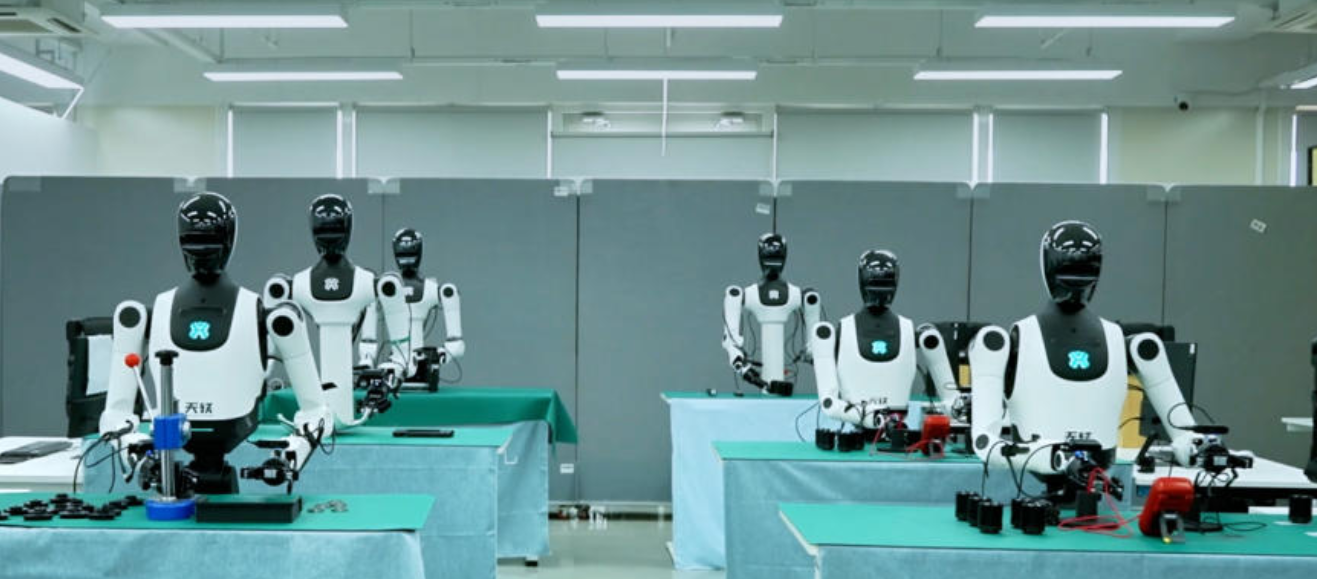
Launch of Robo-ValueRL: The First Open-Source VLA Reinforcement Learning Framework for Robotics
The Beijing Humanoid Robot Innovation Center and Renmin University of China's Gaoling Artificial Intelligence Institute have launched the Robo-ValueRL open-source framework. This initiative aims to enhance humanoid robots' decision-making capabilities in precision tasks, such as semiconductor assembly, by addressing challenges in data quality, control precision, and adaptability in dynamic environments. Robo-ValueRL introduces a value estimation mechanism based on historical observations, enabling robots to autonomously assess their actions. This closed-loop learning process—observation, value estimation, correction, and iteration—allows for improved accuracy and reduced instability in operations. The framework is fully open-source, providing access to core algorithms, evaluation tools, and standardized protocols for universities, research institutions, and manufacturers. The open-source nature of Robo-ValueRL significantly lowers the barriers for small and medium-sized manufacturers to implement reinforcement learning in specialized fields like semiconductor production and medical device manufacturing. This development marks a shift in humanoid robotics from laboratory experiments to practical industrial applications, paving the way for robots to evolve their decision-making capabilities independently.
Humanoid Robots Reinforcement Learning Precision Manufacturing Open Source Technology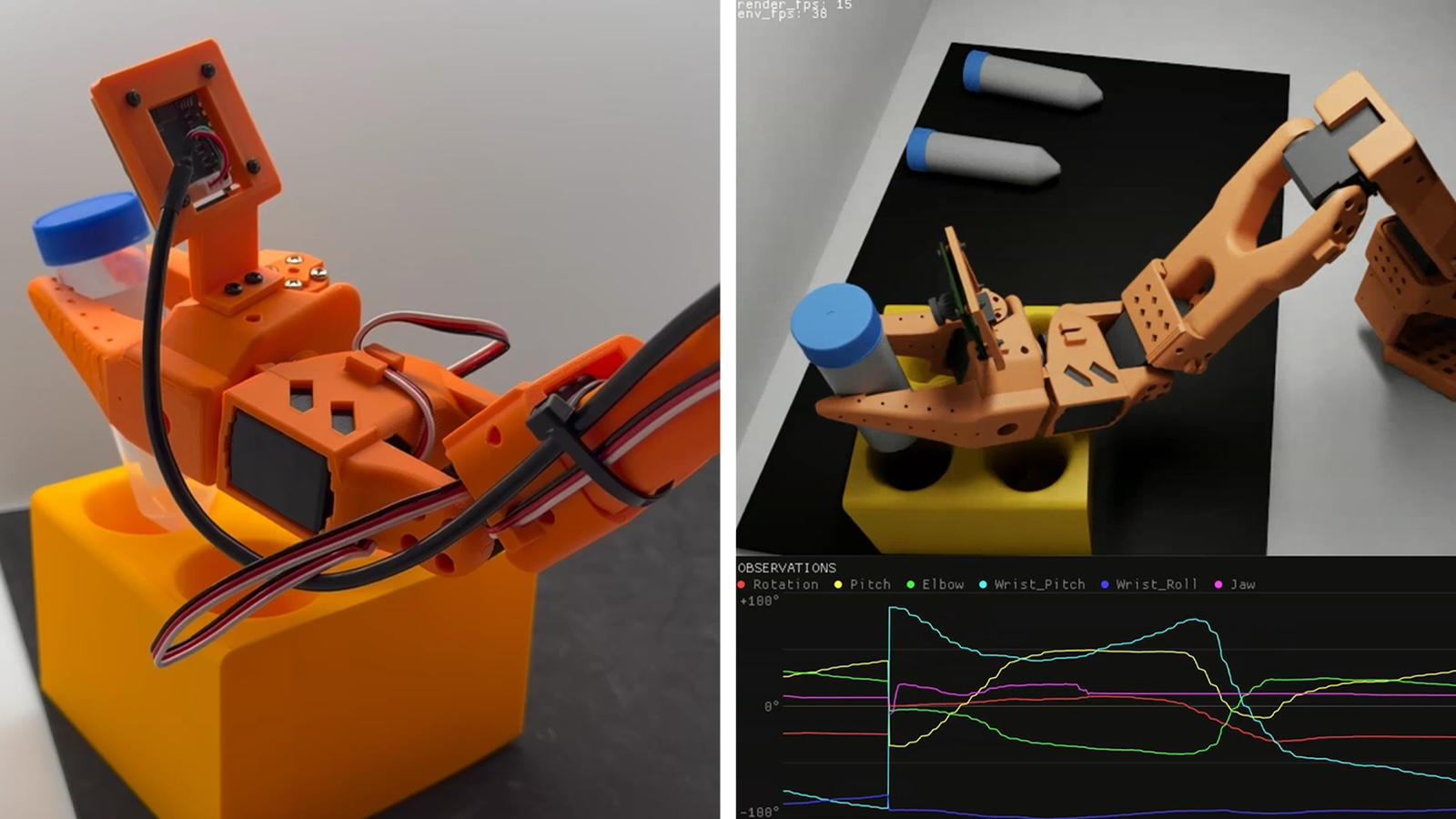
NVIDIA Open Sources Embodied Intelligence Toolchain to Enhance Robotics Development
On July 6, NVIDIA integrated three key components into Hugging Face's open-source robotics library, LeRobot: the GR00T N1.7 model, Isaac Teleop framework, and the upcoming Cosmos 3. This collaboration connects NVIDIA's 3 million robot developers with Hugging Face's 16 million AI builders, facilitating access to pre-trained models and data. This initiative is significant as it shifts NVIDIA's focus from merely creating models to building an ecosystem that addresses data bottlenecks in embodied intelligence development. The Isaac Teleop framework standardizes data collection, allowing for easier sharing and reuse within the community, which is crucial for advancing robotics. Looking ahead, the integration of GR00T N1.7 and Isaac Teleop into the LeRobot workflow marks a pivotal moment for robotics developers. No further timeline was disclosed at the time of publication.
Robotics Open Source AI Development Data Collection Machine Learning
NASA and Rice University Launch Open-Source Simulator for Space Robotics Research
Rice University and NASA have introduced the iMETRO Dynamic Simulation, the first open-source platform for developing robots for spacecraft and habitats. Unveiled at the 2026 IEEE International Conference on Robotics and Automation in Vienna, this simulator creates a digital twin of NASA's iMETRO facility, enabling global researchers to test intravehicular robotic systems in a virtual setting. This platform is significant as it broadens access to advanced space robotics research, facilitating innovation for future human space missions. It focuses on robot manipulators that assist with maintenance and logistics tasks, which are crucial for reducing astronaut workloads during extended missions. The simulator features an eight-degree-of-freedom robotic manipulator model and supports ROS 2 and MuJoCo, enhancing usability and compatibility for developers. Looking ahead, the iMETRO Dynamic Simulation aims to maximize astronaut productivity by automating routine tasks, allowing crew members to focus on scientific exploration. The research team successfully demonstrated the simulator's capabilities by transferring a robotic application from simulation to the physical facility in under a day. No further timeline was disclosed at the time of publication.
AI and Robotics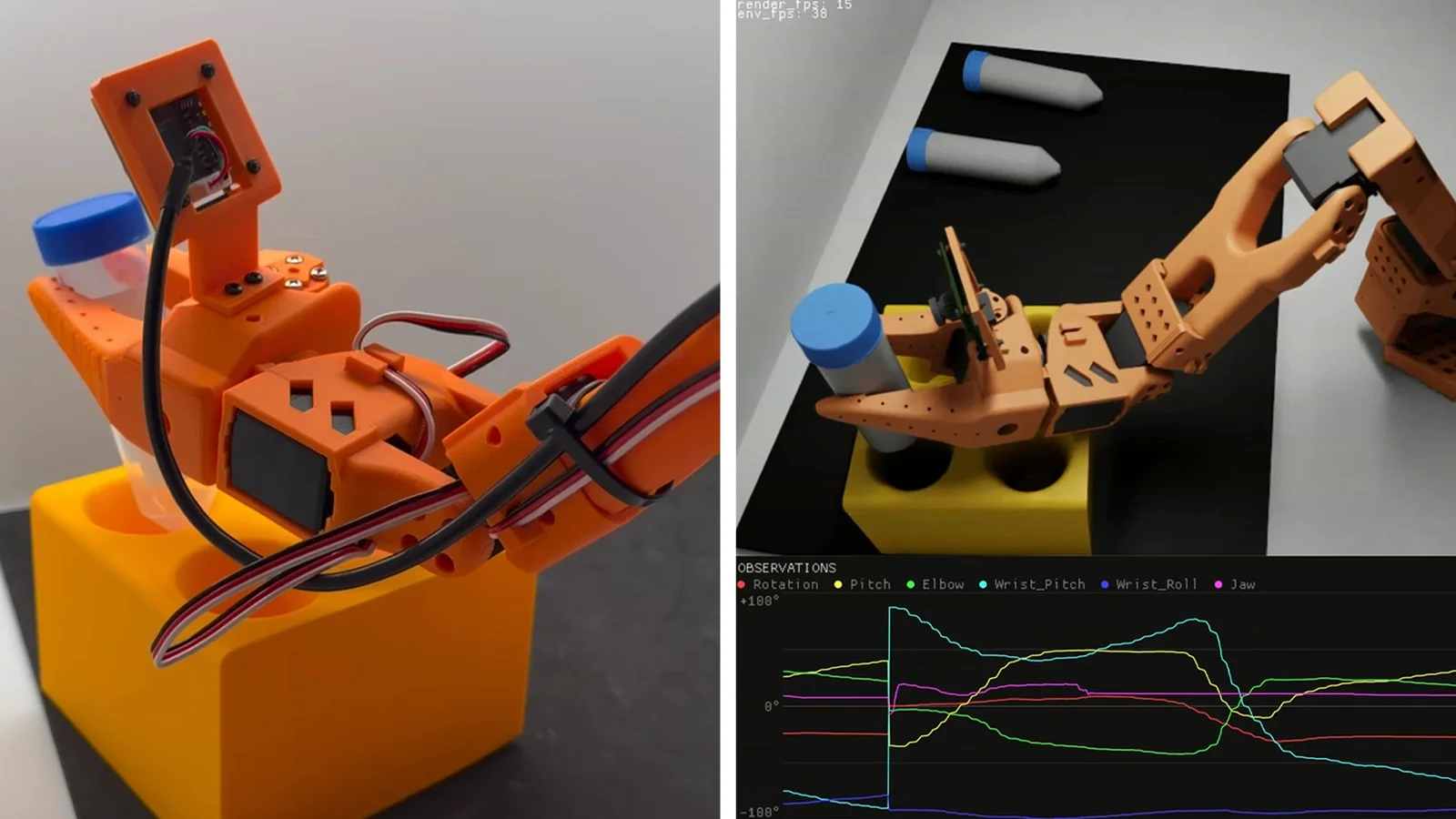
NVIDIA and Hugging Face Collaborate to Standardize Open-Source Robotics Pipeline with LeRobot
NVIDIA and Hugging Face have announced a collaboration aimed at standardizing the open-source robotics pipeline through LeRobot. This partnership integrates NVIDIA’s physical AI models and frameworks into Hugging Face’s library, facilitating a unified approach for robotics developers. By connecting NVIDIA’s 3 million robotics developers with Hugging Face’s 16 million AI builders, the initiative seeks to create an end-to-end pipeline for humanoid and automation research. The significance of this collaboration lies in its potential to streamline the fragmented tools that have historically hindered physical AI development. With the integration of NVIDIA Isaac GR00T 1.7 and Isaac TeleOp into LeRobot, developers can now utilize shared models and workflows, enhancing the training and evaluation of robots. This move is part of Hugging Face's broader strategy to capture the data layer of physical automation, following recent acquisitions and partnerships aimed at expanding their capabilities. Looking ahead, the collaboration also addresses simulation and validation bottlenecks by linking heavy-duty compute resources to LeRobot. The integration of NVIDIA Jetson Thor with LeRobot’s Reachy 2 platform enables advanced multimodal processing for Vision-Language-Action models. This initiative aims to provide a comprehensive open-source solution, reducing reliance on proprietary systems and fostering innovation within the robotics research community.
NVIDIA Le Robot US open-source hugging-face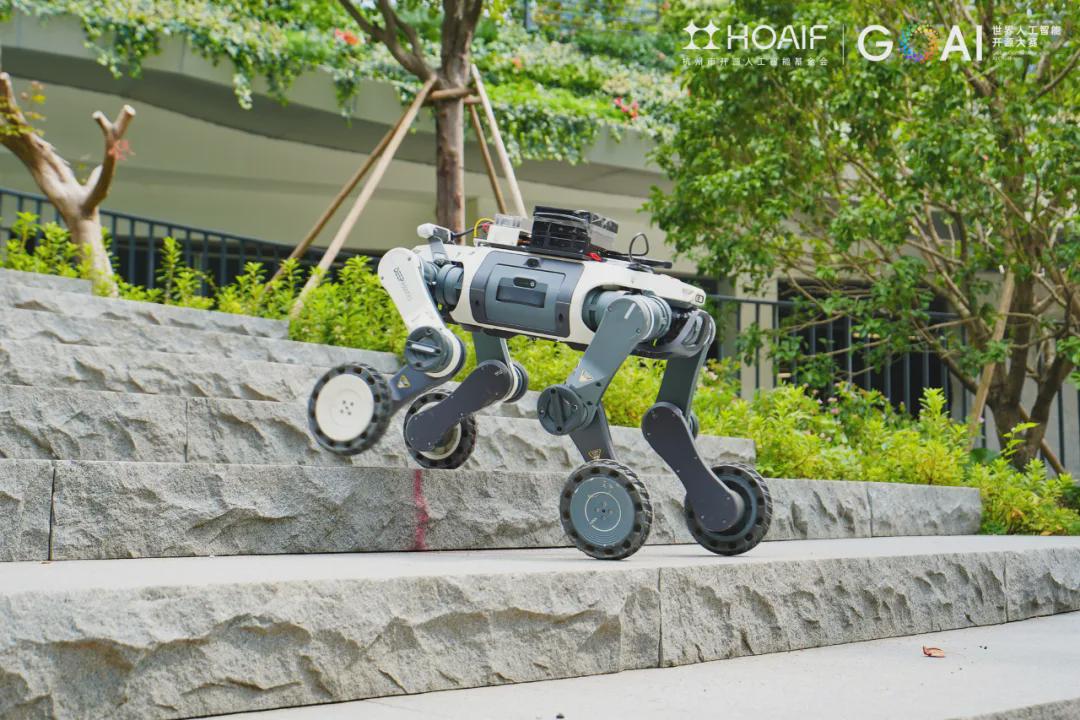
Competition in Embodied Intelligence: Openness Drives Innovation with Cloud Deep Technology's Robot
The GOAI World AI Open Source Competition featured teams using the Cloud Deep Technology's Cat S10 robot to tackle real-world terrain challenges. The competition emphasized practical problem-solving over theoretical presentations, allowing diverse teams to develop algorithms and deploy solutions on the same robotic platform. This approach highlights the importance of collaboration and openness in advancing embodied intelligence. By providing access to their mature product, Cloud Deep Technology encourages innovation and collective progress in the industry, moving from individual success to broader possibilities for all participants. Looking ahead, the competition showcased various strategies, including autonomous navigation and reinforcement learning, emphasizing the need for reliable solutions in real-world applications. No further timeline was disclosed at the time of publication.
Embodied Intelligence Robot Competitions Algorithm Development Real-World Applications
China Mobile Releases Open-RAIL Middleware for Integrating VLA/WAM Models with Robotics Hardware
China Mobile has announced the open-source release of its Open-RAIL middleware, designed to facilitate the integration of VLA/WAM models with robotic hardware. This middleware introduces asynchronous inference, hardware abstraction, and approximately 50 to 100 lines of code for model hooks, enabling seamless operation across diverse robotic systems. The significance of Open-RAIL lies in its ability to drive heterogeneous robots from end to end, enhancing the interoperability of various robotic components. By providing a standardized interface, it allows developers to implement complex robotic functionalities more efficiently, which is crucial in advancing robotics applications in various sectors. Looking ahead, stakeholders in the robotics industry should monitor the adoption of Open-RAIL and its impact on the development of robotic systems. The open-source nature of this middleware may encourage collaboration and innovation, potentially leading to new applications and improvements in robotic technology. No further timeline was disclosed at the time of publication.

DeepCybo Releases PhysBrain 1.5 with 72.5 Average on 28 Benchmarks as Open Source
DeepCybo has announced the open-source release of PhysBrain 1.5, achieving an impressive average score of 72.5 across 28 public embodied benchmarks. This model, which features both 2B and 8B parameters, is designed to enhance unified understanding, action, and future-state token capabilities, alongside an evaluation kit. The significance of this release lies in DeepCybo's claim of leading the open-source sector with PhysBrain 1.5. By providing a robust framework for embodied AI, the model aims to facilitate advancements in various applications that require physical interaction and understanding, thereby pushing the boundaries of current AI capabilities. Looking ahead, industry stakeholders should monitor the adoption and performance of PhysBrain 1.5 in real-world applications. The evaluation kit provided with the model will be crucial for developers and researchers to assess its effectiveness and potential integration into existing systems. No further timeline was disclosed at the time of publication.
China Mobile Launches Open-RAIL Engineering Base for VLA and WAM Robot Models
China Mobile has announced the open-source release of Open-RAIL, an engineering base designed to integrate vision-language-action and world-action-model systems with robotic platforms. This innovative framework allows for seamless model inference, real-robot execution, data feedback, and model iteration within a unified workflow. The significance of Open-RAIL lies in its ability to support four heterogeneous robots and ten VLA or WAM models, making it a versatile tool for developers. The project claims that new models can be integrated with only 50 to 100 lines of code, while its hardware-abstraction layer ensures standardized control, state reading, and action execution across various robot platforms. Looking ahead, the adoption of Open-RAIL could streamline the development process for robotics applications, enhancing interoperability among different systems. No further timeline was disclosed at the time of publication.
News Feed
JD.com Unveils Comprehensive AI Industrialization Strategy with Open-Source AI Models
JD.com founder Richard Liu announced the company's initiative to eliminate technology barriers by opening its full-stack self-developed AI to global partners. This move is part of JD's broader strategy to enhance its logistics capabilities and foster collaboration in the AI sector. The company's significant investment in research and development, which increased by 53.2% in the first half of the year, underscores its commitment to building the world's largest embodied data collection center. By open-sourcing its EgoLive and JoyAI models, JD.com aims to drive innovation and efficiency in logistics through advanced robotics. Looking ahead, JD.com is set to deploy its robots across logistics operations, enhancing its service capabilities. No further timeline was disclosed at the time of publication.
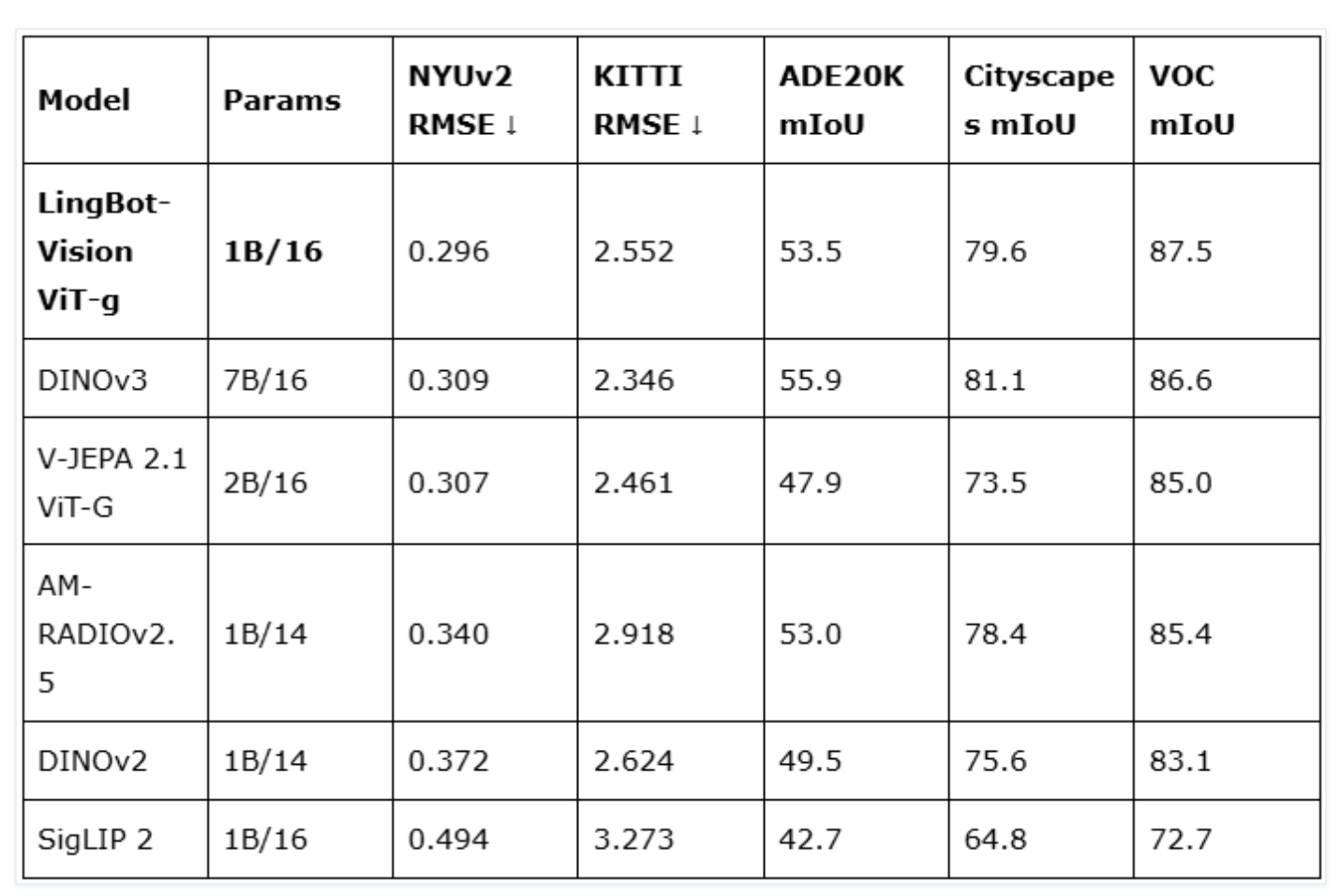
Ant Group Launches Open Source LingBot-Vision: A Breakthrough in Robotic Vision Technology
Ant Group's Robbyant has introduced the LingBot-Vision model, a groundbreaking visual perception technology designed for robots. This innovative model, which operates with just 1.1 billion parameters, significantly outperforms traditional systems in depth estimation and object boundary recognition. By enhancing robots' ability to comprehend intricate environments, LingBot-Vision represents a major leap forward in the field of embodied intelligence. The technology has been made available as open-source, fostering further advancements and collaboration within the robotics community.
Robotic Vision Depth Perception AI Technology Open Source Embodied Intelligence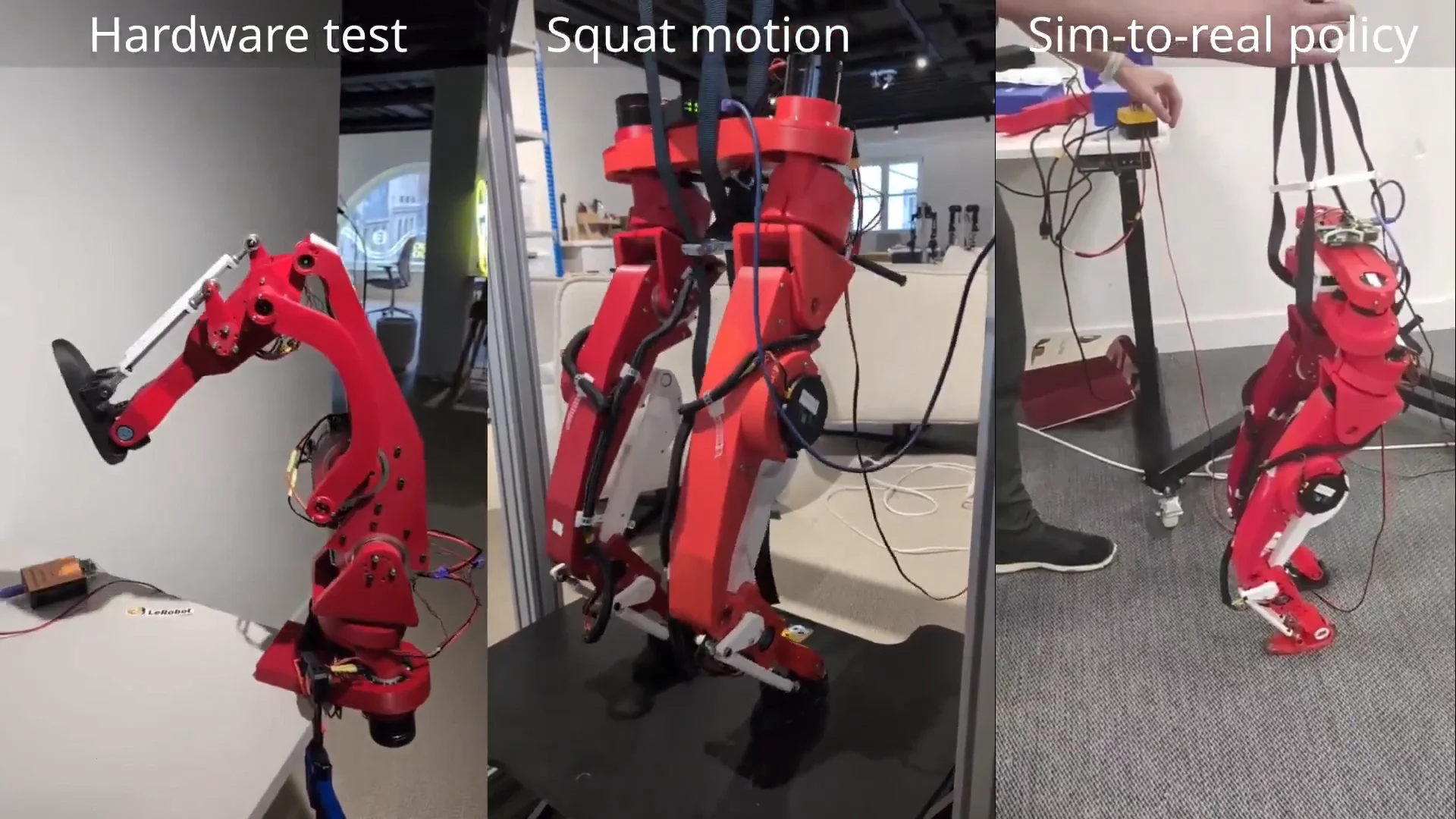
Hugging Face Launches $2,500 LeRobot Humanoid for Open-Source Robot Learning
Hugging Face has introduced the LeRobot Humanoid, an open-source bipedal robot designed for robot learning, with a build cost of approximately $2,500. This initiative aims to address the significant barrier in open-source robotics, which is the limited availability of accessible physical platforms for testing software. By prioritizing reproducibility and repairability, the LeRobot Humanoid offers a practical alternative to expensive proprietary hardware. The significance of the LeRobot Humanoid lies in its potential to democratize physical AI and facilitate research in reinforcement learning. Researchers can now conduct real-world tests without the constraints of costly and fragile equipment. The robot's design allows for easy repairs and modifications, enabling users to focus on learning experiments rather than hardware limitations. Looking ahead, Hugging Face's strategy in the open-robotics sector is becoming increasingly clear. The company is building a comprehensive ecosystem that includes the LeRobot software library and partnerships with other robotics firms. As the LeRobot Humanoid remains an experimental platform, future developments will likely focus on refining its capabilities and expanding its applications in the field of robotics.
LeRobot Europe open-source hugging-face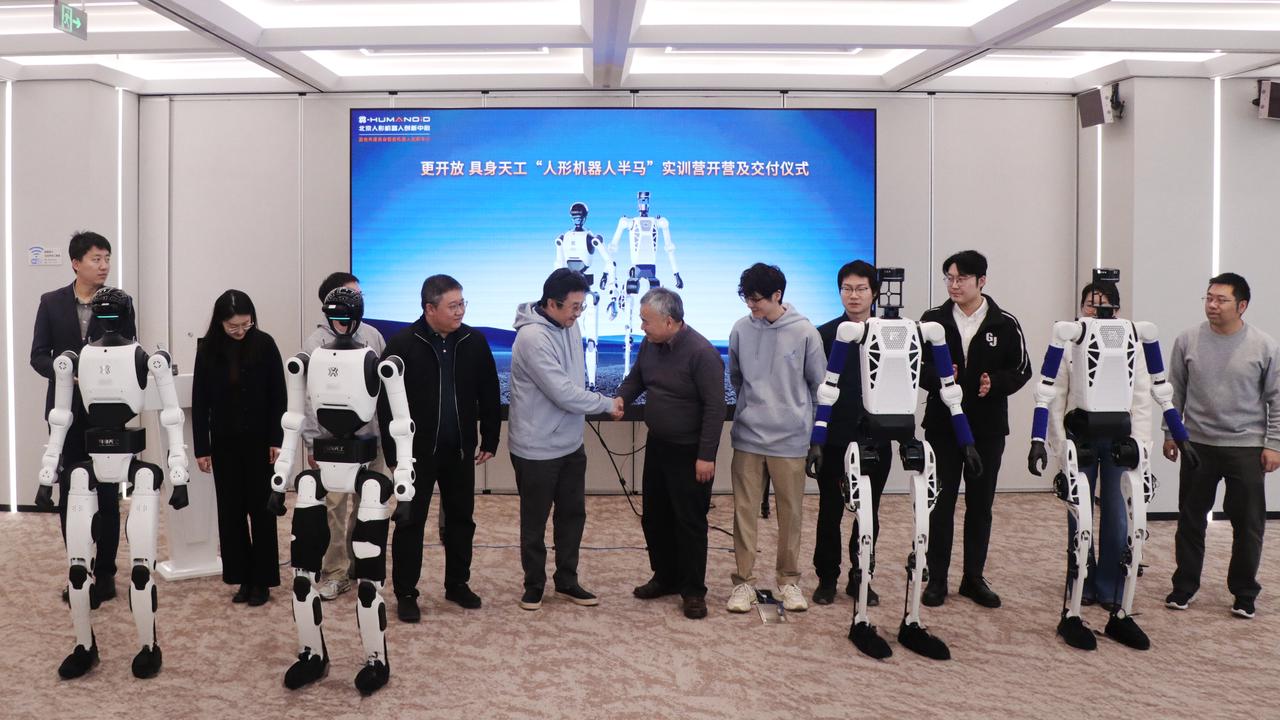
Beijing Humanoid Holds Robot Half Marathon Cooperation Delivery Ceremony to Explore the Limits of Embodied Intelligent Technology with Open Source Ecology
The Beijing Humanoid Robot Innovation Center, designated as China's "national team" for embodied intelligent robots, is spearheading advancements in core technologies and developing an independent industrial ecosystem. Since its establishment, the center has focused on aligning with national strategies to enhance China's global competitiveness. Recently, it inaugurated a data and training base for embodied intelligent robots, marking a pivotal step beyond physical capabilities. This initiative aims to position China as a leader in data strategy within the emerging field of embodied intelligence. The center is set to provide extensive, high-quality data infrastructure essential for the industry, while also leading the creation of China's first standards for data collection in this domain. By offering specialized services and generating valuable data, the center is poised to facilitate the integration of humanoid robots into various sectors and households. This effort is expected to accelerate the development of new productive forces and foster technological self-reliance in China. As the landscape of artificial intelligence evolves from "perceptual intelligence" to "embodied intelligence," the demand for high-quality data becomes increasingly critical to drive innovation and growth in the sector.
Robotics Automation AI
Zhuhai Amicro Technology Advances Towards Over $100 Million IPO in Hong Kong
Zhuhai Amicro Technology, a chipmaker backed by Xiaomi, is set to start premarketing for an initial public offering (IPO) in Hong Kong, aiming to raise over $100 million. The company successfully passed its listing hearing with Hong Kong Exchanges and Clearing (HKEX), which is a significant regulatory milestone for the share sale. This IPO is crucial for Zhuhai Amicro Technology as it seeks to expand its operations and enhance its market presence in the competitive robotics chip sector. The backing from Xiaomi adds credibility and potential investor interest, which could facilitate a successful capital raise. Investors and industry watchers should keep an eye on the upcoming premarketing activities, as they will provide insights into investor sentiment and demand for the shares. No further timeline was disclosed at the time of publication.

Utah Division of Water Resources Explores Drone-Based Cloud Seeding Technology
The Utah Division of Water Resources is investigating the use of drones for cloud seeding, aiming to replace traditional crewed aircraft tested from 2022 to 2025. This initiative represents a significant shift in how unmanned aircraft can operate within the atmosphere, merging aviation, meteorology, and water management. The potential of drone technology in cloud seeding could enhance the precision and scalability of weather modification efforts. By utilizing unmanned aircraft, the Utah Division of Water Resources hopes to improve the effectiveness of cloud seeding operations, which have been in practice since the 1950s, by allowing direct access to clouds under favorable conditions. As the drone industry evolves, the implications of drones transitioning from observational roles to active atmospheric operations will be crucial. The success of drone-based cloud seeding will depend on advancements in meteorology, measurement techniques, and beyond visual line of sight (BVLOS) operations. No further timeline was disclosed at the time of publication.
Drone News Drone News Feeds News Weather Aerospace Airspace IntegrationRobotics needs a service framework.
RSF defines a common language for robot service capability, lifecycle operations, certification pathways, and service-provider networks.
Join the RobotToday community on LinkedIn
Daily robotics news, in-depth analysis, conference highlights, and discussions with professionals worldwide.







