


AWS Introduces Open-Source Physical AI Toolchain to Enhance Robotics Development
- Published
- Source
- AIInsider
Amazon Web Services (AWS) has launched an open-source Physical AI Toolchain aimed at assisting robotics developers in training, simulating, deploying, and enhancing physical AI systems using AWS cloud services and Nvidia’s software stack. This toolchain encompasses synthetic data generation, model training, simulation, edge deployment, and continuous improvement, enabling users to manage fleets of machines effectively.
The significance of this launch lies in its potential to streamline the engineering efforts of manufacturers and robotics developers, allowing them to focus more on innovation rather than infrastructure. With one in seven startups engaged in physical AI and 72% of them deeming cloud computing essential, the toolchain is positioned to support a wide range of applications, from industrial automation to humanoid robotics.
Looking ahead, AWS's Physical AI Toolchain is expected to play a crucial role in the evolution of physical AI across various industries. As companies increasingly adopt this technology, the toolchain's capabilities for fleet management and operational data integration will be vital for improving performance and scalability in real-world applications. No further timeline was disclosed at the time of publication.
Original report
AWS Launches Open-Source Physical AI Toolchain for Robotics Development
AIInsider · Greg BockThis briefing is an independently written summary based on publicly available reporting and is provided for industry information and news discovery. The original report and source publication are credited and linked where applicable. RobotToday does not claim ownership of third-party source material.
Rights concerns? Contact [email protected] with the relevant URL and details. We will review the matter and take appropriate action where warranted.
More related news
- 1
- 2
- 3
- 4
- 5
- 6
-
7
RobotToday Weekly November 16–20, 2026 RobotToday · 4 days ago
- 8
- 9
- 10
- 11
- 12
Related Suppliers

NEURA Robotics
Germany
Metzingen, Germany robotics company founded 2019 by David Reger; builds MAiRA, LARA, and 4NE-1 humanoid robots, raising over 1 billion dollars in funding.

RLWRLD
United States
Develops robotics foundation models enabling industrial robots to perceive, reason, and perform dexterous manipulation autonomously in the real world.

sewts
Germany
Munich firm founded 2019 building physical-AI robot cells that feed and sort laundry textiles; reports over 70 robots deployed in Europe.

Fid Labs
United States
New York AI startup (founded 2024) building an agent platform for robotics software; raised $1.7M pre-seed from 8VC and Boost VC; acquired by Nominal in 2026.

Fauna Robotics (Acquired by Amazon)
United States
NYC-based humanoid robotics company that built Sprout, a 3.5-ft, 50-lb developer-ready bipedal robot priced at $50,000; acquired by Amazon in March 2026.
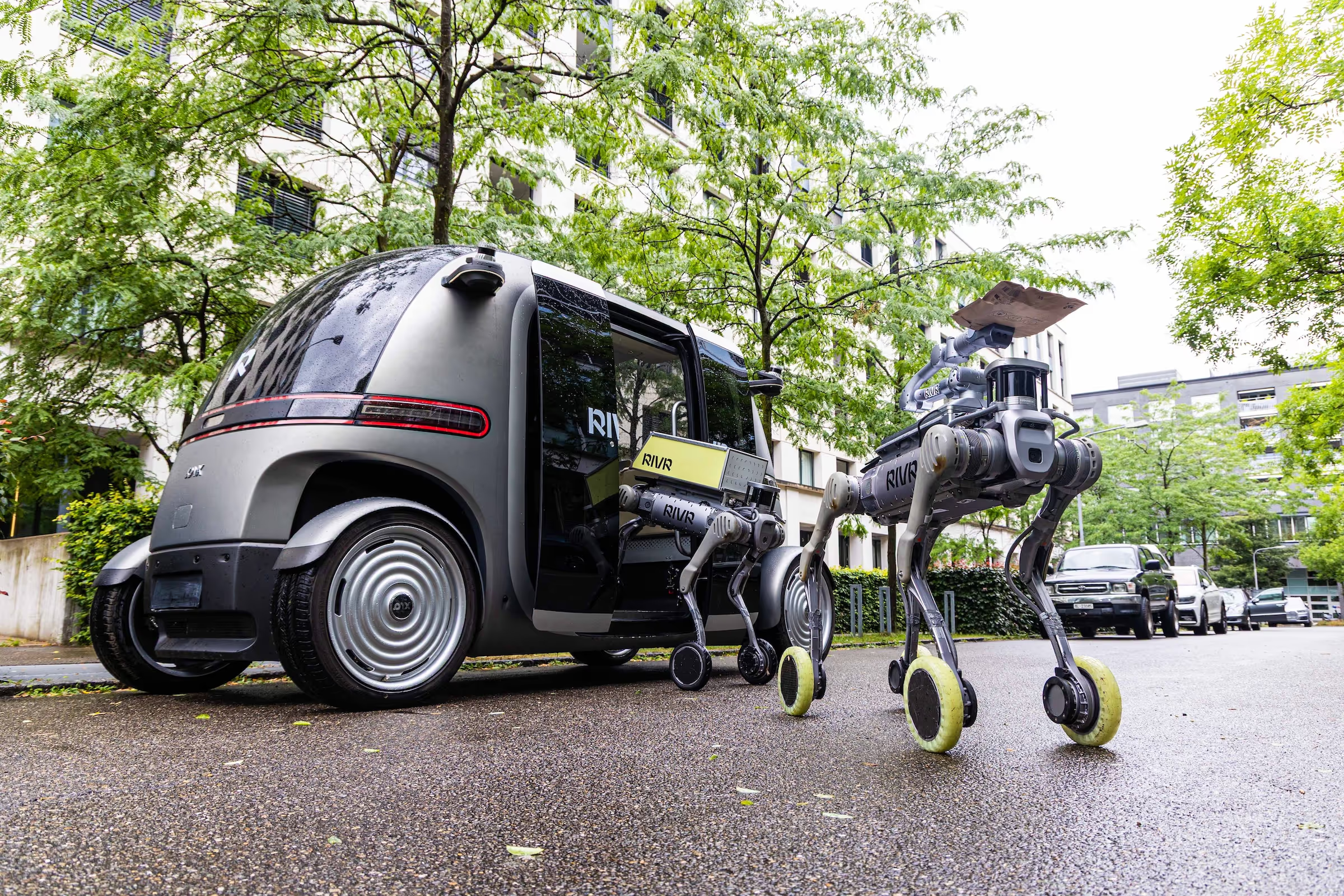
RIVR (Acquired by Amazon)
Switzerland
Zurich ETH spin-off building wheeled-legged robots powered by Physical AI for autonomous last-mile and doorstep delivery; acquired by Amazon in 2026.

NVIDIA Robotics
United States
NVIDIA robotics division delivering Isaac simulation and training tools, Jetson edge compute modules, and Omniverse digital twin frameworks for physical AI.
Antioch
United States
New York simulation software firm founded 2025; its cloud platform calibrates digital twins of robots and runs thousands of parallel tests, $40.5M raised.

TeknTrash Robotics
United Kingdom
London start-up deploying ALPHA, a wheeled dual-arm humanoid trained on VR-captured worker data to sort waste in recycling plants under a RaaS model.

J-MEX Inc. 晶鑫科技
Taiwan
Hsinchu, Taiwan motion-sensing company founded 2006; makes MEMS inertial motion-capture suits and teleoperation systems for robotics and sports.

OceanScan - Marine Systems & Technology, Lda
Portugal
Porto University spin-off (2008) building the LAUV one-person-portable modular AUV, delivered to navies including Denmark's for mine hunting.

Modular
United States
Modular built the Mojo language and MAX AI-inference platform for GPUs/CPUs before Qualcomm completed its acquisition of the firm in July 2026.
Robotics needs a service framework.
RSF defines a common language for robot service capability, lifecycle operations, certification pathways, and service-provider networks.
Join the RobotToday community on LinkedIn
Daily robotics news, in-depth analysis, conference highlights, and discussions with professionals worldwide.


