

US Army tests DZYNE’s IonStrike interceptors for drone defence roles
- Published
- Source
- Army-Technology
The US Army's 52d Air Defense Artillery Brigade is currently conducting tests and evaluations of IonStrike, a kinetic interceptor created by DZYNE Technologies. This initiative is part of the Army's broader strategy to enhance its defenses against uncrewed aircraft systems (UAS). The testing aims to assess the effectiveness and reliability of IonStrike in real-world scenarios, addressing the growing threat posed by UAS in modern warfare. The evaluations are taking place as military forces adapt to evolving aerial threats, underscoring the importance of advanced interception technologies in maintaining national security.
Original report
US Army tests DZYNE’s IonStrike interceptors for drone defence roles
Army-Technology · Jangoulun SingsitThis briefing is an independently written summary based on publicly available reporting and is provided for industry information and news discovery. The original report and source publication are credited and linked where applicable. RobotToday does not claim ownership of third-party source material.
Rights concerns? Contact [email protected] with the relevant URL and details. We will review the matter and take appropriate action where warranted.
More related news
- 1
- 2
- 3
- 4
- 5
- 6
-
7
HRI 2027 – Santa Clara, Mar 8–12, 2027 RobotToday · 2 days ago
-
8
Suzy Teele’s Mission at ARM Institute RobotToday · 3 days ago
- 9
- 10
- 11
- 12
Related Suppliers

Drone Delivery Canada
Canada
Vaughan, Ontario drone logistics developer merged with Volatus Aerospace in August 2024; the combined company trades as FLT in Toronto.
Duckietown Robotics
United States
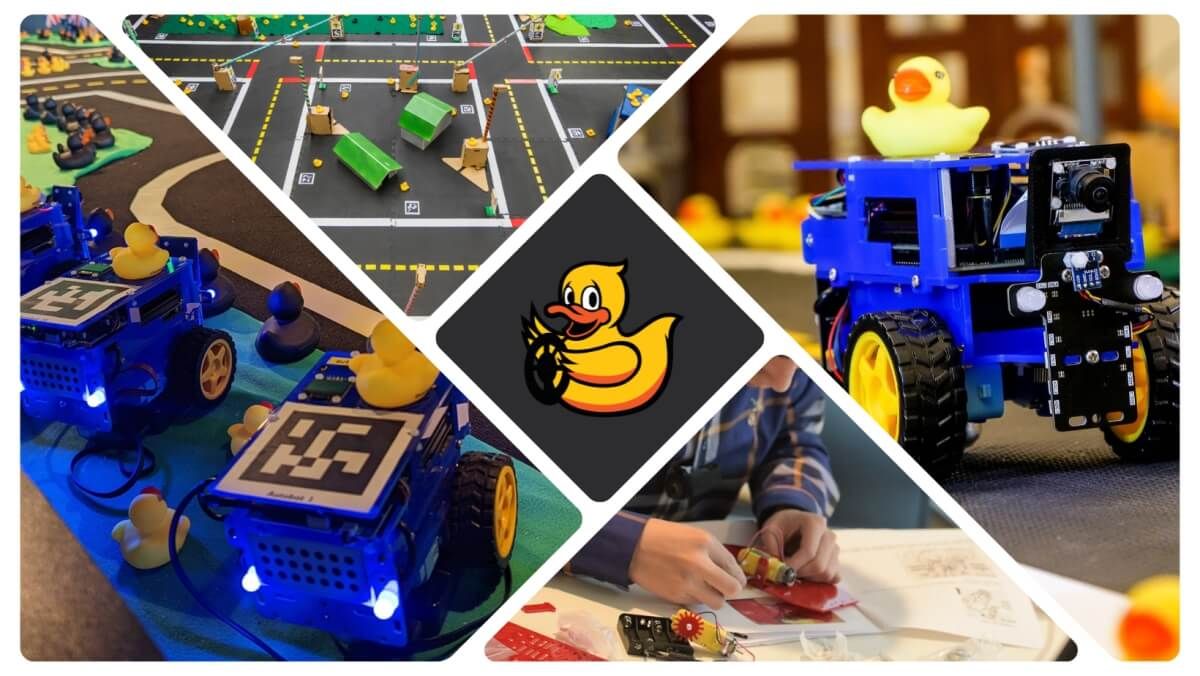
Educational robotics platform provider offering autonomous vehicle kits and AI curricula used by 250+ universities worldwide.
EasyMile
France
Toulouse, France autonomous-vehicle software company founded 2014; EZTow and EZDolly systems automate industrial tow tractors and cargo movers at airports.

Industrial Technology Research Institute (ITRI) 工業技術研究院
Taiwan
Hsinchu County, Taiwan applied-technology research institute founded 1973; over 6,500 staff developing autonomous mobile robots and AI perception systems.

Korea Aerospace Research Institute
Korea, Republic of (South)
Daejeon, South Korea national aerospace research institute founded 1989; develops the NURI orbital launch vehicle, KOMPSAT satellites, and lunar probes.

Korea Research Institute of Ships & Ocean Engineering (KRISO)
Korea, Republic of (South)
Daejeon government ship and ocean research institute behind the Crabster seabed walking robot, an R&D USV and a 3,500 m deep-sea ROV/AUV coring system.
Robotics needs a service framework.
RSF defines a common language for robot service capability, lifecycle operations, certification pathways, and service-provider networks.
Join the RobotToday community on LinkedIn
Daily robotics news, in-depth analysis, conference highlights, and discussions with professionals worldwide.


