


The Need for Natural Communication in Humanoid Robots for Adoption
- Published
- Source
- RoboticsBusinessReview.com
Recent tech events showcased humanoid robots demonstrating impressive mobility and dexterity. However, communication remains a significant challenge, as these robots struggle to interact naturally with humans. This limitation could hinder their widespread adoption, as effective human-machine interaction is crucial for building trust and ensuring safety.
The ability of humanoid robots to communicate effectively is essential for their acceptance in various environments, including noisy and unpredictable settings. Current audio and voice systems in robotics are not yet capable of functioning well in real-world scenarios, which may impede the technology's growth. As humanoid robots become more advanced in movement and vision, the lack of natural communication could become a critical barrier.
Looking ahead, the focus on enhancing audio and voice capabilities will be vital for the future of humanoid robots. As the industry continues to evolve, addressing the communication gap will be necessary for achieving broader acceptance and integration of these technologies into everyday life. No further timeline was disclosed at the time of publication.
Original report
Why robots that can’t communicate naturally won’t be adopted
RoboticsBusinessReview.com · Gunnar Pétur HaukssonThis briefing is an independently written summary based on publicly available reporting and is provided for industry information and news discovery. The original report and source publication are credited and linked where applicable. RobotToday does not claim ownership of third-party source material.
Rights concerns? Contact [email protected] with the relevant URL and details. We will review the matter and take appropriate action where warranted.
More related news
- 1
- 2
- 3
- 4
- 5
- 6
- 7
-
8
RobotToday Weekly November 16–20, 2026 RobotToday · 3 days ago
- 9
- 10
-
11
RobotToday Weekly November 9–13, 2026 RobotToday · 1 week ago
- 12
Related Suppliers

NVIDIA Robotics
United States
NVIDIA robotics division delivering Isaac simulation and training tools, Jetson edge compute modules, and Omniverse digital twin frameworks for physical AI.
Attraclab
Japan
Attraclab is a Saitama, Japan field-robotics integrator building drones, UGVs and USVs with AI and GIS for agriculture, construction and logistics.
Tangible Robots
United States
San Francisco startup building Eggie, a wheeled humanoid with humanlike hands for household dexterity tasks, backed by Blume Ventures and Micelio.
Techsoft Robots 深圳市泰科智能机器人有限公司
China
Shenzhen manufacturer of humanoid and collaborative robot joint modules, servo drives, and dual-arm cobots for OEM and end-user customers.
Stratoship
Australia
Brisbane startup founded 2020 building solar-powered stratospheric HAPS airships; its SZ-155 prototype spent 8+ hours near 65,000 ft in 2025.
Scout AI
United States
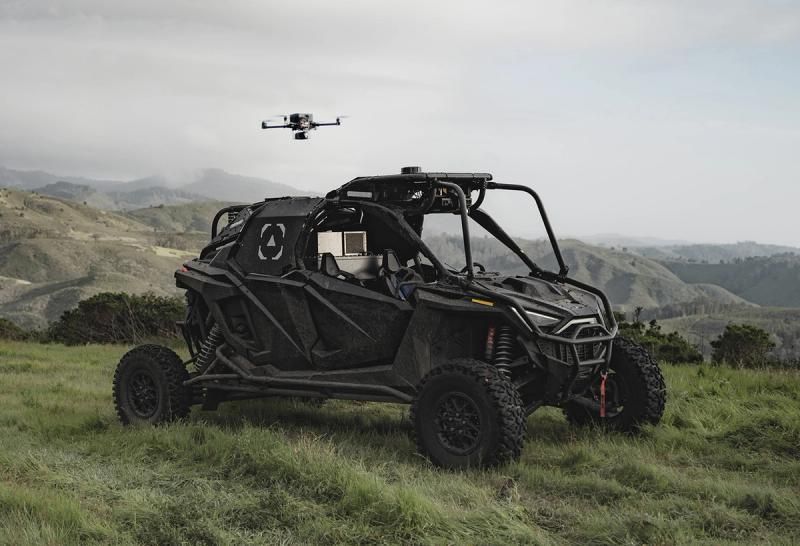
Sunnyvale defense AI startup building Fury, a vision-language-action foundation model enabling single-operator command of multiple autonomous unmanned.

ATR Intelligent Robotics and Communication Laboratories
Japan
Kyoto research laboratory within ATR (est. 1986) studying human-robot interaction, cybernetic avatars and social robots such as Robovie and Geminoid.

Center for Intelligent Robotics (CIR) at KIST
Korea, Republic of (South)
South Korean government research center at KIST focused on intelligent robotics and human-robot interaction since 1966.
Om AI 联汇科技
China
Hangzhou on-device multimodal AI company; VLX-Seek, VLX-Flow and VLX-Go models and the OmAgent platform give robots and drones perception and navigation.

Mitsubishi Electric Research Laboratories
United States
MERL is Mitsubishi Electric's North American corporate R&D lab, conducting applied research in robotics, AI, computer vision, and control systems.

McMaster Manufacturing Research Institute
Canada
Hamilton, Ontario applied manufacturing research center at McMaster University; runs a 21,000 sq ft facility with seven research labs.
Guangzhou PHYBOT Technology Co., Ltd. 广州动易人工智能科技有限公司
China
Guangzhou embodied-intelligence startup building bipedal humanoid and four-wheel-legged robots under the PHYBOT brand.
Robotics needs a service framework.
RSF defines a common language for robot service capability, lifecycle operations, certification pathways, and service-provider networks.
Join the RobotToday community on LinkedIn
Daily robotics news, in-depth analysis, conference highlights, and discussions with professionals worldwide.


