

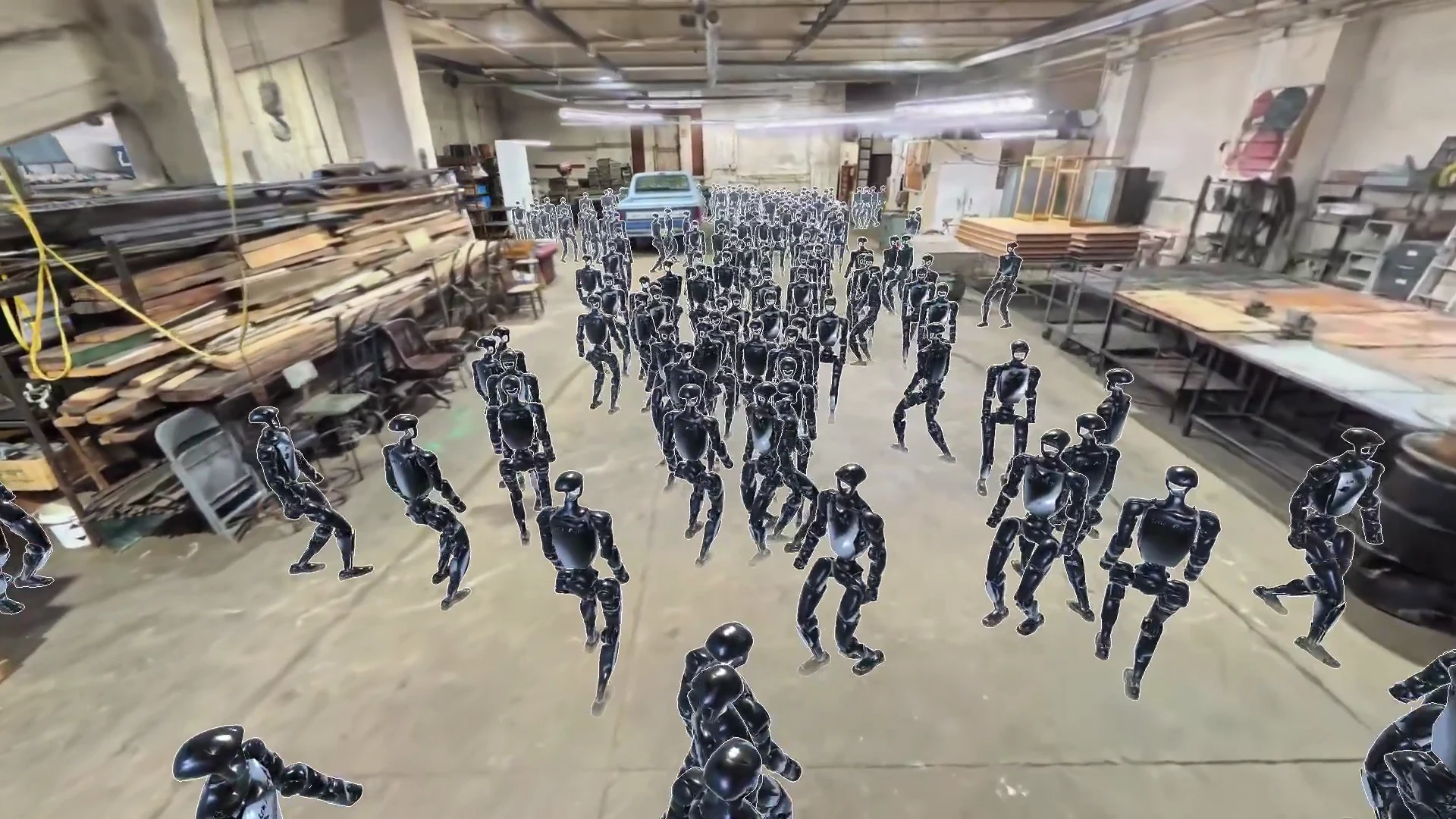
Niantic Spatial has launched its Places Library, providing robotics developers with a catalog of 100 real environments for training and evaluation. The assets, available as USDZ files, include two representations for each environment: a Gaussian splat for visual appearance and a mesh for collision detection. This initiative aims to enhance embodied AI training by offering realistic settings that align with gravity and support various simulators, including NVIDIA Isaac Sim.
The significance of this launch lies in its potential to improve robot training efficiency. By utilizing real-world environments captured with a standard 360-degree camera, Niantic ensures that robots receive accurate visual and collision data, which is crucial for effective navigation and interaction. The library includes diverse settings, such as medical warehouses and urban streets, allowing developers to test their robots in varied scenarios without the need for extensive in-house data collection.
Looking ahead, the Places Library could facilitate more advanced evaluations of robotic behavior in different environments. While the library's impact on performance across the 100 environments remains to be seen, it offers a valuable resource for robotics teams aiming to refine navigation tasks and adapt to changing surroundings. No further timeline was disclosed at the time of publication.
Editor's Note
The introduction of Niantic Spatial's Places Library marks a significant advancement in the robotics training landscape. By providing access to a diverse range of real-world environments, the library enables developers to enhance their robots' navigation capabilities without the burden of capturing data themselves. This could lead to faster iterations in robot training and deployment, ultimately benefiting the broader robotics ecosystem.































Leave a comment