

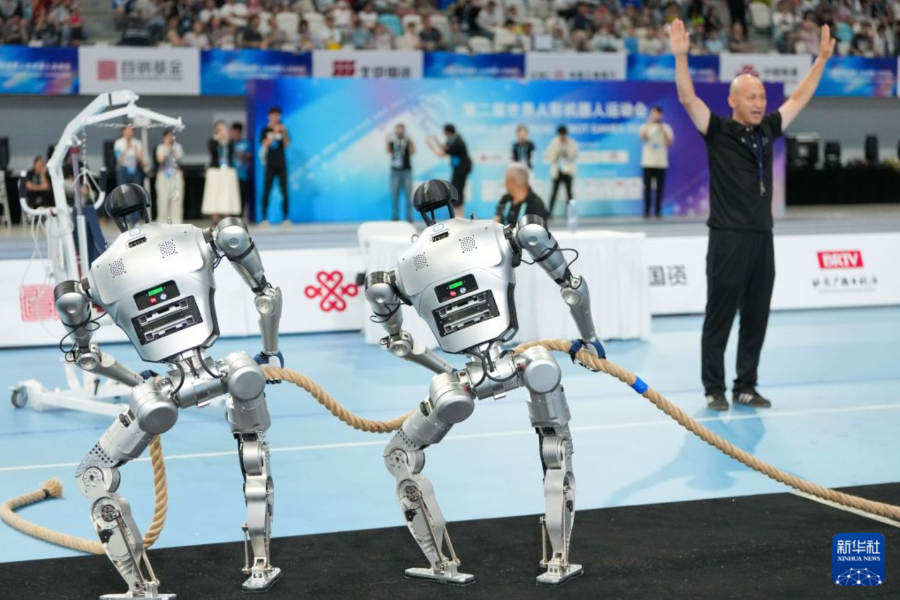
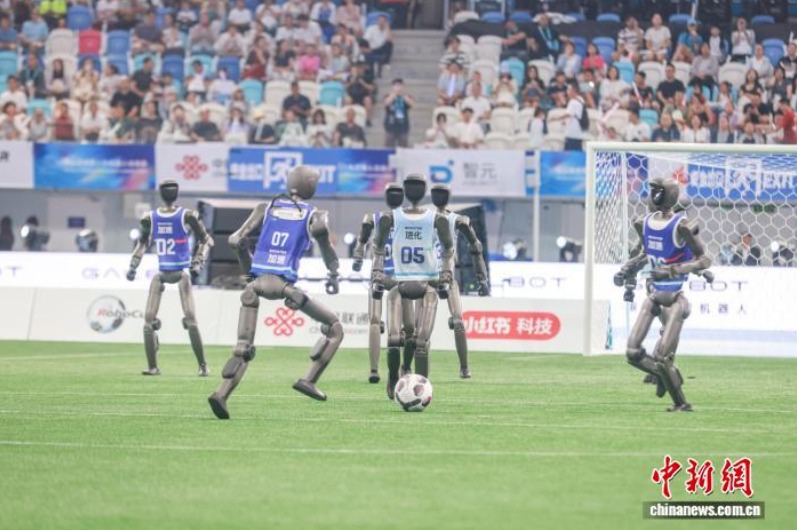
On August 25, the second World Humanoid Robot Games featured a tug-of-war competition at the National Speed Skating Stadium in Beijing. This new event captivated audiences as it tested not only the robots' strength but also their teamwork and grip capabilities. The lightweight category saw the Xingzhe Taishan team emerge victorious, demonstrating exceptional coordination and stability.
The heavyweight competition was even more intense, with the Tiangong team facing off against the Beijing Humanoid-Huake Union team. Both teams showcased their robots' grip and stability in a fierce battle, ultimately leading to Tiangong's triumph due to superior teamwork. The tug-of-war event is significant as it evaluates core robotic abilities, including lower body strength, grip control, and multi-robot collaboration, highlighting any weaknesses in these areas.
As humanoid robots evolve from speed to stability and from individual tasks to team challenges, the tug-of-war serves as a critical test of their foundational capabilities for real-world applications. Each match acts as a pressure test for technological maturity, with spectators noting the heightened tension compared to human competitions.
Editor's Note
The tug-of-war competition at the World Humanoid Robot Games illustrates the growing emphasis on collaborative robotics in competitive environments. As robots transition from individual tasks to teamwork, this event highlights the importance of grip strength and stability, which are crucial for real-world applications in various sectors, including logistics and manufacturing.



























Leave a comment