

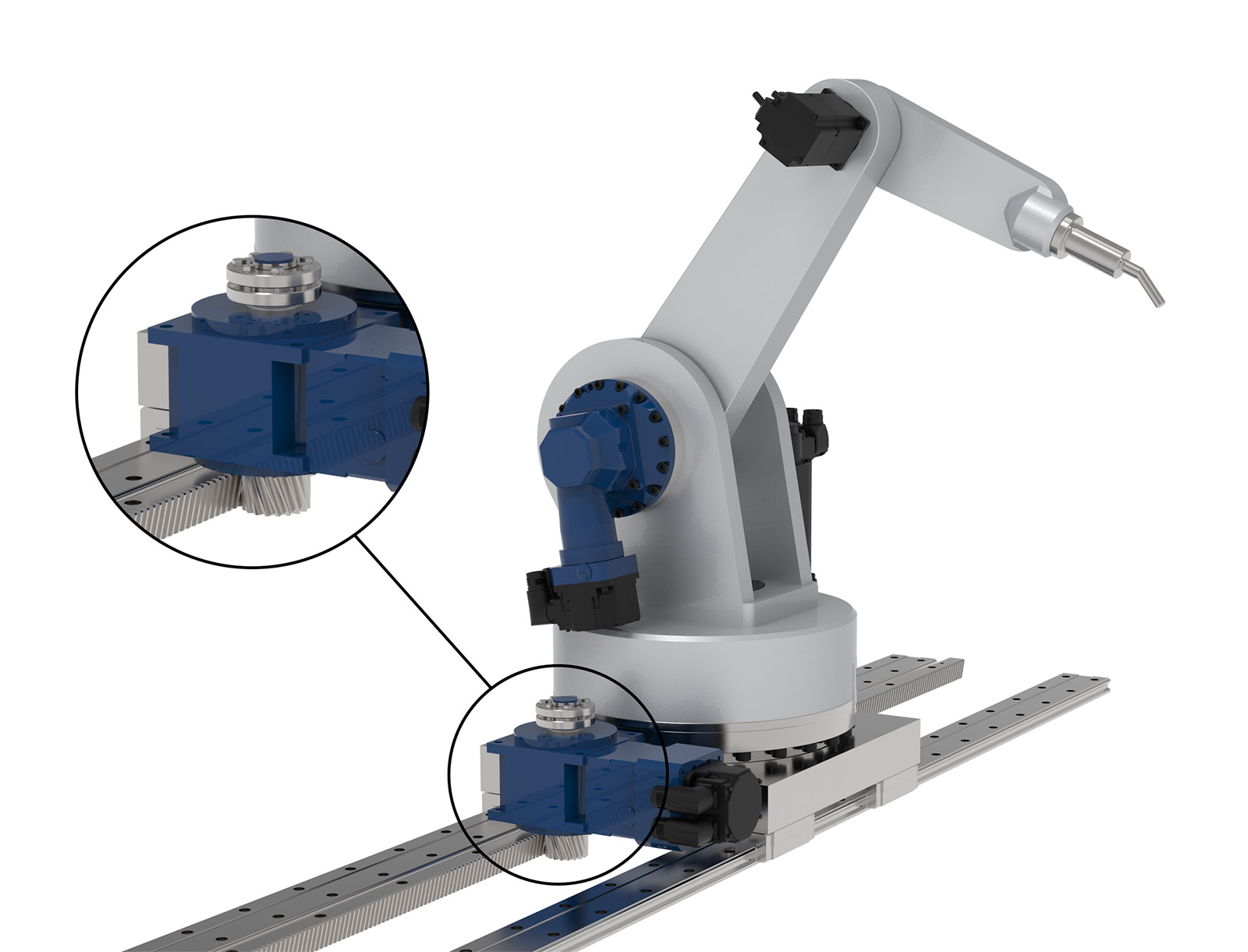
In the design of long-travel axes for articulated robots, engineers often choose between rack and pinion systems, ball screws, and linear motors. Rack and pinion systems, which consist of a rotating pinion engaging with a toothed rack, offer significant advantages in customization and scalability for longer distances, as highlighted by Matt Ruggles, a senior design engineer at GAM.
The choice of mechanism is critical, as ball screws can provide higher precision over shorter distances but face limitations due to a phenomenon known as 'whip' when extended beyond 2-3 meters. This can lead to issues such as premature wear and catastrophic failure, making rack and pinion a more reliable option for longer travel applications.
As the industry continues to evolve, understanding the strengths and weaknesses of each system will be essential for engineers. While linear motors excel in speed and control, their complexity and stiffness management present challenges. No further timeline was disclosed at the time of publication.
Editor's Note
The ongoing debate between rack and pinion systems and ball screws highlights the importance of selecting the right technology for specific applications in robotics. As manufacturers seek to optimize performance and reliability, understanding the trade-offs between precision, travel distance, and system complexity will be crucial for future developments in automation and motion control.






















Leave a comment