Industry Briefing
A single destination for timely, editor-curated robotics news from around the world.
AI's Breakthrough in Solving Navier–Stokes Problem Sparks Controversy Among Mathematicians
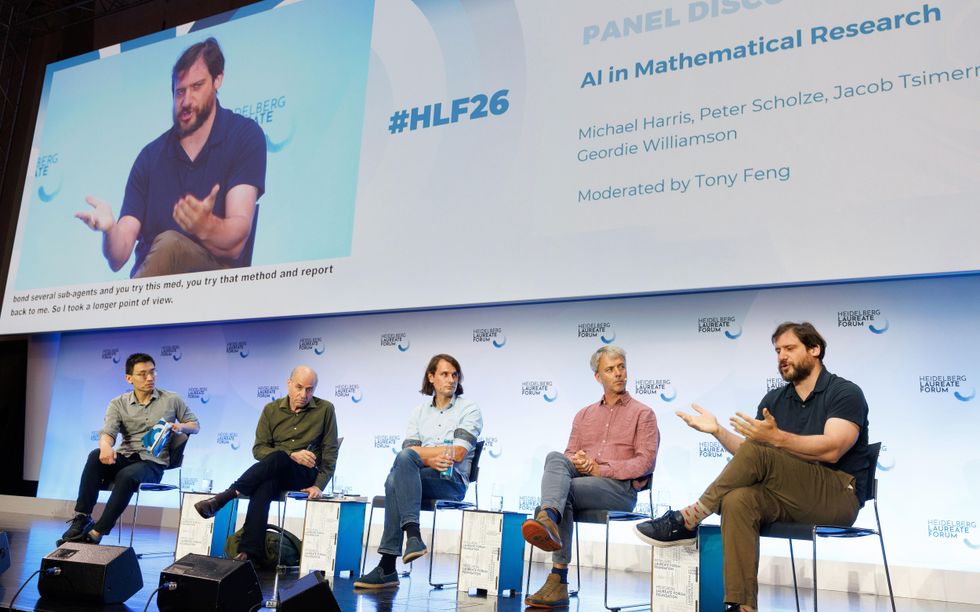
On September 13, the Heidelberg Laureate Forum in Germany became a focal point for discussions on AI's rapid advancements in mathematics, particularly following OpenAI's claim of solving the Navier–Stokes existence and smoothness problem. This achievement, part of the Millennium Prize Problems, has ignited debates within the mathematical community regarding the implications of AI in the field. The significance of AI's role in mathematics is underscored by its ability to tackle complex problems that have long stumped researchers. As AI technologies evolve, they are not only solving longstanding mathematical challenges but also prompting a reevaluation of traditional methodologies and community norms. This shift raises concerns among mathematicians about the future of their discipline and the potential impact on academic standards and job assessments. Looking ahead, the focus remains on which Millennium Problems AI will address next, with speculation surrounding the Riemann hypothesis and the Hodge conjecture. As tech giants like OpenAI and Anthropic continue to push boundaries, the mathematical community must grapple with the consequences of AI's integration into their field, including issues of collaboration, recognition, and the essence of mathematical understanding.
Math Ai Openai Academia
Top 25 Fields Medalists Warn AI Solutions Could Undermine Mathematical Research Integrity
A coalition of 25 Fields Medalists has issued a warning regarding the potential negative impact of AI on mathematical research. They criticize the trend of AI companies solving renowned mathematical problems as mere showcases of their models' capabilities, arguing that correct answers do not encapsulate the true value of mathematical inquiry. The mathematicians express concern that the rush to produce agentic mathematics proofs could disrupt traditional methods of verification, idea development, and knowledge transfer within the field. They emphasize that the process of establishing a proof involves extensive discussion, assumption challenges, and connections to prior work, which AI-generated solutions may bypass, leading to a superficial understanding of the underlying methods. As AI systems increasingly claim to solve complex mathematical problems, the authors of the letter caution that this could hinder the collaborative nature of mathematical research. They highlight the risk of diminished open exchange among mathematicians, as the competitive edge provided by AI resources may discourage the sharing of unpublished ideas, ultimately threatening the integrity and progress of the discipline.
AI and Robotics
Understanding the Edge AI Wall: New Mathematical Approaches for Embodied AI Stability
Recent advancements in artificial intelligence have highlighted a critical issue known as the 'edge AI wall' in autonomous mobile robots (AMRs). This phenomenon arises from computational overload, where decision-making quality deteriorates due to an excessive number of alternatives that the planner must evaluate in real time. This challenge, initially perceived as a localized problem, is now recognized as a systemic barrier affecting the entire spectrum of physical AI systems. The implications of this barrier are significant as the industry shifts towards integrating large language models and multimodal foundation models into physical applications. The assumption that scaling computational resources will yield similar breakthroughs in physical AI as seen in cloud AI fails to consider the rigid constraints of hardware in real-world environments. Unlike cloud systems, physical AI must operate within strict limits regarding power consumption, weight, and response times, making computational stability crucial for safe and effective operation. As the complexity of tasks in the physical world increases, the exponential growth of solution spaces will likely exacerbate the computational instability observed in AMRs. Future research and development will need to focus on innovative mathematical solutions to navigate these challenges and enhance the reliability of embodied AI systems. No further timeline was disclosed at the time of publication.
Artificial Intelligence Artificial Intelligence / Cognition Batteries / Power Supplies Microprocessors / SoC Mobility / Navigation Networking / Connectivity
Axiom Math Verifies 246 Theorem Using AI System AxiomProver
Axiom Math has achieved a significant milestone by using its AI system, AxiomProver, to automatically verify the proof of the 246 theorem, which relates to prime numbers. This formal verification represents a notable advancement in number theory, although it does not guarantee absolute correctness due to potential bugs in the verification process. The verification of the 246 theorem is crucial as it formalizes the current limits of human understanding regarding prime numbers. Ken Ono, Axiom Math's founding mathematician, emphasized its importance, stating that it marks a threshold in mathematical knowledge. The achievement also highlights the potential of AI in verifying AI-generated computer code, which is increasingly relevant in today's software landscape. Looking ahead, Axiom Math aims to leverage the components of the formalization for broader mathematical research. The techniques developed could play a vital role in ensuring the safety and correctness of AI-generated code, which is becoming integral to various societal systems. No further timeline was disclosed at the time of publication.
Mathematics Prime-numbers Ai-reasoning Ai-generated-software
Amazon's Valuation Could Surpass Tesla and SpaceX Combined by 2030
Amazon, currently valued at $2.8 trillion, is projected to exceed the combined market cap of Tesla and SpaceX, which stands at $3.3 trillion. Analysts anticipate that by 2030, Amazon's growth, driven by its profitable AWS segment, will lead to a valuation of $215 billion in net income on $1.38 trillion in sales, outpacing the expected earnings of Tesla and SpaceX. This potential shift in valuation is significant as it highlights Amazon's robust business model compared to Tesla and SpaceX, which are facing challenges in profitability and revenue growth. While Tesla's revenue has seen fluctuations, SpaceX has shown rapid growth, yet both companies are projected to generate a combined $151 billion in net income by 2030, which is less than Amazon's forecasted earnings. Investors should monitor the evolving landscape as Tesla and SpaceX aim to enhance their profitability and revenue, particularly with SpaceX's high-margin satellite services. The anticipated merger of Tesla and SpaceX could further impact their financial performance, making the next few years crucial for all three companies.

MIT Researchers Develop Framework for Designing Adaptive Materials Inspired by Pine Cones
MIT researchers have created a mathematical framework that simplifies the design of bioinspired materials, such as moisture-responsive shingles. This framework captures the mechanisms across various length scales in natural systems, like those found in pine cones, and translates them into engineered systems that can be 3D printed. The significance of this work lies in its potential to streamline the development of adaptive materials, reducing costs and time associated with failed prototypes. By moving beyond mere bio-inspiration to what is termed 'bio-derivation,' engineers can systematically translate natural behaviors into synthetic structures, paving the way for innovations like soft robotic grippers and morphing airplane wings. Looking ahead, the framework's application could extend to more complex systems, enhancing the ability of engineers to create materials that respond dynamically to environmental changes. No further timeline was disclosed at the time of publication.
Research Bioinspiration Materials science and engineering Algorithms Design Biology
Anthropic's Claude Fable 5 AI Challenges 87-Year-Old Jacobian Conjecture with Counterexample
Levent Alpöge, a mathematician at Anthropic, recently announced a counterexample to the Jacobian conjecture using the AI model Claude Fable 5. This significant breakthrough in algebraic geometry has garnered attention within the mathematical community, as it challenges a long-standing problem that has remained unproven for decades. The Jacobian conjecture, proposed in 1884 by Czech mathematician Ludwig Kraus and later generalized by German mathematician Ott-Heinrich Keller, posits that a certain type of polynomial function should always have a reversible counterpart if its Jacobian determinant is a non-zero constant. This conjecture has intrigued mathematicians for years, making Alpöge's discovery particularly noteworthy. As AI continues to play a role in mathematical research, it will be interesting to observe how further advancements in large language models like Claude Fable 5 may lead to additional breakthroughs in complex mathematical problems. No further timeline was disclosed at the time of publication.
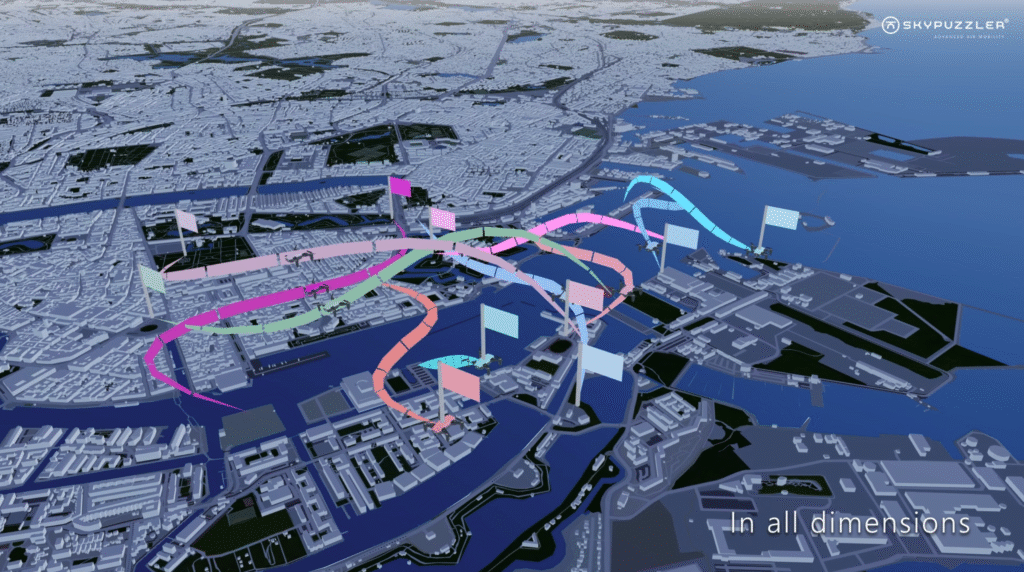
Skypuzzler Proposes Mathematical Algorithms for Airspace Safety Amid Drone Traffic Surge
As the FAA seeks effective management of low-altitude airspace due to rising UAV traffic, Skypuzzler, a Copenhagen-based technology firm, offers a solution based on mathematical algorithms rather than AI. Their air traffic management system integrates strategic and tactical deconfliction to prevent airspace conflicts, allowing real-time traffic management without requiring additional drone hardware. Skypuzzler collaborates with major aerospace and logistics companies, including Thales Group and DSV, to implement its platform in Europe, notably at the Port of Rotterdam. With nearly 100 drone operators in the port, the company addresses the complexities of coordinating diverse drone missions in shared airspace, emphasizing the need for effective deconfliction strategies. Recently, United Airlines Ventures invested in Skypuzzler, facilitating its entry into the U.S. airspace management market, particularly in the Dallas-Fort Worth area. Skou warns that existing U.S. coordination models may not sustain as drone and manned aviation traffic increases, advocating for Skypuzzler's software integration into current UTM systems to enhance airspace safety and scalability.
Applications DL Exclusive Drone News Drone News Feeds Europe Drone Industry News
Nobel Laureate Collaborates with AI to Solve 12-Year-Old Mathematical Conjecture
Nobel Prize-winning physicist Giorgio Parisi has joined forces with the AI model Claude to tackle a long-standing conjecture in statistical physics. Their collaboration, which took place recently, involved extensive dialogue and intricate calculations, ultimately leading to the discovery of a surprisingly simple proof. This partnership not only underscores the potential of artificial intelligence in advancing scientific research but also highlights the critical role of human oversight in the process. Parisi, who had previously expressed skepticism about AI, now illustrates how such technology can complement human expertise in solving complex scientific problems.
AI in Research Mathematical Conjectures Statistical Physics Scientific Collaboration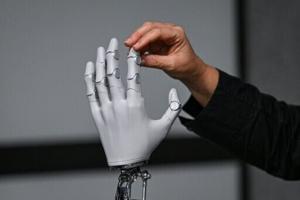
SpaceX's Starmind Plans 1 Million AI Satellites Amid Collision Risks
SpaceX has announced its ambitious Starmind project, which aims to deploy 1 million AI satellites in orbits between 500 and 2,000 km. This initiative, confirmed by Elon Musk on June 23, 2026, follows a merger with xAI, valuing the combined entity at $1.25 trillion. The satellites will function as orbital data centers, processing AI workloads powered by solar arrays and linked by optical lasers. The significance of Starmind lies in its potential to add 100 gigawatts of AI compute capacity annually, contingent on the successful operation of the Starship launch system. However, the project raises concerns regarding space debris, as the current orbital environment is already congested, with a 20% increase in collision risk reported since 2024. The European Space Agency has highlighted that the density of debris in low Earth orbit is now comparable to that of active satellites, complicating the operational landscape for new entrants like Starmind. Looking ahead, the first operational orbital AI deployments are targeted for 2028, with test launches expected in early 2027. However, the project faces scrutiny regarding its impact on space debris, as even a 1% failure rate could significantly increase the number of uncontrollable objects in orbit, exacerbating existing risks. No further timeline was disclosed at the time of publication.

Tesla's Optimus Robots to Support Starmind Satellite Production, Not Maintenance
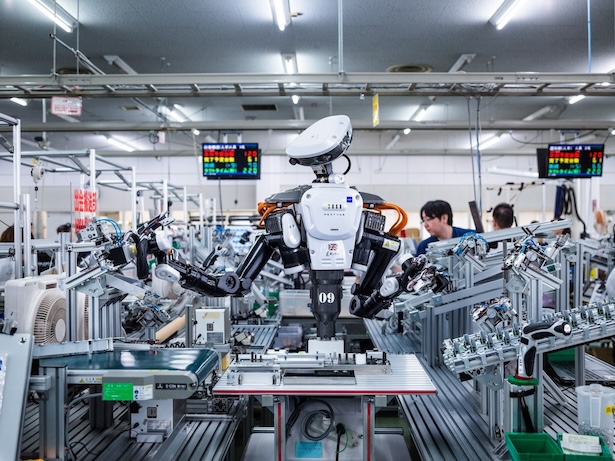
Tesla's Optimus robots will not be used to repair Starmind satellites in orbit, as confirmed by recent statements from Elon Musk. Instead, these robots are intended to assist in the construction and operation of the Terafab chip manufacturing facility in Texas. The AI1 satellites, designed to disintegrate upon reentry, highlight the company's swap-and-replace strategy rather than traditional maintenance practices. This approach is significant as it reflects a broader trend in satellite management, where mass-produced satellites are replaced rather than repaired. The economics of servicing missions are prohibitive, with the cost of launching a replacement satellite being significantly lower than conducting a repair mission. This model aligns with SpaceX's operational history, where rapid replacement of satellites is more efficient than attempting to maintain them in orbit. Looking ahead, the focus will remain on the production capabilities of the Gigasat factory, which is expected to support the continuous replacement of satellites. No further timeline was disclosed at the time of publication, but the demand for rapid satellite turnover suggests a robust future for Optimus robots in terrestrial manufacturing rather than in-space servicing.
SpaceX's Starship V3 Plans for 1 Million Starmind Satellites by 2030
SpaceX's Starship V3 is set to revolutionize satellite deployment, aiming to launch 1 million Starmind satellites by 2030. The spacecraft can carry over 100 tonnes to low Earth orbit (LEO), significantly more than the Falcon 9's capacity. As of May 2026, Starship has completed 12 flights, with the next mission scheduled for late July 2026, focusing on operational payloads including AI1 prototypes in early 2027. This ambitious plan is crucial for expanding orbital compute capacity, targeting an annual addition of 100 GW through a million tonnes of satellite hardware. SpaceX's strategy hinges on achieving a launch cadence of approximately 12,000 flights, equating to about three launches per day. The company has invested over $15 billion in the Starship program, with expectations to begin payload deliveries in the second half of 2026, starting with Starlink V3 satellites. Looking ahead, the successful deployment of the Starmind constellation will depend on Starship's ability to meet its cost targets of $10–20 million per flight. If achieved, this would make launching satellites more economical than building ground data centers. The next significant milestone will be the launch of AI1 prototypes in early 2027, with full-scale deployments commencing in 2028 from the new Gigasat factory in Texas.

Starmind's Satellite Technology Achieves 880 Billion Liters in Annual Water Savings
Starmind has announced that its satellite technology can save approximately 880 billion liters of cooling water annually at full scale. This figure is equivalent to the annual household water use of around 6.5 million Americans. The technology operates by utilizing a closed-loop liquid cooling system that eliminates the need for water during its operational life, contrasting sharply with traditional ground data centers that consume vast amounts of water for cooling. The significance of this achievement lies in the growing water consumption crisis faced by data centers, particularly as AI expansion drives demand. In 2025, U.S. data centers consumed nearly one trillion liters of water, highlighting the urgent need for sustainable solutions. Starmind's approach not only addresses direct water usage but also avoids indirect water consumption associated with electricity generation, marking a substantial shift in how computing can be conducted in a resource-efficient manner. Looking ahead, Starmind's deployment strategy includes a projected buildout of 100 GW of orbital compute per year, which could displace an additional 735 billion liters of ground water demand annually. The first tranche of 10,000 satellites is already operational, offsetting approximately 8.8 billion liters of water per year. No further timeline was disclosed at the time of publication.
SpaceX's Starmind Faces Feasibility Challenges for 1 Million Satellite Deployment
On January 30, 2026, SpaceX submitted a request to the FCC to launch up to 1 million satellites as part of its Starmind orbital compute constellation. This ambitious plan is unprecedented, as the total number of satellites ever launched globally is in the low tens of thousands. The proposal seeks a waiver from standard deployment milestones, citing reliance on the Starship's full reusability for success. The significance of this request lies in the technical and logistical challenges it presents. Experts warn that low Earth orbit may not support the proposed number of active satellites without risking a debris cascade. SpaceX's own IPO prospectus acknowledges unresolved dependencies related to Starship's launch cadence and reusability, which are critical for the orbital AI compute strategy. Looking ahead, the timeline for achieving the necessary launch cadence and manufacturing capacity remains uncertain. SpaceX's Gigasat facility in Texas aims for volume production by late 2027, but this would require unprecedented output levels. No further timeline was disclosed at the time of publication, leaving the feasibility of the Starmind project in question.

SpaceX Unveils AI1 Satellite Specs for Starmind Constellation with Key Thermal Challenges
SpaceX has introduced the AI1 satellite, the inaugural component of its Starmind constellation, which stands 20 meters tall and has a wingspan of 70 meters. This orbital compute node is designed to deliver computing power equivalent to one NVIDIA GB300 server rack, utilizing a unique cooling system with deployable liquid radiators. The satellite's specifications were revealed during a presentation on June 8, 2026, ahead of SpaceX's IPO. The significance of the AI1 satellite lies in its role as a compute platform rather than a traditional satellite, focusing on running AI inference workloads. The satellite's cooling system, which is critical for its operation in the vacuum of space, is designed to reject heat through infrared radiation. However, independent engineers have raised concerns about the feasibility of the thermal and mass claims made by SpaceX, suggesting that the cooling requirements may exceed practical limits. Looking ahead, SpaceX plans to launch two AI1 prototypes in early 2027, with full-scale production expected to commence later that year at its Gigasat facility in Bastrop, Texas. The ongoing debate regarding the satellite's thermal management capabilities will be crucial to monitor as the project progresses, with no further timeline disclosed at the time of publication.
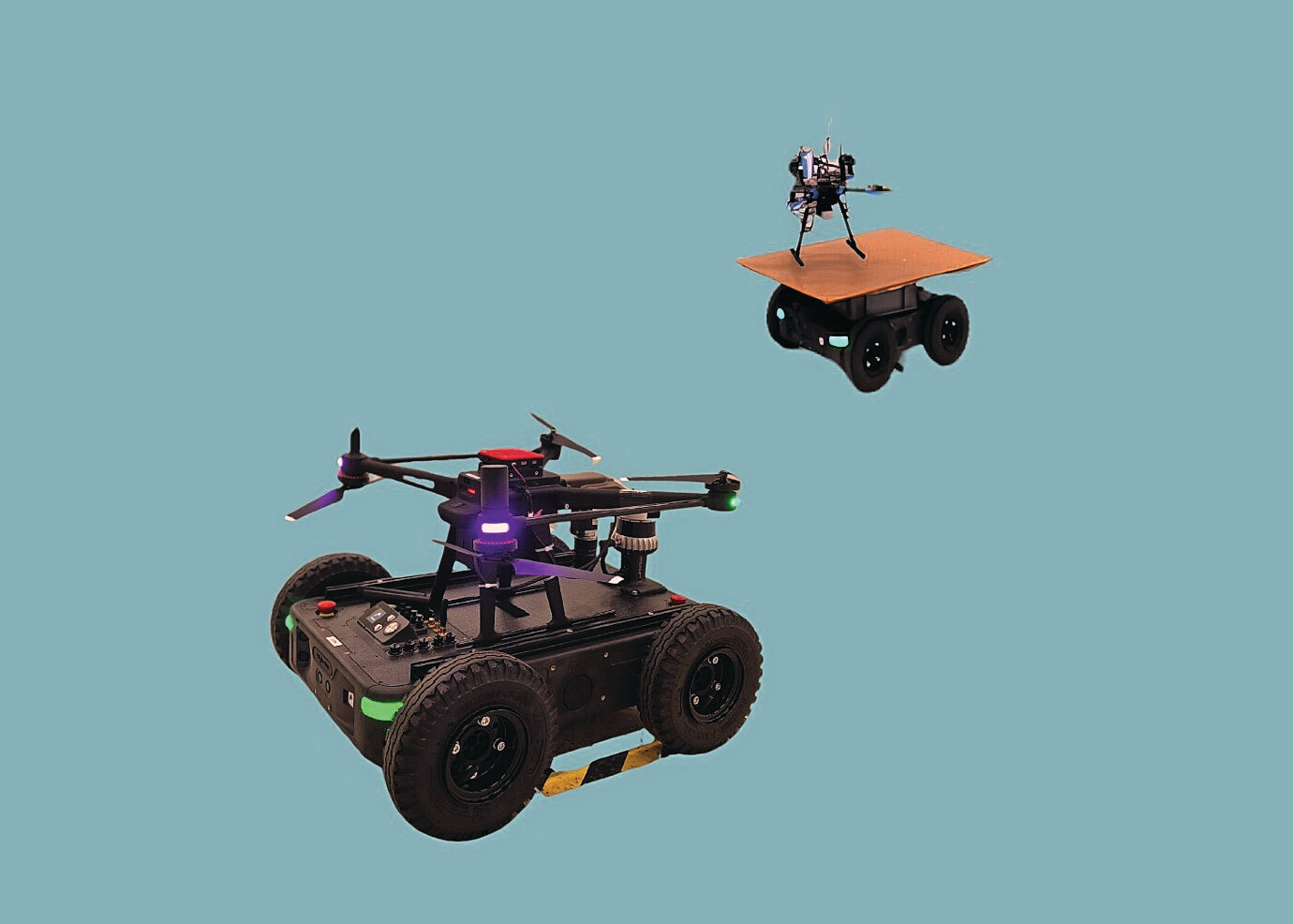
Mathematical models help farm robots work together in real time
Researchers at the University of Groningen in the Netherlands are pioneering the development of innovative mathematical control systems aimed at enabling drones and ground robots to work together autonomously in agricultural settings. This initiative, which is currently underway, seeks to enhance efficiency in farming operations without the need for extensive datasets or artificial intelligence training. The project highlights a significant advancement in agricultural technology, focusing on streamlined cooperation between aerial and terrestrial robotic systems to optimize farming practices. By leveraging mathematical algorithms, the researchers aim to create a more sustainable and effective approach to agriculture, potentially transforming how crops are monitored and managed in the future.
Smart farming agricultural robots crop monitoring drones robotics
New AI method tackles one of science’s hardest math problems
Researchers at the University of Pennsylvania have unveiled a groundbreaking artificial intelligence method aimed at addressing complex inverse equations, which are crucial for identifying underlying causes of observable phenomena. This innovative approach incorporates "mollifier layers" to enhance the stability of calculations by smoothing out noisy data, significantly reducing the computational burden associated with these tasks. The development, announced recently, holds the potential to revolutionize various scientific fields, particularly genetics, where deciphering DNA behavior is essential for advancing disease research. By streamlining the process of solving these challenging equations, the new AI method could pave the way for more efficient and accurate scientific discoveries.

Control framework lets flexible robots move in tight spaces with less math
Recent discussions in robotics have highlighted the limitations of traditional machines, often characterized by rigid arms and mechanical movements, as exemplified by iconic characters like Optimus Prime and Bumblebee from the "Transformers" franchise. These designs, while visually striking, are impractical for navigating confined and cramped environments. Experts in the field are advocating for the development of more flexible and adaptable robotic systems that can operate effectively in such challenging spaces. This shift in focus aims to enhance the functionality of robots in real-world applications, where versatility and maneuverability are crucial. As the industry evolves, researchers are exploring innovative designs and technologies that could redefine the capabilities of robots, making them more suitable for a variety of tasks in diverse settings.
Robotics
Import AI 445: Timing superintelligence; AIs solve frontier math proofs; a new ML research benchmark
As discussions surrounding the future of artificial intelligence intensify, experts are speculating that 2026 could be a critical year for decision-making regarding the singularity. This pivotal moment is anticipated to occur as advancements in AI technology continue to accelerate, raising questions about its implications for society. The year is expected to see significant developments in AI research and policy, with stakeholders from various sectors—including technology companies, government agencies, and academic institutions—coming together to address the ethical and practical challenges posed by rapid AI evolution. The urgency of these discussions is driven by the potential for AI to fundamentally alter industries, economies, and daily life. As the global community prepares for this transformative period, the outcomes of these deliberations could shape the trajectory of AI and its integration into society for decades to come.
Brain inspired machines are better at math than expected
Researchers have achieved a significant breakthrough in computing by developing neuromorphic computers that mimic the human brain's architecture. This advancement enables these computers to solve complex equations related to physics simulations, a task previously reserved for traditional supercomputers that consume vast amounts of energy. The development, announced in October 2023, promises not only to create more powerful and energy-efficient computing systems but also to enhance our understanding of brain function and information processing. By leveraging the brain's computational methods, scientists aim to unlock new potentials in both technology and neuroscience.

Import AI 442: Winners and losers in the AI economy; math proof automation; and industrialization of cyber espionage
A recent debate among AI researchers has emerged regarding the nature of superintelligence, with experts divided on whether it represents a sudden phase change or a gradual evolution in artificial intelligence capabilities. This discussion gained momentum during a conference held in San Francisco in early October 2023, where leading figures in the field gathered to share insights and predictions about the future of AI. Proponents of the phase change theory argue that superintelligence will manifest abruptly, resulting from a breakthrough in AI development that could dramatically surpass human cognitive abilities. They warn that such a sudden leap could pose significant risks if not properly managed. Conversely, those advocating for the gradual shift perspective believe that advancements in AI will unfold incrementally, allowing society to adapt and implement necessary safeguards over time. The motivation behind this debate stems from the increasing integration of AI technologies into various sectors, raising concerns about ethical implications, safety, and the potential for unintended consequences. As AI systems become more sophisticated, understanding the trajectory of their development is crucial for policymakers, researchers, and the public. This ongoing discourse highlights the need for comprehensive strategies to address the challenges posed by advanced AI, regardless of whether its evolution is abrupt or gradual. As the conversation continues, experts emphasize the importance of collaboration across disciplines to ensure that the benefits of superintelligence can be harnessed while minimizing risks.
Robotics needs a service framework.
RSF defines a common language for robot service capability, lifecycle operations, certification pathways, and service-provider networks.
Join the RobotToday community on LinkedIn
Daily robotics news, in-depth analysis, conference highlights, and discussions with professionals worldwide.