

What lessons is Ideal learning to catch up with FSD V14?
- Published
- Source
- 36kr.com
The competitive landscape of the intelligent driving industry has undergone significant changes in recent years, shifting from hardware specifications to advanced model development. Companies are increasingly recognizing that merely having larger models is insufficient for achieving generational advantages; instead, the integration of models, data, computing power, and chips into a continuous iterative loop is becoming crucial. This realization has prompted many automakers to invest in in-house research and development.
Tesla has established a comprehensive ecosystem that spans data collection, training infrastructure, and self-developed chips, while Chinese companies like Li Auto, Xpeng, and NIO are also deepening their technological foundations. Li Auto has introduced its self-developed Mach M100 chip in its L8 and L9 models, which it views as a significant advancement in AI technology.
In a recent discussion with Li Auto's autonomous driving and chip leaders, they emphasized that the industry should focus on the practical problems these investments aim to solve rather than merely the existence of in-house development. They outlined their strategies to achieve performance comparable to Tesla's Full Self-Driving (FSD) system, highlighting the importance of safety, efficiency, and comfort in user experience.
As the industry moves towards higher levels of autonomy, the integration of vision and language models is seen as essential for developing systems that can handle complex, unforeseen scenarios. The executives noted that achieving higher levels of autonomy (L3 and L4) requires models that can reason and think like humans, underscoring the growing significance of language in AI systems.
Overall, the conversation revealed the industry's focus on enhancing AI capabilities through innovative chip design and data utilization, aiming for a future where autonomous driving technology can meet the challenges of real-world driving conditions.
Original report
追赶FSD V14,理想在补哪些课?|最前线
36kr.comThis briefing is an independently written summary based on publicly available reporting and is provided for industry information and news discovery. The original report and source publication are credited and linked where applicable. RobotToday does not claim ownership of third-party source material.
Rights concerns? Contact [email protected] with the relevant URL and details. We will review the matter and take appropriate action where warranted.
More related news
- 1
- 2
- 3
- 4
- 5
- 6
- 7
- 8
- 9
- 10
- 11
-
12
RO-MAN 2027 – Waterloo, Aug 23–27, 2027 RobotToday · 6 days ago
Related Suppliers

BioRobotics Laboratory, Korea University of Technology and Education
Korea, Republic of (South)
South Korean university research laboratory focusing on haptics, exoskeletons, rehabilitation robotics, and autonomous ground vehicles.

McMaster Manufacturing Research Institute
Canada
Hamilton, Ontario applied manufacturing research center at McMaster University; runs a 21,000 sq ft facility with seven research labs.
Robotics Education & Competition Foundation
United States
The REC Foundation is a US nonprofit that runs VEX-based robotics and drone competitions reaching 1.1 million students across 70 countries.
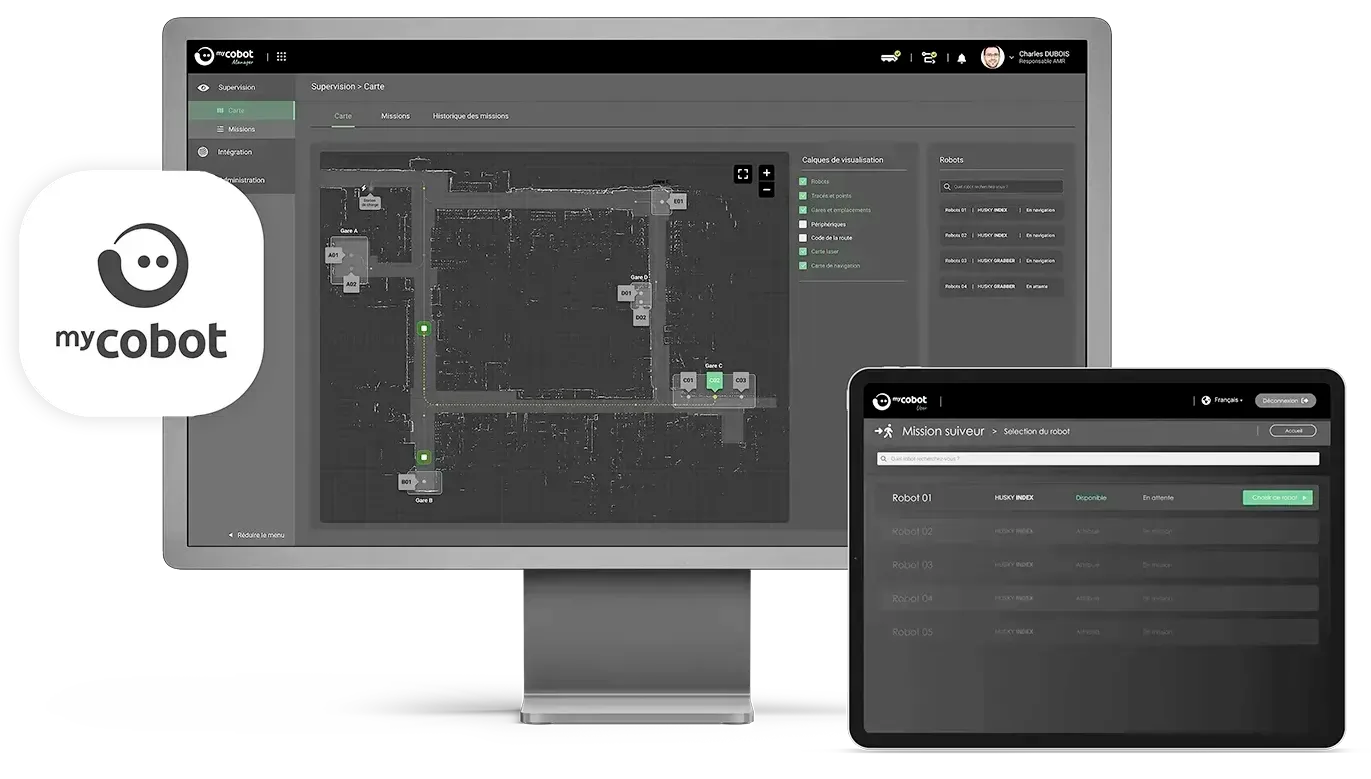
E-COBOT
France
French AMR manufacturer and system integrator offering the HUSKY robot range and MyCobot fleet management software.
EasyMile
France
Toulouse, France autonomous-vehicle software company founded 2014; EZTow and EZDolly systems automate industrial tow tractors and cargo movers at airports.

Filics
Germany
Munich-based robotics startup making ultra-flat omnidirectional AMRs that drive under Euro pallets for space-efficient intralogistics.
Yuanqi Innovation (Xiamen) Robot Co., Ltd. 元启创新(厦门)机器人有限公司
China
Xiamen-based AgiBot VAP partner founded 2025; resells and customises AgiBot humanoids, Genie wheeled robots and D1 quadrupeds with turnkey service.

OM Robot Technology Co. Ltd. 东莞全向机械科技有限公司
China
Chinese manufacturer of mecanum wheels, omnidirectional wheel bases, and mobile robotic platforms for AGV applications.
Techman Robot Inc. (TM Robot) 達明機器人股份有限公司
Taiwan
Techman Robot is a Taiwanese cobot maker producing AI-powered collaborative robots with integrated built-in vision for manufacturing automation.
Ortelio Ltd
United Kingdom
Ortelio Ltd is a UK cloud robotics research company founded in 2011 that develops AI platforms giving robots intelligence for service and healthcare tasks.

Parata Systems
United States
Durham, North Carolina pharmacy automation maker acquired by BD in 2022; builds robotic vial-filling and packaging systems.
Pensa Systems
United States
Austin-based AI retail shelf platform using autonomous drones and CV to detect stockouts; customers include J&J, AB InBev, and Circle K.
Robotics needs a service framework.
RSF defines a common language for robot service capability, lifecycle operations, certification pathways, and service-provider networks.
Join the RobotToday community on LinkedIn
Daily robotics news, in-depth analysis, conference highlights, and discussions with professionals worldwide.


