


Pensa Systems
Austin-based AI retail shelf platform using autonomous drones and CV to detect stockouts; customers include J&J, AB InBev, and Circle K.
Contact Pensa Systems
WEBSITE
https://pensasystems.comPHONE
+1 800-474-0691HEADQUARTERS
United States

Company Facts
Founded
-
Primary Role
Software/Algorithm
Company Size
-
Primary Region
North America
Annual Sales
-
Funding Stage
-
Funding Total
-

Manufacturers Anticipate Price Increases Amid Sourcing Challenges and Tariff Changes
A significant 94 percent of manufacturers are planning to increase prices in 2027, with two-thirds indicating that forecasting pricing has become more challenging compared to the previous year. Factors such as raw materials, labor, and fluctuating tariffs are contributing to this uncertainty, pushing procurement teams to rethink their sourcing strategies. The ongoing tariff debate often centers on the location of part production, yet the real bottleneck lies in the assembly and testing processes that follow manufacturing. With approximately 44 percent of small manufacturers operating below 70 percent capacity, there is an opportunity to enhance domestic production capabilities, particularly in robotics, where demand is surging. Looking ahead, the focus should shift towards financing small and midsize manufacturers to develop subassembly and testing capabilities. This would ensure that domestic parts can be transformed into fully operational machines, rather than merely reshoring components without addressing the underlying bottlenecks. No further timeline was disclosed at the time of publication.
Business Intelligence
Stuut Raises $52.5 Million Series B to Enhance AI Agents for Order-to-Cash Processes
Stuut, an AI platform based in New York, has successfully raised $52.5 million in a Series B funding round led by Insight Partners. This investment, which also saw participation from Andreessen Horowitz, M12, Microsoft’s Venture Fund, and Activant, brings Stuut's total funding to $93 million, following a previous Series A round ten months prior. The significance of this funding lies in Stuut's innovative approach to automating the order-to-cash process for large enterprises. With 81.7% of outbound collections now automated and 95% of incoming payments matched without human intervention, Stuut's platform is designed to enhance customer experience and financial performance. Major clients include Honeywell, ZoomInfo, and Verifone, with the platform having processed over $3 billion in transactions. Looking ahead, Stuut plans to utilize the new funding to expand its services into credit, lending, and funds movement, as it continues to grow at a remarkable rate of over 90% quarter over quarter. No further timeline was disclosed at the time of publication.
AI Funding & Investment Business & Markets AI AI-driven platform capital markets funding
Helm.ai Secures $70 Million in Commercial Contracts for Foundation Models in AI
Helm.ai announced it has signed $70 million in commercial contracts for its foundation models focused on physical AI over the past year. These contracts involve global automotive OEMs, Tier 1 suppliers, and industrial automation companies, with a primary focus on the automotive sector. The significance of these contracts lies in Helm.ai's deep partnerships within the automotive industry, which are seen as flagship deployments. Additionally, the company has established collaborations in mining and construction, indicating a growing demand for its technology. CEO Vladislav Voroninski emphasized the company's path to break even, highlighting its capital efficiency in a competitive market. Looking ahead, Helm.ai's foundation models utilize an unsupervised “deep teaching” methodology to enhance data efficiency, crucial for both autonomous driving and robotics. Voroninski noted the importance of data efficiency in robotics, where large fleets for data collection are not yet available. No further timeline was disclosed at the time of publication.
Artificial Intelligence Artificial Intelligence / Cognition Automotive Construction Design / Development Earnings
WTO Revises Global Trade Forecast for 2026 Amid Rising Demand for AI Technologies
The World Trade Organization (WTO) has upgraded its global trade forecast for 2026, driven by an increase in cross-border trade of high-value chips and other technologies essential for artificial intelligence development. This revision is significant as it reflects the growing importance of advanced technologies in the global economy, particularly in the context of AI build-outs. The demand for these technologies is reshaping trade patterns and influencing economic strategies worldwide. Looking ahead, stakeholders should monitor how the evolving landscape of technology trade impacts global supply chains and economic growth. No further timeline was disclosed at the time of publication.
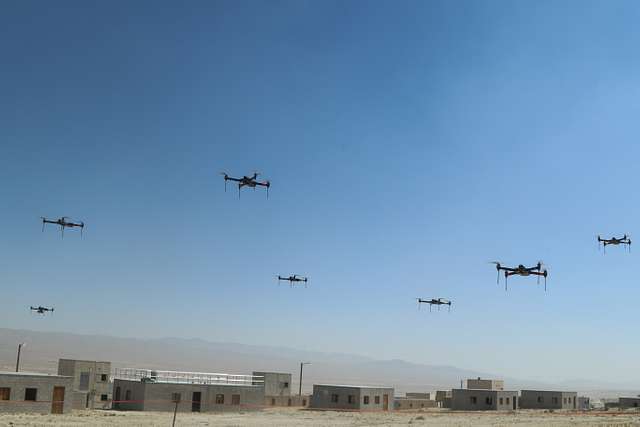
FCC to Vote on Opening 50 MHz of Spectrum for Commercial Drone Operations
The Federal Communications Commission (FCC) is set to vote on new regulations that would open 50 MHz of low-band spectrum for commercial drone operations. This decision, announced by FCC Chairman Brendan Carr in a blog post on October 7, aims to remove existing restrictions that have hindered drone operations in the 800 MHz cellular band. The vote is scheduled for the FCC's open meeting on October 29. This move is significant as it seeks to enhance the operational capabilities of American drone companies by providing access to additional spectrum. Carr emphasized that the current restrictions have inadvertently created barriers for drone operations, and the proposed changes are intended to modernize regulations to support U.S. drone leadership. Access to lower-frequency spectrum is particularly beneficial for reliable communications, especially for advanced operations like flights beyond visual line of sight (BVLOS). Looking ahead, the FCC's actions will focus on spectrum regulations while ensuring that operators continue to comply with FAA flight requirements. No further timeline was disclosed at the time of publication. Additionally, the FCC will consider new restrictions on foreign electronics testing laboratories, which could impact the compliance landscape for manufacturers in the drone sector.
Drone News Drone News Feeds News Products US Government 800 MHz spectrum
Ambrosia Energy and Bloom Energy Discuss AI Infrastructure Opportunities at TechCrunch Disrupt 2026
At TechCrunch Disrupt 2026, Ben Longmier, CEO of Ambrosia Energy, and Bill Thayer, SVP at Bloom Energy, will discuss the growing need for AI infrastructure. As AI applications expand, the demand for physical infrastructure such as power generation and data centers is increasing, presenting new business opportunities. This session will explore the challenges of scaling AI, particularly when demand for computing resources outpaces the availability of power and infrastructure. Longmier and Thayer will analyze which constraints may lead to durable business categories and how founders can navigate this evolving landscape. Attendees can expect insights into the emerging markets driven by AI's physical demands, including energy and cooling solutions. The conversation aims to help founders, investors, and tech leaders identify where to focus their efforts as AI infrastructure continues to develop. No further timeline was disclosed at the time of publication.
Startups AI Bloom Energy TechCrunch Disrupt Ambrosia Energy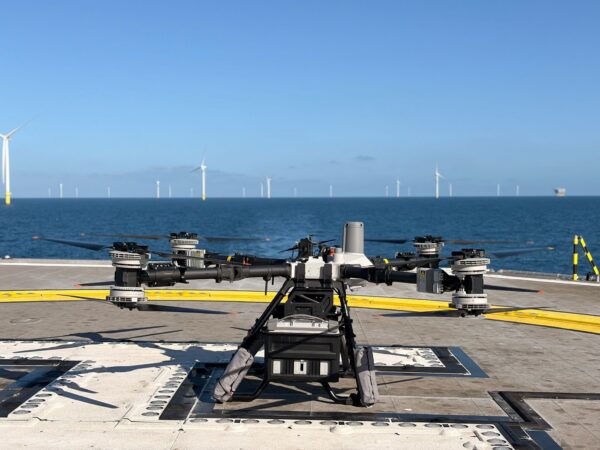
Ørsted and Skyports Complete Heavy Cargo Drone Trial for Wind Turbine Maintenance
Ørsted has successfully conducted a four-week cargo drone trial at its Hornsea 2 offshore wind farm in the North Sea, in collaboration with Skyports Drone Services. The trial involved transporting maintenance kits weighing up to 65 kilograms (143 pounds) between a service vessel and turbine tops, marking the first BVLOS delivery within the wind farm. This trial is significant as it demonstrates the potential of cargo drones to enhance operational efficiency in offshore wind turbine maintenance. By reducing the need for routine vessel trips, the drones can help maintain consistent electricity generation while minimizing operational risks and costs. The innovative load-collection method developed for the drones also increases safety and automation in the delivery process. Looking ahead, the successful execution of this trial paves the way for further integration of drone technology in offshore operations. The collaboration between Ørsted, Skyports, and the UK Civil Aviation Authority highlights the importance of industry partnerships in advancing drone capabilities and regulatory frameworks for BVLOS operations. No further timeline was disclosed at the time of publication.
Drone News Drone News Feeds News UK Drone Industry UK Drone Space aerospace news 2026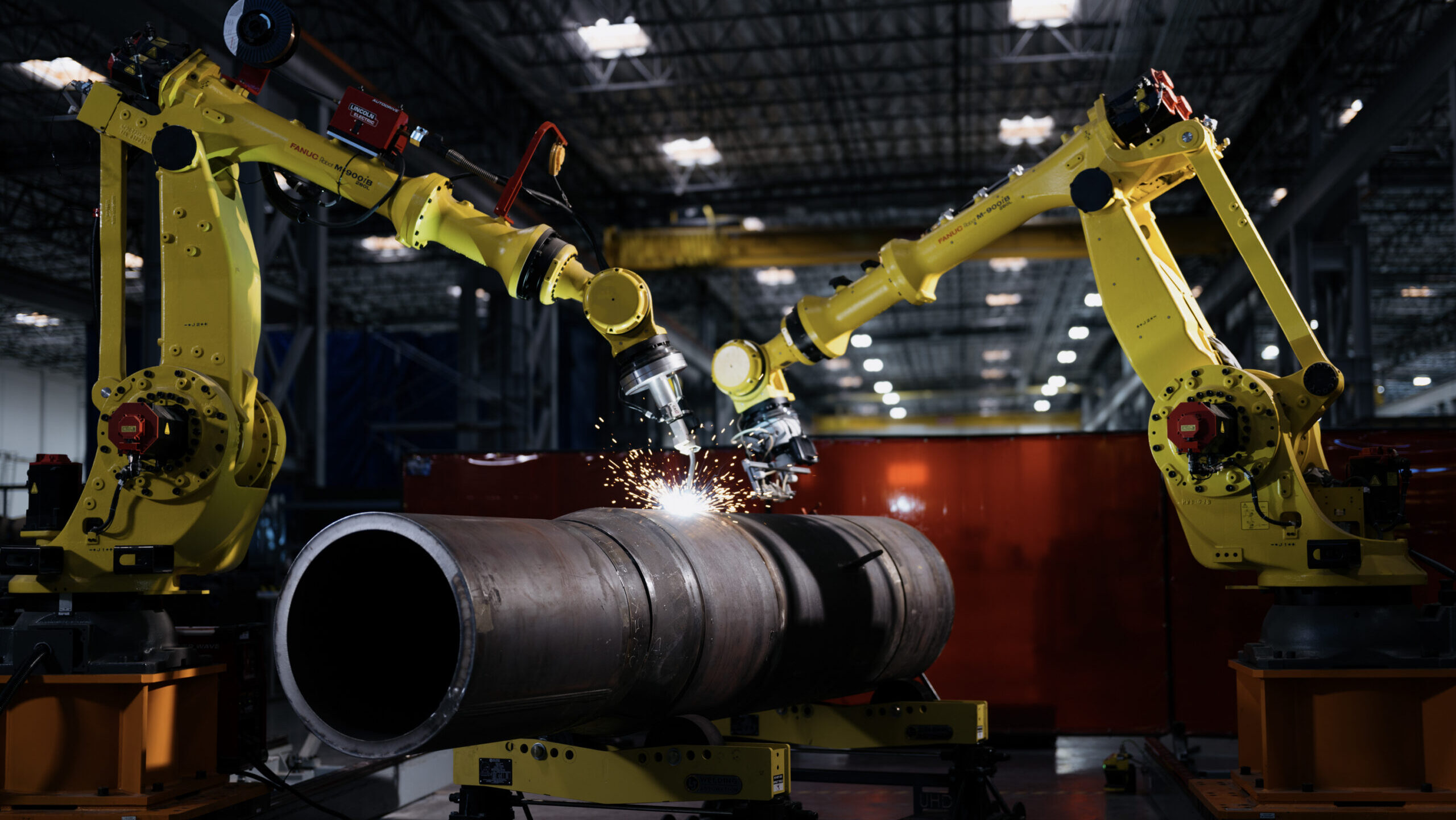
Gecko Robotics Partners with Anduril for New Arsenal-2 Shipyard in Baltimore County
Gecko Robotics has announced its collaboration with Anduril to deploy robotics and AI software at the new Arsenal-2 shipyard in Baltimore County, Maryland. This facility will focus on manufacturing submarine parts, utilizing Gecko's inspection technology for non-destructive testing (NDT) of components, and creating a digital thread for maintenance planning. The partnership is significant as it aligns with Anduril's $6.6 billion investment to enhance submarine production capabilities, including parts for Virginia-class submarines. The integration of Gecko's technology is expected to streamline inspection processes and improve quality control from the outset of operations at the new shipyard. Looking ahead, Anduril plans to commence construction of the Arsenal-2 shipyard after receiving necessary approvals, with initial operations targeted for 2030. The collaboration with Gecko Robotics is also set to extend to a new facility in Orange County, California, indicating a broader strategy to enhance submarine manufacturing efficiency and meet Navy production goals.
Naval Warfare Anduril artificial intelligence AI Gecko Robotics Navy submarine
Waymo Secures $5 Billion Loan from Blackstone and PIMCO for Robotaxi Growth
Waymo, the autonomous vehicle technology firm under Alphabet, has secured a $5 billion loan from notable lenders including Blackstone and PIMCO. This marks Waymo's first debt financing, aimed at accelerating its commercial expansion in existing cities and entering new markets across the U.S., Europe, and Japan. The significance of this financing lies in Waymo's transition into a scaling commercial enterprise, enhancing its financial flexibility and enabling it to capitalize on emerging opportunities. Previously, Waymo relied on equity funding, raising $16 billion in February, which valued the company at $126 billion. Looking ahead, Waymo is expanding its robotaxi services globally, with ongoing tests in London and Tokyo. However, the company's growth has attracted scrutiny from regulators, including investigations into incidents involving its robotaxis and school buses. No further timeline was disclosed at the time of publication.
Transportation Blackstone Waymo
AWS Startups Report Reveals Rapid Growth of Physical AI Amid Market Readiness Challenges
A report from AWS Startups in collaboration with Strand Partners indicates that 15% of startups across 20 markets are developing physical AI technologies. However, only 26% of these startups believe their local markets are ready for deployment, with 70% citing slow adoption as a significant barrier to growth. The report highlights the critical role of cloud infrastructure, with 72% of builders deeming it essential for development. Additionally, 62% of respondents indicated they could not have initiated their projects without cloud computing, while 56% noted that limited computing power hampers progress. Manufacturing and automotive sectors lead in commercial deployment at 51%, followed closely by logistics and retail at 47%. Looking ahead, 76% of builders anticipate that physical AI will become mainstream in their industries within five years, with 36% expecting this transition within two years. However, the report emphasizes that increased customer awareness, technical skills, funding, and clearer regulations are necessary for broader adoption.
Business & Markets Startups Technology & Infrastructure AI Amazon Asia
IMTS 2026 Preview: Record Orders and the Automation Story
IMTS 2026 opens in Chicago with 1,788 exhibitors and record H1 machine tool orders. What the USMTO data says about automation, and the booths to see.
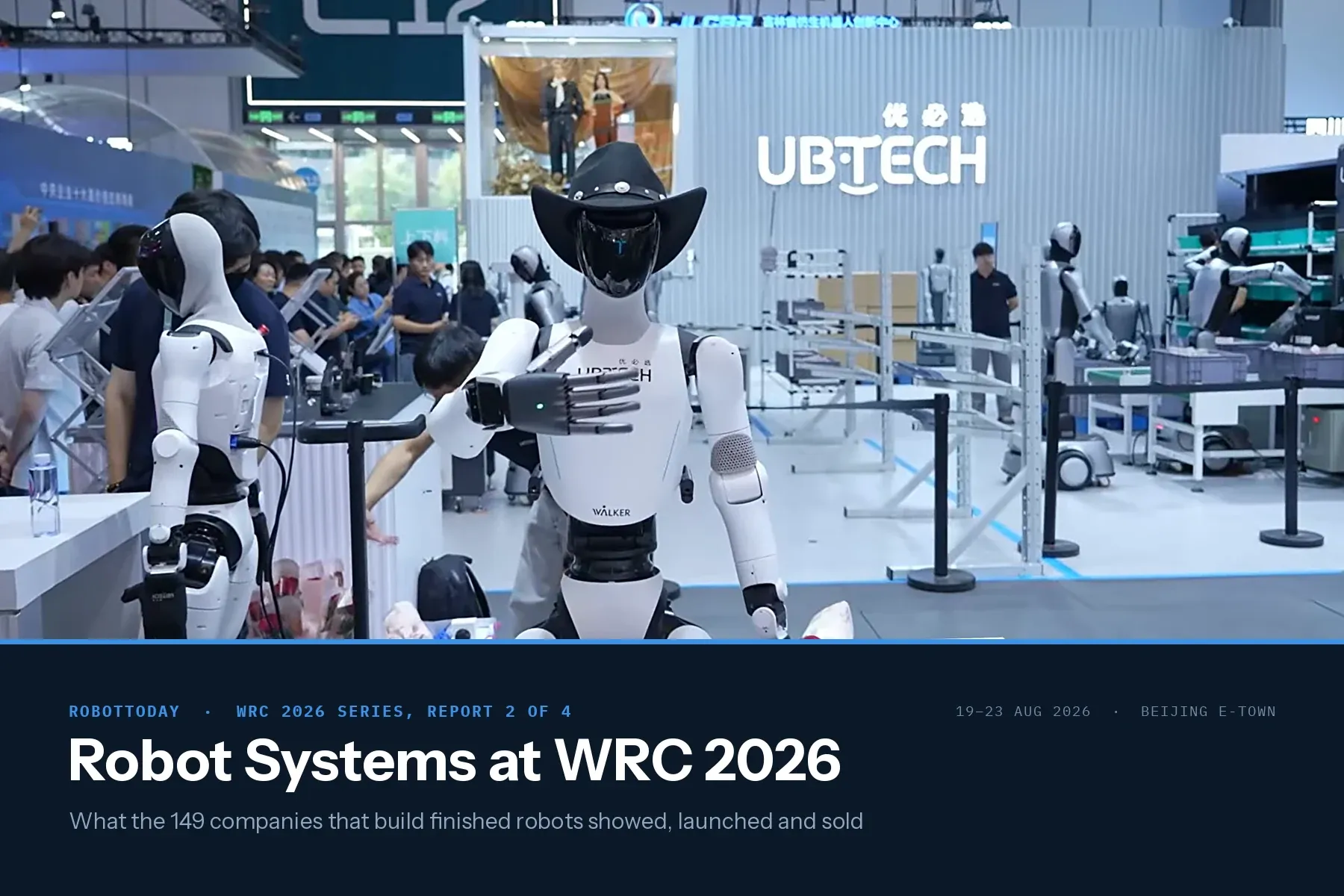
WRC 2026 Robot Systems: 149 Companies That Build Robots
149 of the 248 classified WRC 2026 exhibitors build finished robots. 93 build humanoid or legged machines. The audited humanoid sales number is one unit.
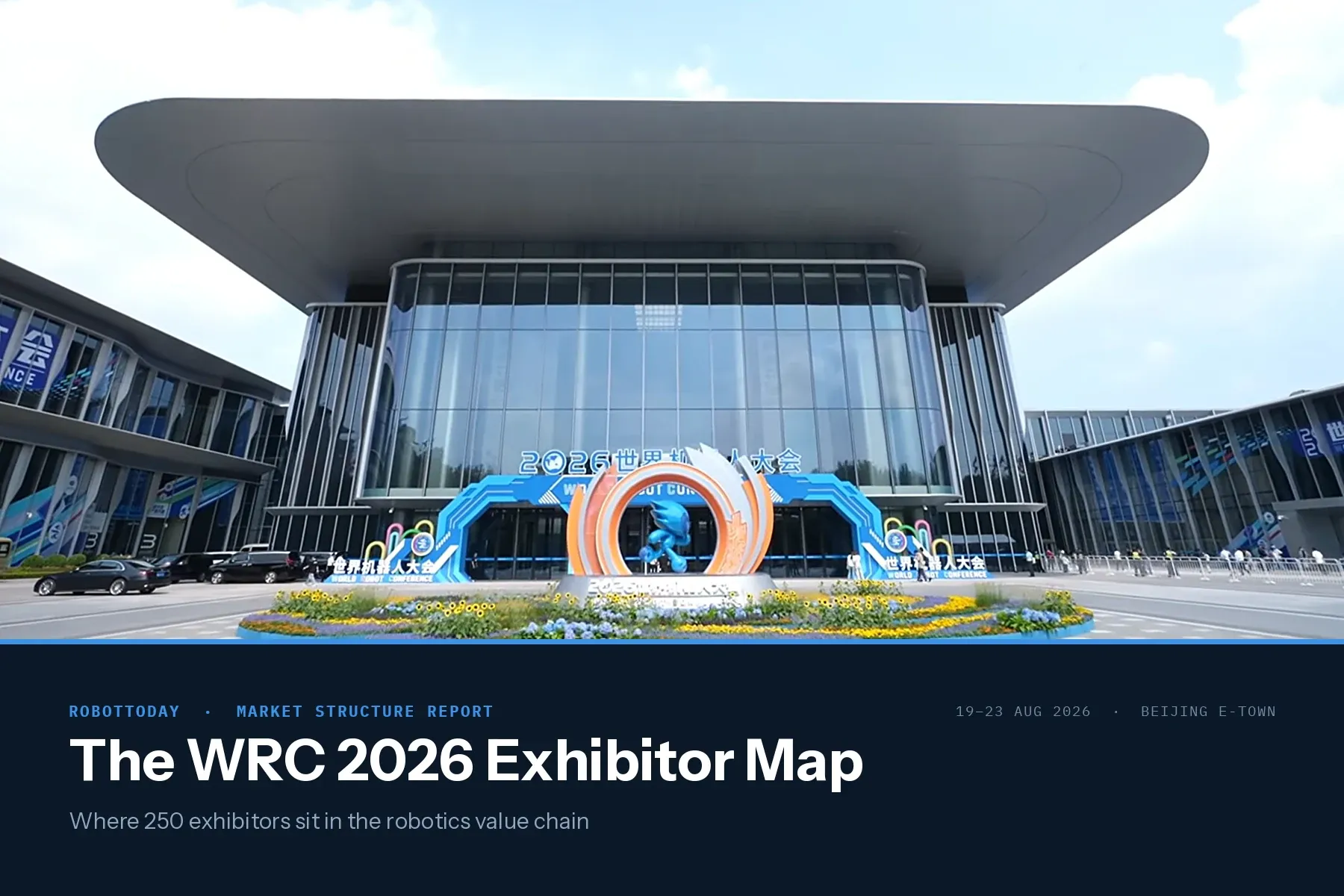
WRC 2026 Exhibitor Map: 248 Robotics Companies Mapped
We classified 248 WRC 2026 exhibitors with the RobotToday taxonomy. Motion & Actuation leads at 75 companies, Humanoid at 72, and compute stays thin at 12. (Modified 2026-08-27)

ROBOTTODAY Weekly July 13 – 17, 2026
This week in robotics: Hyundai takes full ownership of Boston Dynamics, Xpeng targets 1,000 Iron humanoids a month, LimX Dynamics raises $200M pre-IPO, and Agility opens a Silicon Valley physical-AI hub. July 13–17, 2026.

Physical AI Landscape: From Digital Intelligence to the Embodied Physical World
A comprehensive industry analysis of Physical AI — covering Embodied AI, Field AI, Factory AI, VLM, World Model, VLA, and the VLA vs WAM architecture debate. Includes 20+ companies, 28 references, and the RobotToday Physical AI Landscape diagram. July 2026.
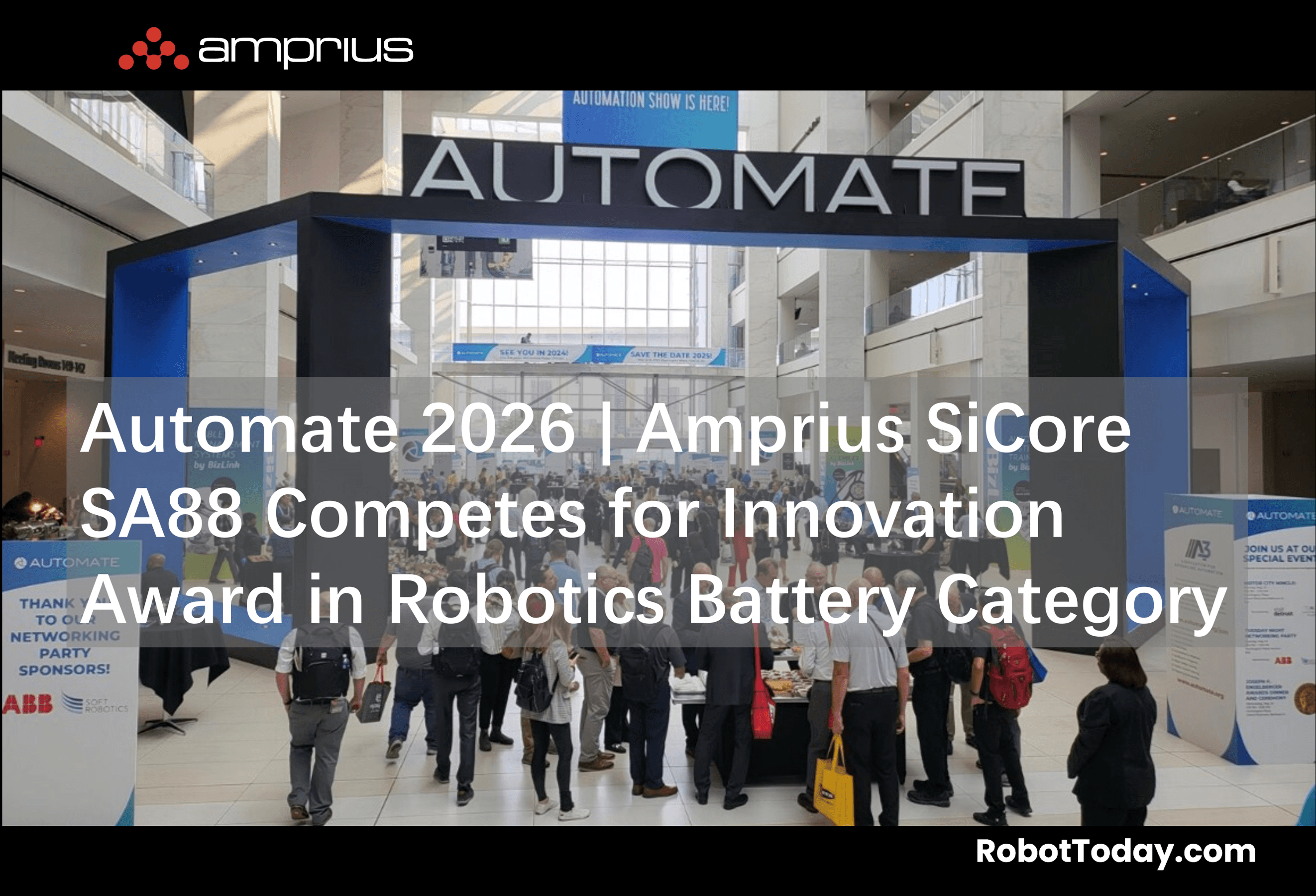
Automate 2026 | Amprius SiCore SA88 Competes for Innovation Award in Robotics Battery Category
At Automate 2026 in Chicago, Amprius Technologies exhibited its SiCore SA88 silicon-anode pouch cell — 358 Wh/kg, 750 Wh/L — as a finalist in the Components, Hardware & Enabling Technologies category. Analysis of implications for AMR, UAV, and aerial mobility platforms.
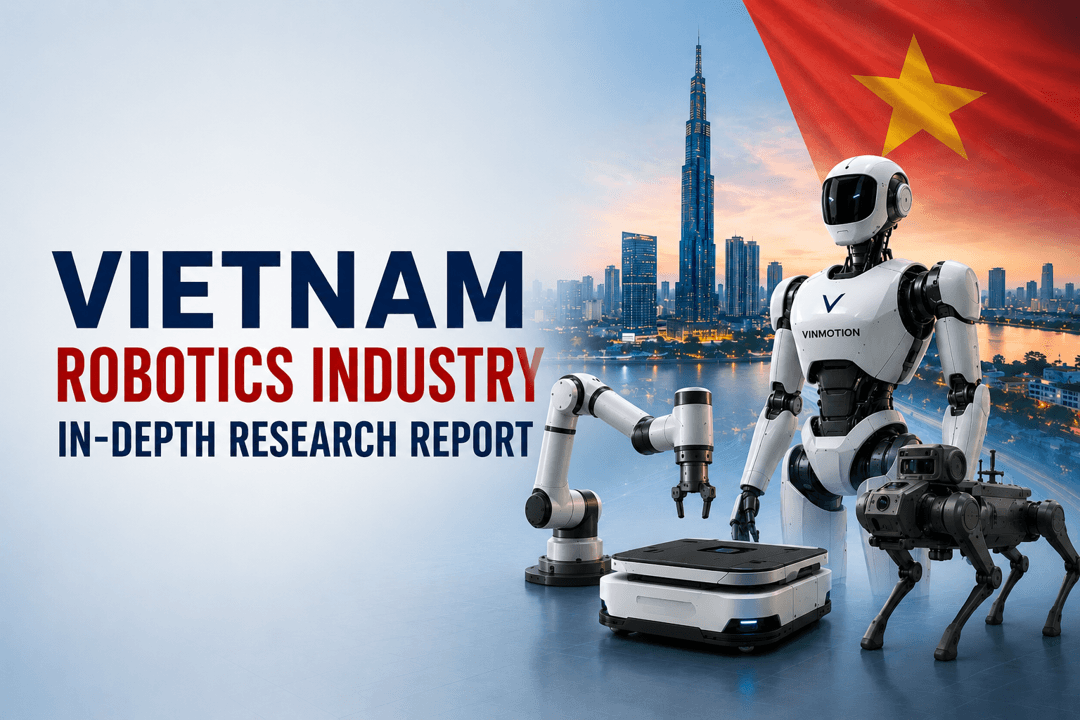
Vietnam Robotics Industry Report 2026
Comprehensive analysis of Vietnam's robotics industry: market size, industrial policy, key companies (Vingroup, Apicoo, Phenikaa-X), geopolitical dynamics, and 2030 growth opportunities.

FUTURE WARFARE | Cross-Domain Integration - Integration How Land, Sea, Air and Software Are Converging Into a Single Kill Chain
Cross-domain robotics is reshaping modern warfare as drones, UGVs, AI targeting systems, and autonomous logistics converge into a single networked kill chain across land, sea, air, and software.

RobotToday Weekly Industry Briefing: Feb 2 – 6, 2026
Robotics shifted from demos to deployment post-CES 2026, led by China’s humanoid scale, AI robot brains, and accelerating industrial adoption.
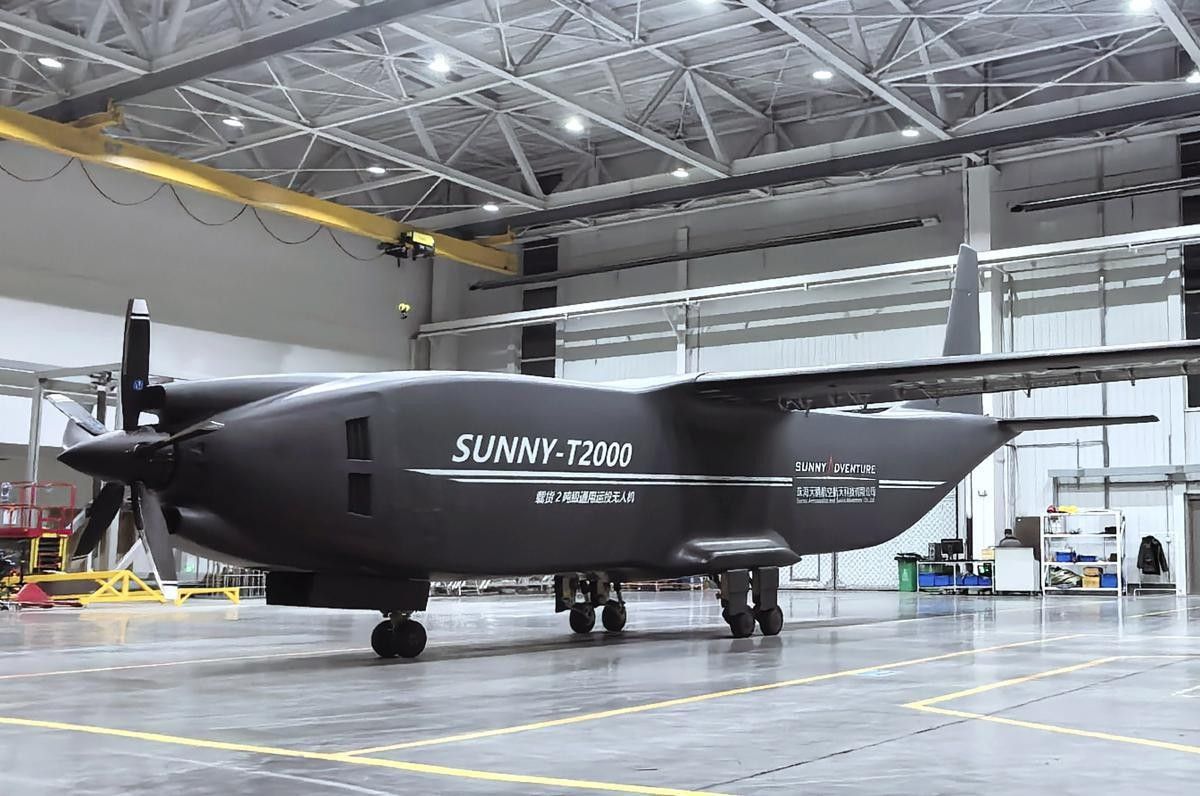
Sunny t2000 china s first 2 ton turboprop cargo uav signals a new era for heavy unmanned logistics
The SUNNY-T2000 signals a shift in heavy cargo UAVs, showing how two-ton unmanned aircraft are reshaping regional and industrial air logistics.


