

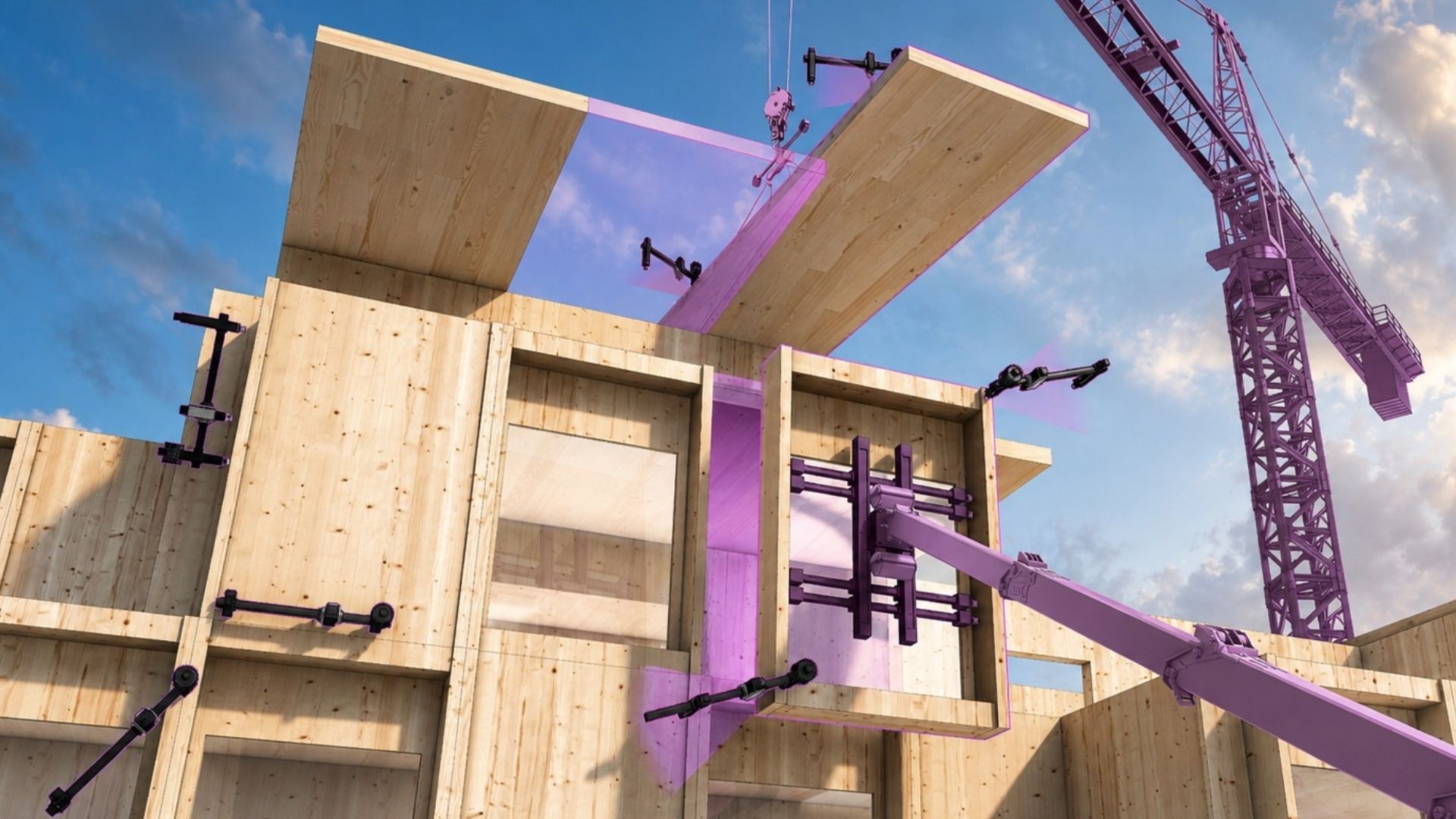
Researchers at the University of Stuttgart in Germany are advancing two autonomous robotic systems aimed at enhancing construction efficiency and sustainability. The SCALAR and COBRAS projects, funded by the European Innovation Council’s EIC Pathfinder Challenge with approximately €4 million each, will explore robotic assembly methods with minimal human involvement, set to commence in November 2026.
The significance of these projects lies in their potential to revolutionize construction practices. SCALAR focuses on modular timber construction, utilizing autonomous machines to assemble prefabricated components, while COBRAS aims to employ swarm intelligence for the assembly of lightweight space-frame structures. Both approaches promise to reduce waste and improve productivity in building processes.
Looking ahead, the research will emphasize the development of digital control systems and sensors capable of functioning in challenging construction environments. No further timeline was disclosed at the time of publication.
Editor's Note
The integration of autonomous robotic systems in construction is poised to reshape the industry by enhancing efficiency and sustainability. As projects like SCALAR and COBRAS emerge, they highlight a shift towards innovative building methods that leverage technology to reduce labor dependency and material waste. This trend may influence procurement strategies and investment in construction technologies.
Copyright Notice
This briefing is an independently written summary based on publicly available reporting and is provided for industry information and news discovery. The original report and source publication are credited and linked where applicable. RobotToday does not claim ownership of third-party source material.
Rights concerns? If you believe any material in this briefing infringes your copyright or other rights, please contact [email protected] with the relevant URL and details. We will review the matter and take appropriate action where warranted.





























Leave a comment