The Price of a Kilowatt-Hour Is Quietly Deciding Where AI Data Centers Are Built
- Published
- Source
- PanDaily.com
Zhejiang Province has introduced a new time-of-use electricity pricing policy that is significantly influencing the strategic decisions regarding the placement of AI computing centers and energy storage investments throughout China. This initiative aims to optimize energy consumption by encouraging usage during off-peak hours, thereby reducing costs for both consumers and businesses. As a result, companies are reevaluating their operational locations to take advantage of lower electricity rates, which could lead to a shift in the development of technology infrastructure within the region. The policy reflects a broader trend in the energy sector, where cost differentials are becoming a critical factor in investment decisions, particularly in the rapidly growing fields of artificial intelligence and energy storage. By incentivizing off-peak energy use, Zhejiang is positioning itself as a competitive hub for technology and innovation, potentially reshaping the landscape of energy consumption and technological development across the country.
Original report
The Price of a Kilowatt-Hour Is Quietly Deciding Where AI Data Centers Are Built
PanDaily.com · [email protected] (Pandaily)This briefing is an independently written summary based on publicly available reporting and is provided for industry information and news discovery. The original report and source publication are credited and linked where applicable. RobotToday does not claim ownership of third-party source material.
Rights concerns? Contact [email protected] with the relevant URL and details. We will review the matter and take appropriate action where warranted.
More related news
- 1
- 2
- 3
- 4
- 5
- 6
- 7
- 8
-
9
RobotToday Weekly November 9–13, 2026 RobotToday · 5 days ago
- 10
- 11
- 12
Related Suppliers

BioRobotics Laboratory, Korea University of Technology and Education
Korea, Republic of (South)
South Korean university research laboratory focusing on haptics, exoskeletons, rehabilitation robotics, and autonomous ground vehicles.

McMaster Manufacturing Research Institute
Canada
Hamilton, Ontario applied manufacturing research center at McMaster University; runs a 21,000 sq ft facility with seven research labs.

Robotics Education & Competition Foundation
United States
The REC Foundation is a US nonprofit that runs VEX-based robotics and drone competitions reaching 1.1 million students across 70 countries.
E-COBOT
France
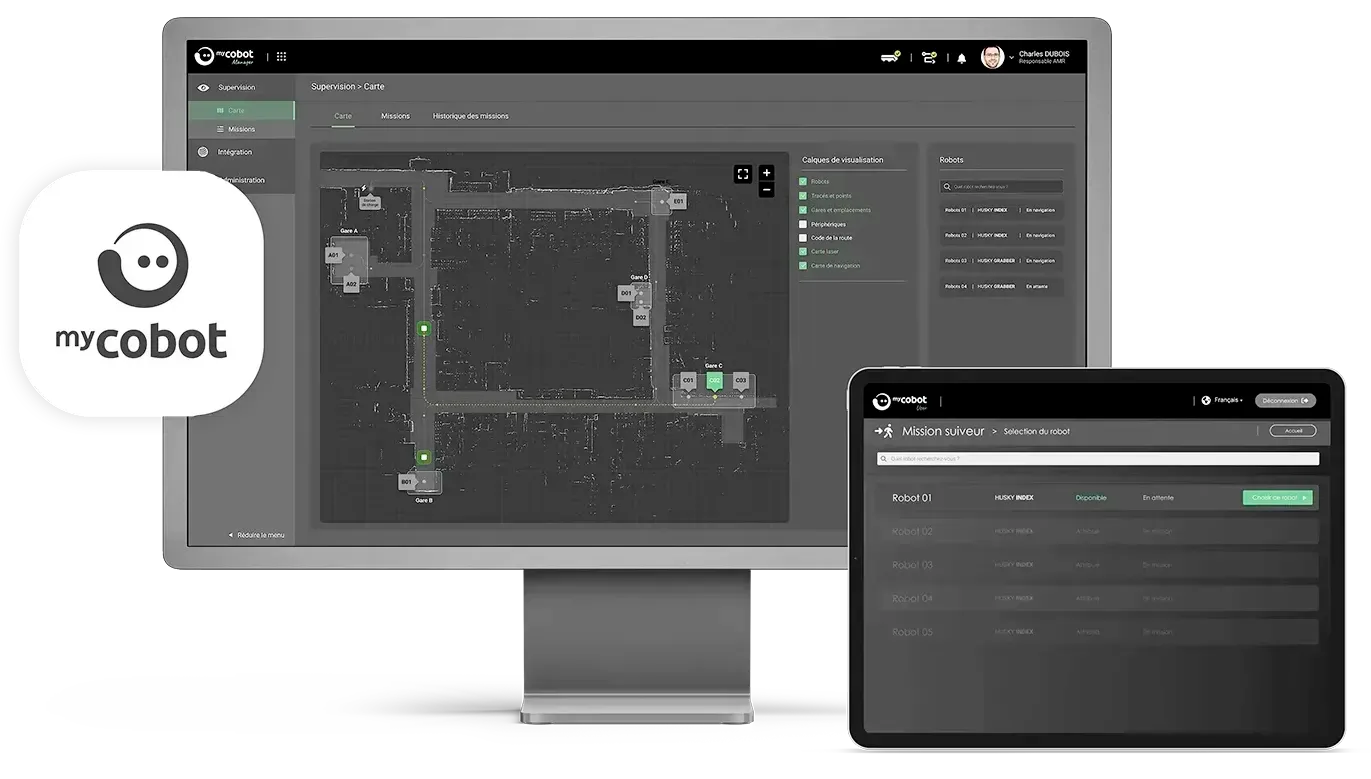
French AMR manufacturer and system integrator offering the HUSKY robot range and MyCobot fleet management software.
EasyMile
France
Toulouse, France autonomous-vehicle software company founded 2014; EZTow and EZDolly systems automate industrial tow tractors and cargo movers at airports.

Filics
Germany
Munich-based robotics startup making ultra-flat omnidirectional AMRs that drive under Euro pallets for space-efficient intralogistics.

Datanomix
United States
No-Operator-Input production monitoring software that turns CNC machine data into real-time visibility and prescriptive coaching for manufacturers.
Datatang 数据堂(北京)科技股份有限公司
China
Beijing AI training-data supplier founded 2010 and quoted on NEEQ; its Nexdata arm sells egocentric, teleoperation and hand-pose datasets for robot learning.
Anyscale
United States
Anyscale is a San Francisco AI infrastructure firm behind Ray, the open-source engine for large-scale model training; Nscale agreed to buy it for $1.65B.
Robotics needs a service framework.
RSF defines a common language for robot service capability, lifecycle operations, certification pathways, and service-provider networks.
Join the RobotToday community on LinkedIn
Daily robotics news, in-depth analysis, conference highlights, and discussions with professionals worldwide.