

Study Reveals Trust Issues with Humanoid Robots After Conversational Errors
- Published
- Source
- Robohub.org
A recent study published in Science Robotics indicates that people become more suspicious of humanoid robots, particularly expressive ones, when they make errors during interactions. The research involved 50 participants conversing with the humanoid robot Pepper, which is designed to recognize emotions and engage expressively. The findings revealed that errors made by the robot led to increased oxytocin levels, which correlated with decreased trust and influence on participants' decisions.
This research is significant as it challenges the assumption that socially expressive robots inherently earn more trust. Instead, it suggests that when an expressive robot makes a mistake, it is perceived as a social violation rather than a technical malfunction, impacting users' trust levels. The study highlights the importance of understanding how human-robot interactions can affect trust, especially as robots become more integrated into daily life.
Future research will explore whether these findings apply to diverse demographics and different robot designs. Additionally, the study aims to investigate if robots can regain trust after making mistakes, similar to human interactions, by acknowledging errors or expressing good intent. No further timeline was disclosed at the time of publication.
Original report
When expressive humanoid robots are awkward, people become wary – new brain study
Robohub.org · The ConversationThis briefing is an independently written summary based on publicly available reporting and is provided for industry information and news discovery. The original report and source publication are credited and linked where applicable. RobotToday does not claim ownership of third-party source material.
Rights concerns? Contact [email protected] with the relevant URL and details. We will review the matter and take appropriate action where warranted.
More related news
- 1
- 2
- 3
- 4
- 5
- 6
- 7
- 8
- 9
- 10
- 11
-
12
ERF 2027 – Birmingham, Mar 2–4, 2027 RobotToday · 2 days ago
Related Suppliers

Drexel University
United States
Philadelphia research university with interdisciplinary robotics and autonomy programs across engineering and computing.

George Mason University Autonomous Robotics Lab
United States
GMU Autonomous Robotics Lab is a Computer Science research group in Fairfax, VA, studying swarm robotics, multi-robot systems, and computer vision.

Pepperl+Fuchs SE
Germany
German industrial sensor and automation technology company pioneering explosion protection and smart factory sensing since 1945.
Peppermint Robotics
India
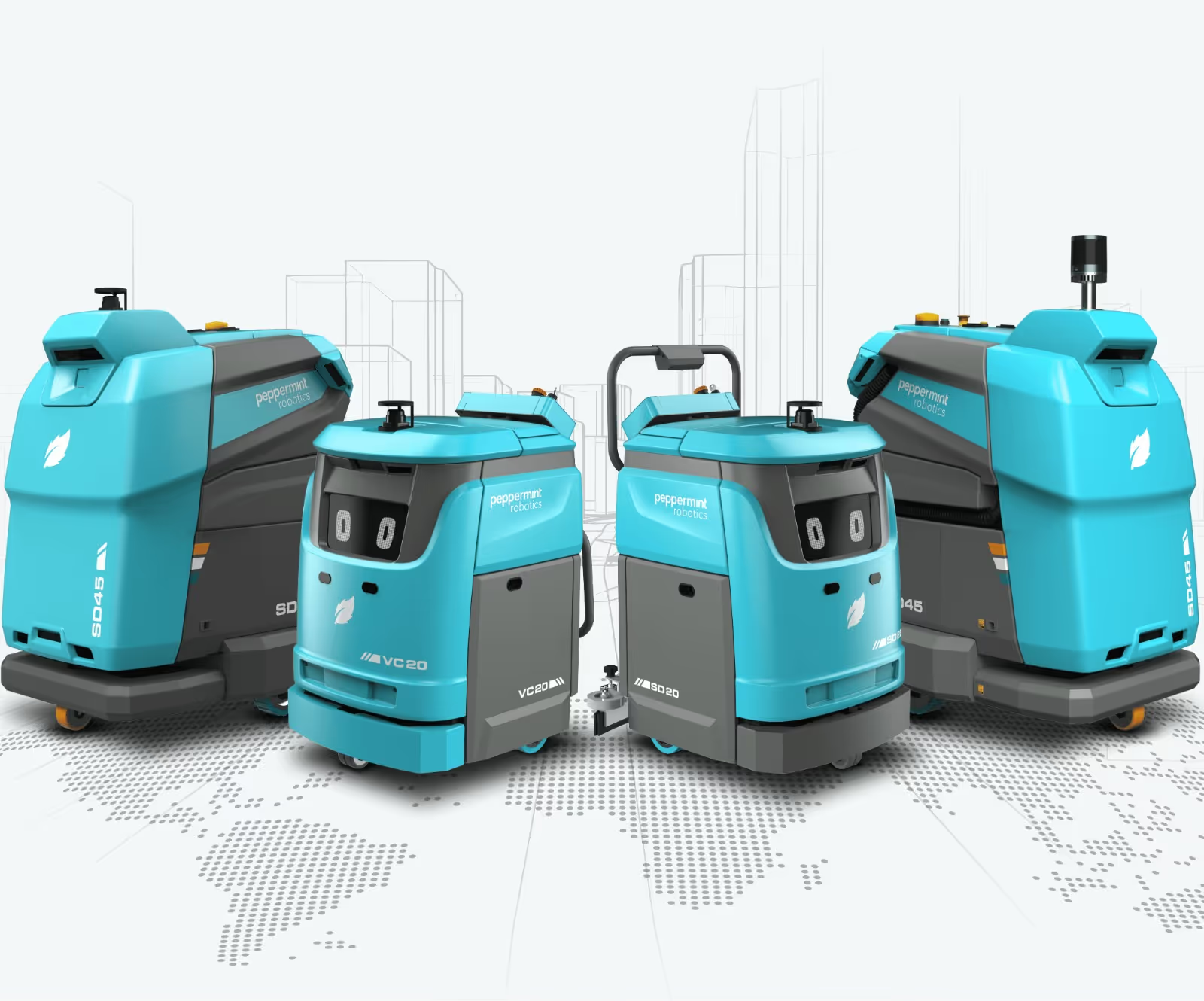
India-based robotics startup building autonomous floor-cleaning and material-handling robots for commercial and industrial environments.
Tangible Robots
United States
San Francisco startup building Eggie, a wheeled humanoid with humanlike hands for household dexterity tasks, backed by Blume Ventures and Micelio.
Techsoft Robots 深圳市泰科智能机器人有限公司
China
Shenzhen manufacturer of humanoid and collaborative robot joint modules, servo drives, and dual-arm cobots for OEM and end-user customers.

University of Plymouth, Centre for Robotics and Neural Systems
United Kingdom
Plymouth, UK university research centre for cognitive and developmental robotics; uses iCub and Pepper platforms for language learning and social HRI studies.
OpenMind
United States
US robotics software startup (est. 2024) building OM1, an open-source, hardware-agnostic AI operating system for humanoid and legged robots.

AKA Intelligence
United States
US AI company developing the Musio social robot and MUSE AI engine for English language learning and emotional social interaction.

RoboCARE Lab
United States
WPI research lab led by Dr. Fengpei Yuan developing socially intelligent robots for dementia care, aging support, and autism assistance via AI and HRI.

CMES Robotics
United States
AI 3D robot-vision developer enabling robots to recognize irregular objects for depalletizing, picking and loading.

Bossa Nova Robotics
United States
US retail robotics and AI company providing autonomous shelf-scanning robots and inventory analytics for large-format retail stores.
Robotics needs a service framework.
RSF defines a common language for robot service capability, lifecycle operations, certification pathways, and service-provider networks.
Join the RobotToday community on LinkedIn
Daily robotics news, in-depth analysis, conference highlights, and discussions with professionals worldwide.


