

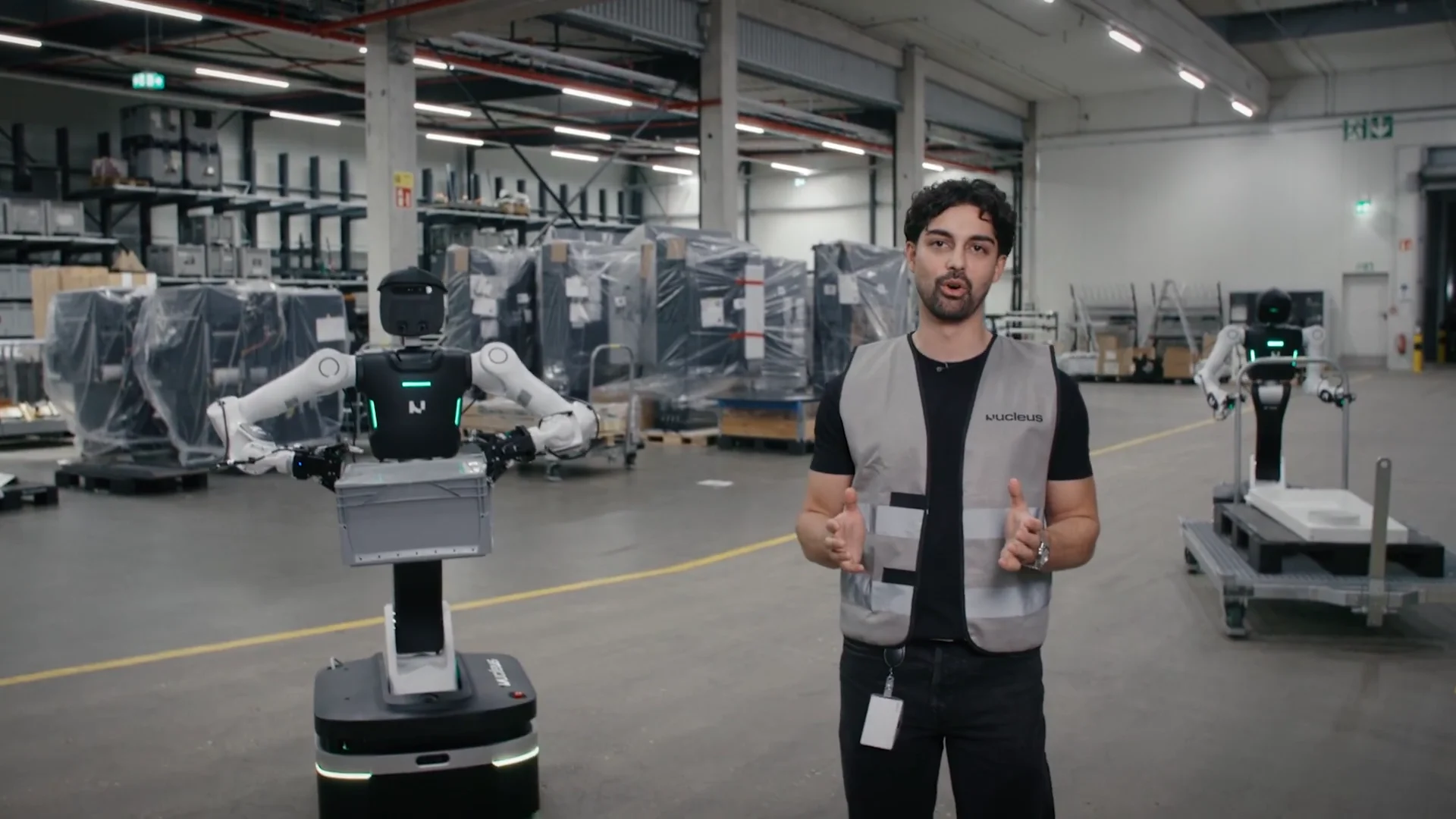
Nucleus, a European startup, has made a significant hardware pivot by replacing the bipedal design of its Nucleus I robot with a wheeled base for its next-generation platform, Nucleus II. This decision follows direct feedback from customers in industrial logistics environments, who prioritized higher payload capacities, extended operational uptime, and enhanced safety features.
The shift to a wheeled mobile base addresses critical limitations of compact bipedal robots, as highlighted by co-founder Melvin Schwarz. The company aims to meet the demands of plant managers who explicitly requested a design without legs, emphasizing the importance of real-world deployment data in shaping product development.
Looking ahead, Nucleus plans to deploy up to 25 Nucleus II robots by the end of Q1, continuing to operate under a Robotics-as-a-Service model. The company has also improved its teleoperation interface, which allows remote operators to intervene during logistics workflows, further enhancing the robot's operational capabilities. No further timeline was disclosed at the time of publication.
Editor's Note
Nucleus's pivot to a wheeled base reflects a growing trend in robotics where customer feedback directly influences product design. This shift highlights the importance of adaptability in the robotics sector, particularly in industrial applications where operational efficiency and safety are paramount. As companies increasingly adopt Robotics-as-a-Service models, the ability to quickly iterate on hardware based on real-world performance will be crucial for success.
























Leave a comment