

Industry Briefing
A single destination for timely, editor-curated robotics news from around the world.
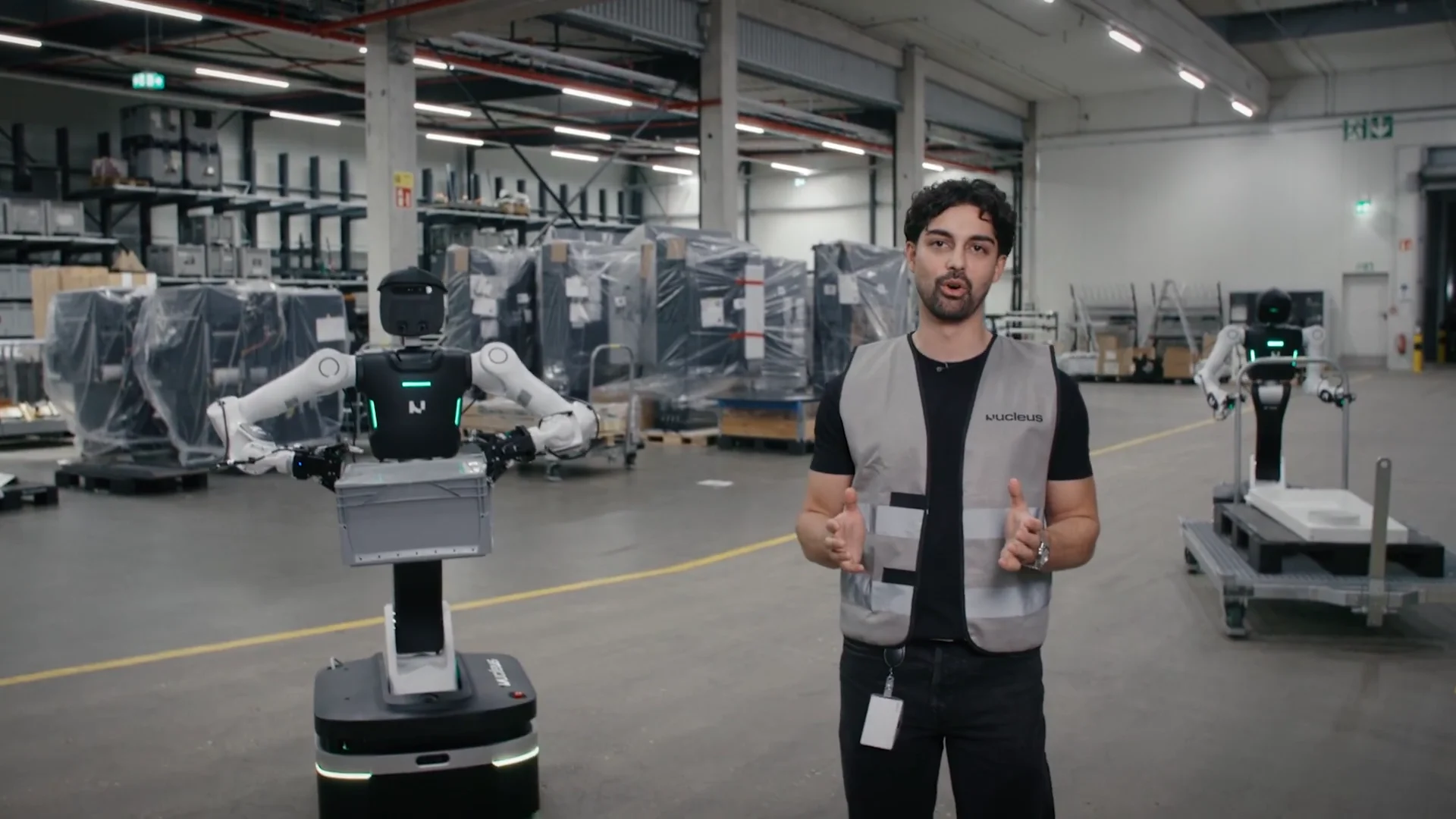
Nucleus Transitions to Wheeled Base for Nucleus II After Factory Feedback
Nucleus, a European startup, has made a significant hardware pivot by replacing the bipedal design of its Nucleus I robot with a wheeled base for its next-generation platform, Nucleus II. This decision follows direct feedback from customers in industrial logistics environments, who prioritized higher payload capacities, extended operational uptime, and enhanced safety features. The shift to a wheeled mobile base addresses critical limitations of compact bipedal robots, as highlighted by co-founder Melvin Schwarz. The company aims to meet the demands of plant managers who explicitly requested a design without legs, emphasizing the importance of real-world deployment data in shaping product development. Looking ahead, Nucleus plans to deploy up to 25 Nucleus II robots by the end of Q1, continuing to operate under a Robotics-as-a-Service model. The company has also improved its teleoperation interface, which allows remote operators to intervene during logistics workflows, further enhancing the robot's operational capabilities. No further timeline was disclosed at the time of publication.
RaaS Europe Deployment Nucleus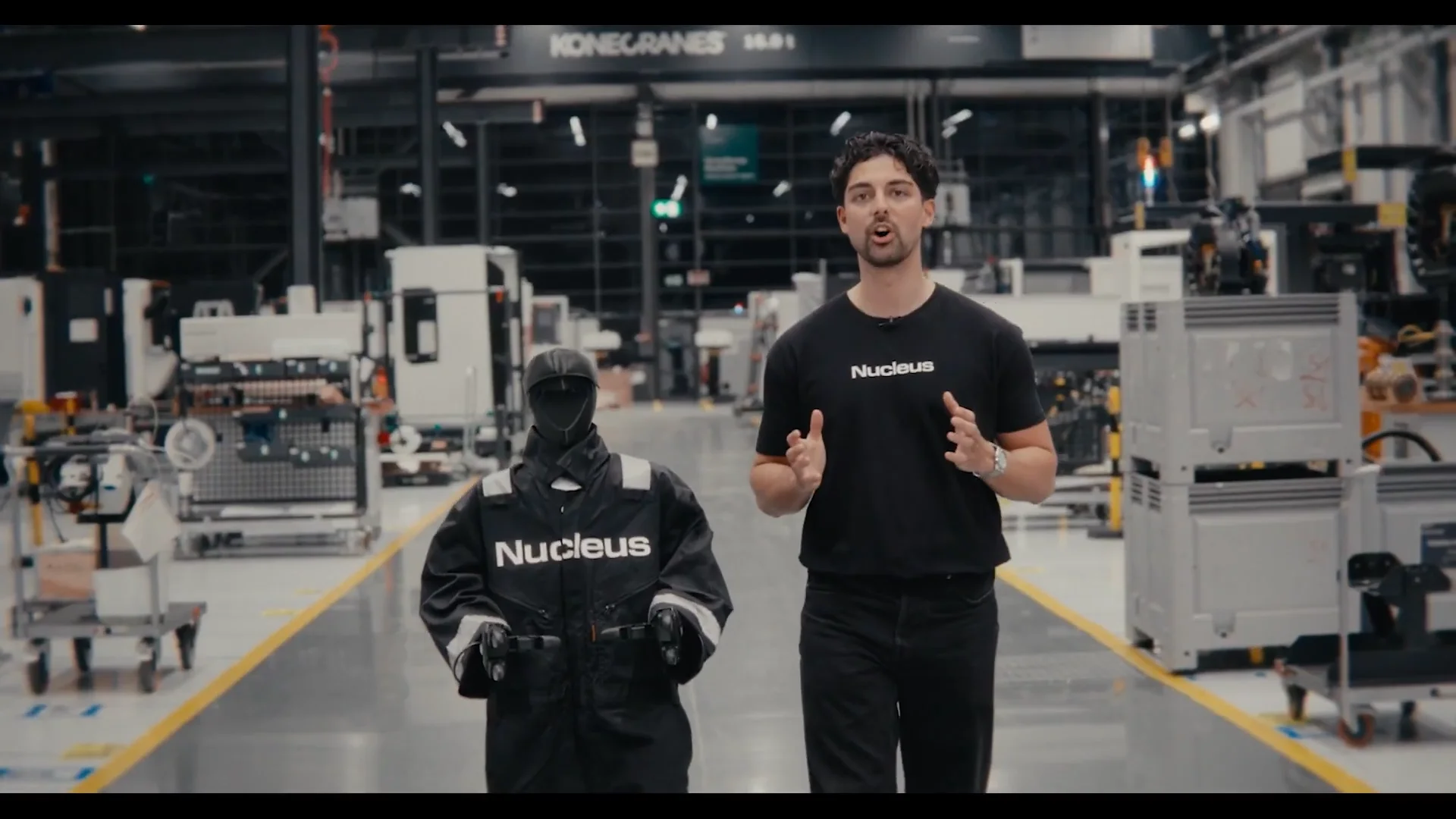
Nucleus Launches Teleoperated Humanoids in Factories, Achieving Deployment in Under 90 Days
Nucleus, a European startup, has emerged from stealth mode to announce the deployment of humanoid robots in a factory setting in Germany within 90 days. This initiative marks a significant shift in the robotics industry, which has been focused on achieving full autonomy. Nucleus aims to address labor shortages by leveraging teleoperation and supervised deployment, allowing humanoids to perform useful tasks from day one. The company's approach contrasts with the industry's tendency to wait for complete autonomy before deploying robots. Nucleus co-founder Melvin Schwarz emphasized the importance of early deployment and heavy supervision, drawing parallels to data-gathering strategies used by Tesla and Waymo in autonomous driving. By actively managing the robots in real-world tasks, Nucleus not only provides immediate value to clients but also collects valuable training data that cannot be easily replicated. Looking ahead, Nucleus plans to continue refining its deployment strategies while addressing logistical challenges faced by clients. The company utilizes Unitree G1 humanoid platforms for its operations, but acknowledges that off-the-shelf hardware often falls short in complex factory environments. No further timeline was disclosed at the time of publication.
Europe NucleusRobotics needs a service framework.
RSF defines a common language for robot service capability, lifecycle operations, certification pathways, and service-provider networks.
Join the RobotToday community on LinkedIn
Daily robotics news, in-depth analysis, conference highlights, and discussions with professionals worldwide.






