

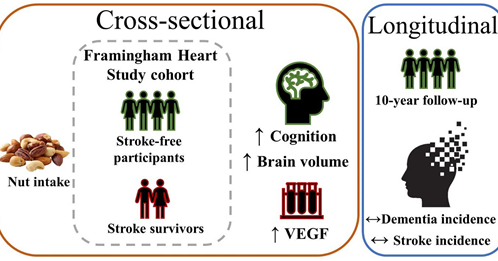
Researchers from Monash University published a study examining the impact of nut consumption on cognitive function and brain health. Utilizing data from the Framingham Heart Study, they analyzed participants with and without stroke, focusing on average nut intake and its correlation with cognitive test scores, brain volume measured by MRI, and protective blood components like BDNF and VEGF.
The analysis of 1,742 participants without stroke revealed that higher nut intake (ranging from 0 to 94.3g per day) was associated with better overall cognitive function scores after adjusting for factors like age, gender, and obesity. Notably, this trend was particularly evident in groups with poorer lifestyle habits, such as low diet quality and lack of exercise.
Among 28 stroke survivors, those with higher nut consumption exhibited elevated levels of VEGF, a component that aids in creating new blood vessels and protecting brain tissue. However, the long-term study tracking participants over ten years found no significant link between nut intake and the risk of new strokes or dementia onset.
Editor's Note
This study underscores the potential cognitive benefits of nut consumption, particularly among individuals with challenging lifestyle habits. As the demand for health-conscious food options grows, understanding the relationship between diet and cognitive health becomes increasingly relevant for both consumers and healthcare providers.



































Leave a comment