Flapping-Wing Flying Robot Achieves 4-Minute Flight with Less Than 1 Gram Weight
- Published
- Source
- leaderobot.com
A new flapping-wing flying robot has successfully flown for four minutes while weighing less than one gram. This achievement marks a significant advancement in overcoming the challenges of cable-free altitude control in aerial robotics. The development of such lightweight flying robots is crucial for applications in various fields, including surveillance and environmental monitoring.
The ability to control altitude without cables opens up new possibilities for the deployment of flying robots in complex environments. This technology can enhance the versatility and functionality of drones, enabling them to operate in areas where traditional methods are impractical. As the demand for innovative aerial solutions grows, advancements like these are essential for the future of robotics.
The specific milestones for further development of this flapping-wing robot have not been disclosed at the time of publication. However, continued research and testing are expected to refine its capabilities and expand its applications in the robotics industry.
Original report
"Less than 1 gram flies for 4 minutes! How does this flapping-wing flying robot overcome the 'cable-free altitude control' barrier?"
leaderobot.com · LeaderobotThis briefing is an independently written summary based on publicly available reporting and is provided for industry information and news discovery. The original report and source publication are credited and linked where applicable. RobotToday does not claim ownership of third-party source material.
Rights concerns? Contact [email protected] with the relevant URL and details. We will review the matter and take appropriate action where warranted.
More related news
- 1
- 2
- 3
- 4
-
5
RobotToday Weekly November 2 – 6, 2026 RobotToday · 4 days ago
- 6
- 7
- 8
- 9
- 10
- 11
- 12
Related Suppliers

GIPSA-lab (UMR 5216)
France
GIPSA-lab is a Grenoble signal, control and speech lab (UMR 5216) of 320 members that builds custom flying robots and the NINA humanoid robot.

Northeastern University — Institute for Experiential Robotics
United States
Boston-based Northeastern University institute at 815 Columbus Avenue; researches legged, soft and medical robotics through labs led by Lipton, Padir and Song.

NEXT.robotics GmbH & Co.KG
Germany
Zimmern ob Rottweil, Germany robotics integrator building UR and Mecademic cobot cells, EOAT grippers, and mobile robot systems for industry and research.

Skip
United States
San Francisco Google X spinoff building powered exoskeleton wearables (movewear) that reduce walking exertion, including MO/GO powered pants with Arc'teryx.

Aerial Technology International
United States
Oregon commercial UAS maker producing industrial-grade, application-specific drones for cinematography, agriculture, mapping, inspections, and public services.
DJI 大疆创新
China
Shenzhen-based maker of consumer, professional and enterprise camera drones plus stabilized camera gimbals and flight-control systems.

Copenhagen Subsea A/S
Denmark
Danish maker of oil-free rim-driven electric subsea thrusters (200-1,900 N, rated to 6,000 m), the Gorilla light work-class ROV and the MSS positioning system.

Center for Integrated Underwater Observation Technology, Institute of Industrial Science, The University of Tokyo
Japan
University of Tokyo IIS ocean centre whose Maki Lab builds hovering AUVs (Tri-TON, MONACA, HATTORI) and runs the Hiratsuka offshore test tower.
Invictus Robotics
United Kingdom
London start-up whose AERAS drone carries a six-axis robotic arm for contact inspection and tasks at height without scaffolding or rope access.

Stanford Aerospace Robotics Lab
United States
Stanford AA department lab researching autonomous navigation and robotics for air, space, land, and water vehicles using feedback control and sensing.

Blighter Surveillance Systems
United Kingdom
UK developer and manufacturer of ground-based radar systems for surveillance of land, maritime, and aerial threats including drones.
Star Robotics
Spain
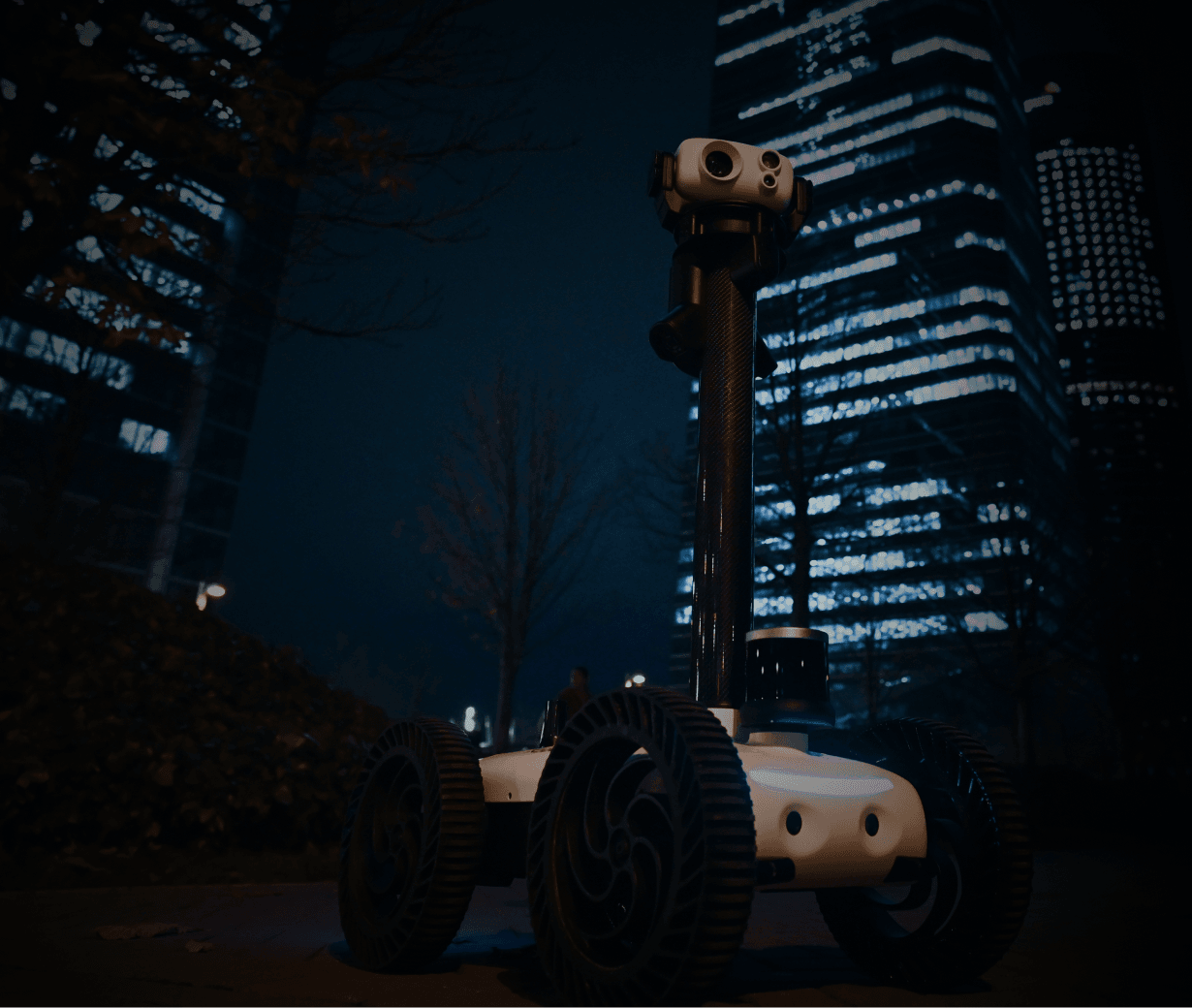
Madrid-based company developing autonomous ground security and inspection robots, with the Watchbot platform deployed across industrial and commercial sites.
Robotics needs a service framework.
RSF defines a common language for robot service capability, lifecycle operations, certification pathways, and service-provider networks.
Join the RobotToday community on LinkedIn
Daily robotics news, in-depth analysis, conference highlights, and discussions with professionals worldwide.