

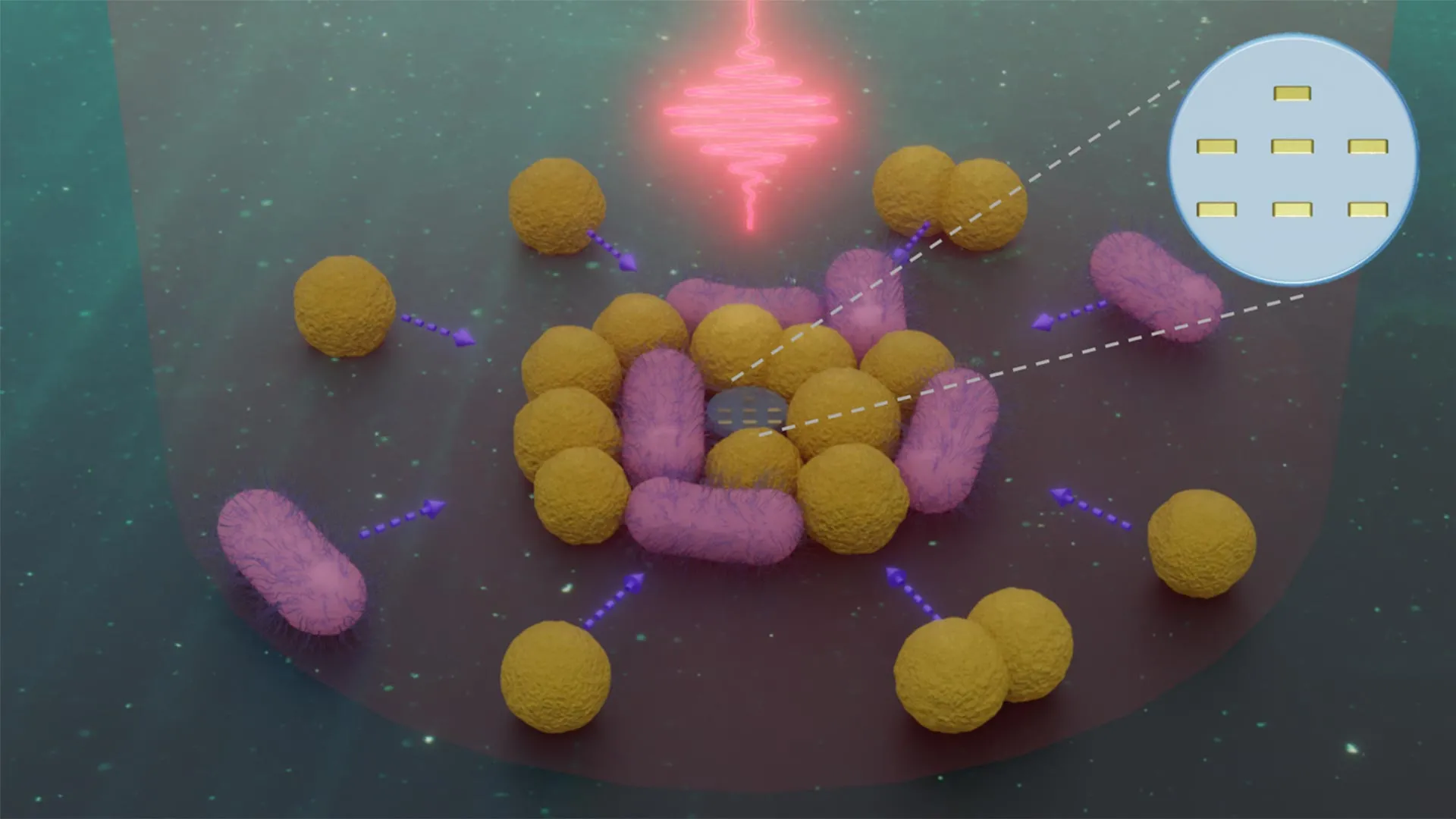
Researchers at Julius-Maximilians-Universität Würzburg have developed tiny light-powered nanorobots capable of hunting down and collecting bacteria. These microdrones, measuring less than one micrometer, utilize photon recoil for propulsion and can maneuver effectively in microscopic environments. This advancement represents a significant step towards direct manipulation of biological materials in water, addressing longstanding challenges in the field.
The ability to control and transport bacteria with these nanorobots could revolutionize microbiology and biomedical research. By simplifying their design and steering system, the researchers have created devices that can efficiently scan and clean microscopic environments. This innovation not only enhances our understanding of the microbial world but also opens up new possibilities for applications in various scientific fields.
Looking ahead, the continued development of these nanorobots may lead to their use in precise material manipulation and environmental cleaning at the microscopic level. As researchers refine their capabilities, the potential for these tiny machines to impact scientific research and practical applications will become increasingly significant. No further timeline was disclosed at the time of publication.
Editor's Note
The development of light-powered nanorobots marks a notable advancement in the field of micro-manipulation. As industries increasingly seek innovative solutions for handling biological materials, these technologies could enhance capabilities in research and environmental applications. The implications for precision in microbiology and biomedical fields are particularly promising, suggesting a shift towards more efficient methodologies.
Copyright Notice
This briefing is an independently written summary based on publicly available reporting and is provided for industry information and news discovery. The original report and source publication are credited and linked where applicable. RobotToday does not claim ownership of third-party source material.
Rights concerns? If you believe any material in this briefing infringes your copyright or other rights, please contact [email protected] with the relevant URL and details. We will review the matter and take appropriate action where warranted.






































Leave a comment