

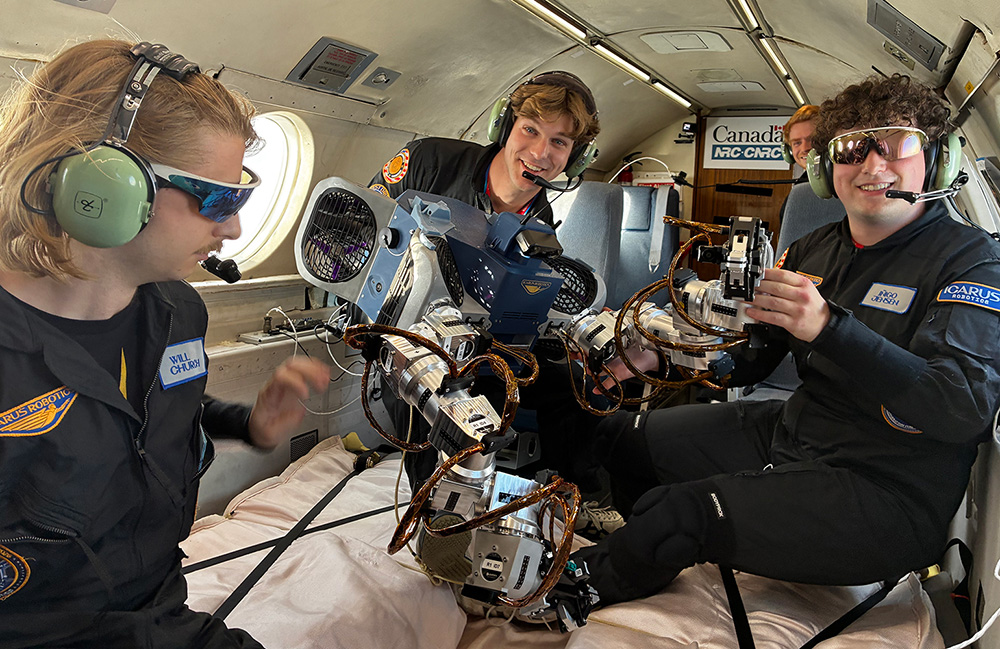
Icarus Robotics announced the successful testing of its free-flying robot, JOY, during four parabolic flights from September 9 to 11. Over these flights, JOY completed 66 parabolas, achieving a total of 2 minutes of weightlessness. This robot is designed to operate within the International Space Station (ISS) and assist with cargo and logistics tasks.
The significance of this testing lies in Icarus Robotics' goal to enhance astronaut efficiency by allowing them to focus on critical research and mission objectives. The company plans to launch JOY, named Joyride-1, to the ISS in 2027, following a mission management agreement with Voyager Technologies. The recent flights mark a crucial step before the finalization of JOY’s hardware for NASA handover in January.
Looking ahead, Icarus Robotics aims to refine JOY's capabilities further, having already tested its manipulation, state estimation, and flight control systems. The positive results from these tests provide confidence for the upcoming handover to NASA, as the team prepares for the next phase of development and deployment.
Editor's Note
The successful testing of JOY by Icarus Robotics highlights the growing importance of robotics in space exploration. As missions become more complex, the integration of autonomous systems can significantly enhance operational efficiency aboard the ISS. This development could pave the way for more advanced robotic solutions in future space missions.


























Leave a comment