

Fourier Introduces 'Embodied Home' Solution for Intelligent Robot Operations in 2026
- Published
- Source
- leaderobot.com
In 2026, the embodied intelligence industry is transitioning from technology validation to large-scale commercialization. With support from capital and policy, the focus is shifting from rigid, high ROI scenarios like industrial manufacturing to commercial services and home environments. A key challenge remains: can robots effectively operate in the complex and unstructured home settings?
The complexity of home environments poses significant challenges for humanoid robots, which must navigate unclear instructions and varied layouts. Current mainstream navigation AI struggles with personalized understanding, a critical shortcoming for practical applications in home services. At the World Artificial Intelligence Conference 2026, Fourier showcased the 'Embodied Home' solution, aiming to enable robots to understand their environment and intentions, thereby completing long sequences of tasks autonomously.
The 'Embodied Home' solution integrates a semantic task execution hub for humanoid robots, combining large language models, 3D spatial semantic memory, navigation planning, and control execution. This allows robots to autonomously interpret and execute tasks based on natural language commands, enhancing user interaction and ensuring task reliability through a complex task scheduling mechanism. No further timeline was disclosed at the time of publication.
Original report
Fourier's 'Embodied Home' Solution Tackles Challenges of Intelligent Robot Operations
leaderobot.com · LeaderobotThis briefing is an independently written summary based on publicly available reporting and is provided for industry information and news discovery. The original report and source publication are credited and linked where applicable. RobotToday does not claim ownership of third-party source material.
Rights concerns? Contact [email protected] with the relevant URL and details. We will review the matter and take appropriate action where warranted.
More related news
- 1
- 2
- 3
- 4
- 5
- 6
- 7
- 8
- 9
-
10
RobotToday Weekly October 12 – 16, 2026 RobotToday · 1 week ago
- 11
-
12
ERF 2027 – Birmingham, Mar 2–4, 2027 RobotToday · 1 week ago
Related Suppliers

Fourier Intelligence 上海傅利叶智能科技有限公司
China
Shanghai-based robotics company developing humanoid robots and rehabilitation exoskeletons, known for the GR-series general-purpose humanoid robot line.

SwitchBot
China
SwitchBot is a Shenzhen-based, Series B-funded smart-home robotics company selling connected vacuum robots, smart locks, and automation hubs.
Familiar Machines & Magic
United States
Consumer physical-AI startup from iRobot co-founder Colin Angle building screen-free home companion robots called Familiars.

Vesoma
Germany
Munich-area humanoid startup founded 2025 developing the Vesoma 1 robot trained by reinforcement learning; staff exceeded 60 by September 2026.
Beijing LivSyn Robotics Co., Ltd. 灵生科技
China
Beijing embodied-AI startup building RUDA, a cross-embodiment robot model architecture, plus PhiAgent video-to-data engine and wearable data-capture devices.
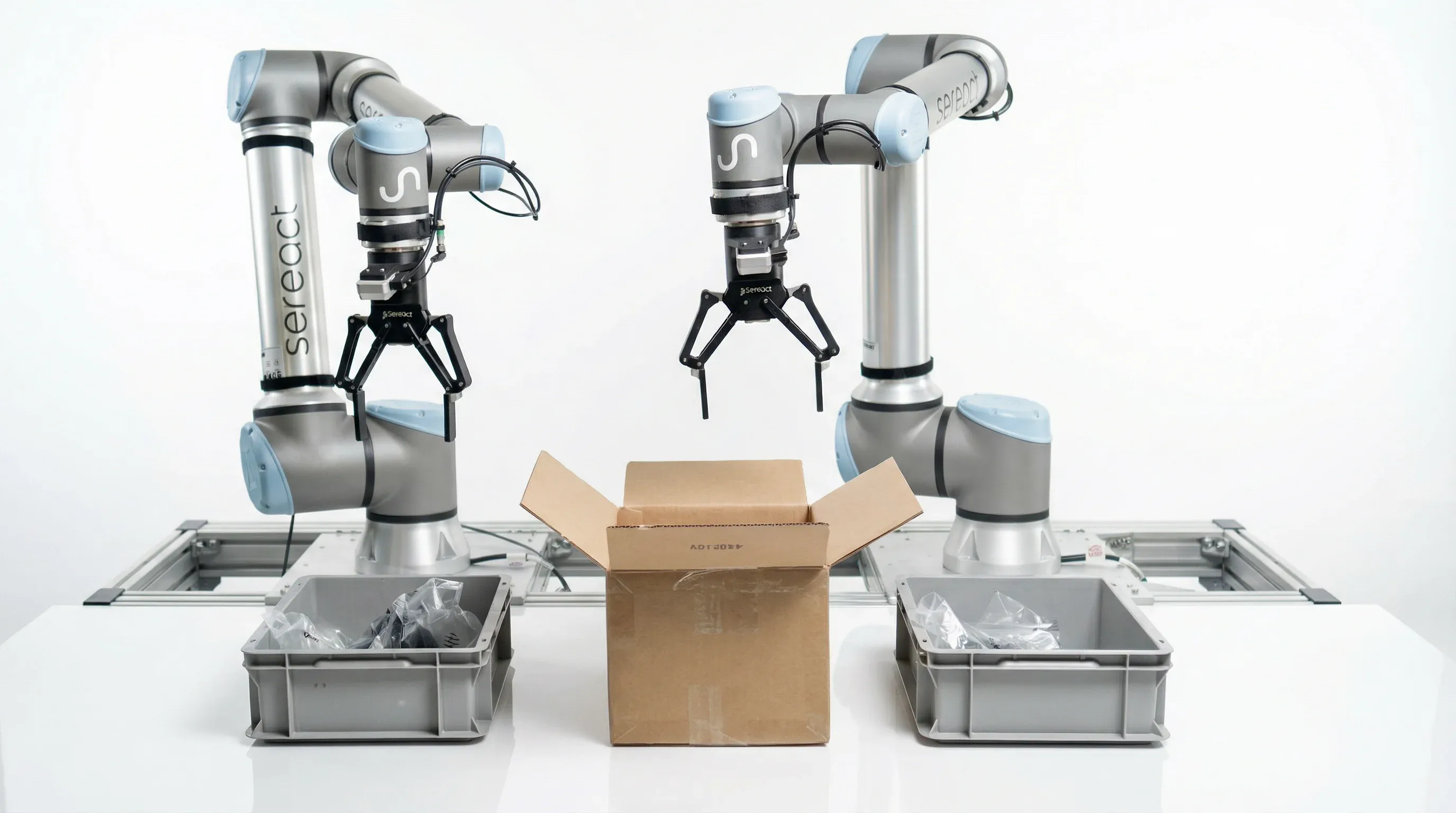
Sereact
Germany
Stuttgart AI robotics company founded 2021; Cortex VLA model drives 98%+ day-one pick accuracy across 100+ live deployments with over 1 billion cumulative.

Covariant
United States
US AI robotics software company; builds RFM-1 robotics foundation model and Covariant Brain for warehouse picking and logistics automation.

FARobot Inc. 法博智能移動股份有限公司
Taiwan
Taiwanese Foxconn-ADLINK joint venture (2020) building SWARM CORE multi-brand fleet software and SMR-series autonomous mobile robots

Viscon Group
Netherlands
Family-owned Dutch automation integrator founded in 1927 that builds machinery and software for horticulture, fresh produce, hatcheries and food logistics.

XPENG Inc. 小鹏汽车
China
Chinese EV maker expanding into autonomous vehicles and humanoid robotics; developing IRON humanoid robot targeting mass production in 2026.
HAL Robotics
United Kingdom
London robot software company (est. 2014); decode platform enables no-code programming and simulation for 1000+ industrial robots in manufacturing.
Insight Intelligence 具识智能
China
Shanghai developer of insightOS, an embodied-AI robot operating system spanning dev, runtime and fleet ops; HIT spin-out with deployments at BYD.
Robotics needs a service framework.
RSF defines a common language for robot service capability, lifecycle operations, certification pathways, and service-provider networks.
Join the RobotToday community on LinkedIn
Daily robotics news, in-depth analysis, conference highlights, and discussions with professionals worldwide.


