

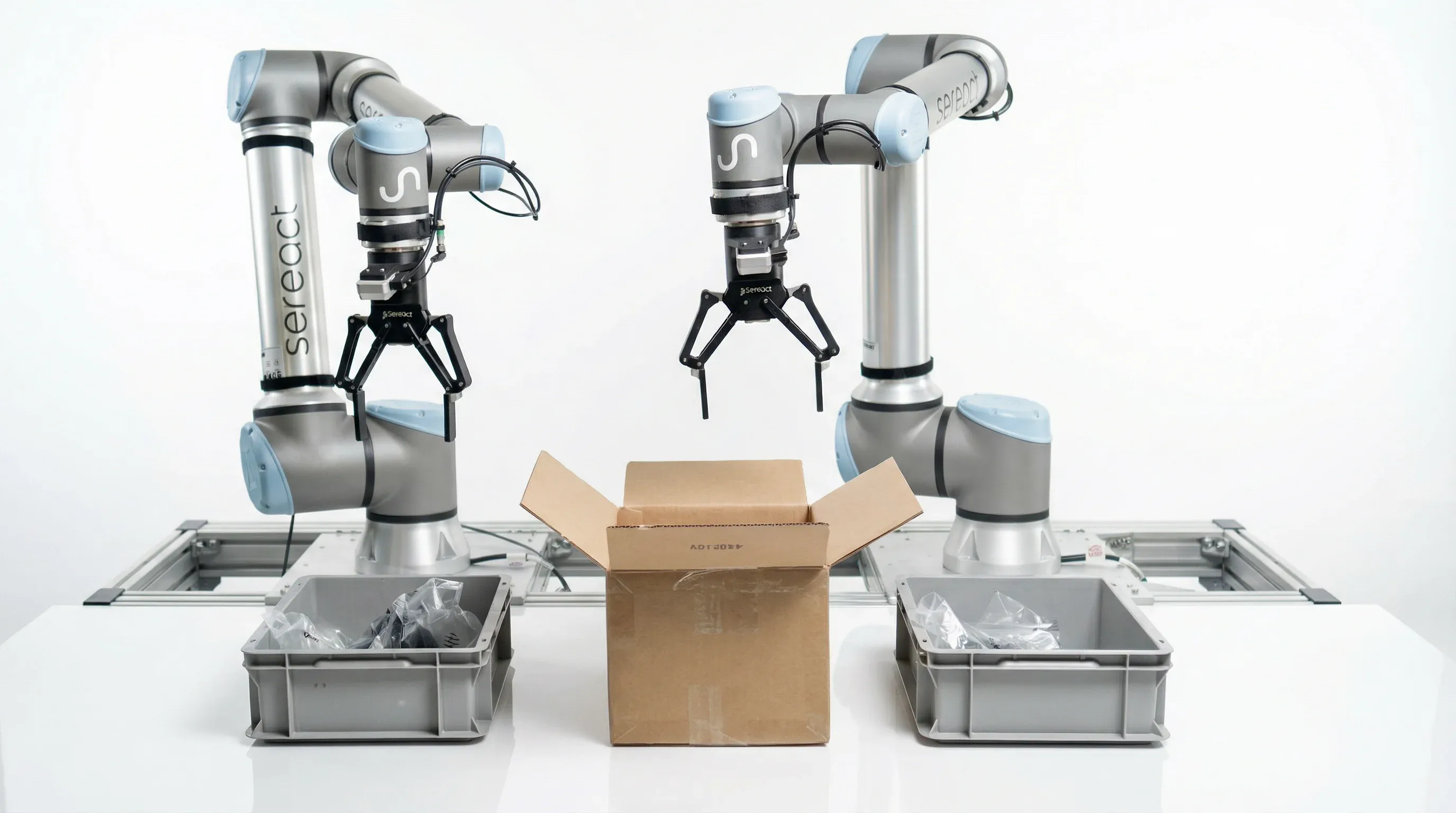
Sereact
"One Brain. Any Robot."
Stuttgart AI robotics company founded 2021; Cortex VLA model drives 98%+ day-one pick accuracy across 100+ live deployments with over 1 billion cumulative.
Contact Sereact
WEBSITE
https://sereact.ai/PHONE
+49 711 90777712HEADQUARTERS
Germany

Company Facts
Founded
2021
Primary Role
Software/Algorithm
Company Size
-
Primary Region
Europe
Annual Sales
-
Funding Stage
-
Funding Total
-
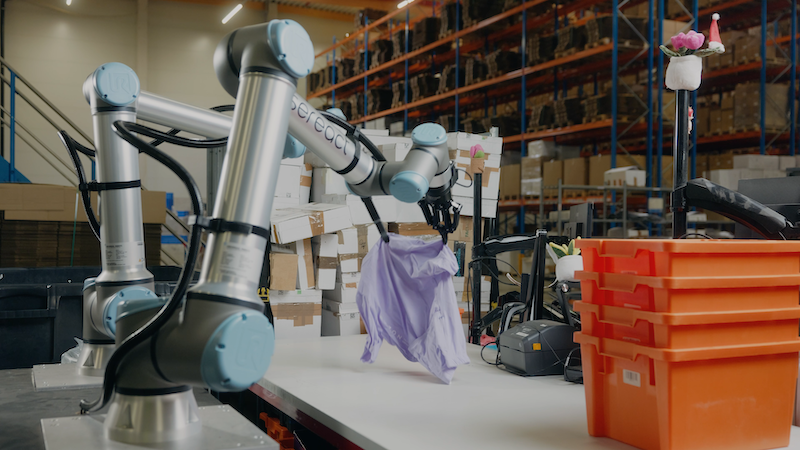
Sereact Launches AI-Powered Returns Automation for Zalando in Germany and Poland
Sereact, in collaboration with Zalando and CEVA Logistics, has initiated AI-driven automated returns processing at key logistics facilities in Germany and Poland. Utilizing Sereact's Cortex platform, dual-arm robotic systems are now operational, autonomously handling returned fashion items. This marks the beginning of a larger effort to enhance returns automation across Europe. The significance of this deployment lies in addressing the complexities of returns management in fashion e-commerce, where items often arrive in poor condition. Sereact's technology allows for dynamic identification and sorting of previously unseen objects, eliminating the need for specific training. This Robotics-as-a-Service model not only streamlines operations but also alleviates physical strain on employees, enabling them to focus on higher-value tasks. Looking ahead, the collaboration aims to expand intelligent automation across Zalando's European logistics network. No further timeline was disclosed at the time of publication. The partnership emphasizes the importance of integrating technology with human capabilities to tackle the challenges of modern fulfillment in the fashion industry.
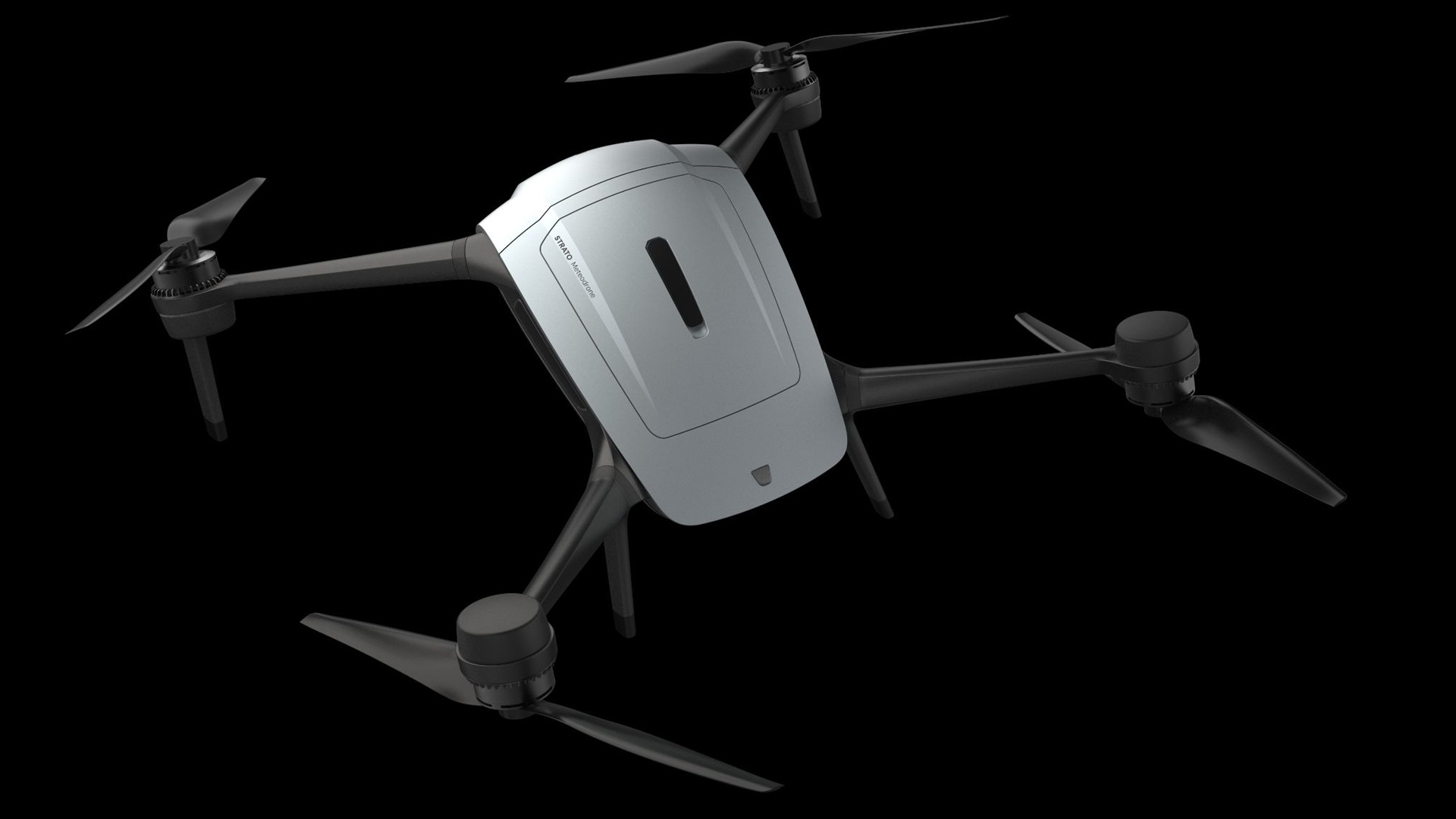
Meteomatics Launches Strato Drone, Reaching 34,245 Feet for Atmospheric Data Collection
Meteomatics, a Swiss weather technology company, has introduced the Strato multicopter drone, which achieved an altitude of 34,245 feet (10,438 meters) to gather atmospheric data. This drone is designed to measure critical weather parameters such as temperature, humidity, air pressure, and wind speed, providing insights typically collected by weather balloons. The significance of Strato lies in its ability to operate in harsh conditions, withstanding winds of up to 80 mph and featuring an active de-icing system. Unlike traditional weather balloons that drift and are often unrecoverable, Strato can navigate to specific locations, collect data, and return, allowing for timely and targeted weather observations. Looking ahead, Strato's capabilities could enhance weather data collection for airlines and aerospace operators, filling gaps left by conventional methods. No further timeline was disclosed at the time of publication.
Innovation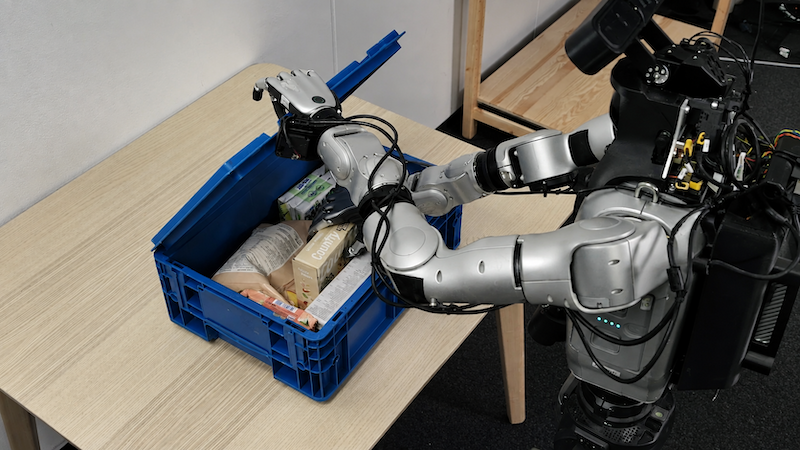
Odyssey Unveils Odyssey-3, a Groundbreaking World Model for Robotics and AI
Odyssey, an AI research company, has launched Odyssey-3, its most advanced world model to date. This model represents a major leap towards general-purpose intelligence, enabling systems to understand, predict, and interact with both physical and virtual environments. Odyssey-3 can control robots, humanoids, vehicles, and drones, and has already been adopted by companies like Flexion. The significance of Odyssey-3 lies in its ability to provide intelligent systems with a foundational understanding of the world, allowing them to learn new tasks more efficiently. By leveraging a vast dataset of visual observations, the model has developed insights into physics, dynamics, and human behavior, which can be applied across various systems. This capability marks a shift in how AI can adapt and operate in diverse environments with minimal additional training. Looking ahead, the focus will be on how Odyssey-3 can further enhance the capabilities of physical agents in different applications. As Oliver Cameron, co-founder and CEO of Odyssey, stated, the model is a crucial step towards achieving a single intelligence that can seamlessly operate across multiple tasks and environments. No further timeline was disclosed at the time of publication.
IROS 2026 Category Award Finalists: All 22 Papers
From humanoid tennis to bin picking and farm robots: the 22 finalists for IROS 2026's eight category awards, and what each one means for industry.

IROS 2026 by the Numbers: Papers, Countries, Topics
RobotToday analyzed all 1,933 IROS 2026 papers: acceptance fell to 36.5%, the U.S. overtook China, and VLA titles jumped from 4 to 65.
IROS 2026 Best Paper Finalists: South Korea Leads
Ten papers made the IROS 2026 Best Paper and Best Student Paper shortlist, four from South Korea. What each one does and what it means for industry.

New 'SANDO' System Keeps UAVs Safe from Collisions in Wildfire Areas
The 'SANDO' system enhances the safety of uncrewed aerial vehicles (UAVs) by ensuring their flight paths remain collision-free, particularly in hazardous environments like wildfires. This technology is crucial as UAVs are often deployed to gather vital information in such dangerous situations, where they face risks from sudden flare-ups and falling debris. The importance of the 'SANDO' system lies in its ability to protect UAVs from potential damage during operations in uncharted territories. By avoiding collisions with obstacles such as tree branches, the system allows for safer data collection, which is essential for rescuers responding to wildfires. This advancement could significantly improve the effectiveness of UAVs in emergency response scenarios. Looking ahead, the implementation of the 'SANDO' system could lead to broader applications of UAVs in various challenging environments. As the technology develops, stakeholders will be keen to observe its impact on UAV operational safety and efficiency in disaster response efforts. No further timeline was disclosed at the time of publication.
Robotics
Assessing Pose Estimation Uncertainty in Multi-Sensor Robotic Systems via Point Cloud Registration
The study published in the Journal of Field Robotics evaluates the uncertainty in pose estimation arising from automatic point cloud registration in multi-sensor robotic systems. This research is crucial as accurate pose estimation is vital for the effective operation of robotic systems in various applications. Understanding the uncertainty in pose estimation can significantly enhance the reliability and performance of robotic systems, especially in complex environments where multiple sensors are utilized. The findings of this study could lead to improved algorithms and methodologies for better integration of sensor data, ultimately benefiting industries that rely on advanced robotics. Looking ahead, researchers and engineers should monitor developments in pose estimation techniques and their applications in real-world scenarios. No further timeline was disclosed at the time of publication.
RESEARCH ARTICLE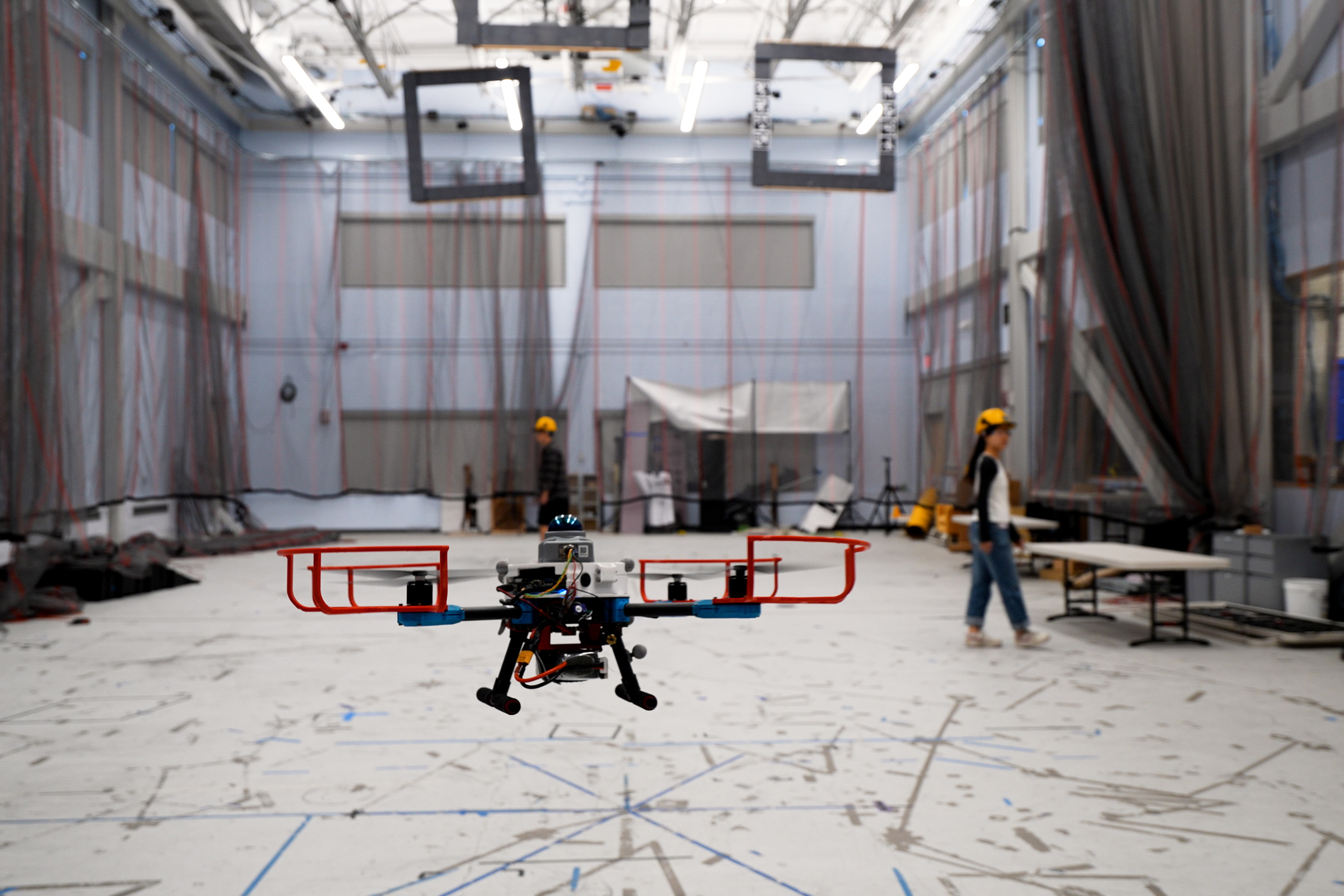
MIT Develops SANDO: A Collision-Free Navigation System for UAVs in Unknown Environments
MIT researchers have developed an autonomous navigation system named SANDO, designed for uncrewed aerial vehicles (UAVs) to navigate safely in unpredictable environments. This system ensures that UAVs can avoid collisions with unknown moving obstacles, which is crucial in high-risk scenarios like search and rescue missions or disaster response. The significance of SANDO lies in its ability to provide formal safety guarantees in dynamic environments, where traditional navigation systems fall short. Unlike existing planners that only work in static settings or lack formal guarantees, SANDO uses a mathematical approach to ensure collision avoidance, making it particularly valuable for applications requiring real-time adaptability. Looking ahead, the potential applications for SANDO are vast, including emergency medical supply deliveries and exploration in hazardous areas. As the technology matures, it could revolutionize how UAVs operate in complex environments, enhancing safety and efficiency. No further timeline was disclosed at the time of publication.
Research Computer science and technology Algorithms Drones Robotics Autonomous vehicles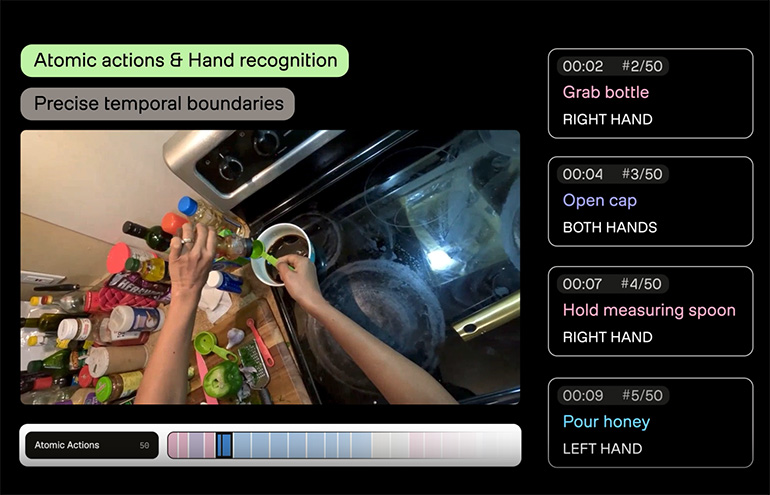
TwelveLabs Launches Pegasus 1.6 for Enhanced Video Understanding in Physical AI
TwelveLabs Inc. has unveiled its Pegasus 1.6 model, designed to enhance video understanding for physical AI applications. This model addresses the challenge of transforming complex video footage into actionable insights, enabling robotics and AI teams to train on real human experiences rather than starting from scratch. The significance of Pegasus 1.6 lies in its ability to provide temporal context, spatial reasoning, and task completion judgment, which are crucial for machines to navigate real-world environments. According to Jae Lee, co-founder and CEO of TwelveLabs, the model allows for a more precise understanding of actions and interactions captured in egocentric video, facilitating the development of smarter robotics systems. Looking ahead, TwelveLabs aims to further refine its video intelligence platform, focusing on the video understanding layer to improve training data for robotics teams. The company emphasizes that Pegasus 1.6 can utilize existing video data and analyze still images, making it a versatile tool for various applications in physical AI. No further timeline was disclosed at the time of publication.
Artificial Intelligence Artificial Intelligence / Cognition Assembly Human Robot Interaction / Haptics Manufacturing Microprocessors / SoC
RobotToday Weekly September 21 – 25, 2026
Cognex buys RealSense, Qualcomm acquires PickNik, the IFR counts 5 million factory robots, AGIBOT deploys 300 robots at Chimelong, and Tekever raises $580 million.

China’s Dexterous Hand Industry, 2026 Part 1 — The Demand Picture
MIR Databank puts China dexterous hand shipments above 30,000 units in 2026, yet only 3.5% of 2025 demand came from factory production. Part 1 of 3.

China’s Dexterous Hand Industry, 2026 Part 2 — The Technology
Linkage, tendon, direct drive or hybrid — and why hardware is converging while the DL1–DL5 manipulation scale decides who wins. Part 2 of 3.
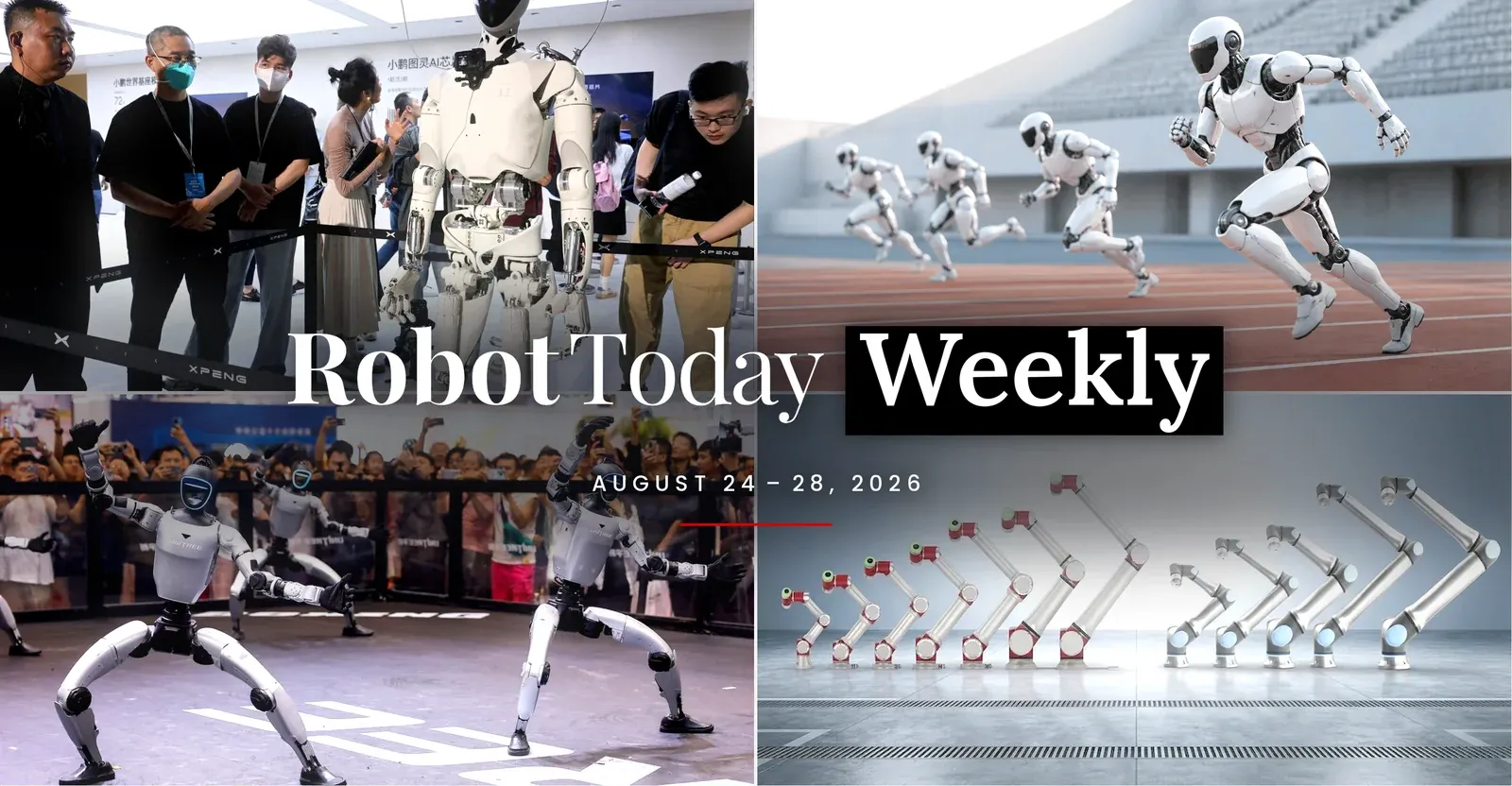
ROBOTTODAY WEEKLY BRIEFING August 24 – 28, 2026
This week in robotics: XPeng's Dogotix raises over $900 million at a $6.3 billion valuation, Unitree's post-IPO slump revives bubble talk, Beijing's World Humanoid Robot Games close with a shift to real-world tasks, and Teradyne sues JAKA at Europe's Unified Patent Court. August 24–28, 2026.
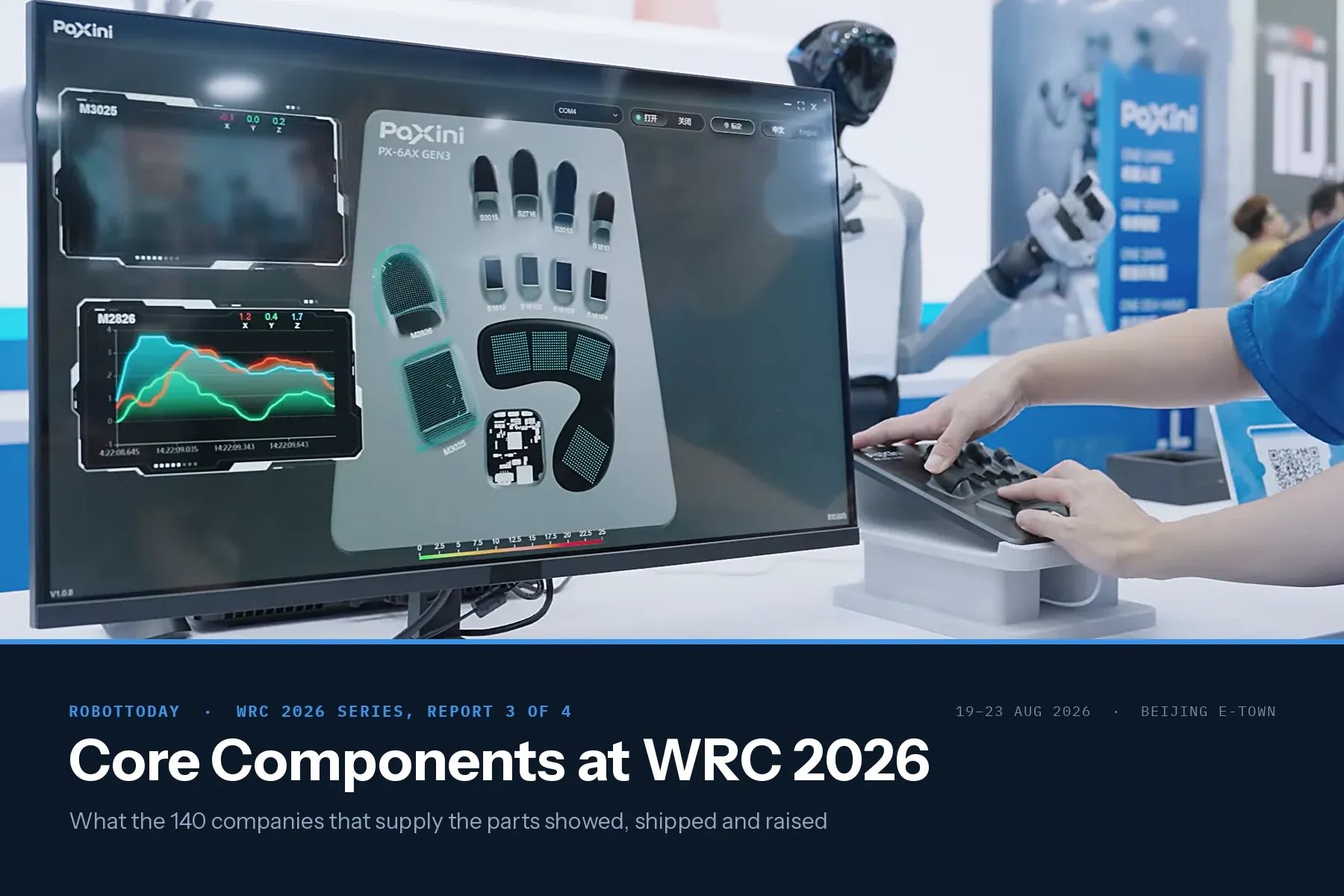
WRC 2026 Core Components: 137 Robot Parts Suppliers
The third report in the WRC 2026 series. Report 1 mapped all 248 exhibitors by category and Report 2 covered the 139 that build finished robots. This one covers the 137 that build what goes inside them.
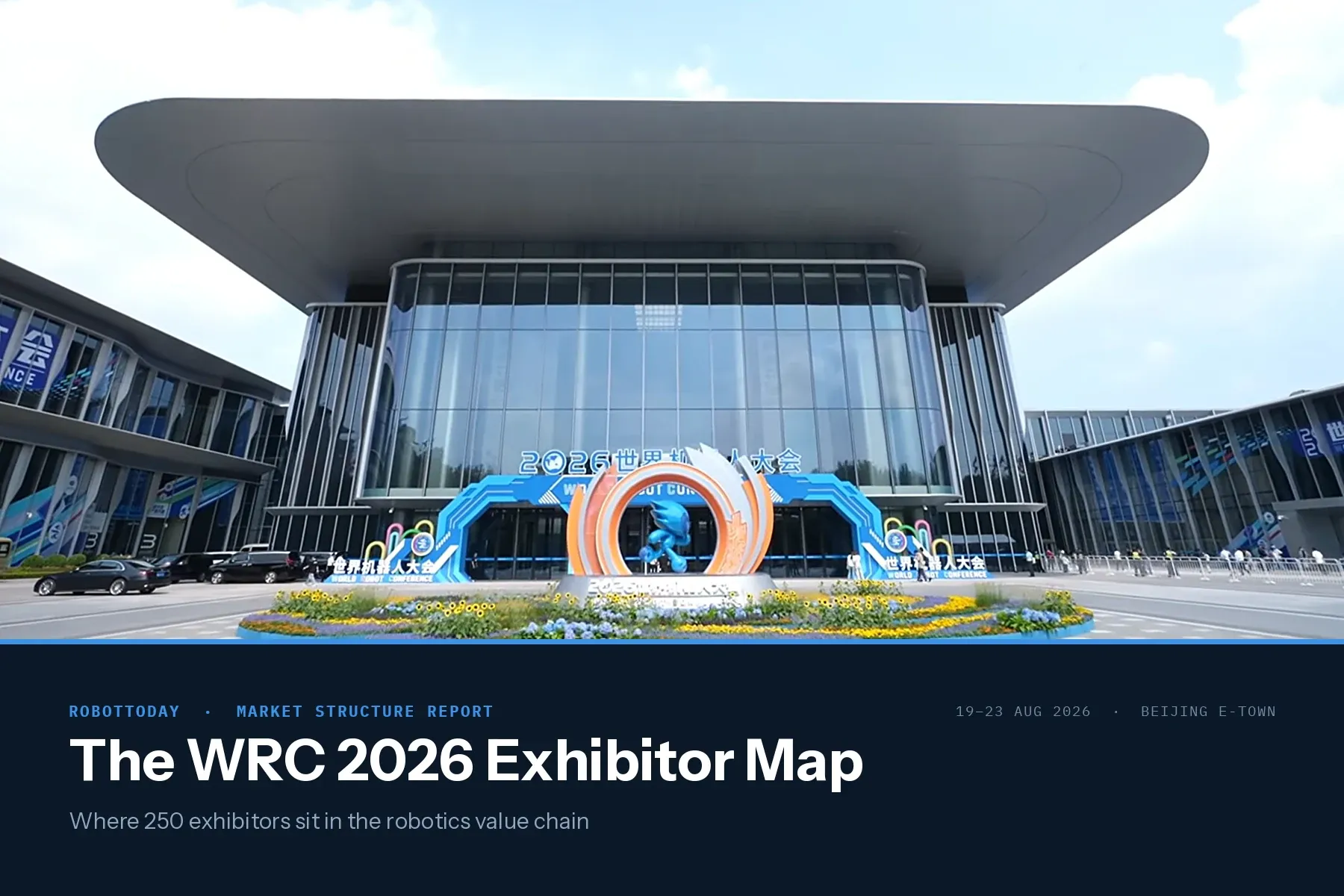
WRC 2026 Exhibitor Map: 248 Robotics Companies Mapped
We classified 248 WRC 2026 exhibitors with the RobotToday taxonomy. Motion & Actuation leads at 75 companies, Humanoid at 72, and compute stays thin at 12. (Modified 2026-08-27)

Automate 2026 show recap
Editors Steve Crowe, Mike Oitzman, and Sarah Wynn provided an insightful analysis of Automate 2026, focusing on significant trends in physical artificial intelligence, humanoid robotics, and software orchestration. Their review highlights the advancements and innovations showcased at the event, reflecting the evolving landscape of automation technology. The analysis aims to inform industry stakeholders about the implications of these trends for future developments in robotics and automation. The recap serves as a valuable resource for understanding how these technologies are shaping various sectors and the potential impact on the workforce.
Artificial Intelligence Business Resources Controllers Educational Events Humanoids
ROBOTTODAY Weekly April 27th – May 1st, 2026
This week in robotics: Figure scales to one humanoid per hour, Meta acquires Assured Robot Intelligence, China's State Grid commits $995M for 8,500 AI robots, and SoftBank plans $100B IPO for robotics spinout Roze. April 28–May 2, 2026.
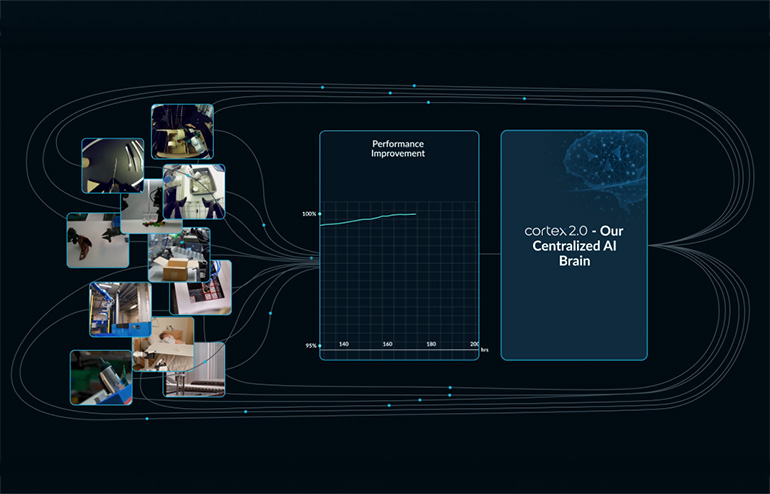
Sereact gets Series B funding to expand Cortex 2.0 robot brain, enter U.S. market
Sereact, a robotics company, has announced plans to enhance its Cortex 2.0 technology, expanding its capabilities beyond bin picking to include assembly and kitting tasks. This initiative comes as the company secures Series B funding, enabling it to enter the U.S. market. To support this expansion, Sereact is also opening a new office in Boston. The move aims to capitalize on growing demand for advanced robotic solutions in various industries, reflecting the company's commitment to innovation and market growth.
6-Axis Artificial Intelligence Artificial Intelligence / Cognition Humanoids Investments Logistics
Sereact Raises $110M in Series B Funding to Expand Warehouse Robotics Platform
Sereact, a German robotics software company, has successfully secured $110 million in a Series B funding round, with Headline leading the investment. The round also saw participation from Bullhound Capital, Daphni, and Felix Capital, alongside existing investors Air Street Capital, Creandum, and Point Nine. This significant funding will enable Sereact to focus on two key priorities: scaling its Cortex 2.0 platform and enhancing its product offerings. The investment reflects growing confidence in Sereact's innovative approach to robotics software and its potential impact on the industry.
AI AI Funding & Investment Robotics Germany robots Sereact

