

Exploring Sensorimotor Contingency Learning Through a Playful Robot in a Crib
- Published
- Source
- AAAS:ScienceRobotics
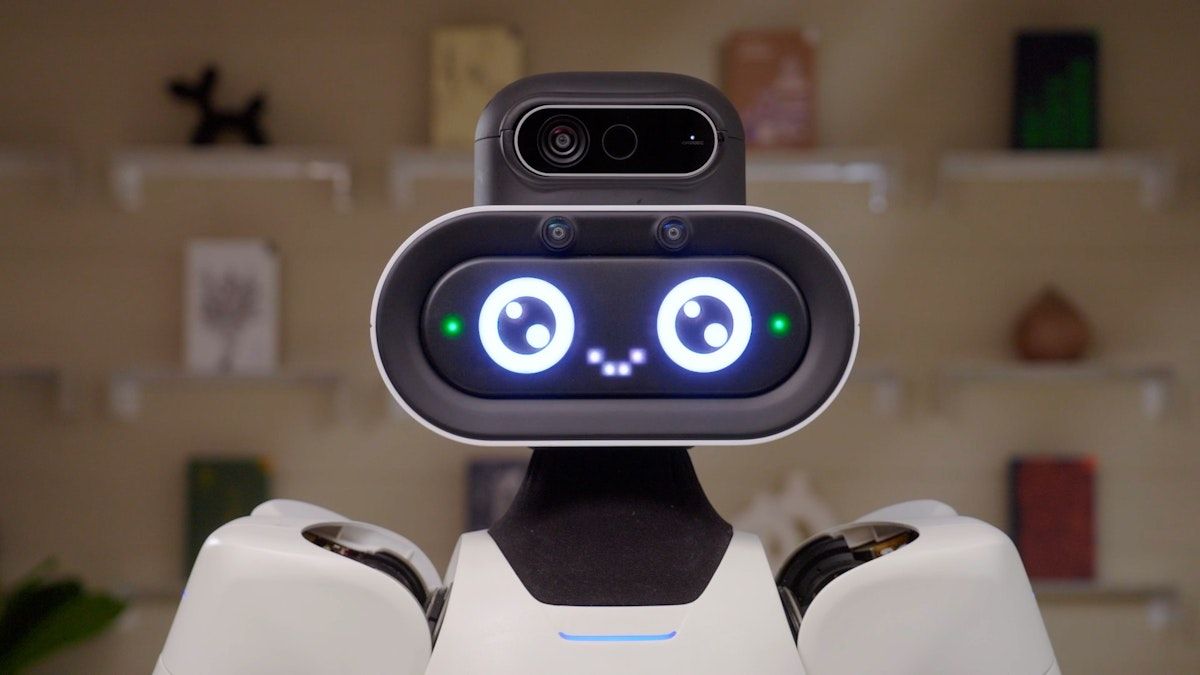
A recent study published in Science Robotics highlights the role of a playful robot in a crib designed to enhance our understanding of sensorimotor contingency learning. This innovative approach aims to investigate how infants learn to associate their actions with sensory outcomes through interaction with the robot.
The significance of this research lies in its potential to inform developmental psychology and robotics. By analyzing the interactions between infants and the robot, researchers hope to uncover insights into the fundamental processes of learning and development, which could influence future educational tools and robotic designs.
Looking ahead, the study sets the stage for further exploration into the implications of sensorimotor learning in both human and robotic contexts. No further timeline was disclosed at the time of publication.
Original report
Robot in a crib: How a playing robot helps us understand sensorimotor contingency learning
AAAS:ScienceRobotics · Josua Spisak, Sergiu Tcaci Popescu, Lukas Rustler, Stefan Wermter, J. Kevin O’Regan, Matej HoffmannThis briefing is an independently written summary based on publicly available reporting and is provided for industry information and news discovery. The original report and source publication are credited and linked where applicable. RobotToday does not claim ownership of third-party source material.
Rights concerns? Contact [email protected] with the relevant URL and details. We will review the matter and take appropriate action where warranted.
More related news
-
1
RobotToday Weekly October 5 – 9, 2026 RobotToday · 22 hours ago
- 2
- 3
- 4
- 5
- 6
- 7
- 8
- 9
- 10
- 11
- 12
Related Suppliers

AidALL Inc.
Korea, Republic of (South)
South Korean startup developing Bedivere, an autonomous guide robot for the visually impaired using proprietary neuromorphic on-device AI architecture.

ReHaptix
Switzerland
ETH Zurich spin-off (2013, Bremgarten CHE); tablet app clinically validates upper-limb motor assessment for remote stroke and MS rehabilitation.

Blue Edge Systems Engineering
Portugal
Portuguese ocean robotics and systems engineering firm specializing in autonomous underwater vehicles, bathymetric surveying, and marine data acquisition.
Xiao-I Corporation
China
Shanghai, China AI company founded 2001, Nasdaq-listed as AIXI; develops conversational AI and cognitive-intelligence software under its Hua Zang platform.

RoboMatter
United States
Pittsburgh-based company producing ROBOTC programming tools and Robot Virtual Worlds 3D simulation for VEX and LEGO educational robots.

Tormach Inc.
United States
Tormach (Madison, WI, est. 2001) makes affordable CNC mills, lathes, routers, and the ZA6 6-axis robot arm running open-source PathPilot software.
ilo robot
Germany
ilo robot makes ilo, a modular educational robot designed and built in Brittany that teaches coding from block programming up to Python.
Kiwi Campus Inc. (Robot.com)
United States
Operator of Level 4 autonomous sidewalk delivery, logistics, advertising and humanoid robots deployed across 10 countries for Fortune 500 customers.

IUVO
Italy
Italian wearable robotics spin-off of Scuola Superiore Sant'Anna (Pisa, 2015), developing passive and active exoskeletons backed by COMAU and Össur.
Tau Robotics
United States
Palo Alto AI robotics startup building general-purpose robot learning systems that enable robotic arms to acquire skills autonomously in the real world.

ATR Intelligent Robotics and Communication Laboratories
Japan
Kyoto research laboratory within ATR (est. 1986) studying human-robot interaction, cybernetic avatars and social robots such as Robovie and Geminoid.

Center for Intelligent Robotics (CIR) at KIST
Korea, Republic of (South)
South Korean government research center at KIST focused on intelligent robotics and human-robot interaction since 1966.
Robotics needs a service framework.
RSF defines a common language for robot service capability, lifecycle operations, certification pathways, and service-provider networks.
Join the RobotToday community on LinkedIn
Daily robotics news, in-depth analysis, conference highlights, and discussions with professionals worldwide.


