


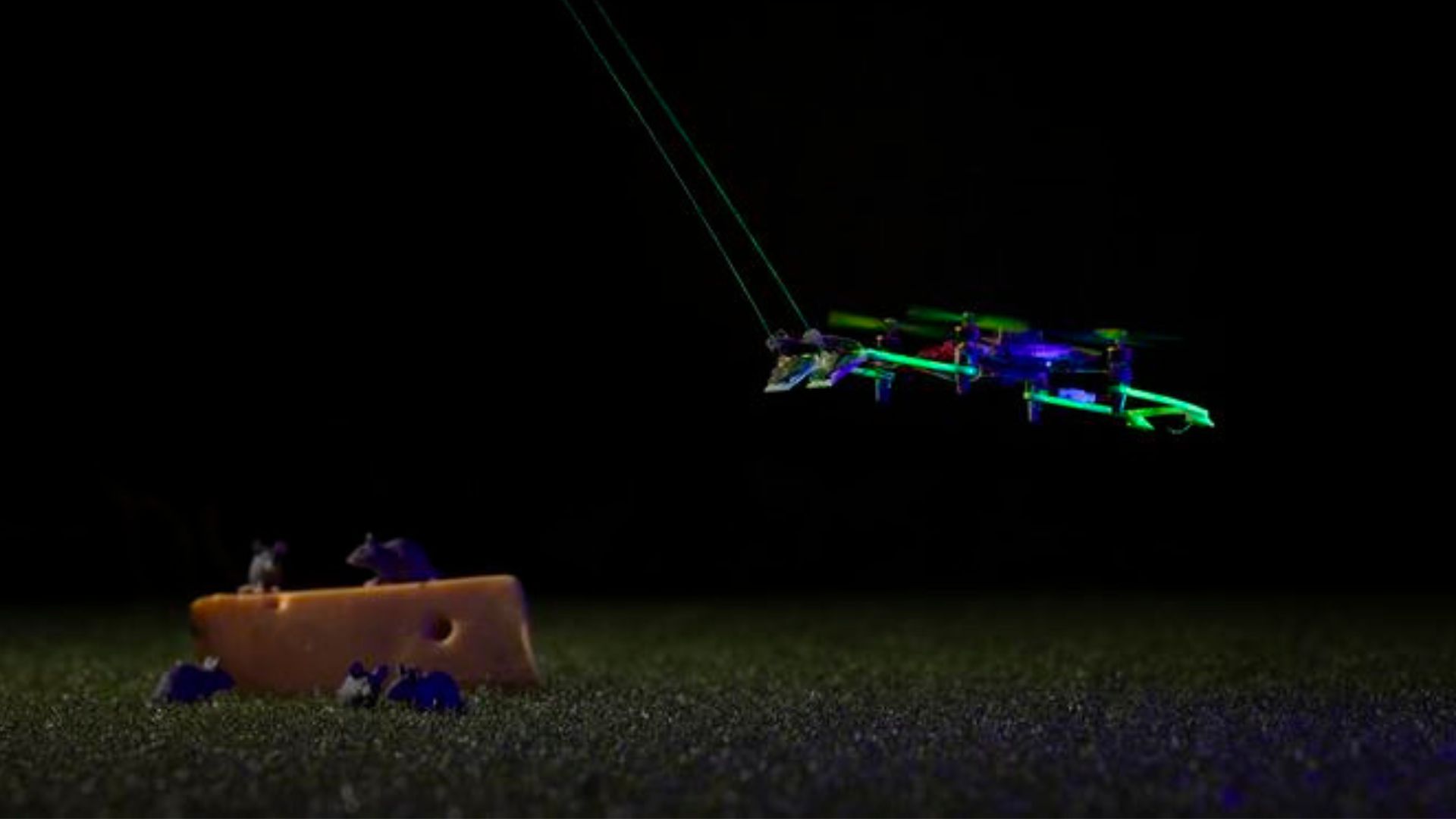
Researchers at Delft University of Technology have created a lightweight tactile sensor inspired by animal whiskers, enabling tiny autonomous drones to navigate in low-visibility environments. This innovation allows drones to explore areas filled with darkness, dust, or smoke without relying on heavy sensors.
The ability for drones to navigate through challenging environments is significant for various applications, including search and rescue operations, environmental monitoring, and industrial inspections. By mimicking the sensory capabilities of rats and mice, these drones can effectively maneuver in tight spaces and complex terrains.
Future developments in this technology could enhance the operational capabilities of drones in various sectors. As research progresses, it will be important to monitor advancements in sensor technology and potential applications in real-world scenarios. No further timeline was disclosed at the time of publication.
Editor's Note
The integration of bio-inspired technologies into drone navigation systems represents a significant advancement in robotics. This development could lead to improved operational efficiency in sectors requiring exploration of confined or hazardous environments, enhancing safety and effectiveness in critical missions.





























Leave a comment