


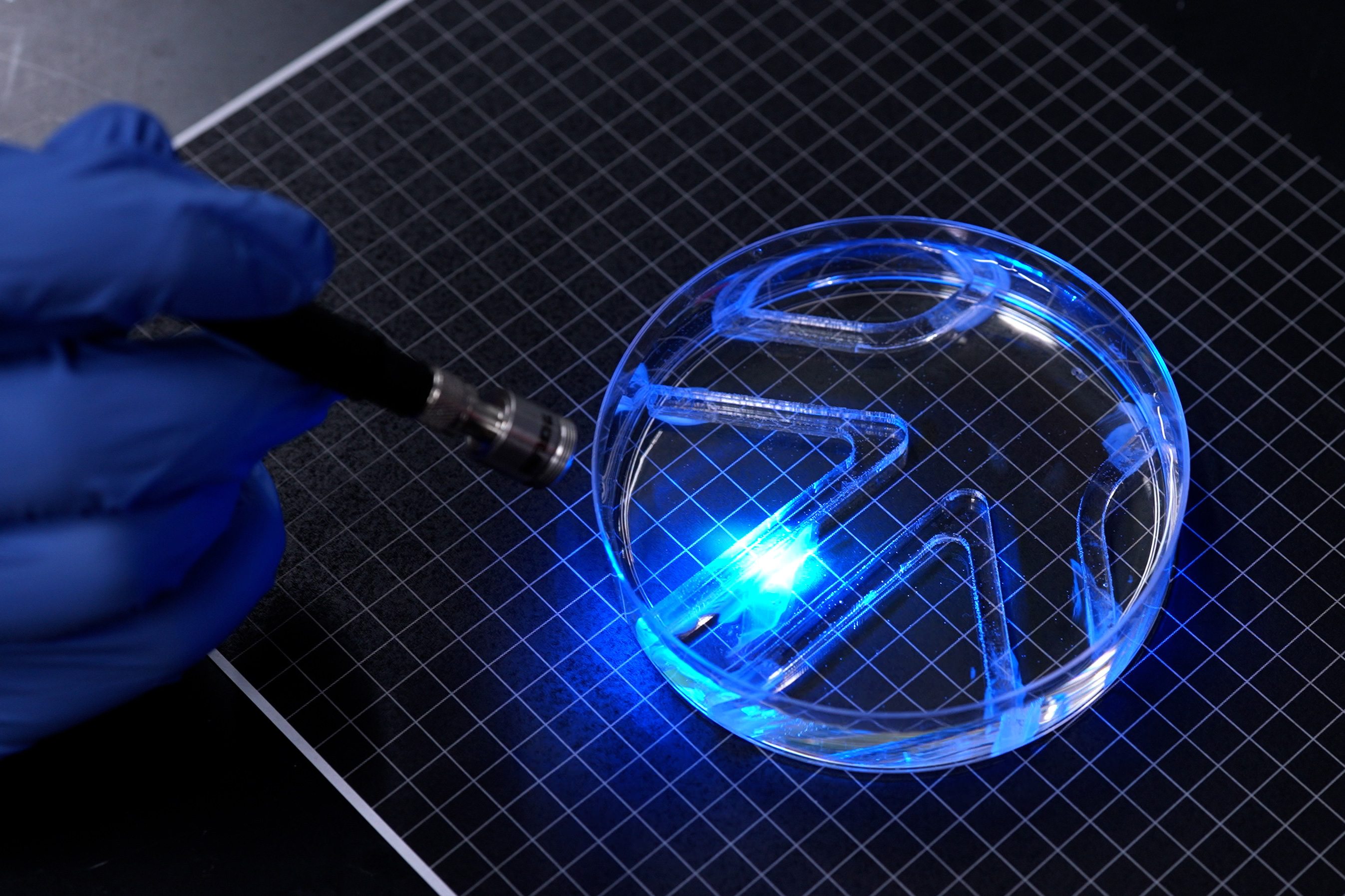
Researchers at Zhejiang University have created a 6mm long, 2.5mm diameter helical robot that operates without a battery or traditional motor. Instead, it is powered by an external arrangement of piezoelectric transducers that generate ultrasonic fields for propulsion and directional control. The robot can navigate through pipes, perform high-speed spins, and traverse slopes of 30° and 60°, even completing vertical movements and maneuvering through complex pathways.
This breakthrough addresses a significant challenge in micro-robotics: providing power to increasingly smaller devices. The robot's design allows it to operate in confined fluidic environments, demonstrating its ability to move forward and backward within a 3mm diameter pig vein. The study, published in the journal Ultrasonics, highlights the innovative use of ultrasonic manipulation to enhance the robot's capabilities in navigating complex geometries.
Future developments may focus on refining the robot's navigation in more intricate environments and optimizing the control of the ultrasonic fields. The research team has shown that by adjusting the activation combinations, frequency, and phase of the piezoelectric transducers, they can significantly enhance the flow field around the robot, indicating potential for further advancements in micro-robotic applications.
Editor's Note
The development of this ultrasonic-powered micro-robot represents a significant advancement in the field of robotics, particularly for applications in medical and industrial environments where traditional power sources are impractical. The ability to navigate complex pathways without a battery opens new avenues for research and development in micro-robotics, potentially leading to innovative solutions in minimally invasive procedures and fluidic manipulation.





































Leave a comment