Tesla Proposes $3.1 Billion Polysilicon Facility Near Robstown, Texas
- Published
- Source
- ManufacturingDive.com
Tesla has proposed a $3.1 billion polysilicon manufacturing facility near Robstown, Texas, and applied for a state tax incentive through the Jobs, Education, Technology and Innovation Program. The company says the facility would supply an upstream component for its vertically integrated domestic solar manufacturing platform. Its application describes U.S.-produced solar-grade polysilicon as support for manufacturing N-type, high-efficiency solar cells. Tesla has not disclosed the facility’s planned annual polysilicon output.
The proposal would add domestic capacity for a foundational photovoltaic material that Tesla says is currently produced predominantly outside the United States. The company cited Texas’s industrial infrastructure, workforce, Gulf Coast location and energy access, while stating that property taxes materially affect the project’s economics and its comparison of Texas with competing sites. Tesla says the project is expected to bring skilled manufacturing jobs and other economic benefits to the state.
Tesla’s application projects construction from 2027 to 2030 and full operation in 2032, with 515 employees earning an average salary of $130,000. The state incentive request seeks a reduction in school-related property taxes; its outcome was not disclosed. The project’s annual production capacity also remains undisclosed, leaving the facility’s expected contribution to domestic polysilicon supply unquantified.
Original report
Tesla proposes $3.1 billion Texas polysilicon refinery
ManufacturingDive.com · Jeff KinneyThis briefing is an independently written summary based on publicly available reporting and is provided for industry information and news discovery. The original report and source publication are credited and linked where applicable. RobotToday does not claim ownership of third-party source material.
Rights concerns? Contact [email protected] with the relevant URL and details. We will review the matter and take appropriate action where warranted.
More related news
- 1
- 2
- 3
- 4
- 5
- 6
- 7
- 8
- 9
- 10
- 11
- 12
Related Suppliers

Tesla
United States
US EV and energy company developing the Optimus humanoid robot and Full Self-Driving autopilot; targeting 50,000 Optimus units in 2026.
Terafab
United States
Tesla/SpaceX/xAI semiconductor fab announced March 2026 in Austin TX; produces AI chips for Optimus robots, FSD, and SpaceX satellites.

Prismecs
United States
US global EPC and engineering solutions provider for power generation and energy infrastructure, with 1,500+ MW installed across 15+ countries since 2016.

L2F Inc.
United States
Lewisville, Texas engineering and food-service robotics firm founded 2011; part of Middleby, makes PizzaBot, FryBot, and the CORI kitchen-transfer robot.

Sunday Robotics
United States
Mountain View AI robotics startup; builds Memo, a wheeled home humanoid trained on 10M chore episodes; $1.15B valuation after $165M Series B in 2026.
6K Energy
United States
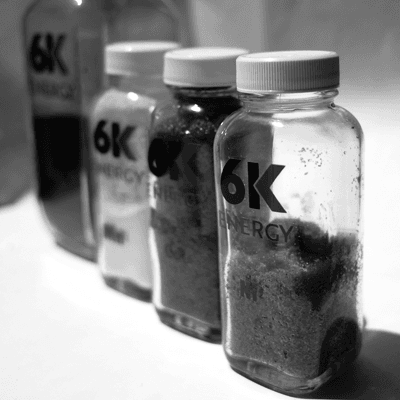
6K division producing NMC and LFP battery cathode active material via UniMelt microwave-plasma, including the PlusCAM plant in Jackson, TN.
Vuototecnica S.r.l.
Italy
Italian vacuum component maker founded 1975 in Lecco province; produces suction cups, vacuum pumps and generators, and Octopus gripping systems.
Advanced Farm Technologies, Inc.
United States
Davis, California developer of robotic strawberry and apple harvesters whose assets and IP were acquired by CNH after its 2024 apple pilots.

Pittsburgh Robotics Network
United States
Pittsburgh nonprofit (2018) connecting 260+ robotics and AI companies with $9.8B+ investment; delivers ecosystem growth, talent programs, and industry advocacy.

Robot Factory Srl
Italy
Italian maker of benchtop 3D printers with inclined-extruder FDM technology and compact thermoplastic injection molding machines, made in Italy since 2006.

Lunar Zebro (TU Delft)
Netherlands
TU Delft student team building Lunar Zebro, a six-legged shoebox-sized nano rover billed as the world's smallest and lightest, for a Moon launch NET 2028.

BeeX
Singapore
Singapore developer and operator of hovering autonomous underwater drones (A.IKANBILIS, ALPHA, BETTA, CASPER) for offshore wind, ports and naval MCM.
Robotics needs a service framework.
RSF defines a common language for robot service capability, lifecycle operations, certification pathways, and service-provider networks.
Join the RobotToday community on LinkedIn
Daily robotics news, in-depth analysis, conference highlights, and discussions with professionals worldwide.