

Study Highlights Physical Risks from AI Errors in Human-Robot Interactions
- Published
- Source
- RobotMagazine
A study published in 2025 examined 303 accidents related to human-robot interactions, revealing unexpected activations and sensor errors. As Physical AI evolves, AI errors are transitioning from digital to physical realms, posing significant risks. Unlike previous AI mistakes, which were largely confined to digital outputs, errors in robotic systems can lead to real-world consequences, where a minor miscalculation can result in serious incidents.
This research, featured in the journal Safety Science, categorized incidents into seven major types, with a focus on unexpected robot activations and sensor inaccuracies. These findings underscore the urgent need for advancements in Physical AI to enhance robots' environmental perception and decision-making capabilities. As robots increasingly operate in physical spaces, ensuring their reliability and safety becomes paramount.
Looking ahead, the development of Physical AI will be critical in addressing these challenges. The integration of cameras, proximity sensors, vision systems, contextual data, and AI models is essential for enabling robots to accurately perceive their surroundings before taking action. No further timeline was disclosed at the time of publication.
Original report
Robotique : quand une erreur d’IA devient un risque physique
RobotMagazine · Christophe Carl LouisThis briefing is an independently written summary based on publicly available reporting and is provided for industry information and news discovery. The original report and source publication are credited and linked where applicable. RobotToday does not claim ownership of third-party source material.
Rights concerns? Contact [email protected] with the relevant URL and details. We will review the matter and take appropriate action where warranted.
More related news
-
1
RobotToday Weekly October 12 – 16, 2026 RobotToday · 5 hours ago
- 2
- 3
- 4
- 5
- 6
- 7
- 8
- 9
- 10
- 11
- 12
Related Suppliers
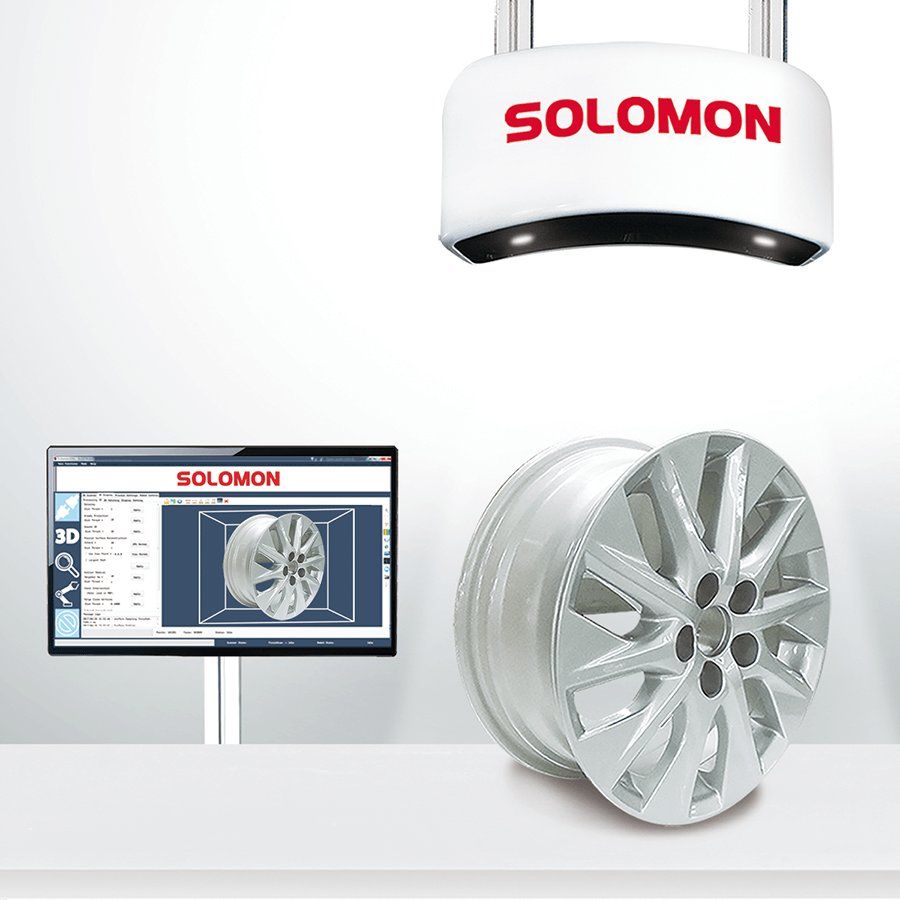
Solomon AI and 3D Vision
Taiwan
Taipei, Taiwan vision-technology company founded 1973, listed on the Taiwan Stock Exchange (2359); makes SolVision inspection and SolMotion robot software.

WATA AI Inc.
Korea, Republic of (South)
South Korean spatial AI company founded 2019 in Jeonju, making LiDAR SLAM-based autonomous inventory inspection robots for warehouses.

LS2N - Laboratoire des Sciences du Numérique de Nantes
France
LS2N is a Nantes digital-science lab of 534 members whose ARMEN, ReV and RoMas teams research autonomous, soft and manufacturing robots.

Delsys
United States
Natick, MA maker, founded 1993, of Trigno wireless surface EMG and IMU sensors (up to 32 per base) plus an API for myoelectric control of robots and prostheses.

Eka Robotics
United States
US robotics startup building a Vision-Force-Action foundation model for general, high-performance, safe physical robots.

Metalware
United States
San Francisco firmware security startup (YC W24) offering automated binary fuzzing to detect vulnerabilities in embedded device firmware.

K|Lens GmbH
Germany
German machine vision startup using light field sensors and multiview AI for inline industrial quality inspection in automotive, aviation, and medtech.

Erhardt + Leimer GmbH
Germany
Stadtbergen, Germany web-handling automation maker founded 1919; supplies web-guiding, tension-control and inspection systems to over 20,000 customers.

AI Robot Association (AIRoA)
Japan
Tokyo non-profit association of Japanese industry and academia collecting open robot data and building robot foundation models, backed by NEDO.

Blue Danube Robotics GmbH
Austria
Vienna-based maker of AIRSKIN — a modular pressure-sensitive robot safety skin enabling fenceless human-robot collaboration; ISO 13849 PLe certified.
Archetype AI
United States
Physical AI platform company deploying the Newton foundation model to fuse sensor data with language for real-world industrial intelligence.

Deplace AI
France
Paris-based physical AI startup capturing human motion demonstrations and converting them into multimodal action guidance priors for robotics models.
Robotics needs a service framework.
RSF defines a common language for robot service capability, lifecycle operations, certification pathways, and service-provider networks.
Join the RobotToday community on LinkedIn
Daily robotics news, in-depth analysis, conference highlights, and discussions with professionals worldwide.


