

SpaceX Proposes 1 Million AI Satellites to Address Ground Data Center Constraints
- Published
- Source
- optimusk.blog
On January 30, 2026, SpaceX filed with the FCC to launch up to 1 million AI compute satellites, positioning orbital data centers as a solution to the increasing demand for AI computing power. Ground data centers are facing significant challenges, with energy consumption projected to reach approximately 1,050 TWh in 2026, making them the fifth-largest electricity consumer globally. The demand for new data center capacity is outpacing the growth of power generation infrastructure, leading to a critical bottleneck in the grid system.
The significance of this initiative lies in the structural constraints faced by ground data centers, including power delivery limitations, high water consumption, and local opposition to new projects. The Uptime Institute's 2026 outlook identifies power as the primary constraint on data center growth, with capacity clearing prices in the PJM grid skyrocketing to $329.17/MW, driven by data center expansion. Additionally, cooling requirements are becoming increasingly unsustainable, with facilities consuming vast amounts of water, further complicating their operational viability.
Looking ahead, SpaceX's orbital AI compute initiative aims to circumvent these challenges by leveraging the advantages of space, such as continuous solar power and minimal local opposition. The first AI prototypes are expected to launch in early 2027, with operational deployments planned for 2028. No further timeline was disclosed at the time of publication.
Original report
.snippet-box { background: var(--color-bg-2); border: 1px solid var(--color-border); border-left: 3px solid var(--color-accent); padding: 1.5rem 1.75rem; margin: 2rem 0 2.5rem; border-radius: 2px; } .snippet-box .snippet-title { font-family: var(--font-mono); font-size: 0.7rem; font-weight: 500; color: var(--color-accent); letter-spacing: 0.15em; text-transform: uppercase; margin-bottom: 1rem; } .snippet-box > p { color: #c8d0dc; font-size: 0.95rem; margin-bottom: 0.85rem; } .snippet-list { list-style: none; padding: 0; margin: 0; } .snippet-list li { color: #d0d8e0; font-size: 0.9rem; padding: 0.5rem 0; border-bottom: 1px solid var(--color-border); display: flex; gap: 0.75rem; align-items: flex-start; margin-bottom: 0; } .snippet-list li:last-child { border-bottom: none; } .snippet-dot { width: 5px; height: 5px; border-radius: 50%; background: var(--color-accent); flex-shrink: 0; margin-top: 0.55rem; } .stat-grid { display: grid; grid-template-columns: repeat(3, 1fr); gap: 1px; background: var(--color-border); border: 1px solid var(--color-border); margin: 2rem 0; } @media (max-width: 600px) { .stat-grid { grid-template-columns: repeat(2, 1fr); } } .stat-card { background: var(--color-bg-2); padding: 1.25rem 1rem; text-align: center; } .stat-num { font-family: var(--font-display); font-size: 2rem; color: var(--color-accent); line-height: 1; display: block; margin-bottom: 0.4rem; } .stat-lbl { font-family: var(--font-mono); font-size: 0.62rem; letter-spacing: 0.1em; color: var(--color-text-muted); text-transform: uppercase; } .post-timeline { list-style: none; padding: 0; margin: 1.5rem 0; } .post-timeline li { display: grid; grid-template-columns: 130px 1fr; gap: 1.25rem; padding: 1rem 0; border-bottom: 1px solid var(--color-border); font-size: 0.9rem; color: #c8d0dc; margin-bottom: 0; } .post-timeline li:last-child { border-bottom: none; } .tl-yr { font-family: var(--font-display); font-size: 0.9rem; color: var(--color-accent); padding-top: 0.1rem; line-height: 1.3; } .box-takeaway { border-left: 3px solid var(--color-accent); background: rgba(255,68,68,0.06); padding: 1rem 1.25rem; margin: 1.5rem 0; border-radius: 0 2px 2px 0; } .box-takeaway p { color: #d0d8e0; margin: 0; font-size: 0.9rem; } .box-takeaway strong { color: #ffffff; } .box-insight { background: rgba(0,102,204,0.08); border: 1px solid rgba(0,102,204,0.25); padding: 1rem 1.25rem; margin: 1.5rem 0; border-radius: 2px; } .box-insight p { color: #c8d0dc; margin: 0; font-size: 0.9rem; } .box-insight strong { color: #ffffff; } .box-warning { background: rgba(255,180,0,0.07); border: 1px solid rgba(255,180,0,0.3); border-left: 3px solid #ffb400; padding: 1rem 1.25rem; margin: 1.5rem 0; border-radius: 0 2px 2px 0; } .box-warning p { color: #d0d8e0; margin: 0; font-size: 0.9rem; } .box-warning strong { color: #ffe066; } .post-faq { margin: 1.5rem 0; } .post-faq-item { border-bottom: 1px solid var(--color-border); padding: 1.25rem 0; } .post-faq-item:last-child { border-bottom: none; } .post-faq-q { font-family: var(--font-display); font-size: 1.2rem; color: var(--color-text); margin-bottom: 0.5rem; } .post-faq-a { color: #c8d0dc; font-size: 0.9rem; line-height: 1.7; margin: 0; } .src-note { font-family: var(--font-mono); font-size: 0.65rem; letter-spacing: 0.08em; color: var(--color-text-dim); margin-top: 0.5rem; } .src-note a { color: var(--color-text-dim); text-decoration: underline; } .post-intro { border-left: 3px solid var(--color-border-light); padding-left: 1.25rem; margin: 1.75rem 0 2rem; } .post-intro-label { font-family: var(--font-mono); font-size: 0.65rem; letter-spacing: 0.18em; color: var(--color-accent); text-transform: uppercase; margin-bottom: 0.5rem; } .post-intro p { color: #c8d0dc; font-size: 1rem; margin: 0; } .post-cta { background: var(--color-bg-2); border: 1px solid var(--color-border); padding: 2rem; margin-top: 3rem; text-align: center; } .post-cta h3 { font-family: var(--font-display); font-size: 1.8rem; color: var(--color-text); margin-bottom: 0.75rem; } .post-cta p { color: var(--color-text-muted); margin-bottom: 1.25rem; font-size: 0.9rem; } .post-cta .mono { color: var(--color-text-dim); font-size: 0.75rem; margin: 0; } .article-body p { color: #cdd5e2; } .article-body li { color: #cdd5e2; } .article-body strong { color: #f0f2f5; } .article-body a { color: #7ab4ff; text-underline-offset: 3px; } .article-body a:hover { color: var(--color-accent); } .article-body h3 { font-family: var(--font-display); font-size: 1.4rem; color: #e8ecf2; margin: 2rem 0 0.75rem; } .article-body h4 { font-family: var(--font-mono); font-size: 0.7rem; letter-spacing: 0.12em; color: var(--color-accent); text-transform: uppercase; margin: 1.75rem 0 0.3rem; } .post-meta-row { display: flex; flex-wrap: wrap; gap: 1rem; align-items: center; padding: 1rem 0; border-top: 1px solid var(--color-border); border-bottom: 1px solid var(--color-border); margin-bottom: 2rem; } .post-meta-tag { background: rgba(255,68,68,0.15); color: var(--color-accent); border: 1px solid rgba(255,68,68,0.3); padding: 3px 10px; font-family: var(--font-mono); font-size: 0.65rem; letter-spacing: 0.1em; text-transform: uppercase; } .post-meta-item { font-family: var(--font-mono); font-size: 0.65rem; letter-spacing: 0.08em; color: var(--color-text-dim); } hr.post-hr { border: none; border-top: 1px solid var(--color-border); margin: 2.5rem 0; } { "@context": "https://schema.org", "@type": "Article", "headline": "Why Starmind, Not Earth? Ground Data Centers' 3 Limits", "description": "Power, water, and NIMBY are choking ground data centers in 2026. See the numbers behind SpaceX's bet on orbital AI compute — and what orbit can't fix.", "image": "https://optimusk.blog/img/og-post-optimus.jpg", "author": { "@type": "Person", "name": "Lindsey A. Kennedy", "url": "https://optimusk.blog/about/" }, "publisher": { "@type": "Organization", "name": "OPTIMUSK.BLOG", "logo": { "@type": "ImageObject", "url": "https://optimusk.blog/img/logo.png" } }, "datePublished": "2026-07-08T09:00:00+00:00", "dateModified": "2026-07-08T09:00:00+00:00", "mainEntityOfPage": { "@type": "WebPage", "@id": "https://optimusk.blog/blog/why-not-earth-data-centers/" }, "inLanguage": "en", "keywords": ["Starmind vs data centers", "space data centers", "AI data center power crisis 2026", "orbital computing", "why data centers in space"], "articleSection": "Technology", "wordCount": 1485 } { "@context": "https://schema.org", "@type": "FAQPage", "mainEntity": [ { "@type": "Question", "name": "Why is SpaceX putting data centers in space?", "acceptedAnswer": { "@type": "Answer", "text": "Because the three inputs a ground data center needs — grid power, cooling water, and permits — are all constrained in 2026, while orbit offers continuous solar power, free vacuum cooling, and no local opposition. The bet is that cheap Starship launch makes orbital compute cheaper than fighting for scarce terrestrial capacity." } }, { "@type": "Question", "name": "Are space data centers actually cheaper than ground ones?", "acceptedAnswer": { "@type": "Answer", "text": "Not yet. In a June 8, 2026 presentation, Musk estimated orbit becomes the most cost-effective location for high-density AI compute within two to three years — a projection that assumes Starship launch costs fall by an order of magnitude. Today, ground is cheaper for everything latency-sensitive." } }, { "@type": "Question", "name": "Won't the latency make space AI useless?", "acceptedAnswer": { "@type": "Answer", "text": "For real-time chat and autonomous systems, mostly yes. For training runs and batch inference — which account for the bulk of raw compute demand — an extra 10–20 ms is irrelevant." } }, { "@type": "Question", "name": "How much power do AI data centers use on Earth?", "acceptedAnswer": { "@type": "Answer", "text": "Global data center consumption passes roughly 1,000 TWh in 2026 — about double 2024 and comparable to Japan's national total — with AI workloads driving most of the growth." } }, { "@type": "Question", "name": "When does Starmind start operating?", "acceptedAnswer": { "@type": "Answer", "text": "Two AI1 prototypes target early 2027 launches, with first operational orbital AI deployments slated for 2028." } } ] } { "@context": "https://schema.org", "@type": "BreadcrumbList", "itemListElement": [ { "@type": "ListItem", "position": 1, "name": "Home", "item": "https://optimusk.blog/" }, { "@type": "ListItem", "position": 2, "name": "Blog", "item": "https://optimusk.blog/blog/" }, { "@type": "ListItem", "position": 3, "name": "Why Starmind, Not Earth? Ground Data Centers' 3 Limits", "item": "https://optimusk.blog/blog/why-not-earth-data-centers/" } ] } // MENU Home Blog Services Tools About Careers Contact Buy Optimus Home › Blog › Why Starmind, Not Earth? The Case Against Ground Data Centers // Contents // Contents The Question Behind Starmind Problem #1: The Grid Can't Keep Up Problem #2: Water Problem #3: Nobody Wants One Next Door What Orbit Actually Fixes Earth vs. Orbit: The 2026 Scorecard The Honest Counter-Case: What Orbit Do… Signals to Watch Through 2027 FAQ Bottom Line Analysis // Updated: July 8, 2026 // 7 min read // Lindsey A. Kennedy Why Starmind, Not Earth? The Case Against Ground Data Centers
optimusk.blog · OptimusK BlogThis briefing is an independently written summary based on publicly available reporting and is provided for industry information and news discovery. The original report and source publication are credited and linked where applicable. RobotToday does not claim ownership of third-party source material.
Rights concerns? Contact [email protected] with the relevant URL and details. We will review the matter and take appropriate action where warranted.
More related news
- 1
- 2
- 3
- 4
- 5
- 6
-
7
SARC 2027: June 26-July 1, Odense, Denmark RobotToday · 4 days ago
- 8
- 9
- 10
- 11
-
12
Glacian: Physics Model Vets AI Data Center Cooling RobotToday · 2 weeks ago
Related Suppliers
Terafab
United States
Tesla/SpaceX/xAI semiconductor fab announced March 2026 in Austin TX; produces AI chips for Optimus robots, FSD, and SpaceX satellites.

Starcloud
United States
Starcloud (founded 2024, Redmond WA) launched Starcloud-1, the first satellite with an Nvidia H100 GPU, targeting gigawatt-scale orbital AI data centers.
DeepCtrls 深度智控
China
Nanjing energy-AI startup founded in 2018 by Tsinghua/Berkeley Lab alumni; its IoT platform targets at least 10% facility energy savings.
Alloy Enterprises Inc
United States
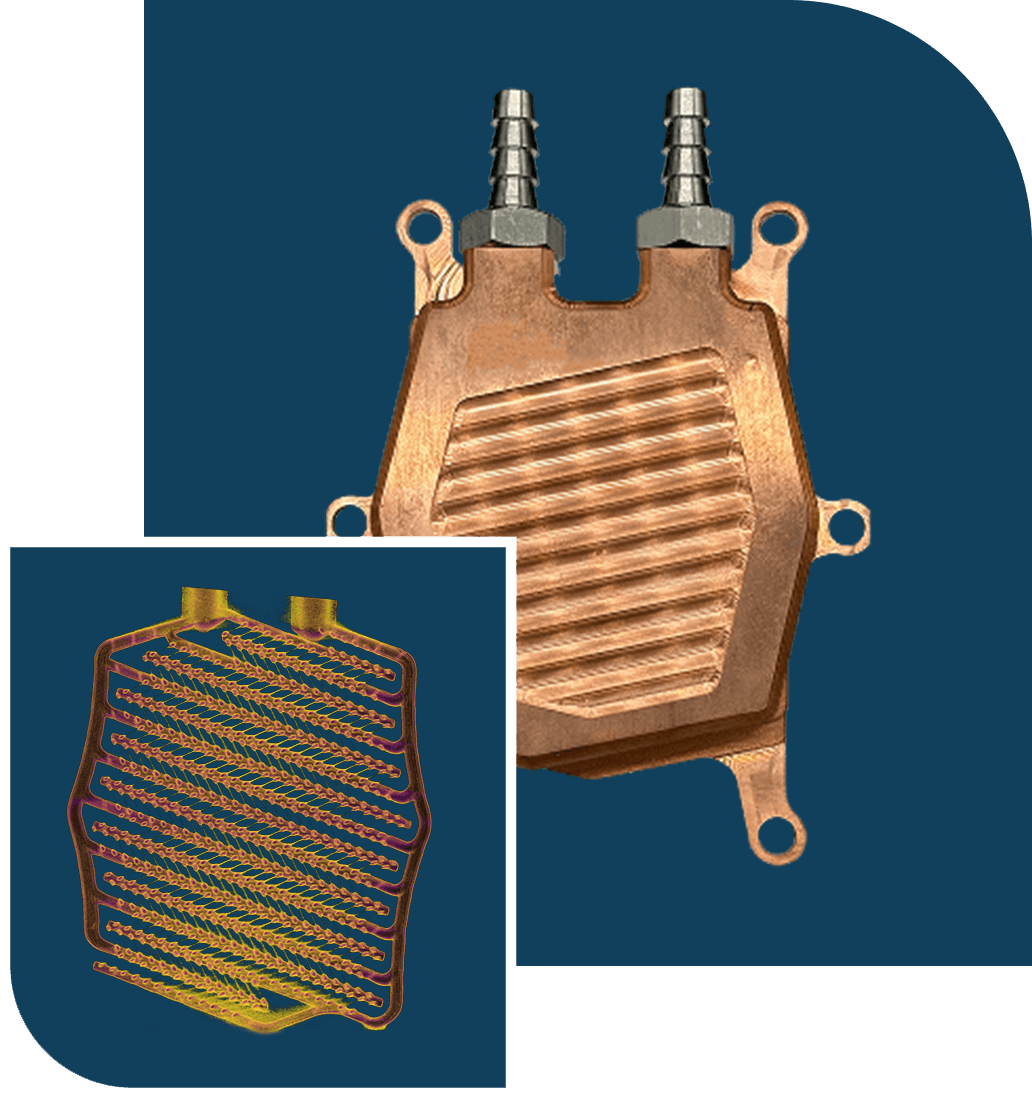
US thermal management maker founded 2020; patented Stack Forging™ yields leak-tight aluminum cold plates with 4× pressure drop reduction.
Motus Labs
United States
US robotics gear manufacturer offering the Orbital Flex precision gear design with zero backlash for 10,000 hours, founded 2018 in Dallas, TX.

Rogue Space Systems Corporation
United States
Laconia, NH maker (est. 2020) of Orbots, maneuverable spacecraft for proximity operations, inspection and payload hosting, plus GPU-based space compute.

Doxel
United States
Doxel is a US AI software company that automates construction progress tracking using robots, drones, and computer vision to predict project outcomes.
MemryX
United States
US AI chip startup co-founded 2019 at University of Michigan, developing edge AI accelerator chips with at-memory dataflow for robotics, vision, and video.
Honor Device Co., Ltd. 荣耀
China
Shenzhen smartphone maker whose embodied-intelligence lab built Lightning, the 169 cm biped that won the 2026 Beijing humanoid half marathon in 50:26.
Aspen Systems LLC
United States
Manufacturer of miniature vapor compression cooling systems for robotics, medical, military, and industrial applications.
Rugged Robotics
United States
Houston-based RaaS company deploying autonomous robots that mark CAD designs directly onto construction floors for multi-trade layout.

Shanghai Artificial Intelligence Laboratory 上海人工智能实验室
China
Shanghai-based national AI research institute founded 2020; develops the InternLM model family and the Intern-Robotics embodied-AI engine.
Robotics needs a service framework.
RSF defines a common language for robot service capability, lifecycle operations, certification pathways, and service-provider networks.
Join the RobotToday community on LinkedIn
Daily robotics news, in-depth analysis, conference highlights, and discussions with professionals worldwide.


