

Quiz: Industrial Connectivity Trends
- Published
- Source
- AutomationWorld.com
Recent developments in industrial networks are significantly transforming the landscape of manufacturing connectivity. As companies increasingly adopt advanced technologies, the integration of Internet of Things (IoT) devices and cloud computing is reshaping how manufacturers communicate and operate. This shift is particularly evident in the ongoing evolution of smart factories, which leverage real-time data to enhance efficiency and productivity.
The changes are occurring across various sectors, with a notable emphasis on automation and data analytics. By October 2023, many manufacturers have begun to implement these technologies to streamline operations and reduce costs. The push for greater connectivity is driven by the need for improved supply chain management and the ability to respond swiftly to market demands.
Experts highlight that the transition to more interconnected systems is not merely a trend but a necessary adaptation to remain competitive in a rapidly changing global market. Manufacturers are increasingly recognizing the importance of collaboration and data sharing among partners to optimize processes and innovate products.
As this transformation continues, the implications for workforce dynamics and skill requirements are becoming apparent. Companies are investing in training programs to equip employees with the necessary skills to thrive in this new environment. The ongoing evolution of industrial networks is poised to redefine traditional manufacturing paradigms, fostering a more agile and responsive industry capable of meeting the challenges of the future.
Original report
Quiz: Industrial Connectivity Trends
AutomationWorld.com · (undefined)This briefing is an independently written summary based on publicly available reporting and is provided for industry information and news discovery. The original report and source publication are credited and linked where applicable. RobotToday does not claim ownership of third-party source material.
Rights concerns? Contact [email protected] with the relevant URL and details. We will review the matter and take appropriate action where warranted.
More related news
- 1
- 2
- 3
- 4
-
5
ROBOTTODAY Weekly October 19 – 23, 2026 RobotToday · 3 days ago
- 6
- 7
- 8
- 9
- 10
- 11
- 12
Related Suppliers

Da Shiang Automation Industrial Co. Ltd. 達詳自動化工業股份有限公司
Taiwan
Taiwan-based robotic system integrator founded 2013; 1,000+ robot projects in automotive, aerospace, and metal manufacturing.

Janome Industrial Equipment Europe GmbH
Germany
German sales subsidiary of Janome Industrial Equipment (Japan), distributing servo presses and desktop/Cartesian robots in Europe since 1984.

Industrial Technology Research Institute (ITRI) 工業技術研究院
Taiwan
Hsinchu County, Taiwan applied-technology research institute founded 1973; over 6,500 staff developing autonomous mobile robots and AI perception systems.
E-COBOT
France
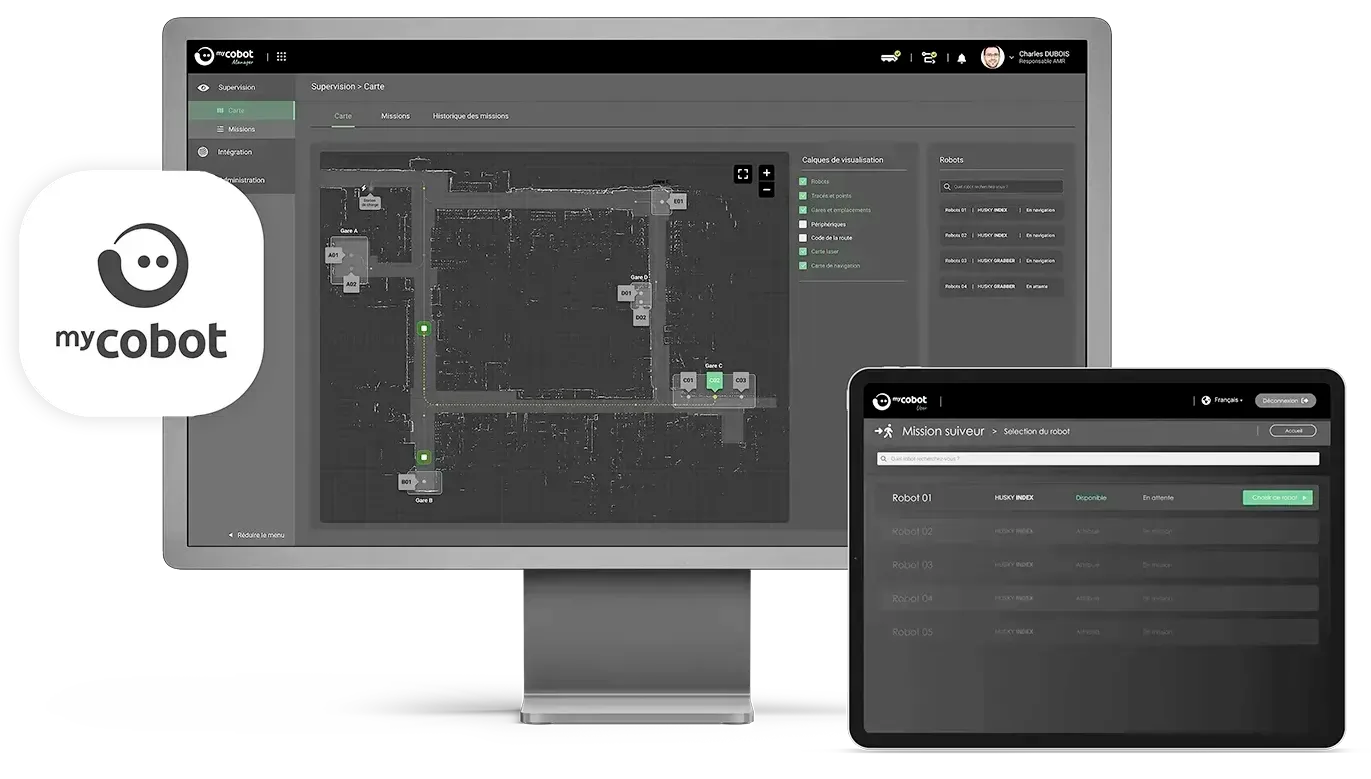
French AMR manufacturer and system integrator offering the HUSKY robot range and MyCobot fleet management software.
EasyMile
France
Toulouse, France autonomous-vehicle software company founded 2014; EZTow and EZDolly systems automate industrial tow tractors and cargo movers at airports.

Filics
Germany
Munich-based robotics startup making ultra-flat omnidirectional AMRs that drive under Euro pallets for space-efficient intralogistics.

BioRobotics Laboratory, Korea University of Technology and Education
Korea, Republic of (South)
South Korean university research laboratory focusing on haptics, exoskeletons, rehabilitation robotics, and autonomous ground vehicles.

McMaster Manufacturing Research Institute
Canada
Hamilton, Ontario applied manufacturing research center at McMaster University; runs a 21,000 sq ft facility with seven research labs.

Robotics Education & Competition Foundation
United States
The REC Foundation is a US nonprofit that runs VEX-based robotics and drone competitions reaching 1.1 million students across 70 countries.

Datanomix
United States
No-Operator-Input production monitoring software that turns CNC machine data into real-time visibility and prescriptive coaching for manufacturers.
Datatang 数据堂(北京)科技股份有限公司
China
Beijing AI training-data supplier founded 2010 and quoted on NEEQ; its Nexdata arm sells egocentric, teleoperation and hand-pose datasets for robot learning.
Anyscale
United States
Anyscale is a San Francisco AI infrastructure firm behind Ray, the open-source engine for large-scale model training; Nscale agreed to buy it for $1.65B.
Robotics needs a service framework.
RSF defines a common language for robot service capability, lifecycle operations, certification pathways, and service-provider networks.
Join the RobotToday community on LinkedIn
Daily robotics news, in-depth analysis, conference highlights, and discussions with professionals worldwide.


