

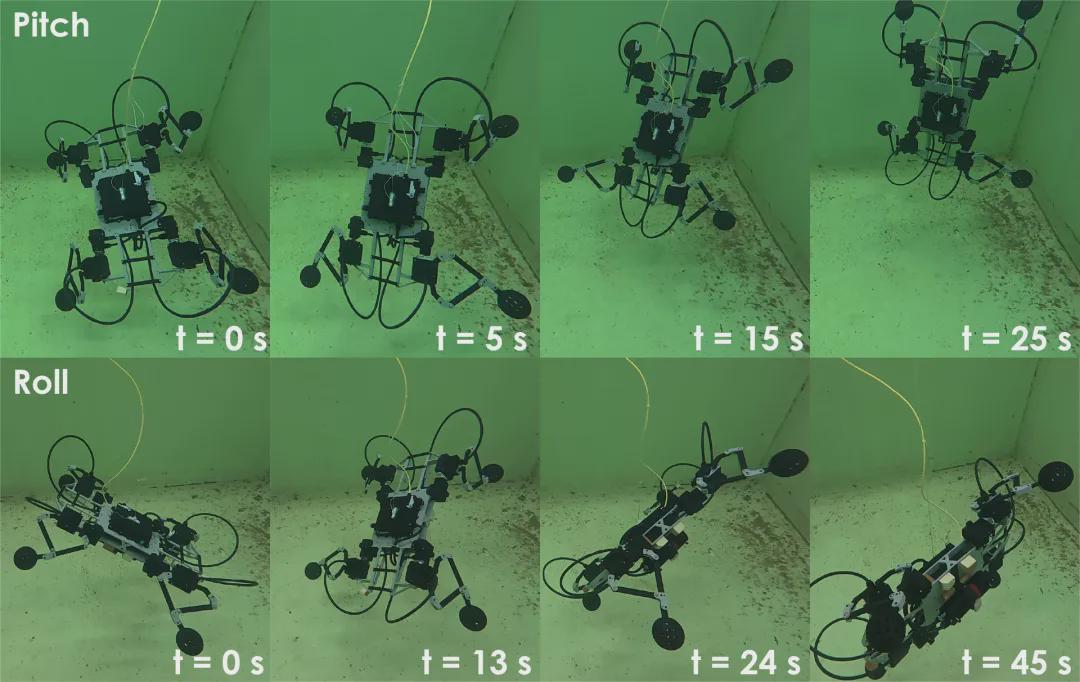
A research team from the Norwegian University of Science and Technology (NTNU) has developed a quadruped robot capable of swimming without traditional propulsion systems. Instead, it uses the resistance generated by spherical ends of its legs to maneuver in water, adjusting its roll, pitch, and yaw.
This innovation is significant as it addresses the challenges of waterproofing and control algorithms in aquatic environments, particularly for robots designed primarily for land. The team employed a hard-shell design inspired by traditional remotely operated vehicles (ROVs) to ensure all electronic components are securely sealed.
Looking ahead, the robot has demonstrated effective performance in water, undergoing rigorous testing without water ingress. No further timeline was disclosed at the time of publication.
Editor's Note
The development of aquatic-capable robots like NTNU's swimming robot dog highlights the growing intersection of robotics and environmental adaptability. As industries seek versatile solutions for diverse terrains, innovations in waterproofing and propulsion methods will be crucial for future robotic applications in both land and aquatic environments.

































Leave a comment