


Minerva Humanoids Secures $10M Funding to Develop Robots for Hazardous Environments
- Published
- Source
- AIInsider
Minerva Humanoids has emerged from stealth mode, announcing approximately $10 million in pre-seed funding aimed at developing semi-autonomous humanoid robots for hazardous work environments. The funding round was led by General Catalyst, with Long Journey Ventures and Credo Ventures as co-leads, and will support advancements in robot hardware and AI systems as the company prepares for its initial paid pilots this fall.
The significance of this funding lies in Minerva's focus on enhancing safety in high-risk sectors such as energy operations, public safety, and explosive ordnance disposal. The company's first robot, Roger, is designed to allow trained specialists to perform dangerous tasks remotely, minimizing the need for human presence in hazardous areas. This approach aims to improve efficiency and safety in operations where traditional robots may fall short.
Looking ahead, Minerva plans to produce its robots in both the U.S. and Germany, while avoiding reliance on single-source Chinese components. The company is also exploring partnerships with academic institutions to address challenges in hazardous environments. No further timeline was disclosed at the time of publication.
Original report
Minerva Humanoids Emerges from Stealth with $10M in Funding to Develop Robots for Hazardous Work
AIInsider · Greg BockThis briefing is an independently written summary based on publicly available reporting and is provided for industry information and news discovery. The original report and source publication are credited and linked where applicable. RobotToday does not claim ownership of third-party source material.
Rights concerns? Contact [email protected] with the relevant URL and details. We will review the matter and take appropriate action where warranted.
More related news
- 1
- 2
- 3
- 4
- 5
-
6
RobotToday Weekly November 16–20, 2026 RobotToday · 2 days ago
- 7
- 8
- 9
- 10
- 11
- 12
Related Suppliers

Minerva Humanoids
United States
San Francisco startup founded 2025 by MIT, Tesla Optimus and Boston Dynamics alumni; builds the teleoperated humanoid Roger for oil, gas and EOD work.

Shenzhen Liangyuan Innovation Technology Co., Ltd. 深圳亮源新创科技有限公司
China
Shenzhen embodied-AI lab led by ex-OpenAI researcher Roger Jiang, building Physical AI foundation models Light-O1, Light REACT and LightNav-0

Hardhat Robotics
United States
Hardhat Robotics builds field-ready, teleoperated mobile robots that take on high-risk construction tasks to protect skilled workers.
Wuhan Optics Valley Haribit Technology Co., Ltd. 武汉光谷华汇科技有限公司
China
Wuhan subsidiary of Beijing Ligong Huahui building core robot joints and a voice-controlled dual-arm teleoperation system for special environments.

Korea Research Institute of Ships & Ocean Engineering (KRISO)
Korea, Republic of (South)
Daejeon government ship and ocean research institute behind the Crabster seabed walking robot, an R&D USV and a 3,500 m deep-sea ROV/AUV coring system.

Life Science Robotics ApS
Denmark
Danish medical robotics company in Aalborg, developer of ROBERT, a rehabilitation robot for mobilizing bedridden patients after stroke or spinal injury.

Recon Robotics
United States
Edina MN maker of throwable micro-robots (Throwbot 2) for military, law enforcement, and first responders; ~7,000 units deployed globally.

Abaka AI
United States
Palo Alto AI data firm (est. 2019) annotating sensor data for embodied AI, autonomous vehicles, and generative AI; serves 1,000+ industry partners.

SpirOps AI
France
Paris-based independent AI lab since 2004; specializes in crowd simulation, autonomous vehicle AI, and robot decision-making for Stellantis and Alstom.

Tensorfield Agriculture
United States
California-based agri-robotics company deploying semi-autonomous robots that use superheated vegetable oil to eliminate weeds without herbicides.

Robotiz3d Ltd
United Kingdom
University of Liverpool spin-out whose ARRES robots detect road defects, seal cracks and repair potholes; trialled with Hertfordshire County Council.
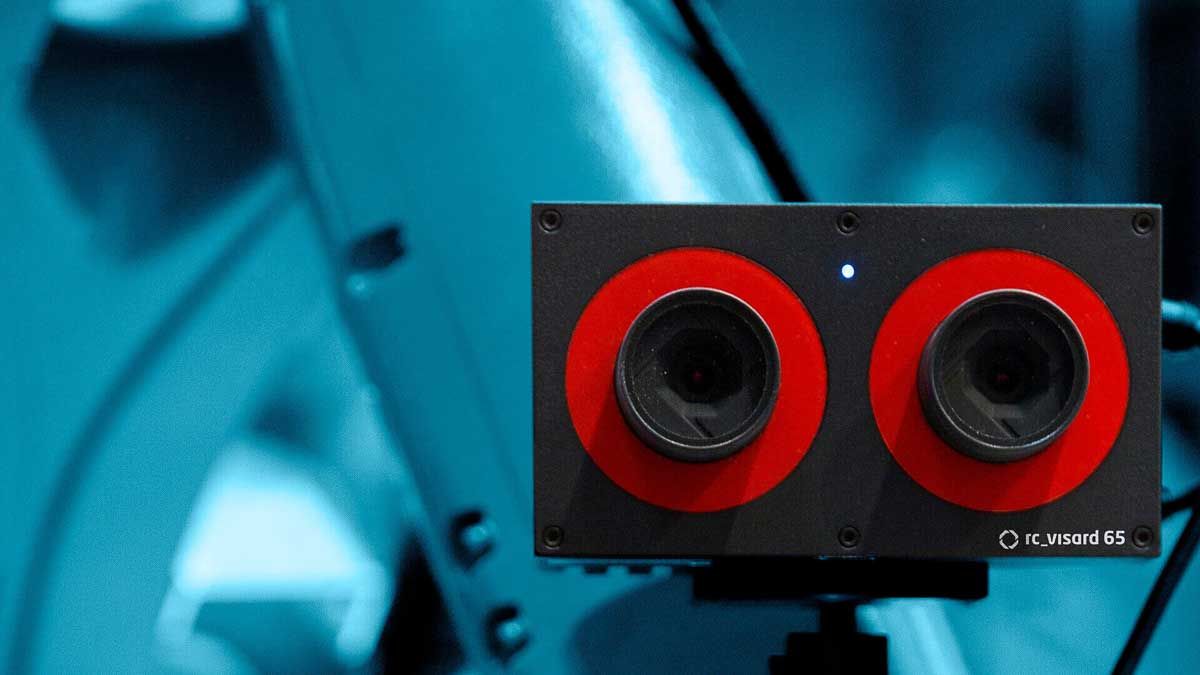
Roboception GmbH
Germany
Munich-based DLR spin-off delivering 3D stereo vision sensors and AI software that give industrial robots eyes and perception.
Robotics needs a service framework.
RSF defines a common language for robot service capability, lifecycle operations, certification pathways, and service-provider networks.
Join the RobotToday community on LinkedIn
Daily robotics news, in-depth analysis, conference highlights, and discussions with professionals worldwide.


