

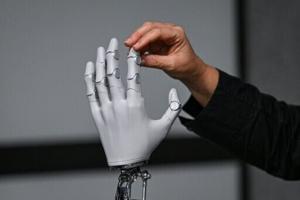
A recent study published in the Journal of Field Robotics explores a human pose estimation approach aimed at enhancing multi-modal perception in dynamic occlusion scenarios. This research is particularly relevant for improving human-robot collaboration, as it addresses the challenges posed by occlusions in real-time environments.
The significance of this study lies in its potential to advance the capabilities of robots in collaborative settings, enabling them to better understand and interact with human counterparts. By focusing on dynamic occlusion scenarios, the research highlights the importance of robust perception systems that can adapt to changing environments, which is crucial for effective human-robot teamwork.
Looking ahead, the implications of this research could lead to more sophisticated robotic systems capable of navigating complex environments while maintaining high levels of interaction with humans. No further timeline was disclosed at the time of publication.
Editor's Note
The integration of advanced perception technologies in robotics is critical for enhancing human-robot collaboration. As industries increasingly adopt automation, understanding human movements in dynamic settings will be essential for ensuring safety and efficiency in shared workspaces. This research contributes to the ongoing evolution of intelligent robotic systems.









Leave a comment