

Human Archive
"Archiving the physical world for embodied intelligence"
Data lab capturing aligned multimodal human-interaction data to train robotics and embodied-AI foundation models.

Company Facts
Founded
-
Primary Role
Software/Algorithm
Company Size
-
Primary Region
North America
Annual Sales
-
Funding Stage
Early-Stage VC
Funding Total
-
Certifications & Memberships
CASIA's Peiyan Li Brings Two VLA Papers to IROS 2026
CASIA Ph.D. candidate Peiyan Li co-authored two IROS 2026 papers on VLA models for long robot tasks. We also cover his BridgeVLA and SpatialVAM work.

Google Launches Agentic AI with Gemini for Business Applications
Google announced the introduction of its Gemini AI into the agentic era during a Cloud event, launching a unified agent capable of performing tasks on behalf of users. This development signifies a shift from conversational AI to agents that can manage tasks such as scheduling and code generation. The importance of this launch lies in Gemini's existing user base, which exceeds 1 billion monthly active users, and its adoption by nearly 90% of Fortune 100 companies. By initially focusing on business applications, Google aims to address challenges related to security and performance before expanding to consumer use. Looking ahead, Google plans to enhance the agent's capabilities by allowing it to connect with various business systems and utilize third-party models. Users will be able to track the agent's activities through a dedicated interface, ensuring transparency and accountability in task management. No further timeline was disclosed at the time of publication.
AI Enterprise TC gemini Google
Nous Research Secures $90M Series B Funding at $1.5B Valuation for Hermes AI Expansion
Nous Research has successfully raised $90 million in Series B funding, achieving a valuation of $1.5 billion. This funding round, led by Robot Ventures, also included participation from notable investors such as Nvidia and Samsung. The total funding for the three-year-old company now stands at $158 million, bolstered by the popularity of its open-source Hermes Agent, which has been cloned over 24 million times. The significance of this funding lies in Nous Research's strategy to expand its offerings into the enterprise market with Hermes for Businesses. This initiative aims to provide companies with customized AI agents that can manage complex workflows while ensuring data privacy and security. The company has reported a strong commercial momentum, with annualized revenue reaching approximately $36 million by mid-September 2026 and expectations to exceed $100 million by year-end. Looking ahead, the focus will be on how Nous Research leverages this new capital to enhance its enterprise solutions and further penetrate the market. No further timeline was disclosed at the time of publication.
AI Funding & Investment Business & Markets AI AI-driven platform capital markets funding
Stuut Raises $52.5 Million Series B to Enhance AI Agents for Order-to-Cash Processes
Stuut, an AI platform based in New York, has successfully raised $52.5 million in a Series B funding round led by Insight Partners. This investment, which also saw participation from Andreessen Horowitz, M12, Microsoft’s Venture Fund, and Activant, brings Stuut's total funding to $93 million, following a previous Series A round ten months prior. The significance of this funding lies in Stuut's innovative approach to automating the order-to-cash process for large enterprises. With 81.7% of outbound collections now automated and 95% of incoming payments matched without human intervention, Stuut's platform is designed to enhance customer experience and financial performance. Major clients include Honeywell, ZoomInfo, and Verifone, with the platform having processed over $3 billion in transactions. Looking ahead, Stuut plans to utilize the new funding to expand its services into credit, lending, and funds movement, as it continues to grow at a remarkable rate of over 90% quarter over quarter. No further timeline was disclosed at the time of publication.
AI Funding & Investment Business & Markets AI AI-driven platform capital markets funding
Ambrosia Energy and Bloom Energy Discuss AI Infrastructure Opportunities at TechCrunch Disrupt 2026
At TechCrunch Disrupt 2026, Ben Longmier, CEO of Ambrosia Energy, and Bill Thayer, SVP at Bloom Energy, will discuss the growing need for AI infrastructure. As AI applications expand, the demand for physical infrastructure such as power generation and data centers is increasing, presenting new business opportunities. This session will explore the challenges of scaling AI, particularly when demand for computing resources outpaces the availability of power and infrastructure. Longmier and Thayer will analyze which constraints may lead to durable business categories and how founders can navigate this evolving landscape. Attendees can expect insights into the emerging markets driven by AI's physical demands, including energy and cooling solutions. The conversation aims to help founders, investors, and tech leaders identify where to focus their efforts as AI infrastructure continues to develop. No further timeline was disclosed at the time of publication.
Startups AI Bloom Energy TechCrunch Disrupt Ambrosia Energy
AWS Unveils Open-Source Physical AI Toolchain for Robotics Development
Amazon Web Services (AWS) has launched an open-source Physical AI Toolchain aimed at assisting roboticists in transitioning from data collection to the deployment of AI models on robots. This toolchain integrates AWS services with NVIDIA’s Physical AI software, addressing the challenge of connecting various components necessary for effective AI-powered robotics. The significance of this launch lies in its potential to streamline the development process for AI models, allowing companies to focus on solving specific problems rather than managing infrastructure. AWS's Sri Elaprolu emphasized the importance of generating synthetic data and utilizing simulation to enhance model training and deployment, particularly in environments with variable conditions. Looking ahead, the toolchain is designed to support continuous improvement through a feedback loop, where data from deployed robots is used to refine models. While no further timeline was disclosed at the time of publication, AWS's toolchain draws on insights from Amazon's extensive robotics operations, which include over 1 million robots, and aims to adapt to diverse operational environments such as convenience stores.
Artificial Intelligence Artificial Intelligence / Cognition Design / Development News Amazon amazon robotics
AWS Introduces Open-Source Physical AI Toolchain to Enhance Robotics Development
Amazon Web Services (AWS) has launched an open-source Physical AI Toolchain aimed at assisting robotics developers in training, simulating, deploying, and enhancing physical AI systems using AWS cloud services and Nvidia’s software stack. This toolchain encompasses synthetic data generation, model training, simulation, edge deployment, and continuous improvement, enabling users to manage fleets of machines effectively. The significance of this launch lies in its potential to streamline the engineering efforts of manufacturers and robotics developers, allowing them to focus more on innovation rather than infrastructure. With one in seven startups engaged in physical AI and 72% of them deeming cloud computing essential, the toolchain is positioned to support a wide range of applications, from industrial automation to humanoid robotics. Looking ahead, AWS's Physical AI Toolchain is expected to play a crucial role in the evolution of physical AI across various industries. As companies increasingly adopt this technology, the toolchain's capabilities for fleet management and operational data integration will be vital for improving performance and scalability in real-world applications. No further timeline was disclosed at the time of publication.
AI Physical AI Technology & Infrastructure AI infrastructure platform Amazon Amazon Web Services
AWS Startups Report Reveals Rapid Growth of Physical AI Amid Market Readiness Challenges
A report from AWS Startups in collaboration with Strand Partners indicates that 15% of startups across 20 markets are developing physical AI technologies. However, only 26% of these startups believe their local markets are ready for deployment, with 70% citing slow adoption as a significant barrier to growth. The report highlights the critical role of cloud infrastructure, with 72% of builders deeming it essential for development. Additionally, 62% of respondents indicated they could not have initiated their projects without cloud computing, while 56% noted that limited computing power hampers progress. Manufacturing and automotive sectors lead in commercial deployment at 51%, followed closely by logistics and retail at 47%. Looking ahead, 76% of builders anticipate that physical AI will become mainstream in their industries within five years, with 36% expecting this transition within two years. However, the report emphasizes that increased customer awareness, technical skills, funding, and clearer regulations are necessary for broader adoption.
Business & Markets Startups Technology & Infrastructure AI Amazon Asia
LG Electronics Showcases Robotics at 2026 First Global Challenge in Incheon
LG Electronics is actively participating in the 2026 First Global Challenge, an international youth robotics competition taking place at Songdo Convensia in Incheon. The event, which runs from Wednesday to Saturday, gathers youth teams from 185 countries to design and build robots aimed at addressing global challenges, particularly focusing on wildfire prevention and recovery due to climate change. This year's competition, themed “Igniting Innovation,” emphasizes the importance of robotics in tackling pressing issues like wildfires. LG's involvement includes sponsoring the event and showcasing its latest robotics technologies at an exhibition booth. The company also features its humanoid robot, LG CLOiD, allowing visitors to engage with the technology and learn about the innovative solutions being developed by young participants. As LG increases its investment in robotics as a key growth area, it aims to integrate physical AI into its strategy. The company recently launched LG Data Factory to enhance data management for robotics training. No further timeline was disclosed at the time of publication.
All News
RobotToday Weekly September 28 – October 2, 2026
AMD buys World Labs for $8.2 billion, Tesla lines up $30 billion in credit, Boston Dynamics reveals a new Atlas hand, Figure melts its F.02 fleet, and IDC counts 25,000 humanoids shipped in H1.

Glacian: Physics Model Vets AI Data Center Cooling
Glacian Technologies pairs AI with a physics-based digital twin that rejects unsafe commands. CEO Jie Zhao on cutting data center cooling energy 15-30%.

ROBOTTODAY WEEKLY September 7 – 11, 2026
This week in robotics: JD.com plans to deploy three million robots across its logistics network, XPeng commissions its IRON humanoid production line, FANUC and Google launch an AI arc-welding agent, and Unitree shares fall 53% from their post-IPO high. September 7–11, 2026.

China’s Dexterous Hand Industry, 2026 Part 3 — The Players
Five vendor archetypes, MIR’s composite top ten, eight company profiles and six field deployments — every firm linked to the RobotToday supplier directory.

China’s Dexterous Hand Industry, 2026 Part 2 — The Technology
Linkage, tendon, direct drive or hybrid — and why hardware is converging while the DL1–DL5 manipulation scale decides who wins. Part 2 of 3.
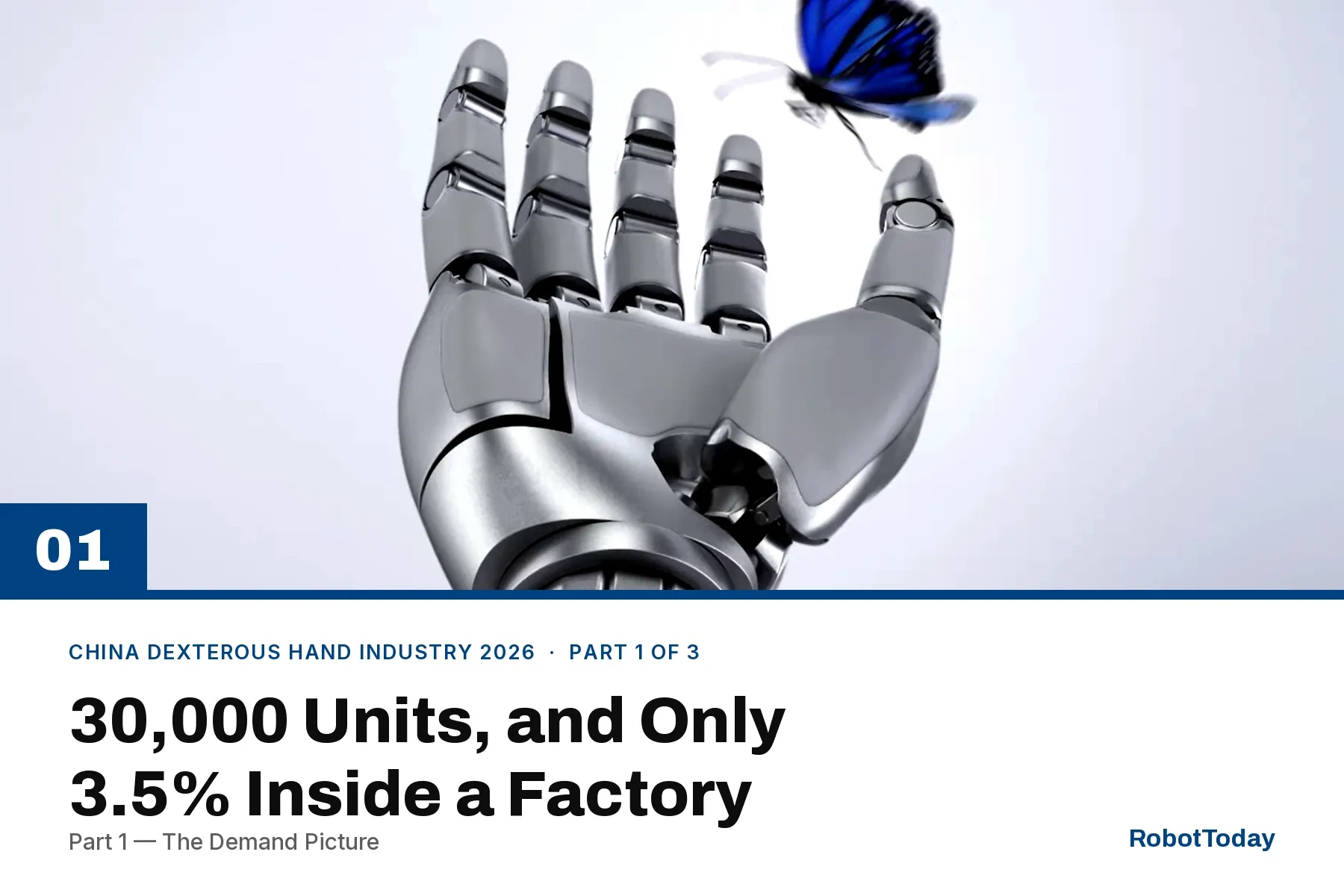
China’s Dexterous Hand Industry, 2026 Part 1 — The Demand Picture
MIR Databank puts China dexterous hand shipments above 30,000 units in 2026, yet only 3.5% of 2025 demand came from factory production. Part 1 of 3.

Inside Saga Robotics: UVC Light vs. Crop Disease
Saga Robotics CPO Damian Flynn on the Thorvald platform's UVC treatment system, its jump from UK strawberries to California wine grapes, and why he's “incredibly bullish” on applying automation and robotics into industries “most chaotic environment.”
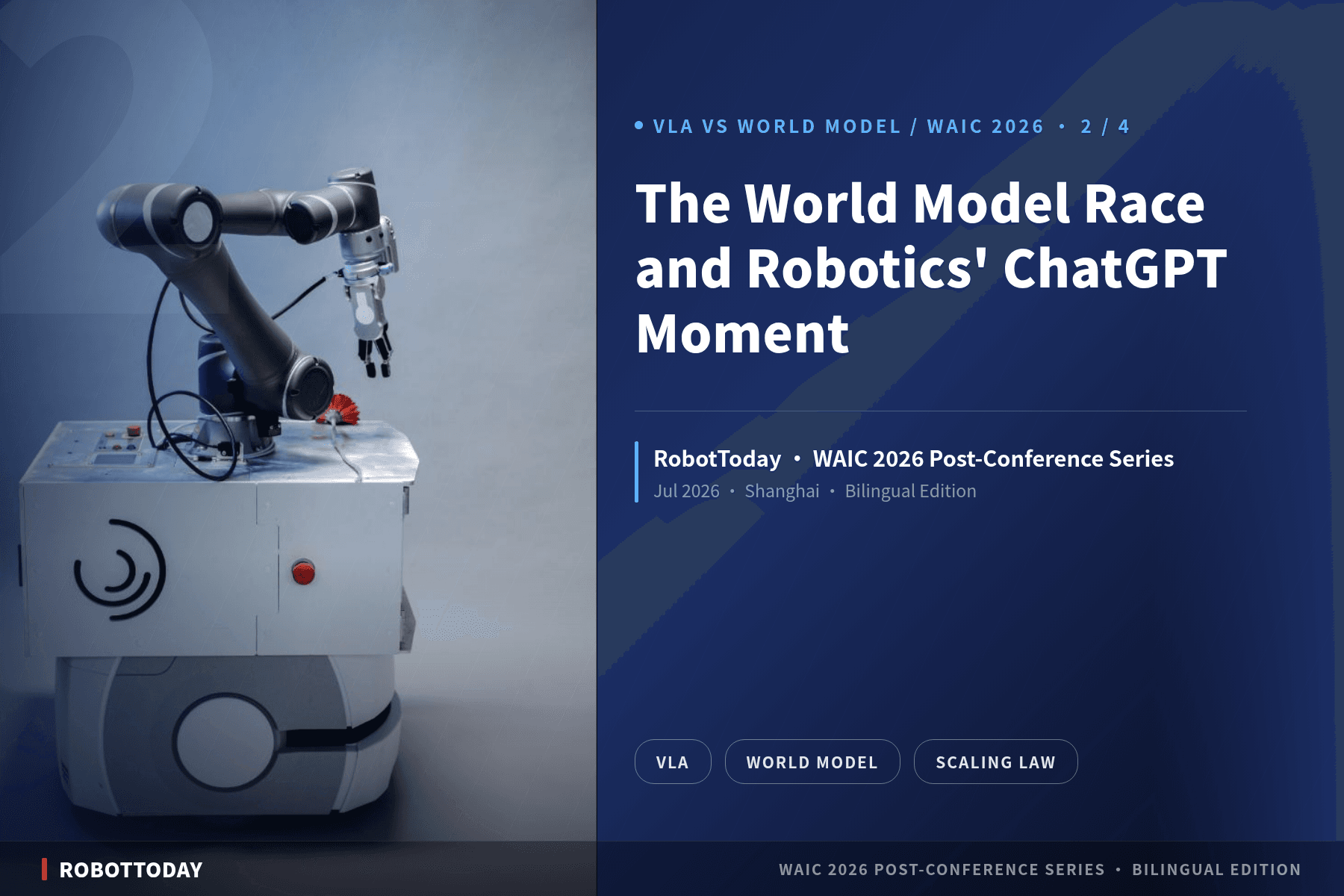
WAIC Review 2/4: World Models vs. VLA: Robotics' Next 'ChatGPT Moment'
At WAIC 2026, world-model and VLA camps staked rival paths to generalist robots; Zhiyuan, SenseTime and NVIDIA predict a robot 'ChatGPT moment' in 2-5 years.

India's $1/hour Data Collection Model Gains Popularity
A novel data collection model is emerging in India, utilizing head-mounted cameras worn by workers to capture first-person footage. This innovative approach, spearheaded by the teenage founders of Egolab AI, has garnered significant attention and was recently acquired by a US company, highlighting its growing importance in the industry. Additionally, the startup Human Archive has successfully raised $8.2 million to enhance this data collection method. This initiative not only aims to provide valuable data for artificial intelligence training but also offers workers an opportunity to earn supplementary income. The combination of technology and economic support is positioning these startups at the forefront of a transformative movement in data collection.
Data Collection AI Training Wearable Technology Gig Economy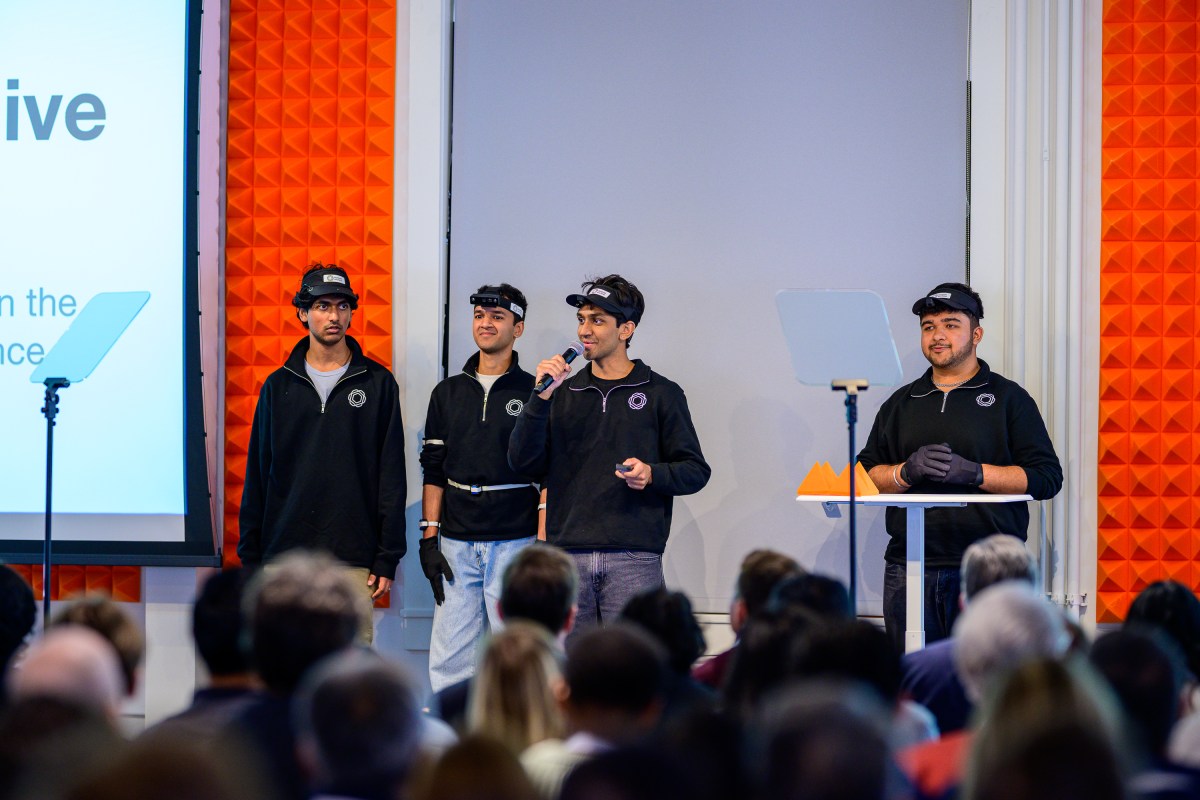
This startup is betting India’s gig economy can train the world’s robots
Human Archive, a startup established by researchers from Berkeley and Stanford, is engaging gig workers in India to wear camera-equipped caps and sensor devices. This initiative aims to gather real-world physical training data, which is increasingly sought after by AI and robotics laboratories. By leveraging the capabilities of gig workers, the company is addressing the growing demand for diverse and comprehensive datasets necessary for advancing technology in these fields. The project highlights the intersection of innovative research and practical application, as it seeks to enhance the development of AI and robotics through firsthand data collection.
AI robots wing vc physical ai Human Archive
Agricultural Robotics | Post-Harvest Automation: The $7.5B System Shaping the Food Supply
Post-harvest robotics automate sorting, grading, packing, and cold storage across the $7.5B equipment market. Deep-dive on TOMRA, Unitec, MAF Roda, Greefa, JBT, Bühler, and the AI-driven platforms replacing 450,000+ packhouse workers by 2030.


