

Exploring Centralized and Decentralized Power Models in Swarm Robotics
- Published
- Source
- RoboticsBusinessReview.com
Swarm robotics systems are influenced by their power architecture, which affects coordination efficiency and fault tolerance in multi-agent environments. Centralized models rely on unified infrastructure for energy management, while decentralized approaches distribute control among individual robotic units. These differences lead to operational trade-offs in communication latency and adaptive responsiveness.
Understanding power topology is crucial for robotics engineers and AI researchers, as it impacts autonomous decision-making and task execution. In dynamic environments, such as UAV swarms, maintaining operational continuity requires adaptive routing awareness to prevent disruptions caused by changing positions or communication ranges. The challenges of power architecture underscore its importance in evaluating swarm models.
Centralized power models excel in structured environments like warehouses, optimizing synchronization and workload efficiency. However, they face scalability and vulnerability issues. Conversely, decentralized models enhance fault tolerance and scalability but can suffer from communication congestion as swarm size increases. The balance between these architectures is vital for effective swarm robotics deployment.
Original report
The differences between decentralized and centralized power in swarm robotics
RoboticsBusinessReview.com · Lou FarrellThis briefing is an independently written summary based on publicly available reporting and is provided for industry information and news discovery. The original report and source publication are credited and linked where applicable. RobotToday does not claim ownership of third-party source material.
Rights concerns? Contact [email protected] with the relevant URL and details. We will review the matter and take appropriate action where warranted.
More related news
- 1
- 2
- 3
- 4
- 5
- 6
- 7
- 8
- 9
- 10
- 11
- 12
Related Suppliers

ADVANCED Motion Controls
United States
USA-based designer and manufacturer of high-performance servo drives and motor controllers, founded 1987 in Camarillo, California.
Star Robotics
Spain
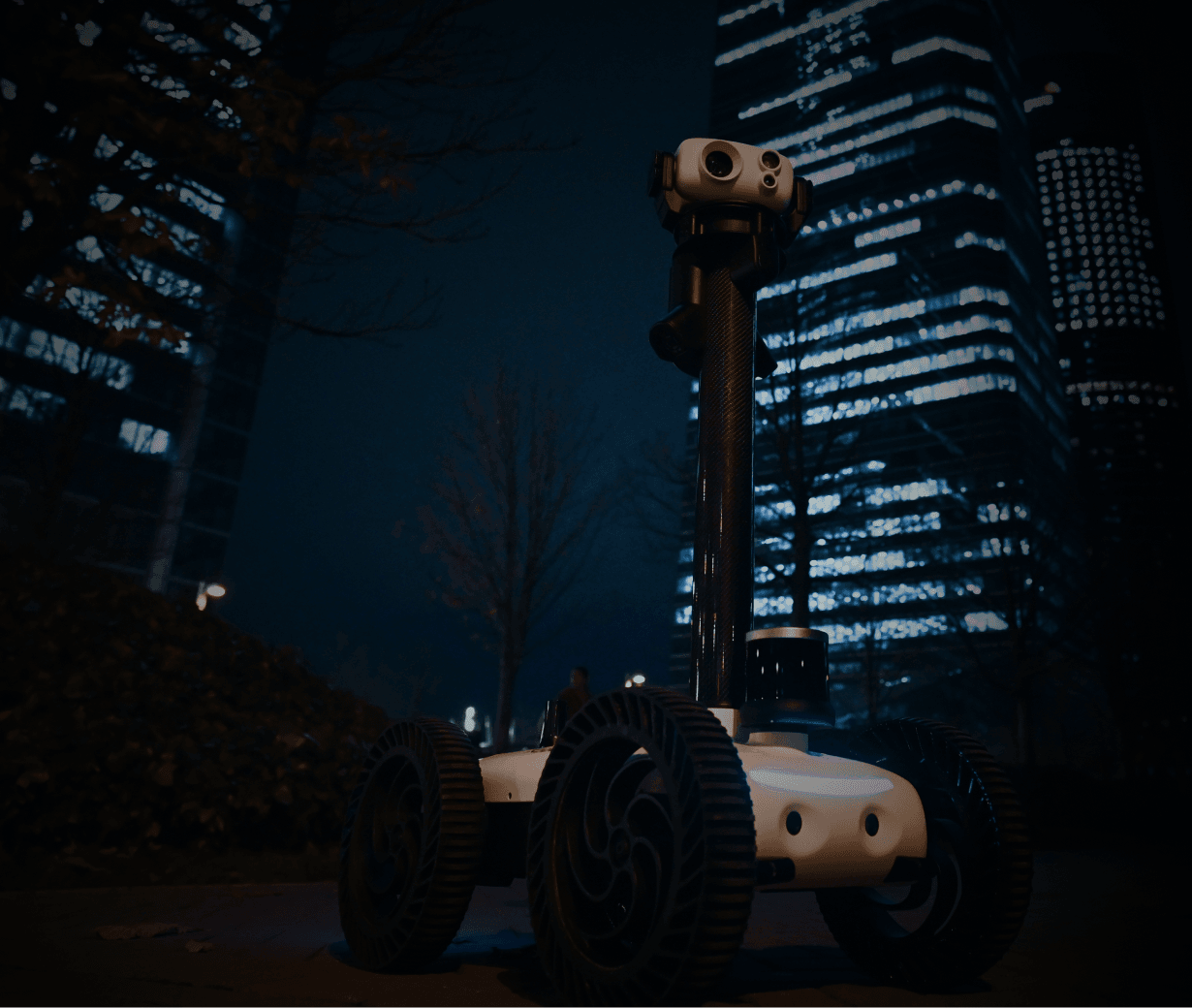
Madrid-based company developing autonomous ground security and inspection robots, with the Watchbot platform deployed across industrial and commercial sites.
TransDigm Group Incorporated
United States
TransDigm Group (NYSE: TDG), founded 1993 in Cleveland OH, makes electromechanical actuators, connectors, and flight-critical aerospace components.

Murrelektronik GmbH
Germany
Oppenweiler, Germany family-owned automation supplier operating for 50 years; makes connectors, I/O systems and the cabinet-free Vario-X platform.
R3 Solutions GmbH
Germany
Berlin company building ultra-reliable low-latency industrial wireless via patented EchoRing, Wi-Fi, and DECT NR+ for automation and intralogistics.
Silvus Technologies
United States
LA-based MIMO wireless radio maker; StreamCaster SDRs for drones, robots and defense; acquired by Motorola Solutions in 2025.

Tiburon Subsea
United States
US developer of JETTE, a patented two-pod vectored thruster system that lets torpedo-style AUVs hover and strafe; being integrated into HII's REMUS 300.
Real-Time Innovations (RTI)
United States
RTI is the world's largest DDS middleware vendor, providing RTI Connext software as the backbone for autonomous vehicles, defense, and aerospace systems.

AFI Robotics
Saudi Arabia
Saudi-KFUPM JV (est. 2020) deploying OEM submersible robots for live oil & gas tank inspection; served Aramco, SABIC, and Ma'aden without shutdown.

ZBDynamiX Co. Ltd. 苏州中博动力科技有限公司
China
Suzhou ZBDynamiX (est. 2025) is a Chinese ODM/OEM manufacturer of battery packs and actuators — harmonic, planetary, and dexterous hand — for humanoid robots.
Bristol Robotics Laboratory
United Kingdom
UK's largest co-located multidisciplinary robotics research centre, a joint venture of U Bristol and UWE Bristol, 450+ researchers.
George Mason University Autonomous Robotics Lab
United States
GMU Autonomous Robotics Lab is a Computer Science research group in Fairfax, VA, studying swarm robotics, multi-robot systems, and computer vision.
Robotics needs a service framework.
RSF defines a common language for robot service capability, lifecycle operations, certification pathways, and service-provider networks.
Join the RobotToday community on LinkedIn
Daily robotics news, in-depth analysis, conference highlights, and discussions with professionals worldwide.


