

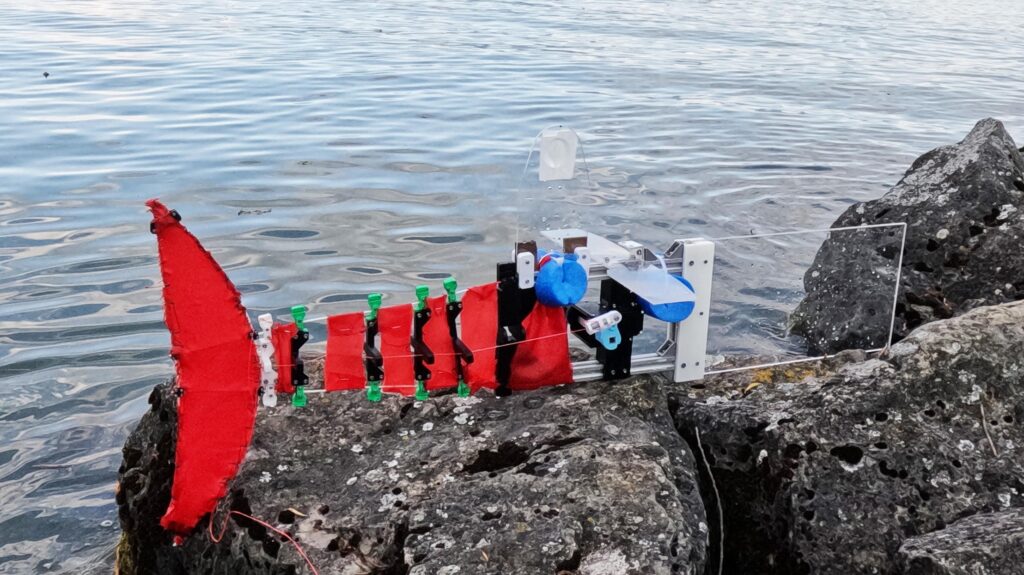
A team from EPFL and NYU has introduced ScaFi, a scalable robotic fish designed to adapt to various aquatic environments. Unlike traditional propeller-driven vehicles, ScaFi mimics the swimming motion of fish, allowing it to navigate shallow waters and dense vegetation without disturbing wildlife.
The significance of ScaFi lies in its ability to maintain swimming efficiency across different sizes, which could reduce the engineering effort required for aquatic robots. The research highlights the importance of adaptable tools for environmental monitoring, as ecosystems vary greatly in size and complexity.
Future developments will focus on understanding the energy efficiency of ScaFi as it scales, as initial tests revealed challenges with larger models. The team aims to explore whether the energy performance can be improved alongside the swimming capabilities of the robotic fish.
Editor's Note
The development of scalable robotic systems like ScaFi represents a significant advancement in environmental monitoring technologies. As industries increasingly seek efficient and adaptable solutions, the ability to deploy a single robotic platform across various aquatic environments could streamline operations and reduce costs.
Copyright Notice
This briefing is an independently written summary based on publicly available reporting and is provided for industry information and news discovery. The original report and source publication are credited and linked where applicable. RobotToday does not claim ownership of third-party source material.
Rights concerns? If you believe any material in this briefing infringes your copyright or other rights, please contact [email protected] with the relevant URL and details. We will review the matter and take appropriate action where warranted.









Leave a comment