

Efficient Inverse Kinematics Solution for Industrial Robotic Arms: NR Iterative Based on IDBO‐BPNN Prediction
- Published
- Source
- JournalofFieldRobotics
In May 2026, the Journal of Field Robotics published a significant study examining advancements in robotic technology, particularly focusing on autonomous navigation systems. The research, conducted by a team of engineers and scientists, highlights innovative algorithms that enhance the ability of robots to navigate complex environments without human intervention. This study was carried out at various testing sites, including urban landscapes and rugged terrains, to assess the robots' performance in real-world scenarios.
The motivation behind this research stems from the growing demand for autonomous systems in various industries, such as agriculture, construction, and disaster response. By improving navigation capabilities, the team aims to increase the efficiency and safety of robotic operations in challenging conditions. The findings indicate that these new algorithms can significantly reduce the time and resources required for robots to complete tasks, thereby offering potential cost savings and improved outcomes for businesses.
The study's implications are far-reaching, suggesting that enhanced autonomous navigation could lead to broader adoption of robotic technologies across multiple sectors. As industries continue to seek innovative solutions to improve productivity and reduce risks, this research represents a crucial step forward in the integration of robotics into everyday applications.
Original report
Efficient Inverse Kinematics Solution for Industrial Robotic Arms: NR Iterative Based on IDBO‐BPNN Prediction
JournalofFieldRobotics · Yining Zhang, Shujun Ma, Dezhao Wang, Ronghua HuThis briefing is an independently written summary based on publicly available reporting and is provided for industry information and news discovery. The original report and source publication are credited and linked where applicable. RobotToday does not claim ownership of third-party source material.
Rights concerns? Contact [email protected] with the relevant URL and details. We will review the matter and take appropriate action where warranted.
More related news
- 1
- 2
- 3
- 4
- 5
- 6
-
7
RobotToday Weekly October 12 – 16, 2026 RobotToday · 3 days ago
- 8
- 9
- 10
- 11
- 12
Related Suppliers

BioRobotics Laboratory, Korea University of Technology and Education
Korea, Republic of (South)
South Korean university research laboratory focusing on haptics, exoskeletons, rehabilitation robotics, and autonomous ground vehicles.

McMaster Manufacturing Research Institute
Canada
Hamilton, Ontario applied manufacturing research center at McMaster University; runs a 21,000 sq ft facility with seven research labs.

Robotics Education & Competition Foundation
United States
The REC Foundation is a US nonprofit that runs VEX-based robotics and drone competitions reaching 1.1 million students across 70 countries.

Da Shiang Automation Industrial Co. Ltd. 達詳自動化工業股份有限公司
Taiwan
Taiwan-based robotic system integrator founded 2013; 1,000+ robot projects in automotive, aerospace, and metal manufacturing.

Janome Industrial Equipment Europe GmbH
Germany
German sales subsidiary of Janome Industrial Equipment (Japan), distributing servo presses and desktop/Cartesian robots in Europe since 1984.

Industrial Technology Research Institute (ITRI) 工業技術研究院
Taiwan
Hsinchu County, Taiwan applied-technology research institute founded 1973; over 6,500 staff developing autonomous mobile robots and AI perception systems.

Drone Delivery Canada
Canada
Vaughan, Ontario drone logistics developer merged with Volatus Aerospace in August 2024; the combined company trades as FLT in Toronto.
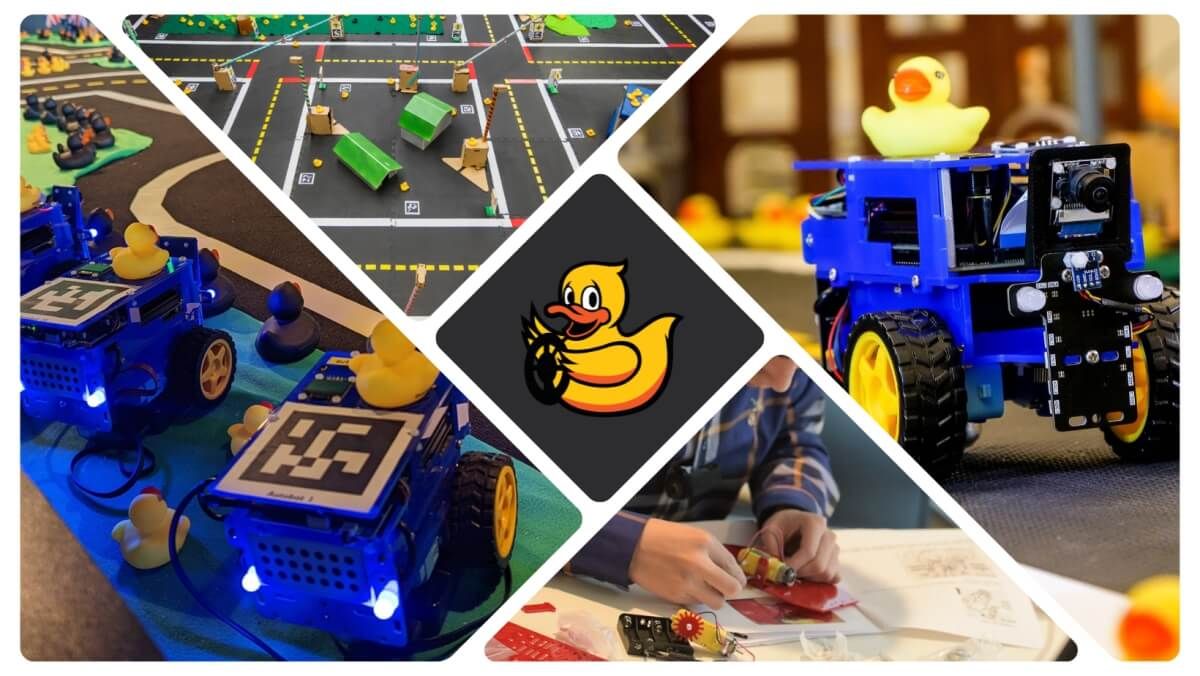
Duckietown Robotics
United States
Educational robotics platform provider offering autonomous vehicle kits and AI curricula used by 250+ universities worldwide.
EasyMile
France
Toulouse, France autonomous-vehicle software company founded 2014; EZTow and EZDolly systems automate industrial tow tractors and cargo movers at airports.

Vicon Motion Systems
United Kingdom
UK motion capture technology leader; Valkyrie & Vantage camera systems for robotics, life sciences, entertainment & engineering.
Pendulum Systems
United States
Seattle AI software company delivering device-native alt-PNT navigation for GPS-denied environments across drones, defense, and supply chains.

Physik Instrumente (PI) GmbH
Germany
Karlsruhe, Germany precision motion maker founded 1970; builds piezo actuators, nanopositioning stages, and hexapod robots; being acquired by HOERBIGER in 2026.
Robotics needs a service framework.
RSF defines a common language for robot service capability, lifecycle operations, certification pathways, and service-provider networks.
Join the RobotToday community on LinkedIn
Daily robotics news, in-depth analysis, conference highlights, and discussions with professionals worldwide.


