

Contactile Introduces Friction-Based Tactile Sensors for Enhanced Robot World Models
- Published
- Source
- RoboticsBusinessReview.com
Contactile has developed tactile sensors for robotic hands and grippers that enhance world models in robotics. These sensors address the limitations of current conditioning methods, which primarily rely on visual inputs and joint encoders, by incorporating friction as a critical input. This advancement is essential for improving robots' ability to generalize across various surfaces and objects.
The significance of this development lies in its potential to transform robot learning. By making friction a first-class input, robots can better predict the outcomes of their actions and adapt to novel tasks without extensive memorization. This shift could lead to more capable robotic systems that can operate effectively in contact-rich environments, where traditional conditioning methods fall short.
Looking ahead, the integration of Contactile's tactile sensors into robotic systems could revolutionize how robots interact with their environments. As the field of robot learning continues to evolve, the emphasis on accurate conditioning will be crucial for deploying effective world models. No further timeline was disclosed at the time of publication.
Original report
Friction is key to making better robot world models
RoboticsBusinessReview.com · Heba KhamisThis briefing is an independently written summary based on publicly available reporting and is provided for industry information and news discovery. The original report and source publication are credited and linked where applicable. RobotToday does not claim ownership of third-party source material.
Rights concerns? Contact [email protected] with the relevant URL and details. We will review the matter and take appropriate action where warranted.
More related news
- 1
- 2
- 3
-
4
RobotToday Weekly October 12 – 16, 2026 RobotToday · 2 days ago
- 5
-
6
WHC 2027 – Boston, Jul 13–16, 2027 RobotToday · 5 days ago
-
7
RO-MAN 2027 – Waterloo, Aug 23–27, 2027 RobotToday · 5 days ago
-
8
ACIRS 2027 – Hong Kong, Jul 23–25, 2027 RobotToday · 5 days ago
- 9
- 10
- 11
- 12
Related Suppliers

Contactile
Australia
Australian developer of optical multimodal tactile sensors and smart grippers giving robots a human sense of touch for dexterous manipulation.

Brighter Signals
Netherlands
Amsterdam startup making fabric-based multi-modal tactile sensors; partnered with Shanghai-listed Tier-1 CAIP in 2025 to manufacture them at scale.

Apex Sensing LLC
United States
Apex Sensing develops flexible tactile sensors and electronic skin for humanoid robots, plus industrial inspection, medical and battery sensing.
Beijing Institute for General Artificial Intelligence 北京通用人工智能研究院
China
Beijing non-profit AGI institute led by Zhu Songchun whose embodied-AI stack includes the TongBrain robot brain and the open-source TongSIM simulator.
Runway AI, Inc.
United States
US AI research company building general world models (GWM-1) for video generation and a robot-learning platform for policy inference, sim evaluation and data.

Vulcan Engineering Co.
United States
Helena, Alabama foundry automation engineer founded 1970; builds robotic casting finishing, mold handling and lost foam systems in a 300,000 sq ft plant.

Tactile Robots
Italy
Italian robotics startup founded in 2016 in Lecce, building GUIDO, a pressure-sensitive autonomous indoor delivery robot for commercial spaces.
The Robot Learning Company
United States
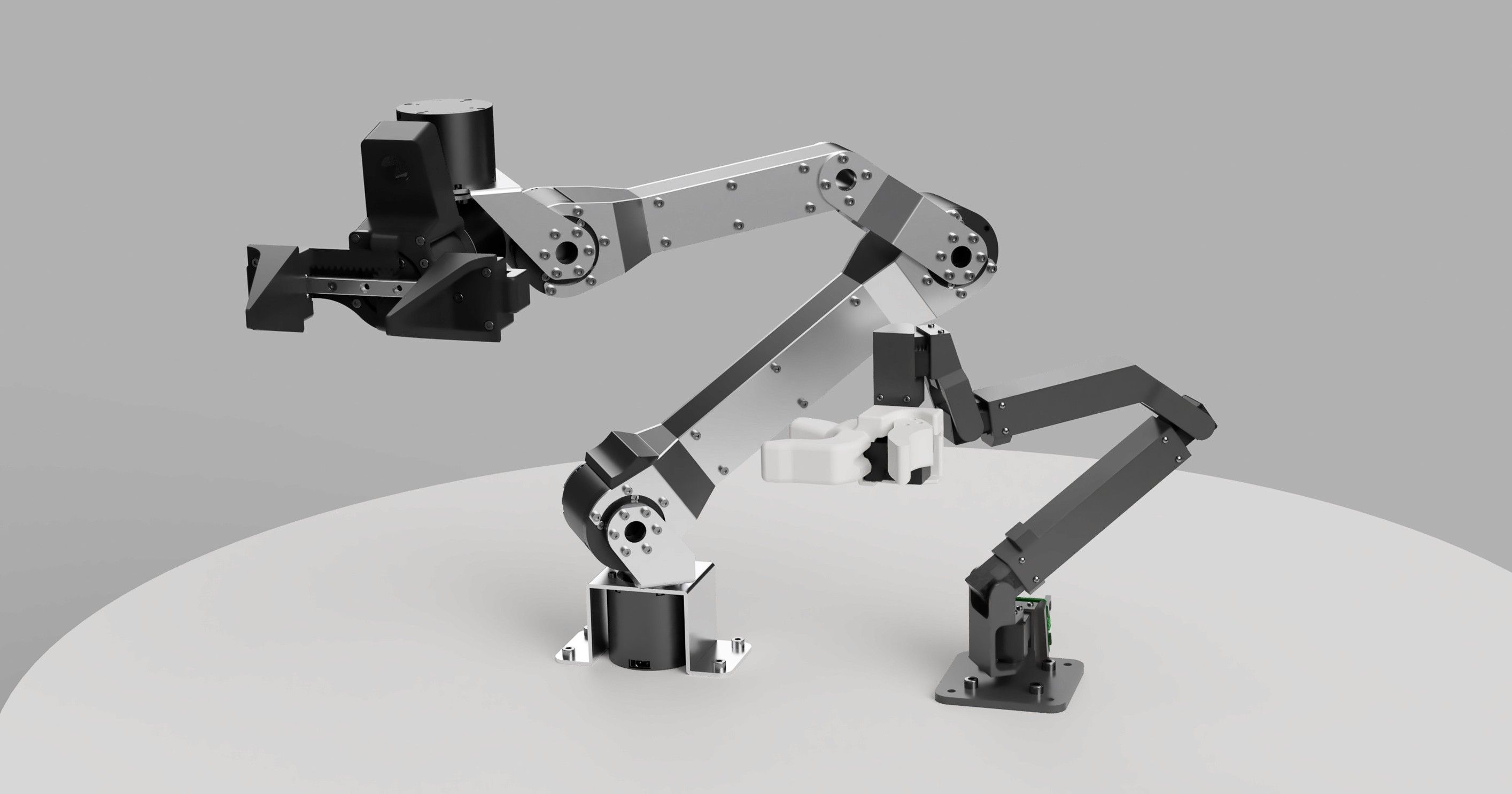
YC X25 startup building open-source AI-native robot arms; TRLC-DK1 bimanual dev kit enables imitation learning and teleoperation for around USD 1,200.
Assured Robot Intelligence
United States
San Diego robot-AI start-up founded by Lerrel Pinto and Xiaolong Wang, building humanoid foundation models; acquired by Meta in May 2026.

Proception.AI
United States
Palo Alto startup building high-dexterity robotic hands with 20+ DoF and tactile sensing for humanoid and manipulation research.

Tokyo Robotics Inc. 東京ロボティクス株式会社
Japan
Tokyo-based humanoid robotics developer led by CEO Yoshihiro Sakamoto; builds the Torobo platform and Torobo Hand using torque-sensing impedance control.
Luoyang BECOT Scientific Development Co., Ltd. 洛阳百克特科技发展股份有限公司
China
Luoyang mine-hoist friction-drive specialist (NEEQ: 837067) whose magnetic flux leakage climbing robot inspects stay cables of cable-stayed bridges.
Robotics needs a service framework.
RSF defines a common language for robot service capability, lifecycle operations, certification pathways, and service-provider networks.
Join the RobotToday community on LinkedIn
Daily robotics news, in-depth analysis, conference highlights, and discussions with professionals worldwide.


