

Advances in Autonomous Vehicle Testing: The State of the Art and Future Outlook on Driving Datasets, Simulators, and Proving Grounds
- Published
- Source
- JournalofFieldRobotics
A recent study published in the Journal of Field Robotics highlights advancements in autonomous robotic systems designed for agricultural applications. Researchers from a leading university conducted the study to explore how these robots can improve efficiency and sustainability in farming practices. The findings, released in early October 2023, indicate that the integration of advanced sensors and artificial intelligence allows these robots to perform tasks such as planting, monitoring crop health, and harvesting with greater precision.
The research was conducted on various farms across the Midwest, where the team tested different robotic models under real-world conditions. The motivation behind this study stems from the increasing demand for food production and the need to reduce environmental impact. By employing autonomous technology, farmers can potentially decrease labor costs and enhance productivity while minimizing the use of pesticides and fertilizers.
The study outlines the methodology used, including the development of algorithms that enable the robots to navigate complex terrains and adapt to changing environmental conditions. As agriculture faces challenges such as labor shortages and climate change, the implementation of these robotic systems could play a crucial role in the future of farming. The researchers emphasize the importance of continued innovation in this field to address global food security concerns effectively.
Original report
Advances in Autonomous Vehicle Testing: The State of the Art and Future Outlook on Driving Datasets, Simulators, and Proving Grounds
JournalofFieldRobotics · Ao Guo, Yuke Li, Jun Huang, Bai Li, Xiaoxiang Na, Chen Lv, Long Chen, Lingxi Li, Fei‐Yue WangThis briefing is an independently written summary based on publicly available reporting and is provided for industry information and news discovery. The original report and source publication are credited and linked where applicable. RobotToday does not claim ownership of third-party source material.
Rights concerns? Contact [email protected] with the relevant URL and details. We will review the matter and take appropriate action where warranted.
More related news
- 1
- 2
- 3
- 4
- 5
- 6
- 7
- 8
- 9
- 10
- 11
- 12
Related Suppliers

New Holland Agriculture
United Kingdom
Global agricultural machinery brand of CNH Industrial (founded 1895) making tractors, combine harvesters, and precision farming equipment worldwide.

Osiris Agriculture
France
French agtech startup developing Oscar, an autonomous irrigation and fertigation robot for potato and vegetable producers in northern Europe.

Tensorfield Agriculture
United States
California-based agri-robotics company deploying semi-autonomous robots that use superheated vegetable oil to eliminate weeds without herbicides.

Drone Delivery Canada
Canada
Vaughan, Ontario drone logistics developer merged with Volatus Aerospace in August 2024; the combined company trades as FLT in Toronto.
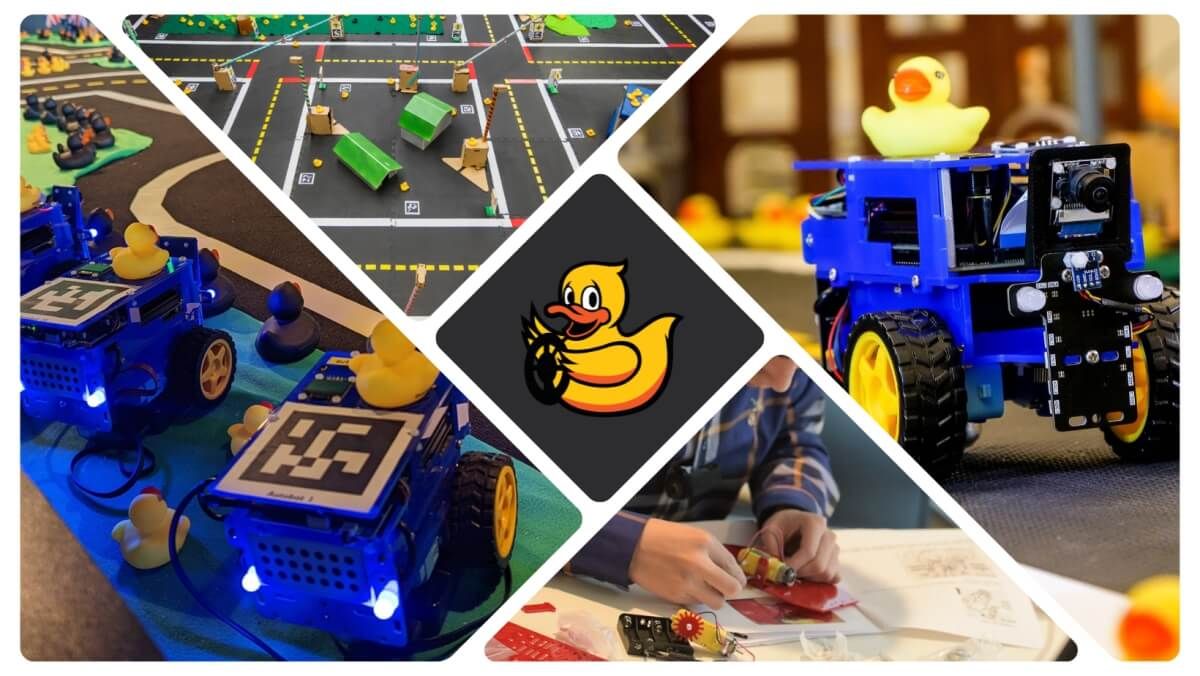
Duckietown Robotics
United States
Educational robotics platform provider offering autonomous vehicle kits and AI curricula used by 250+ universities worldwide.
EasyMile
France
Toulouse, France autonomous-vehicle software company founded 2014; EZTow and EZDolly systems automate industrial tow tractors and cargo movers at airports.

BioRobotics Laboratory, Korea University of Technology and Education
Korea, Republic of (South)
South Korean university research laboratory focusing on haptics, exoskeletons, rehabilitation robotics, and autonomous ground vehicles.

McMaster Manufacturing Research Institute
Canada
Hamilton, Ontario applied manufacturing research center at McMaster University; runs a 21,000 sq ft facility with seven research labs.

Robotics Education & Competition Foundation
United States
The REC Foundation is a US nonprofit that runs VEX-based robotics and drone competitions reaching 1.1 million students across 70 countries.

Da Shiang Automation Industrial Co. Ltd. 達詳自動化工業股份有限公司
Taiwan
Taiwan-based robotic system integrator founded 2013; 1,000+ robot projects in automotive, aerospace, and metal manufacturing.

Janome Industrial Equipment Europe GmbH
Germany
German sales subsidiary of Janome Industrial Equipment (Japan), distributing servo presses and desktop/Cartesian robots in Europe since 1984.

Industrial Technology Research Institute (ITRI) 工業技術研究院
Taiwan
Hsinchu County, Taiwan applied-technology research institute founded 1973; over 6,500 staff developing autonomous mobile robots and AI perception systems.
Robotics needs a service framework.
RSF defines a common language for robot service capability, lifecycle operations, certification pathways, and service-provider networks.
Join the RobotToday community on LinkedIn
Daily robotics news, in-depth analysis, conference highlights, and discussions with professionals worldwide.


