Industry Briefing
A single destination for timely, editor-curated robotics news from around the world.
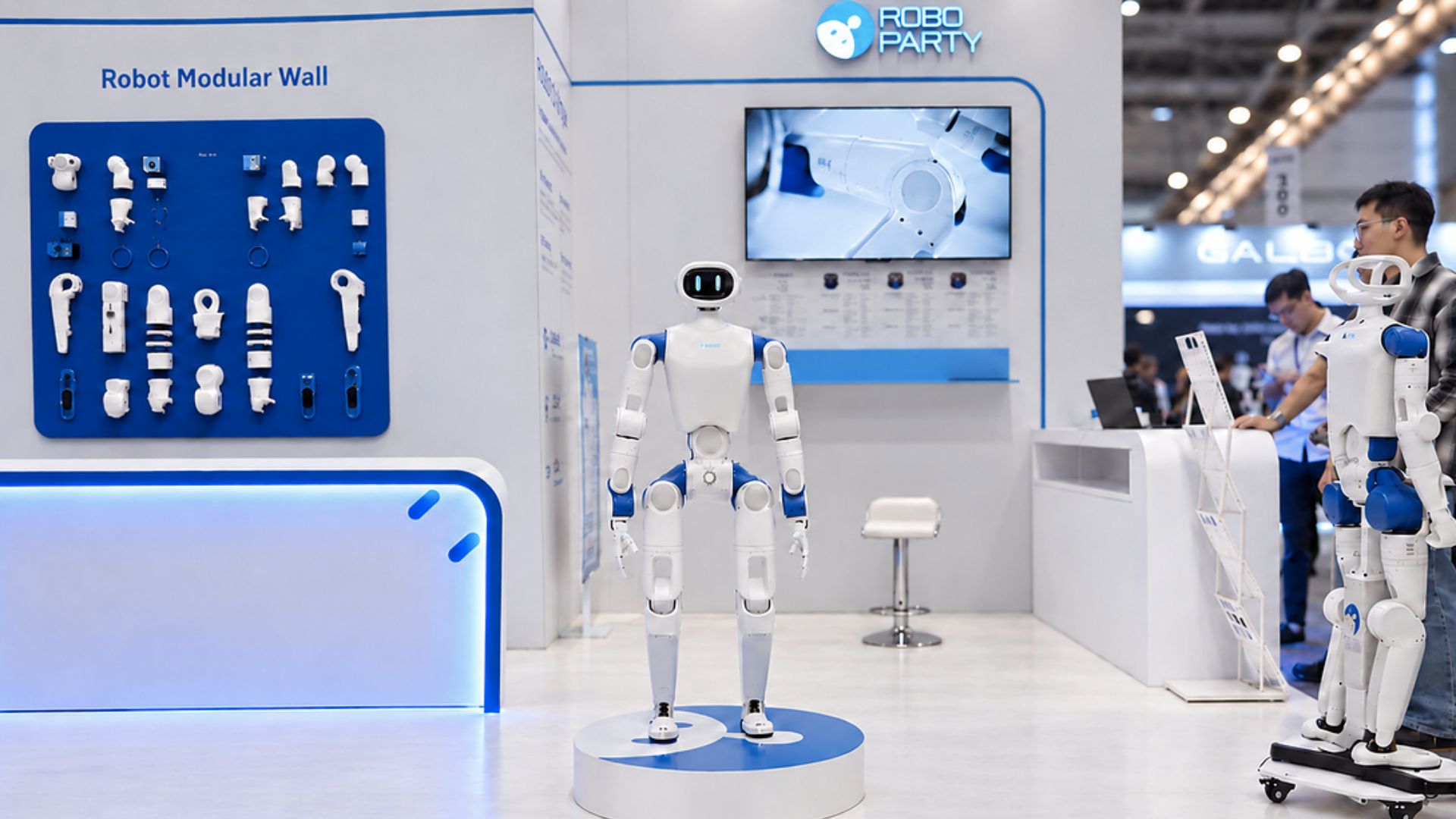
RoboParty Unveils RP1: The First High-Performance Open-Source Bipedal Humanoid Robot
RoboParty, a firm based in Pittsburgh, has introduced RP1 (ROBOTO 01), the world's first high-performance full-stack open-source bipedal humanoid robot, at IROS 2026. This robot aims to serve researchers, educators, and robotics developers by providing a customizable humanoid system that can be modified and trained in real development workflows. The significance of RP1 lies in its open-source nature, allowing a broader range of developers to engage with humanoid robotics. Founder Yi Huang emphasized the importance of accessibility in robotics, stating that the goal is to create an open foundation for continuous improvement and innovation. The robot's capabilities were showcased through an interactive demonstration, where visitors could test its dynamic stability and control performance by applying external disturbances. Looking ahead, RoboParty plans to further develop RP1 as part of its full-stack open-source roadmap, which began with the RPO project. The robot features impressive specifications, including a peak joint torque of 160 N•m, and is designed for dynamic motion and embodied AI model training. No further timeline was disclosed at the time of publication.
Innovation
Automakers Transition from Vehicles to Bipedal Robots Amidst Competitive Landscape
Automakers are shifting their focus from traditional four-wheeled vehicles to bipedal robots, marking the beginning of a competitive race in productivity within the physical world. By 2026, the year anticipated for mass production of humanoid robots, over 20 automotive companies have entered this sector, including Tesla, XPeng, and Chery, transitioning from conceptual showcases to tangible production phases. This shift is significant as it introduces substantial funding and supply chain expertise into the humanoid robotics industry, embedding the concept of mass production into its framework. Tesla is leading the charge with its Optimus robot, aiming for a production capacity of 1 million units annually by 2026, while XPeng plans to launch its IRON series robots by the end of 2026, targeting a monthly output of over 1,000 units. Looking ahead, the market is expected to see over 100,000 humanoid robots produced in China by 2026, with forecasts from institutions like Nomura and Morgan Stanley predicting shipments of 40,000 to 50,000 units. However, automakers face challenges in transitioning from standardized vehicle production to the more complex and fragmented requirements of humanoid robotics, necessitating advancements in technology and product reliability.
Humanoid Robots Automotive Innovation Robotics Manufacturing AI Technology
PaXini Unveils PX-FOOTRIX, the First Multi-Dimensional Tactile Sensor for Bipedal Robots
PaXini has officially launched the PX-FOOTRIX, the world's first multi-dimensional tactile sensor designed for bipedal robots. This innovative product utilizes a pioneering 6D Hall array tactile sensing technology to provide comprehensive three-dimensional force perception and six-dimensional force/moment sensing, enabling robots to accurately understand ground features and adapt their gait in real-time. The introduction of PX-FOOTRIX is significant as it enhances the ability of bipedal robots to navigate complex real-world terrains, moving beyond simple walking capabilities to a deeper understanding of how to walk. This advancement is crucial for applications in industrial manufacturing, logistics, and public services, where robots must adjust their movements based on varying ground conditions. Looking ahead, the PX-FOOTRIX is set to redefine robotic gait perception and control. With its ability to deliver rich tactile feedback and support dynamic gait optimization, it promises to improve the stability and safety of robotic movements in diverse environments. No further timeline was disclosed at the time of publication.
Bipedal Robots Tactile Sensors Robotics Technology AI Sensor Technology
Agility Robotics Unveils Digit 5 and Explores Wheeled Robot Designs
In mid-September, Agility Robotics launched its fifth-generation humanoid robot, Digit 5. The company, which has been developing bipedal robots for over a decade, has seen its flagship product, Digit, deployed in various facilities including Amazon and Toyota Canada. According to the company, it has achieved continuous commercial deployment for nearly three years. The exploration of wheeled designs was confirmed by co-founder and Chief Robotics Officer Jonathan Hurst, who noted that while the company is investigating various robot forms to meet different operational environments, bipedal robots are expected to remain the solution for many scenarios as their safety and reliability improve. Hurst emphasized that the goal is to enable robots to operate in more environments quickly, although it is too early to determine if a wheeled version of Digit will be released. Digit 5 features significant design changes, including a switch from bird-like legs to human-like legs, allowing it to squat and lift loads of up to 50 pounds. Hurst stated that this capability is sufficient for single-person handling tasks in OSHA-regulated areas. The robot's ability to operate without fixed safety zones and its involvement in standard-setting for industrial mobile robots are crucial for its integration into workplaces, as current humanoid robots often operate in isolated areas, limiting their value.
Bipedal Robots Wheeled Robots Industrial Automation Robot Safety Standards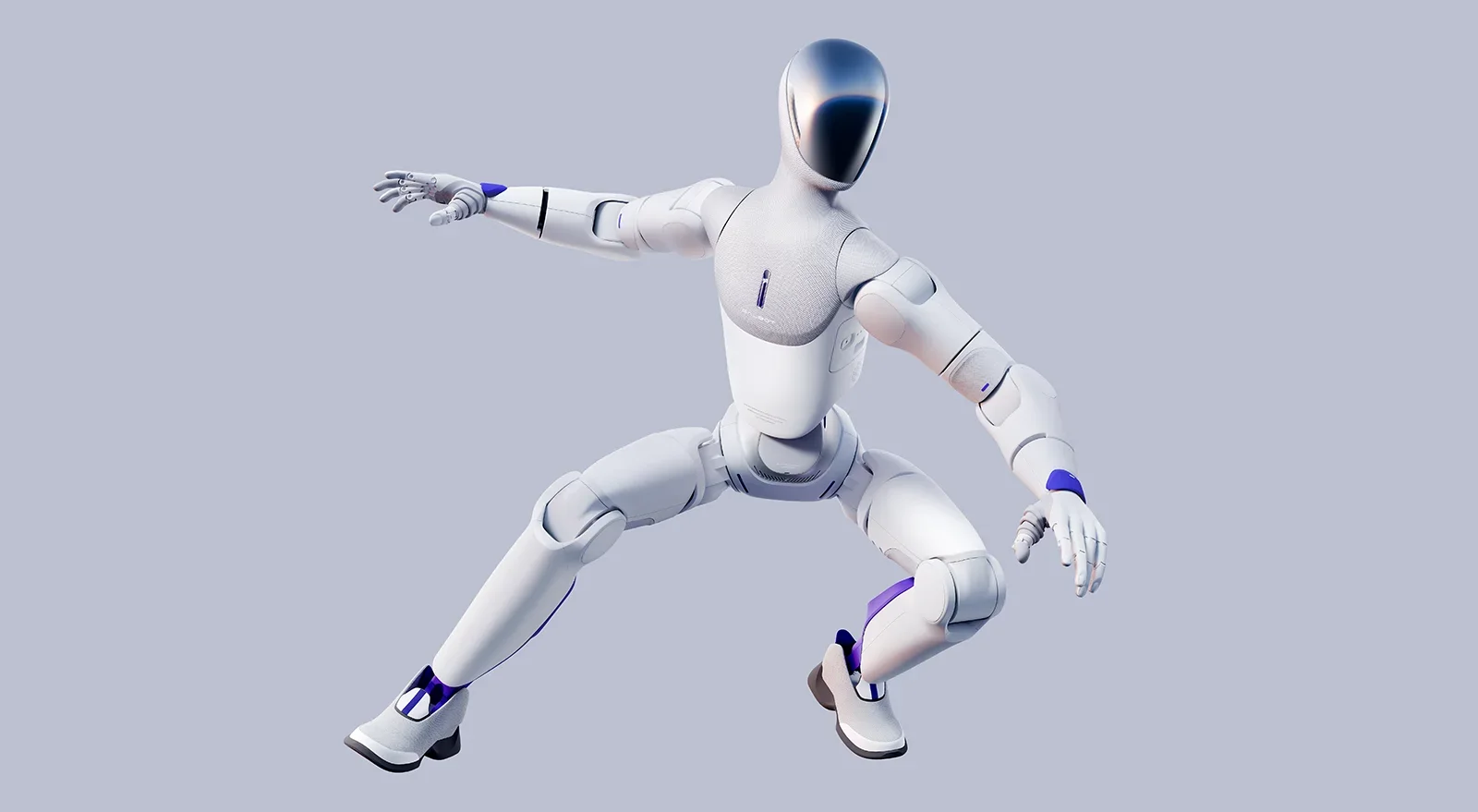
Galbot Launches Pre-Orders for ET1 Bipedal Humanoid Robot Targeting Entertainment Sector
Beijing-based robotics company Galbot has officially opened pre-orders for its first dedicated bipedal humanoid robot, the ET1, also known as 'Yinhe Xingzai' in China. This move marks a significant commercial diversification for Galbot, which has previously focused on wheeled logistics platforms. The pre-orders follow a successful teaser campaign and a notable exhibition at the World Humanoid Robot Games, showcasing the robot's capabilities. The ET1 has already garnered over 200 pre-orders within the first 24 hours, indicating strong interest from commercial venues and event producers. Pre-orders are available through Galbot's website and JD.com, although retail pricing for the different model tiers has not yet been disclosed. The ET1 stands at 1,250 mm tall and weighs 32 kg, placing it in the mid-sized biped category, which is increasingly competitive. Galbot has segmented the ET1 into three configurations: Standard, Pro, and Flagship, each featuring a multi-processor architecture. The Flagship tier boasts AI acceleration capabilities, achieving up to 100 TOPS for real-time processing. The ET1 utilizes Galbot's AstraBrain software for motion control, allowing it to learn new movements through physical demonstrations without the need for external equipment. No further timeline was disclosed at the time of publication.
ET1 Galbot Market China
Unitree Achieves 18,000 Bipedal Humanoids, Leading China's Robotics Market
Unitree has announced that it has reached a cumulative production of 18,000 bipedal humanoid robots as of July 2026, establishing itself as the leader in the pure bipedal robotics sector. This significant milestone highlights the company's dominance over competitors, with AgiBot producing 7,000 pure bipedal humanoids out of a total of 15,000 all-category humanoids, while UBTECH and Galbot lag behind with approximately 3,000 and 1,000 units, respectively. The achievement underscores Unitree's strong position in the rapidly evolving robotics market in China, where the demand for advanced humanoid robots is growing. The clear production gap between Unitree and its competitors indicates not only the company's technological advancements but also its effective market strategies that have allowed it to capture a significant share of the bipedal robot segment. Looking ahead, the robotics industry will be keen to observe how Unitree maintains its lead and whether AgiBot, UBTECH, and Galbot can close the gap. No further timeline was disclosed at the time of publication.

Unitree Robotics Achieves 18,000 Bipedal Humanoid Robots Produced by July 2026
Unitree Robotics has announced a significant milestone, reporting the production of approximately 18,000 bipedal humanoid robots as of July 2026. This achievement highlights the company's rapid manufacturing capabilities and positions it as a key player in the competitive humanoid robotics market. The announcement is particularly noteworthy as it emphasizes the distinction between bipedal humanoids and other robot types, framing Unitree's focus on pure bipedal locomotion amid competition with AGIBOT, which recently captured a 44% market share. This strategic positioning aims to reinforce Unitree's identity as a leading producer of bipedal machines. Looking ahead, Unitree's production success comes at a time of significant momentum, bolstered by its recent IPO and strategic investments. However, the company faces challenges due to geopolitical factors affecting imports, particularly in the U.S. market. No further timeline was disclosed at the time of publication.
Unitree Robotics Market China
Hugging Face Unveils Microduck Bipedal Robot Priced at $399 for Pre-Orders
On August 27, Pollen Robotics, a subsidiary of Hugging Face, announced the Microduck, a bipedal robot available for pre-order at $399. The robot is expected to ship before Christmas 2026 to regions including North America, Europe, and the UK, and comes in four colors. The Microduck stands 25 cm tall, weighs under 800 grams, and features 15 motors across its legs, head, and neck. It is equipped with a camera, small LiDAR, two IMUs, a microphone, and a speaker. The robot runs on a Rockchip RK3566 processor with 1GB of memory and 32GB of storage, and has a removable battery lasting about one hour. It will include seven pre-trained actions at launch, such as walking, sitting, and kicking. Looking ahead, Pollen Robotics aims to foster community engagement by encouraging users to create and share new walking patterns and recovery actions. The company emphasizes that the Microduck is designed for learning through trial and error, making it suitable for home and classroom environments. No further timeline was disclosed at the time of publication.

LG and Nvidia Partner to Launch Bipedal Humanoid Robot in 2027
LG Group has announced a strategic partnership with Nvidia to develop its first bipedal humanoid robot, set for unveiling in early 2027. The agreement was formalized by LG Chairman Koo Kwang-mo and Nvidia CEO Jensen Huang at Nvidia's headquarters in Santa Clara, California, following discussions in Seoul earlier this year. This collaboration is significant as it aims to combine LG's expertise in product engineering and manufacturing with Nvidia's advanced AI technology. The bipedal humanoid robot will utilize Nvidia's Issac GR00T foundation model and Jetson Thor computing platform, marking a notable advancement in robotics and AI factories. Looking ahead, LG's pilot production line in Changwon has already begun initial production of the robot, which will feature key components from various LG affiliates. No further timeline was disclosed at the time of publication.
All News
A Brain-First Approach: Why This Company is Now Developing Bipedal Robots
On June 2, Starry Sea Technology unveiled its latest bipedal humanoid robot, Kengo, alongside the advanced G0.5 model. This launch underscores the company's dedication to utilizing embodied intelligence to tackle real-world productivity challenges, representing a notable departure from the conventional hardware-first focus in robotics. Kengo is engineered to navigate complex environments, highlighting Starry Sea Technology's innovative approach to the future of robotics.
Bipedal Robots Embodied Intelligence Robot Development AI Technology
This DIY Bipedal Robot Used Pneumatic “Air-Muscles” Instead of Motors
In 1987, British photographer Richard Greenhill, driven by a passion for robotics, initiated a weekly gathering in his attic to develop a life-size humanoid robot, the Shadow Walker, capable of performing practical tasks like carrying luggage. Unable to secure support from his startup, Intergalactic Robots, Greenhill enlisted the help of a group of DIY enthusiasts, known as the Shadow Group, who met every Wednesday to work on the project, fueled by homemade spaghetti dinners. With contributions from robotics expert David Buckley, the team designed the robot using a simplified skeletal structure and pneumatic "air-muscles" for movement, aiming to achieve balance and mobility. Despite their efforts, the Shadow Walker struggled to walk, ultimately failing to compete effectively at the 1st International Robot Olympics held in Glasgow in September 1990, where it was outperformed by other entries. The Olympics showcased over 50 robots from various countries, highlighting both the advancements and limitations in robotics at the time. While the Shadow Walker did not succeed in its primary goal, it laid the groundwork for future developments in robotics. In 1997, the Shadow Group transitioned into a registered company, Shadow Robot, which now focuses on creating advanced robotic hands, reflecting a shift from walking robots to specialized dexterity in robotic technology. Despite significant progress in robotics, the journey toward creating truly functional humanoid robots continues.
Past-forward Type-departments Humanoid-robots Shadow-robot Walking-robots Pneumatic-robots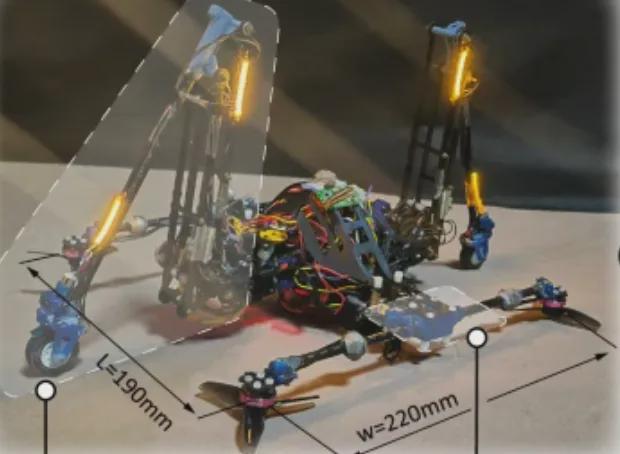
Gravity Defiance: Hong Kong Polytechnic Develops 370g Bipedal Jumping Robot Capable of 6.9m Jumps with 3.8mm Precision
Researchers at Hong Kong Polytechnic University have unveiled GravOff, an innovative bipedal robot designed to simulate a low-gravity environment through the use of rotors. This groundbreaking technology allows the robot to achieve impressive jumps of up to 6.9 meters, showcasing remarkable precision and redefining traditional jumping mechanics. The development, announced recently, aims to enhance trajectory control during the robot's flight, potentially paving the way for advancements in robotics and applications in various fields.
Bipedal Robots Robotics Innovation Jumping Technology Trajectory Control Low-Gravity Systems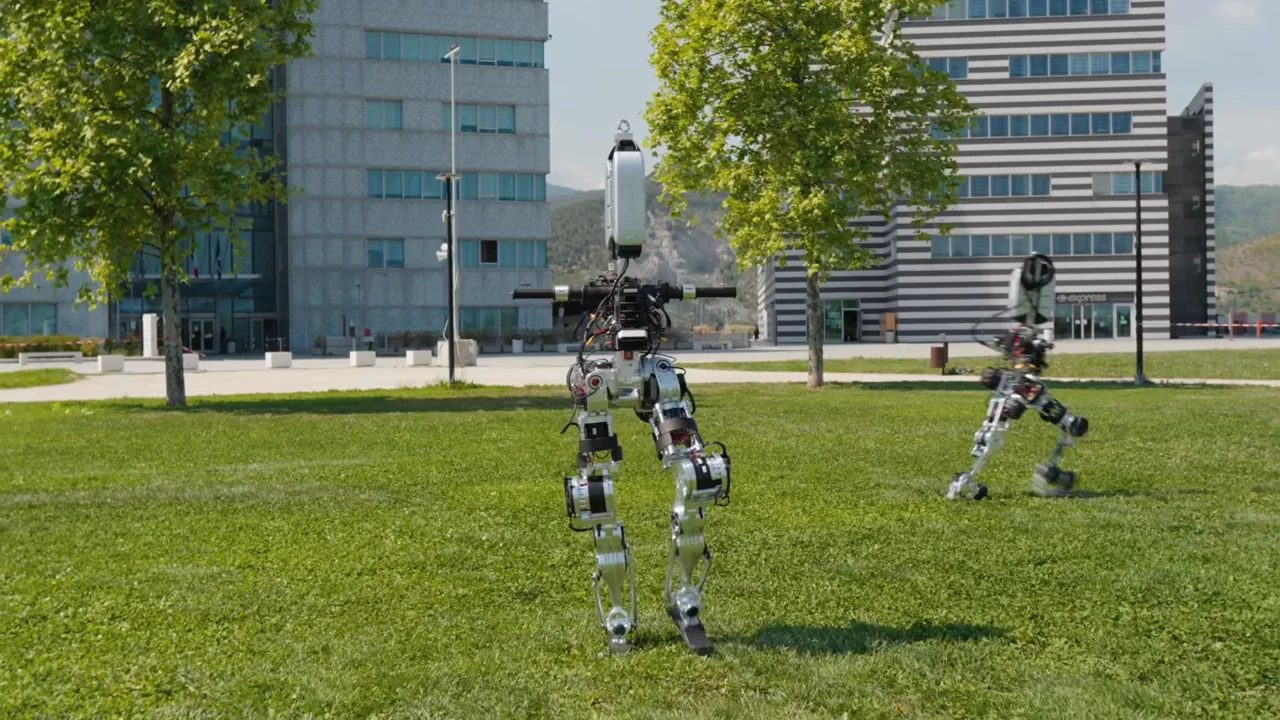
Generative Bionics Unveils Bipedal Robots, Partners with Italdesign for Production
Generative Bionics has showcased two new bipedal robot prototypes capable of navigating outdoor environments. CEO Daniele Pucci revealed that these robots were designed and sent to batch production within three months, utilizing 'Physical AI' for motor control and reinforcement learning for movement. This development is significant as it marks a step towards the industrialization of the GENE.01 humanoid platform, following a strategic partnership with Italdesign. This collaboration aims to transition the prototype into a pre-series product, focusing on replicable design and enhancing the human-robot interface with proprietary artificial skin. Looking ahead, Generative Bionics plans to announce a Chief Production & Industrialization Officer in June 2026 to facilitate scaling up production. Initial tests for the GENE.01/W variant are set for late 2026, indicating a strong push towards deploying humanoid welders in European shipyards, supported by Italdesign's manufacturing expertise.
Generative Bionics Europe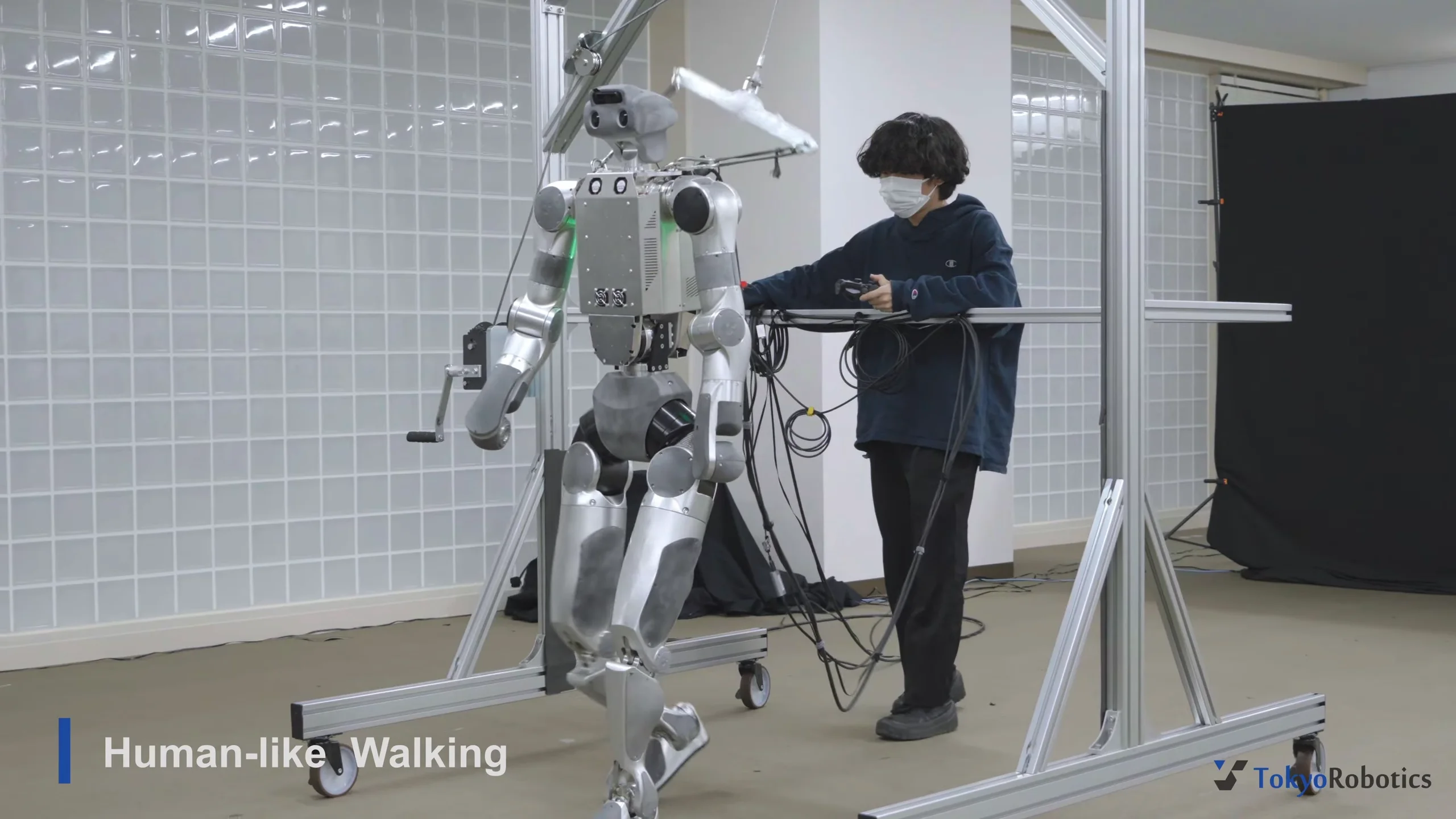
Tokyo Robotics Steps Into the Bipedal Arena with RL-Driven Humanoid
Tokyo Robotics has unveiled an innovative bipedal prototype that showcases advanced self-balancing capabilities and real-time whole-body teleoperation. This development marks a significant evolution from the company's established wheeled Torobo platform. The demonstration highlights the potential for enhanced mobility and control in robotic applications, reflecting the company's commitment to pushing the boundaries of robotics technology. The prototype's capabilities were showcased recently, emphasizing Tokyo Robotics' role in advancing the field of humanoid robotics. This breakthrough aims to address various practical applications, including assistance in complex environments and improved interaction with humans.
Japan Torobo Tokyo Robotics
Video Friday: Bipedal Robot Stops Itself From Falling
IEEE Spectrum robotics has released its latest edition of Video Friday, showcasing a variety of innovative robotics videos and announcing upcoming events in the field. Among the highlights is the Robotic Autonomy in Complex Environments with Resiliency (RACER) program, which is nearing completion after extensive collaboration with the U.S. Army and Marine Corps. This program is expected to leave a lasting impact on military operations and stimulate private-sector investment in autonomous technologies. Notable advancements include the introduction of COSA, a cognitive operating system that enhances humanoid robots' capabilities for high-level cognition and motion control. Meanwhile, the 1X World Model has made significant strides in robot learning, allowing its NEO model to perform tasks autonomously based on voice or text prompts, even for unfamiliar objects. In assistive technology, the GuideData Dataset has been launched to improve interactions between guide dog trainers and visually impaired individuals, aiming to enhance mobility and safety. Additionally, Fourier's Care-Bot prototype is gaining attention for its interactive features at CES 2026. In environmental monitoring, ETH Zurich has developed an autonomous quadruped robot for volcanic gas measurements, successfully tested on Mount Etna. Humanoid robots have also made progress in industrial logistics, completing proof-of-concept testing at Siemens's factory in Erlangen. Columbia Engineers have created a robot capable of learning facial lip motions for speech and singing through observational learning, marking a significant milestone in robotics. Lastly, DEEP Robotics showcased its quadruped robots' capabilities in complex firefighting scenarios, while Synapticon introduced its POSITRON platform to enhance safety in humanoid robots for real-world applications.
Robotics Video-friday Bipedal-robots Humanoid-robots Quadruped-robots Industrial-robotsRobotics needs a service framework.
RSF defines a common language for robot service capability, lifecycle operations, certification pathways, and service-provider networks.
Join the RobotToday community on LinkedIn
Daily robotics news, in-depth analysis, conference highlights, and discussions with professionals worldwide.