Industry Briefing
A single destination for timely, editor-curated robotics news from around the world.
Integrated Lightweight Design of Tubeless Hydraulic Quadruped Robot Utilizing Additive Manufacturing
A new quadruped robot featuring a lightweight and integrated design has been developed, utilizing tubeless hydraulic systems and additive manufacturing techniques. This innovation aims to enhance the robot's mobility and efficiency in various terrains, making it suitable for field applications. The significance of this development lies in its potential to improve robotic performance in challenging environments. By employing additive manufacturing, the design allows for more complex geometries and reduced weight, which can lead to better energy efficiency and operational capabilities in the field. Looking ahead, the focus will be on testing the robot's performance in real-world scenarios to validate its design and functionality. No further timeline was disclosed at the time of publication.
RESEARCH ARTICLE
Worms Navigate Narrow Paths More Efficiently Than Wider Ones, Impacting Robot Design
Recent research reveals that worms can traverse narrow paths more quickly than wider ones, challenging conventional assumptions about navigation efficiency. This finding is significant as it suggests that the design of robotic systems could benefit from mimicking the movement patterns of worms in confined spaces. Observing how these organisms adapt to their environments may lead to advancements in robotics, particularly in applications requiring precise navigation in tight areas.
Robotics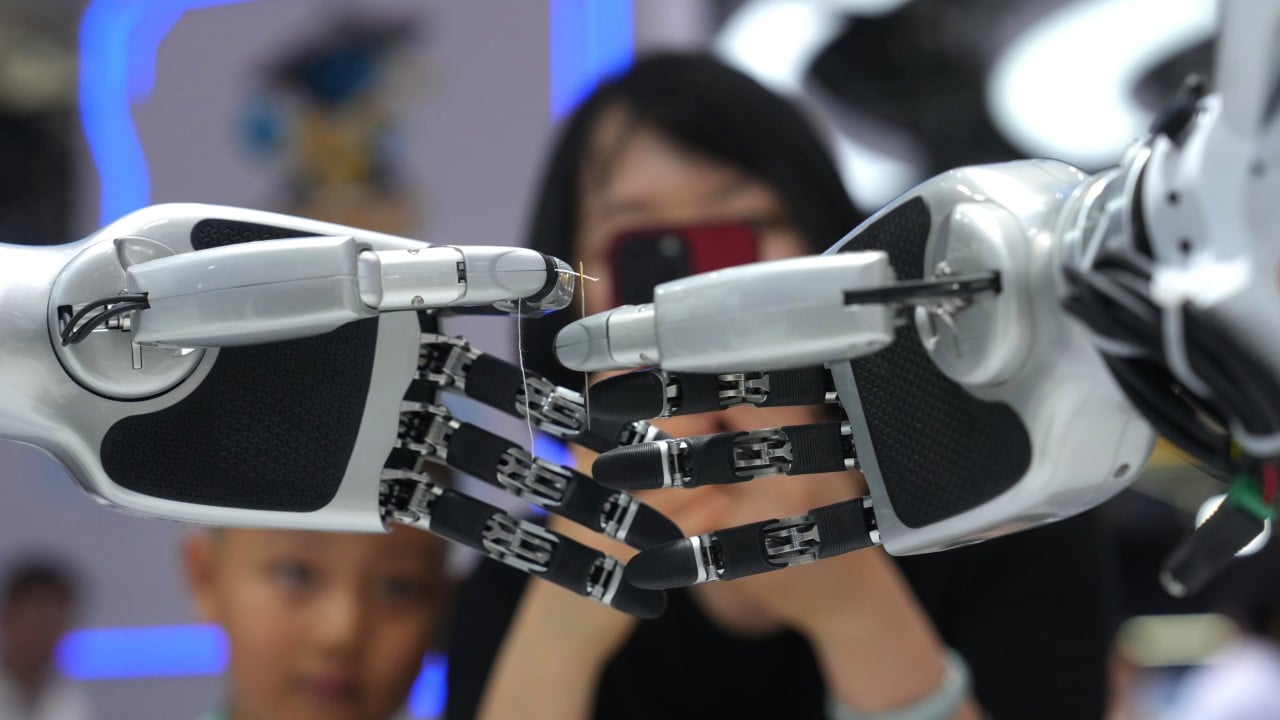
Chinese Robotics Industry Shifts Focus from Humanoid Designs to Practical Applications
The robotics industry is witnessing a transition from showcasing humanoid robots to practical deployments. At Unitree Robotics' booth, bipedal robots demonstrated impressive skills in activities like table tennis and combat, showcasing advancements in speed and balance. However, other exhibitors highlighted robots that efficiently sorted parcels and moved materials, emphasizing functionality over form. This shift is significant as it reflects a growing preference for robots that can perform specific tasks effectively. Yang Li, a senior engineer at X Square Robot, questioned the necessity of bipedal designs, noting that their two-armed WALL-B model sorted 1,816 packages in a controlled test, outperforming the bipedal Figure 03 robot from Figure AI, which managed 1,248 parcels per hour. This trend indicates a move towards more practical robotic solutions in various industries. Looking ahead, the focus on efficiency and task-oriented designs is likely to continue shaping the robotics landscape. With companies like AI2 Robotics showcasing versatile wheeled robots capable of making coffee and ice cream, the industry may prioritize robots that can adapt to different functions over traditional humanoid forms. No further timeline was disclosed at the time of publication.

Kawasaki Reveals Patented Designs for Corleo, Its Innovative Robotic Horse
Kawasaki Heavy Industries has unveiled a set of patented designs for its robotic horse, Corleo, which integrates hydrogen energy, AI, and biomimetic technology. This project aims to create an unprecedented all-terrain personal mobility tool, replacing traditional wheels with four biomimetic mechanical legs that can independently move and absorb shocks. The core design features a 150cc hydrogen fuel engine that acts as a generator, powering independent motors at each leg joint, ensuring long-range and eco-friendliness with emissions of only pure water. The AI system enhances the riding experience by scanning terrain in real-time, assessing foot placements, and maintaining balance based on the rider's weight shifts, offering a unique 'walking-style electrification' experience. Looking ahead, Kawasaki plans to launch a riding simulator and digital models based on Corleo's movement data by 2027. The company has established the 'SAFE ADVENTURE' project team, led by the president, and is collaborating with Nvidia to accelerate development using physics AI and simulation tools. No further timeline was disclosed at the time of publication.
Robotic Mobility Hydrogen Energy AI Technology Biomimetic Design
BioflexBot Robot Design Surpasses Human Hand in Key Motions
A new study published in Advanced Science introduces the BioflexBot, a robot designed to replicate and even exceed the core motions of the human hand. Unlike traditional robotic designs that mimic the complex mechanics of human hands, the BioflexBot features a simpler structure that enhances its functionality. This innovation is significant as it addresses the challenges faced by scientists in creating dexterous robots. By simplifying the design, the BioflexBot not only improves control but also demonstrates that effective robotic motion can be achieved without the complexity typically associated with human-like robotics. Looking ahead, the implications of the BioflexBot's design could influence future developments in robotics, particularly in applications requiring dexterity and precision. No further timeline was disclosed at the time of publication.
Robotics
Addressing Challenges in Robotics Design and Deployment for Enhanced Performance
Robotic systems face unique challenges once deployed, including unpredictable lighting, human behavior variations, and diverse surfaces. These factors create friction points that are not present in controlled laboratory settings. To ensure successful deployment, robots must be resilient and capable of adapting to real-world environments, which requires iterative design processes that account for operational requirements. The importance of user acceptance and trust in autonomous robotics cannot be overstated. Factors such as signaling intentions and predictability of movement play a crucial role in ensuring that non-experts can understand and trust robotic technologies. A cohesive focus on implementation and consumer trust is essential for the successful adoption of robotics in various environments. To enhance the design feedback loop, it is vital to collect operational data from deployed robots, including performance metrics and error recovery success. This data-driven approach helps improve reliability and prevent design failures. No further timeline was disclosed at the time of publication.
Design Robotics automation Autonomous robots autonomous systems data collection
CRAFT: A Modular 3D-Printed Design Library for Continuum Robots
The University of Toronto's Robotics Institute has introduced CRAFT, a modular design library for continuum robots, featuring six types of 3D-printed modules based on flexible hinges. This library aims to enhance the versatility of continuum robots, which can bend continuously without rigid joints, making them ideal for navigating tight spaces such as inside the human body or aircraft wings. Continuum robots face challenges related to their length and weight, which can lead to difficulties in positioning and control. CRAFT addresses these issues by allowing for mechanical reconfiguration before tasks, enabling users to select and combine modules based on required performance characteristics. This approach simplifies the design process compared to traditional methods that require complete redesigns for different tasks. CRAFT currently includes six module types: low stiffness, medium stiffness, high stiffness, directional stiffness, unidirectional stiffness, and a scalable module. Each module is designed to provide specific mechanical properties, allowing for tailored solutions to various applications. No further timeline was disclosed at the time of publication.
Modular Robotics 3D Printing Continuum Robots Robotic Design Soft Robotics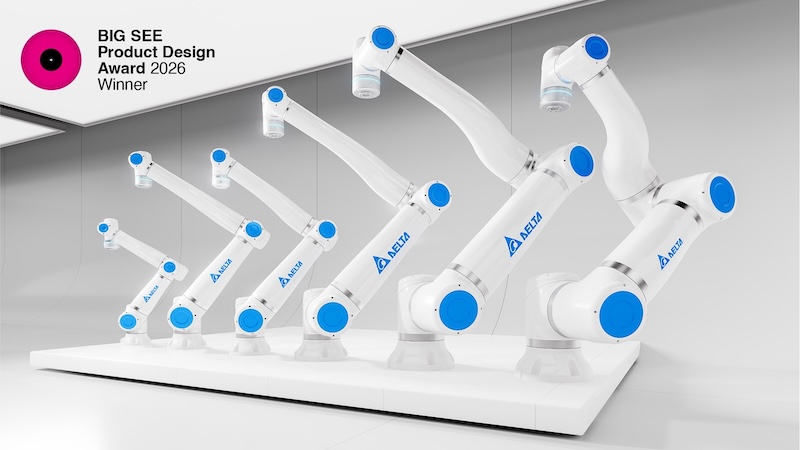
Delta Electronics' D-Bot Collaborative Robots Win BIG SEE Product Design Award 2026
Delta Electronics has received the prestigious BIG SEE Product Design Award 2026 for its Delta D-Bot series of collaborative robots. This award highlights exceptional achievements in product design and industrial innovation, showcasing Delta's commitment to sustainability and creativity in technology. The recognition is significant as it underscores Delta's strategy of investing over eight percent of its annual revenue in research and development, particularly in design and innovation. Michael Mayer-Rosa, senior director at Delta, emphasized that the award reflects the high standards of their team in merging industrial robotics with practical and efficient design, catering to diverse customer needs. Looking ahead, Delta's D-Bot series, launched in spring 2024, features six flexible models with advanced safety technologies and compatibility with various industrial protocols. No further timeline was disclosed at the time of publication.
Design Industrial robots autonomous mobile robots BIG SEE Product Design Award cobots collaborative robots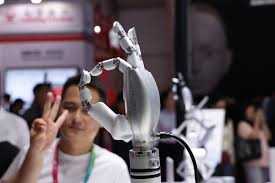
In-Depth Analysis of Adsorption and Locomotion Codesign for Wall-Climbing Robots
The Journal of Field Robotics has published a comprehensive review focusing on the adsorption-locomotion codesign of wall-climbing robots. This review highlights the intricate relationship between the robots' ability to adhere to surfaces and their locomotion capabilities, which are crucial for performing complex operations on various surfaces. Understanding the codesign of these robots is essential as it directly impacts their efficiency and effectiveness in real-world applications. The review emphasizes the importance of optimizing both adsorption and locomotion to enhance the performance of wall-climbing robots, which are increasingly being utilized in fields such as inspection, maintenance, and exploration. Looking ahead, researchers and developers in the robotics field should pay close attention to advancements in adsorption technologies and locomotion strategies. Continued innovation in these areas could lead to significant improvements in the functionality and versatility of wall-climbing robots. No further timeline was disclosed at the time of publication.
SURVEY ARTICLE
Boston Dynamics Introduces Industrial-Style Head for Atlas Robot Design
Boston Dynamics has redesigned its Atlas robot, incorporating an industrial-style head instead of human-like features. Mechanical engineer Taylor Frey-Baker emphasized that Atlas is intended for industrial environments, thus its appearance should reflect that purpose. The head lacks facial features and includes light rings that communicate the robot's operational status and intentions to nearby workers. This design choice is significant as it prioritizes safety and efficiency in shared workspaces. The head's lighting interface provides immediate visual cues about Atlas's actions, reducing ambiguity in industrial settings. The robot is equipped with HDR stereo cameras that enhance environmental perception, allowing operators to navigate challenging lighting conditions effectively. Looking ahead, the integration of the head as a sensor carrier and status indicator positions Atlas to work safely and predictably alongside human workers in factories and warehouses. No further timeline was disclosed at the time of publication.
Industrial Robots Robot Design Automation Technology Safety Systems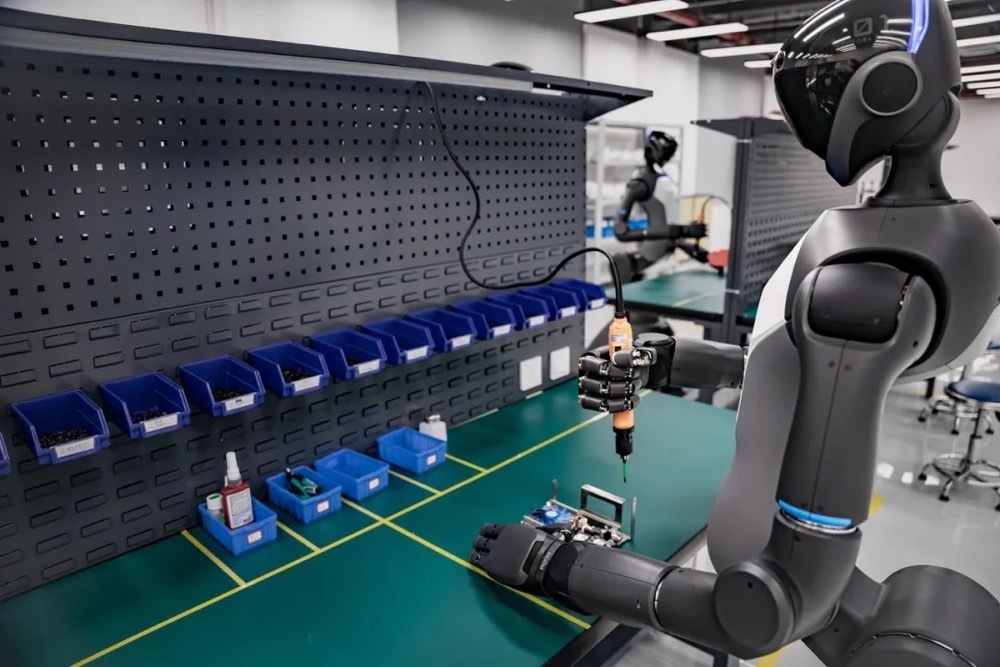
Batten & Kamp Unveils 'Beauty Seeker': An AI Robot as a Mobile Flower Vase
At the 2026 IFA in Berlin, Batten & Kamp introduced 'Beauty Seeker,' a unique creation combining an AI six-legged robot with an orchid, transforming it into a mobile vase. This design intentionally diverges from mainstream technology narratives by stripping the robot of its built-in camera and multiple functionalities, focusing instead on a fundamental question: what does it mean for a high-tech robot to coexist with us as a simple container in a home environment? The robot retains a single core function: using LiDAR to track nearby people and slowly adjust its position to draw attention to the orchid it carries. This design creates a sense of absurdity, as the advanced robot serves not to perform tasks but to act as a moving base for a flower. Interestingly, this limitation reduces the typical threat perception associated with such robots, as it merely holds a flower, creating a peculiar tension between its potential power and its chosen role as a vase. This is not Batten & Kamp's first exploration of such contradictions; their 2023 project 'Comfort Seeker' featured an iconic Eames chair on a four-legged robot, examining the intersection of furniture and autonomous systems. 'Beauty Seeker' continues their inquiry into the relationship between technology and nature, as the orchid, evolved to attract pollinators, now competes for human attention through an AI-driven robot. The designers aim to shift the focus from what robots can do to what they should do, suggesting that the rarest behavior may be simply to hold a flower and quietly revolve around us.
AI Robots Design Innovation Human-Robot Interaction Domestic Technology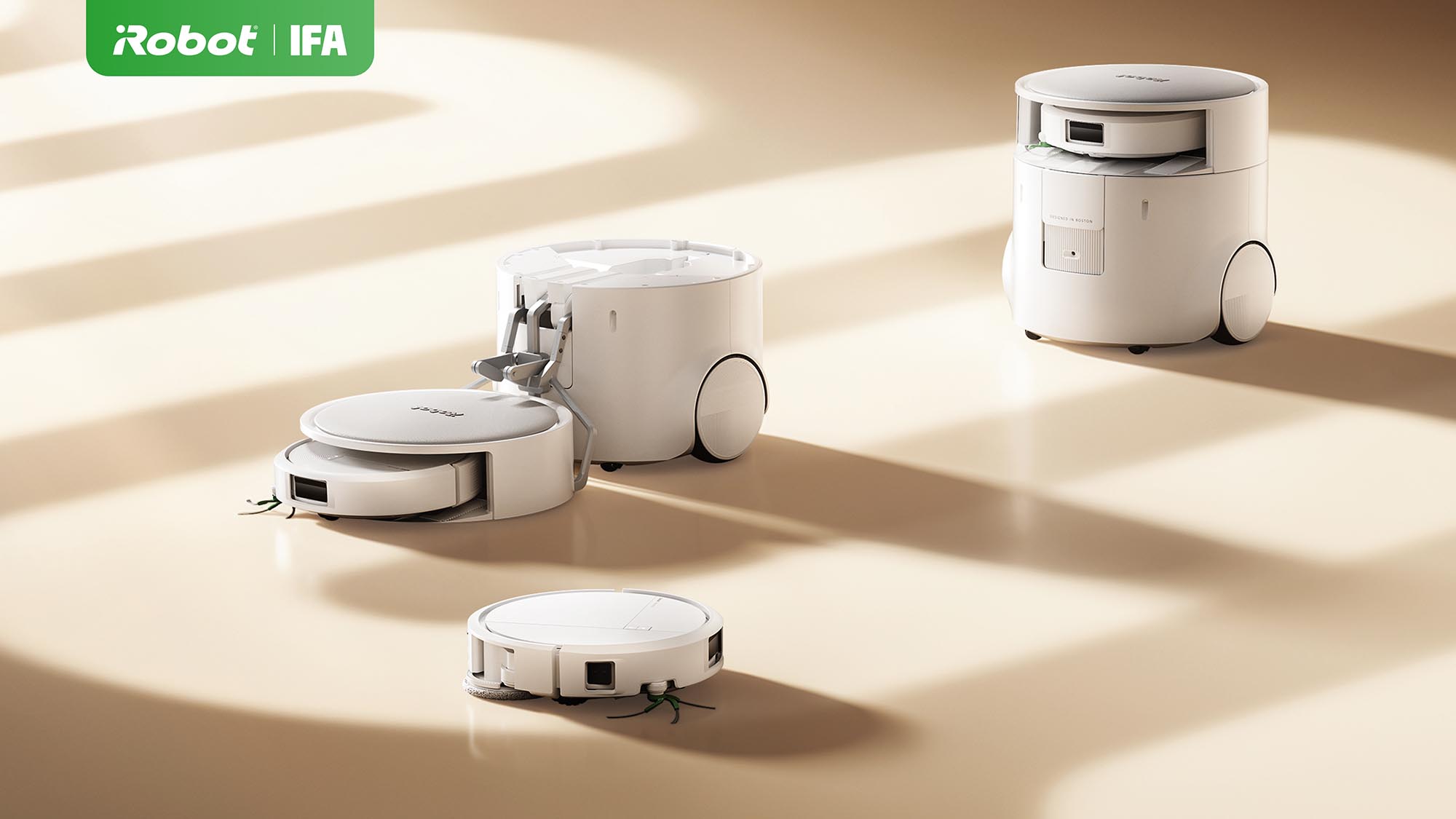
iRobot Unveils Roomba Duo Concept Model at IFA 2026 Featuring Dual-Robot Design
iRobot introduced the Roomba Duo, a concept model of a robotic vacuum cleaner, at IFA 2026 in Berlin on September 4. This innovative design features two robots that can share cleaning tasks, including a companion robot for tight spaces and a main robot for powerful vacuuming and floor washing. The Roomba Duo's dual-robot system utilizes AI to allocate cleaning areas in real-time, enhancing coverage efficiency. The main robot boasts a cylindrical design, equipped with a high-performance motor and a large battery for robust suction and cleaning capabilities. However, iRobot has stated that there are no plans for commercial release of this concept model. As the robotics market evolves, the introduction of the Roomba Duo highlights iRobot's commitment to innovation in home cleaning solutions. Observers should watch for potential developments in dual-robot systems and how they may influence future product offerings. No further timeline was disclosed at the time of publication.

Development and Evaluation of a Wall-Climbing Robot for Adaptive Building Facades
A new wall-climbing robot designed for adaptive building facades has been developed and analyzed. This robot operates under negative pressure, allowing it to adhere to various surfaces effectively. Its design aims to enhance maintenance and inspection processes for buildings with dynamic facades. The significance of this development lies in its potential to revolutionize how buildings are maintained, particularly those with adaptive features. By utilizing negative pressure technology, the robot can navigate complex surfaces, which is crucial for ensuring the longevity and safety of modern architectural designs. Looking ahead, the focus will be on further testing and refinement of the robot's capabilities. No further timeline was disclosed at the time of publication.
RESEARCH ARTICLE
iRobot Launches Roomba® Duo at IFA 2026, Revolutionizing Floor Care with Dual-Unit Design
iRobot Corp. has introduced the Roomba® Duo, its first dual-unit robot vacuum and mop, at IFA 2026. This innovative system combines a main unit that vacuums and steam-mops with a compact companion robot, addressing the limitations of traditional robotic floor care by offering both powerful cleaning and autonomous navigation. The Roomba® Duo's unique architecture allows the main robot to deploy the companion unit into hard-to-reach areas, enhancing cleaning coverage. Equipped with advanced features like a mechanical arm, AI-driven navigation, and a powerful wet-and-dry cleaning module, this system aims to provide a comprehensive solution for busy households, particularly those with pets or children. As the Roomba® Duo sets a new standard for intelligent floor cleaning, industry observers will be keen to see how this dual-unit approach influences consumer preferences and the competitive landscape in the robotics market. No further timeline was disclosed at the time of publication.

Development and Enhancement of a Deep Sea Bionic Robot Fish Utilizing Phase Change Actuator Technology
A recent study published in the Journal of Field Robotics details the design and optimization of a deep sea bionic robot fish that employs phase change actuator technology. This innovative approach aims to enhance the robot's performance in underwater environments, allowing for more efficient movement and adaptability to various conditions. The significance of this development lies in its potential applications in marine exploration and environmental monitoring. By mimicking the natural movement of fish, the bionic robot can navigate complex underwater terrains, providing valuable data for researchers and contributing to the understanding of marine ecosystems. Looking ahead, advancements in phase change actuator technology may lead to further improvements in the robot's capabilities. Researchers are expected to explore additional functionalities and applications, although no specific timeline for future developments was disclosed at the time of publication.
RESEARCH ARTICLE
Development and Evaluation of a Push-Based Gangue-Sorting Robotic System
A new push-based gangue-sorting robotic system has been designed and developed, with successful integration and field evaluation reported in the Journal of Field Robotics. This innovative system aims to enhance the efficiency of sorting gangue materials in mining operations. The significance of this development lies in its potential to improve resource recovery and reduce waste in mining processes. By effectively sorting gangue materials, the robotic system can contribute to more sustainable mining practices and optimize operational efficiency. Looking ahead, the industry will be keen to observe further advancements in robotic sorting technologies and their applications in various mining environments. No further timeline was disclosed at the time of publication.
RESEARCH ARTICLE
BioflexBot Robot Hand Designed to Replicate and Exceed Human Hand Movements
Researchers have developed the BioflexBot, a novel robotic hand that mimics and surpasses essential human hand motions with a simplified design. Unlike traditional robotic hands that replicate human anatomy, the BioflexBot utilizes a coiled spring, constraining shell, and pneumatic system to achieve precise movements such as pinching, rotating, hooking, and grasping with just two pneumatic inputs. The significance of the BioflexBot lies in its ability to perform delicate tasks typically required in healthcare and laboratory environments, such as manipulating acupuncture needles and transporting liquids. It has demonstrated superior performance, rotating bottle caps nearly four times more than a human hand and grasping objects up to 13 times larger than similar robotic systems. Looking ahead, the BioflexBot shows promise for various applications, including inspecting aeroengine blades, assisting humanoid robots in daily tasks, and conducting chemistry experiments. No further timeline was disclosed at the time of publication.
Academia / Research Artificial Intelligence Artificial Intelligence / Cognition Design / Development End Effectors / Grippers End of Arm Tooling
Robot.com Introduces R-dog: A Versatile Four-Legged Delivery and Engagement Robot
Robot.com has unveiled R-dog, a four-legged robotic platform intended for delivery, advertising, and engagement tasks. This innovative robot is designed to operate on REMI, Robot.com's fleet management and physical API layer, showcasing the company's commitment to advancing robotic solutions. The significance of R-dog lies in its potential to enhance operational efficiency in various sectors by integrating advanced autonomy features. The collaboration with FieldAI is crucial, as their general-purpose Field Foundation Models will provide the necessary autonomy capabilities, positioning R-dog as a versatile tool for businesses. Looking ahead, the evolution of R-dog into a production version will be closely monitored. The partnership with FieldAI is expected to yield significant advancements in robotic autonomy, making R-dog a noteworthy development in the robotics landscape. No further timeline was disclosed at the time of publication.

Siemens Xcelerator Aims to Transform Humanoid Robotics Design for $370 Billion Market
Siemens is addressing the complexities of humanoid robotics design with its Xcelerator platform, which integrates mechanical design, simulation, and manufacturing processes. This innovation is crucial as the humanoid robotics market is projected to grow to $370 billion by 2040, according to McKinsey. Overcoming design inefficiencies will be essential for manufacturers to capture market share and create adaptable robots capable of transforming various industries. The potential of humanoid robots lies in their ability to navigate complex environments and perform diverse tasks, unlike traditional industrial robots. However, significant technical challenges remain, including the need for precise coordination of articulated joints and the integration of design and simulation workflows. Siemens Xcelerator aims to streamline these processes, enabling manufacturers to validate designs earlier and reduce reliance on physical prototypes. As competition intensifies in the humanoid robotics sector, manufacturers must adopt advanced solutions like Siemens Xcelerator to remain competitive. The platform's capabilities in connecting design and simulation workflows could be pivotal in accelerating the development of humanoid robots, ultimately reshaping manufacturing and logistics operations in the coming years.
Sponsored Content Siemens Industry
Italian IIT Unveils ErgoCub: A Humanoid Robot Designed to Alleviate Human Waist Strain
The Italian Institute of Technology (IIT) has developed a humanoid robot named ErgoCub, aimed at reducing the physical strain on human operators during collaborative tasks. This innovation integrates human ergonomics directly into the robot's hardware optimization, addressing a critical oversight in robotic design. The significance of this development lies in its approach to shared embodied intelligence, which combines coordination and mutual perception in collaborative environments. By modeling both the robot and human as symmetrical intelligent agents, the design ensures that the robot can effectively work alongside humans, adapting its movements to minimize strain on the human waist. Looking ahead, the research highlights the importance of considering human collaboration in robotic design. The ErgoCub's architecture allows for dynamic adjustments based on the physical characteristics of both the robot and the human, creating a more efficient and ergonomic interaction. No further timeline was disclosed at the time of publication.
Humanoid Robots Robotics Biomechanics Collaborative Robots
Researchers Introduce Milo, the First Fully Autonomous Robotic Guide Dog for the Visually Impaired
Researchers have unveiled Milo, the world’s first fully autonomous robotic guide dog, aimed at assisting blind and visually impaired individuals in navigating various environments. This AI-powered mobile robot serves as a cost-effective alternative to traditional guide dogs, which can be expensive and in limited supply. Milo can be produced for under $2,000, significantly increasing accessibility for those awaiting trained guide dogs. The significance of Milo lies in its ability to navigate unfamiliar locations without the need for pre-mapped environments, utilizing onboard artificial intelligence to identify paths and avoid obstacles. This capability is crucial for users who require reliable navigation assistance in diverse settings. The robot's navigation system, trained through reinforcement learning, allows it to adapt to different lighting and environmental conditions, enhancing its usability. Looking ahead, the open-source release of Milo, including its hardware designs and AI models, invites further research and development in the field. This initiative could lead to advancements in assistive technologies for the visually impaired, making navigation safer and more efficient. No further timeline was disclosed at the time of publication.
Health News accessibility artificial intelligence assistive robotics assistive technology
The Importance of Companion Mobile Apps in Robotics and Automation Systems
Companion mobile apps are becoming essential in robotics and automation, allowing operators to manage machines remotely. As the International Federation of Robotics reported 542,000 industrial robot installations in 2024, the need for efficient monitoring and maintenance alerts has surged, making these apps integral to operations. The rapid growth of robot fleets, now exceeding 4.6 million units globally, necessitates real-time telemetry and role-based access in companion apps. These applications must provide offline functionality and timely alerts to prevent operational delays, as a five-minute lag in communication can lead to significant production losses. Looking ahead, the evolution of robotics-as-a-service is transforming companion apps to support features like usage-based billing and in-app payments. This shift indicates that the role of these apps will expand beyond monitoring to include handling regulated financial data, reflecting the changing landscape of industrial automation.
Automation Robotics Software automation companion apps cybersecurity
Satyress Unveils Threehalfves Robot for Challenging Disaster Response Scenarios
Satyress, a California-based startup, has introduced the Threehalfves robot, a two-meter tall remote-controlled centaur robot designed for disaster sites. This innovative robot features a humanoid upper body and a four-legged base, providing enhanced stability on rugged terrain compared to bipedal robots. Its modular limbs can quickly attach tools like chainsaws and drills, eliminating the need for custom equipment. The significance of the Threehalfves lies in its potential to operate in hazardous environments where human rescue teams must wait for conditions to stabilize. With remote control capabilities, operators can command the robot from a safe distance. The robot's design allows for easy transport, as two units can fit side by side in a standard pickup truck bed, making it accessible for emergency personnel. While the Threehalfves robot represents a step forward in disaster response technology, Satyress has not disclosed pricing or commercial delivery dates, nor whether it meets stringent industrial safety standards for emergency services in the U.S. and Europe. The true test for this robot will be its performance in real disaster scenarios, where safety and effectiveness are paramount.
Disaster Response Robotics Remote Operation Emergency Services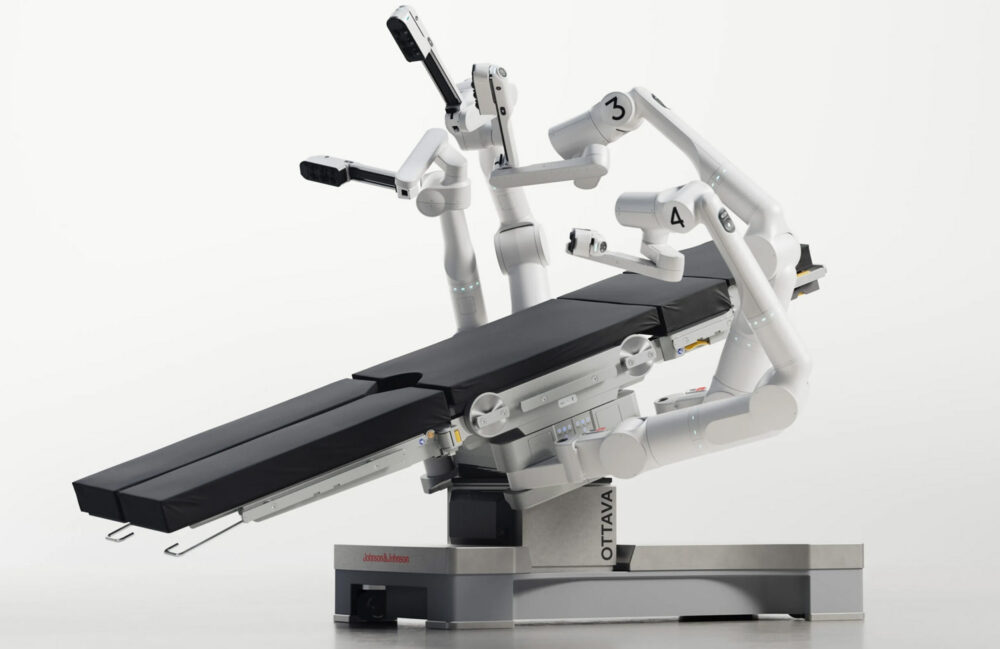
Johnson & Johnson Unveils Ottava Surgical Robot with Innovative Design and Features
Johnson & Johnson MedTech has introduced the Ottava surgical robot, which recently received FDA de novo authorization. This innovative system features four robotic arms integrated into the operating table, allowing for a space-saving design that occupies 30-50% less room than traditional boom-and-cart systems. The significance of the Ottava surgical robot lies in its ability to enhance surgical workflows and reduce setup time. By automating parts of the surgical process, the system aims to provide a more consistent experience for surgical teams, addressing common issues such as inadvertent suture cuts and dull scissors reported by surgeons. Looking ahead, the Ottava system's unique features, including a two-in-one needle driver and patented scissor design, are expected to improve surgical precision and efficiency. No further timeline was disclosed at the time of publication.
Healthcare Robotics Markets / Industries News Surgical / Interventional Systems Johnson & Johnson
Spider-Inspired Robotic Boat Designed for Tracking and Rescuing Individuals in Water
Rescue teams in coastal areas frequently face the challenge of saving individuals at risk of drowning. These critical operations demand rapid response times, as delays can lead to severe or fatal outcomes for those in distress. The development of a spider-inspired robotic boat aims to enhance the efficiency of these rescue missions. By mimicking the agility and precision of a spider, this innovative technology could significantly improve the ability of emergency teams to locate and assist individuals in peril. Looking ahead, the effectiveness of this robotic boat in real-world rescue scenarios will be crucial to its adoption. The ongoing evaluation of its capabilities will determine its potential impact on coastal rescue operations and overall safety in aquatic environments. No further timeline was disclosed at the time of publication.
Robotics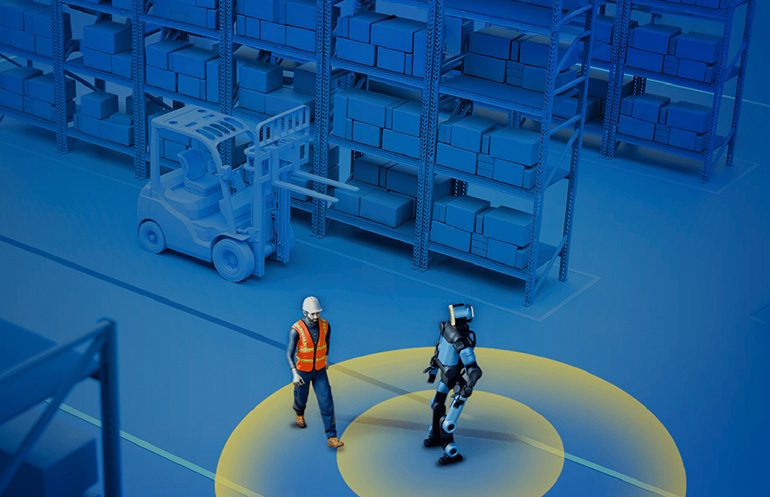
Boston Dynamics Hosts Webinar on Human-Robot Interaction Design for Trust and Safety
Boston Dynamics is set to present a free webinar focused on human-robot interaction (HMI) considerations for humanoid robots. The event, titled "The Art Behind Human-Robot Interaction," will feature experts discussing how to foster trust and safety in human-robot collaboration. The webinar is scheduled for 11:00 a.m. ET on Wednesday, July 22, 2026. As humanoid robots transition from research environments to commercial applications, addressing safety concerns becomes crucial. Boston Dynamics emphasizes that predictability, rather than human-like appearance, is key to successful human-robot coexistence. The insights shared during the webinar will be vital for developers aiming to enhance the user experience and operational safety of humanoid robots. Participants can expect to learn from Mario Bollini, director of human-robot interaction, and Leland Hepler, a distinguished product designer. Both speakers bring extensive experience in robotics and design, making this webinar a significant opportunity for those interested in the future of human-robot collaboration. No further timeline was disclosed at the time of publication.
Artificial Intelligence Artificial Intelligence / Cognition Collaborative Robots Human Robot Interaction / Haptics Humanoids Motion Control
Generative Bionics Unveils Gene.01, a Smart-Skin Humanoid Robot for Safe Human Interaction
Generative Bionics has launched Gene.01, a fully functional humanoid robot platform designed for safe human collaboration. Built in just six months, Gene.01 is equipped with advanced sensors that detect touch, proximity, force, and temperature, enhancing its interaction capabilities with humans. The introduction of Gene.01 is significant as it provides a foundation for Physical AI developers to create industrial applications. Its open-sourced robot model allows for collaborative development, potentially accelerating innovation in the field of humanoid robotics. Looking ahead, the focus will be on how Gene.01 can be integrated into various industrial environments and the applications it can support. No further timeline was disclosed at the time of publication.

Chinese Company Wins Red Dot Award for Panda-Inspired Delivery Robot Design
The Shenzhen-based company, Wandachang Innovation Intelligent Co., has won the prestigious Red Dot Award for its Panda-inspired meal delivery robot, known as Xiong Da. This recognition highlights the robot's unique design that embodies Eastern aesthetics, setting it apart in a market often dominated by minimalist technology. The significance of this award lies in its affirmation of Wandachang's commitment to blending cultural heritage with advanced robotics. The Xiong Da robot features a bionic design inspired by the giant panda, integrating a SLAM positioning system and multi-sensor technology for efficient navigation in narrow spaces. This innovative approach positions the robot as not just a tool, but a companion that resonates emotionally with users. Looking ahead, Wandachang aims to expand its intelligent service system for healthcare and wellness, leveraging its award-winning design to tell the story of Chinese manufacturing on a global stage. No further timeline was disclosed at the time of publication.
Robotics Product Design Cultural Aesthetics Healthcare Technology
ETCO Incorporated Launches New Electrical Connectors and Terminals for Robotics and Automation
ETCO Incorporated has unveiled a new range of standard and custom electrical connectors and terminals designed specifically for automation systems and robotics. These products are engineered to endure intense operations, constant motion, and vibration, making them suitable for demanding applications. The introduction of these connectors and terminals is significant as they address the growing need for reliable electrical components in automation and robotics. With the increasing complexity of automated systems, the durability and performance of electrical connections are crucial for operational efficiency and safety. Looking ahead, industry stakeholders should monitor the adoption of ETCO's new products in various applications. The effectiveness of these connectors and terminals in real-world scenarios will be key to their success in the market. No further timeline was disclosed at the time of publication.

MIT and EPFL Develop Flapping Robot for Seamless Water-Air Transition with Advanced Wing Design
Researchers from MIT and EPFL have created a flapping robot capable of transitioning between water and air without legs. Weighing approximately 250 grams, the robot features a streamlined body, two flexible wings, and a controllable tail. It can flap its wings at frequencies of up to 6 Hz underwater and 5.2 to 11 Hz in the air, mimicking the behavior of diving birds, as detailed in a recent Science publication. This innovation is significant as it addresses the complex physical challenges of transitioning from water to air, a feat that most diving birds achieve with the aid of their legs. The robot's flexible wings reduce drag and allow for a higher flapping frequency underwater compared to rigid wings. This design not only enhances its swimming efficiency but also aligns with biological observations of diving birds, providing insights into their locomotion strategies. Looking ahead, the research team is exploring optimal wing configurations and has tested various sizes and stiffnesses. Future experiments will focus on the robot's ability to transition from water to air solely through wing flapping, a critical milestone that could reveal more about the mechanics of avian flight and inspire advancements in robotic design. No further timeline was disclosed at the time of publication.
Flapping Robots Aerial Robotics Aquatic Robotics Bio-inspired Engineering
Tesla's Optimus Robots to Support Starmind Satellite Production, Not Maintenance
Tesla's Optimus robots will not be used to repair Starmind satellites in orbit, as confirmed by recent statements from Elon Musk. Instead, these robots are intended to assist in the construction and operation of the Terafab chip manufacturing facility in Texas. The AI1 satellites, designed to disintegrate upon reentry, highlight the company's swap-and-replace strategy rather than traditional maintenance practices. This approach is significant as it reflects a broader trend in satellite management, where mass-produced satellites are replaced rather than repaired. The economics of servicing missions are prohibitive, with the cost of launching a replacement satellite being significantly lower than conducting a repair mission. This model aligns with SpaceX's operational history, where rapid replacement of satellites is more efficient than attempting to maintain them in orbit. Looking ahead, the focus will remain on the production capabilities of the Gigasat factory, which is expected to support the continuous replacement of satellites. No further timeline was disclosed at the time of publication, but the demand for rapid satellite turnover suggests a robust future for Optimus robots in terrestrial manufacturing rather than in-space servicing.

Designing Safe and Effective Cobot Workspaces for Human-Robot Collaboration
Collaborative robots, or cobots, are designed to work alongside humans in tasks such as welding, enhancing productivity. However, the success of this partnership hinges on employee safety; without it, the potential benefits of cobots remain untapped. Thoughtful workspace design is crucial to ensure safety and maximize human-robot collaboration. The integration of cobots into various sectors addresses specific challenges, such as improving product inspections through computer vision. To achieve a positive return on investment, stakeholders must prioritize safety during installation. Regulatory guidelines, including ANSI/RIA R15.06 and ISO 10218, provide essential protocols to prevent workplace injuries and hazards. Health and safety managers should conduct thorough audits and risk assessments before deploying cobots. Implementing multiple layers of safety measures, including light curtains and safety mats, is vital. Additionally, addressing electrical safety concerns, such as arc flashes, is critical for protecting employees. No further timeline was disclosed at the time of publication.

Dexory Implements SimScale’s Engineering AI to Enhance Autonomous Robot Design
Dexory, a robotics and warehouse data intelligence company, has implemented SimScale’s Engineering AI to improve the engineering workflows for designing and testing autonomous warehouse robots. This deployment builds on Dexory's existing use of SimScale’s AI-native cloud simulation platform, enabling engineers to quickly identify structural component failures and explore various design options through simulation. The significance of this development lies in the growing demand for faster product development cycles in warehouse robotics, projected to reach a market value of $117 billion by 2034. As engineering teams face pressure to maintain performance and reliability, the integration of AI into engineering processes is becoming increasingly vital. Dexory's use of Engineering AI aims to streamline investigations into structural failures and enhance simulation reporting, making it easier for teams to analyze and share results. Looking ahead, Dexory's program will allow engineers to conduct parameter sweeps and capture simulation knowledge, creating a searchable engineering memory. This initiative not only focuses on productivity but also aims to identify where AI can provide the most value in engineering, establishing best practices for future AI adoption. No further timeline was disclosed at the time of publication.
Automation & Robotics
Development of Innovative Gripping Mechanism and Dual Manipulator System for Apple Harvesting with Tractor
A novel gripping mechanism and dual manipulator robotic system designed for apple harvesting using a tractor has been developed. This innovative system aims to enhance the efficiency of apple picking, addressing the labor shortages faced in agriculture. The significance of this development lies in its potential to revolutionize apple harvesting processes, making them more efficient and less reliant on manual labor. By integrating advanced gripping technology with a dual manipulator system, the project seeks to improve productivity in the agricultural sector. Looking ahead, the focus will be on testing the system in real-world conditions to evaluate its performance and effectiveness in apple harvesting. No further timeline was disclosed at the time of publication.
RESEARCH ARTICLE
Italian Institute of Technology Develops Soft Robotic Arm Inspired by Octopus Design
A team from the Italian Institute of Technology (IIT) has developed a soft robotic arm inspired by the octopus, utilizing a distributed perception design philosophy. Unlike traditional robots with centralized control, this arm mimics the octopus's ability to independently sense and respond through its tentacles, allowing for more agile and nuanced movements underwater. This innovation matters as it enhances the speed and simplicity of robotic control, eliminating the need for high-frequency data processing from a central system. The arm's design incorporates optoelectronic sensors and micro-LEDs in each suction cup, enabling real-time assessment of contact direction and force, thus allowing for immediate actions without centralized commands. The soft robotic arm has demonstrated its capabilities in complex environments, accurately grasping fragile objects without visual feedback. Its potential applications include assisting in medical procedures, handling delicate components in manufacturing, and performing underwater archaeology or deep-sea sampling, showcasing the advantages of biological problem-solving approaches in robotics.
Soft Robotics Robotic Arms Biomimicry Underwater Robotics
Atrack Lab Unveils Safe Design of AT-ROS for Robot Control System Supporting AT-SYNAPSE
On August 13, 2026, Atrack Lab announced the safety design of its robot control system, AT-ROS, which supports the robot AI platform AT-SYNAPSE. This initiative aims to enhance the safety and reliability of collaborative robots. AT-SYNAPSE utilizes large language models (LLMs) like ChatGPT and Claude to enable robots to understand their surroundings and make autonomous decisions through natural dialogue. However, to operate robots safely, a robust control foundation is essential for real-time processing of sensor data, motor control, and obstacle detection, which is provided by AT-ROS based on ROS 2. The separation of AI decision-making from safety control is crucial, ensuring that safety functions remain operational regardless of AI performance. Atrack Lab combines the flexible decision-making capabilities of AT-SYNAPSE with the real-time control of AT-ROS, aiming for applications in service robots, autonomous mobile robots, and disaster response robots, among others. No further timeline was disclosed at the time of publication.
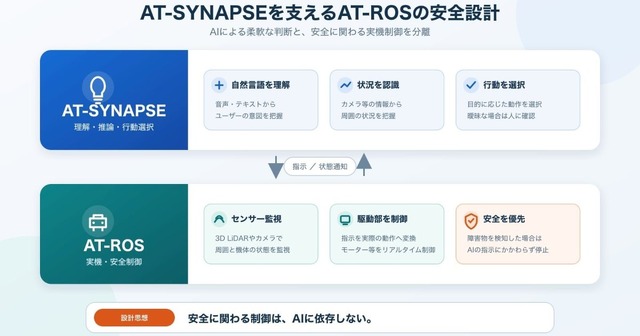
Atrack Lab Introduces Safe Design for Robot Control System AT-ROS Supporting AT-SYNAPSE
On August 13, 2026, Atrack Lab announced the safety design of its robot control system, AT-ROS, which supports the robot AI platform AT-SYNAPSE. This initiative aims to enhance the safety and reliability of collaborative robots. AT-SYNAPSE utilizes large language models like ChatGPT and Gemini to enable robots to understand their surroundings and act autonomously through natural dialogue. The significance of this development lies in the clear separation of AI decision-making from safety controls. Atrack Lab emphasizes that safety-related controls should not rely on AI, ensuring that safety functions remain operational regardless of AI performance. This architecture is crucial for robots operating near humans and objects, where independent control systems must ensure safety through real-time processing of sensor data and motor control. Looking ahead, Atrack Lab plans to leverage its expertise in unmanned vehicles and field robots to combine the flexible decision-making capabilities of AT-SYNAPSE with the real-time control of AT-ROS. No further timeline was disclosed at the time of publication.
SpaceX's Starmind Project: Supplier Strategy and Chip Manufacturing Plans for 2026
SpaceX's Starmind project, aimed at deploying up to 1 million AI satellites, was filed with the FCC on January 30, 2026. The initiative is designed to minimize reliance on external suppliers, with CEO Elon Musk stating that current chip production capabilities only meet 2% of the projected needs. The first satellite, AI1, is set for prototype launches in early 2027, featuring a 70-meter wingspan and a modular payload system that allows for interchangeable chips from various suppliers. The significance of Starmind lies in its ambitious supply chain strategy, which seeks to transition from external hardware suppliers to a fully integrated Musk-owned facility by 2028. The Gigasat manufacturing site in Bastrop, Texas, is expected to be operational by the end of 2027, with plans for high-volume production of the D3 chip, specifically designed for space applications. This approach aims to consolidate chip manufacturing processes under the Terafab joint venture, which has an estimated initial investment of $55 billion. Looking ahead, the next milestone for Starmind is the launch of AI1 prototypes in early 2027, while the full-scale chip production at Terafab is projected to ramp up significantly thereafter. However, analysts express skepticism regarding the feasibility of achieving Musk's ambitious compute goals, which may require substantial investment and time to establish the necessary manufacturing capabilities.

Why the Autonomous Delivery Robot "Kachakapro" is Selling Well: Design Philosophy and Development Strategy Behind Its Market Leadership
In a recent online seminar hosted by Robosta, Takashi Isobe, CEO of Preferred Robotics, discussed the company's success in capturing the top market share in Japan with their product "Kachakapro." The seminar focused on the development of practical robots that serve real societal needs, highlighting the design philosophy behind creating usable products and the realities of mass production and distribution. Isobe's insights aim to shed light on how robotics can effectively integrate into everyday life, emphasizing the importance of functionality and accessibility in robotic design.
Design and Motion Control of a Propeller–Leg Hybrid Multimodal Underwater Adhesion Robot
The Journal of Field Robotics has published an early view article that explores advancements in robotic technology and its applications in various fields. This publication, released in October 2023, highlights the innovative research conducted by a team of engineers and scientists aiming to enhance the efficiency and capabilities of robotic systems. The study focuses on the integration of artificial intelligence and machine learning to improve navigation and decision-making processes in autonomous robots. Researchers conducted extensive field tests to evaluate the performance of these systems in real-world environments, demonstrating significant improvements over previous models. The findings are expected to impact industries such as agriculture, manufacturing, and disaster response, where robotic assistance can lead to increased productivity and safety. This research underscores the growing importance of robotics in addressing complex challenges and advancing technological solutions across multiple sectors.
RESEARCH ARTICLE
The Rise of Robotic Arms in Tourist Attractions: A Call for Safety and Design Innovation
Robotic arms are increasingly being integrated into tourist attractions, providing exciting experiences for visitors. However, this trend has raised safety concerns regarding the use of industrial robots in public spaces. Experts are calling for the development of specially designed robots that prioritize human interaction and safety. While these advanced technologies have the potential to significantly enhance the tourism experience, it is crucial to address safety issues to ensure public confidence and enjoyment. The ongoing dialogue emphasizes the importance of balancing innovation with the well-being of visitors as the tourism industry continues to evolve.
Robotics Tourism Technology Safety Standards Human-Robot Interaction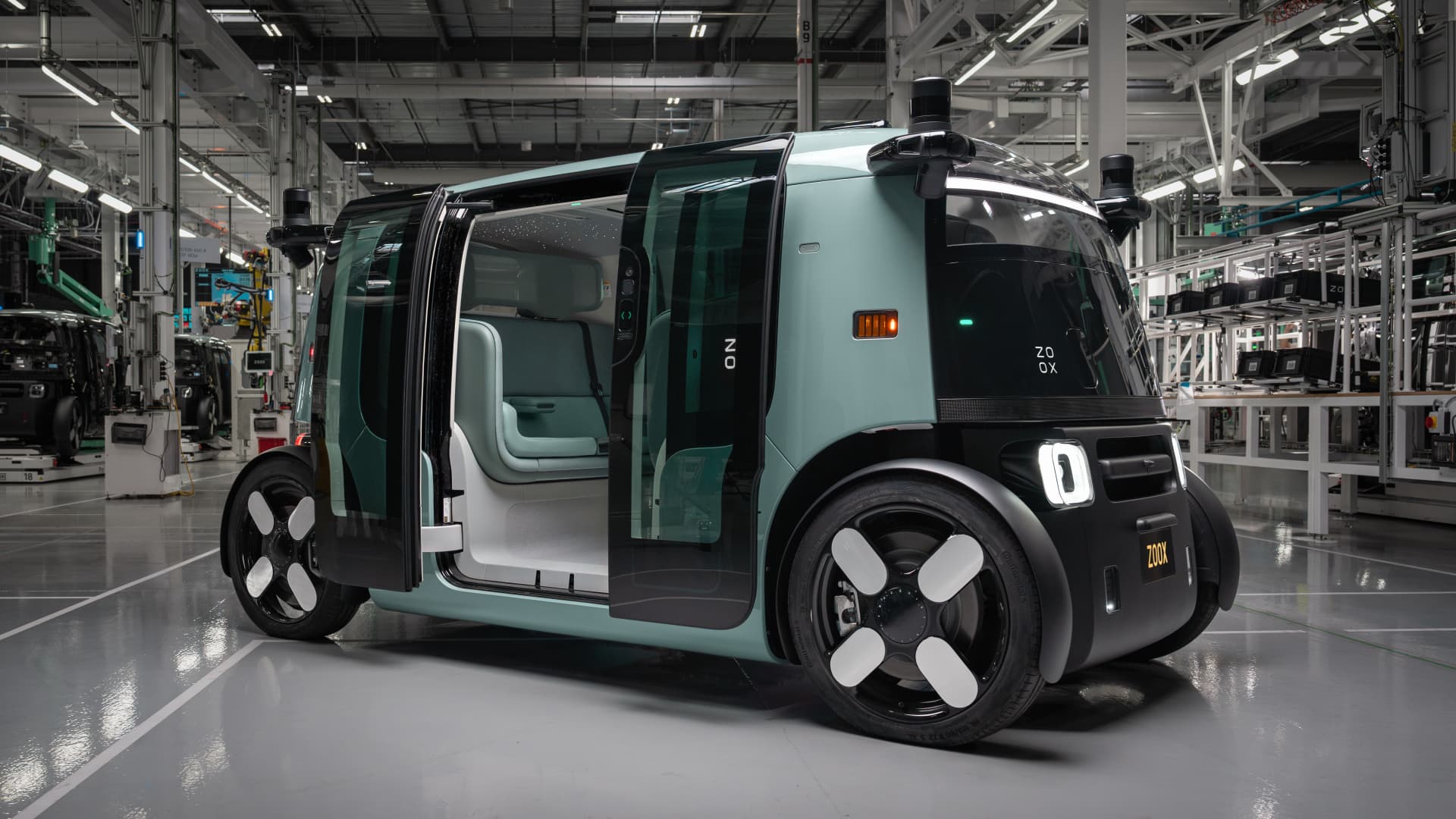
Amazon's Zoox unveils redesigned robotaxi ahead of upcoming expansion
Zoox, the autonomous vehicle division of Amazon, is set to enhance its robotaxi services as it plans to expand into new markets and introduce paid rides. The company aims to improve its technology and operational capabilities to meet growing demand for innovative transportation solutions. This strategic move comes as Zoox prepares to transition from a testing phase to a commercial model, allowing users to access rides for a fee. The expansion reflects Amazon's commitment to advancing its presence in the autonomous vehicle sector and capitalizing on the increasing interest in self-driving technology.
Design of Tentacle Structure and Dynamic Parameters for a Biomimetic Jellyfish Robot and Investigation on Its Propulsion Performance
A recent study published in the Journal of Field Robotics highlights advancements in autonomous robotics, focusing on their applications in various fields such as agriculture, search and rescue, and environmental monitoring. Conducted by a team of researchers from leading universities, the study was released in early October 2023. The research aims to address the growing demand for efficient and reliable robotic systems that can operate in unpredictable environments. By integrating advanced machine learning algorithms and sensor technologies, the team demonstrated how these robots can navigate complex terrains and perform tasks with minimal human intervention. The findings underscore the potential for autonomous robots to enhance productivity and safety in critical operations, particularly in areas that are hazardous for human workers. The study emphasizes the importance of continued innovation in robotics to meet the challenges posed by climate change and population growth. As the field of robotics evolves, the researchers advocate for collaboration between academia and industry to accelerate the development and deployment of these technologies. The implications of this research could significantly impact various sectors, paving the way for smarter, more adaptable robotic solutions in the near future.
RESEARCH ARTICLE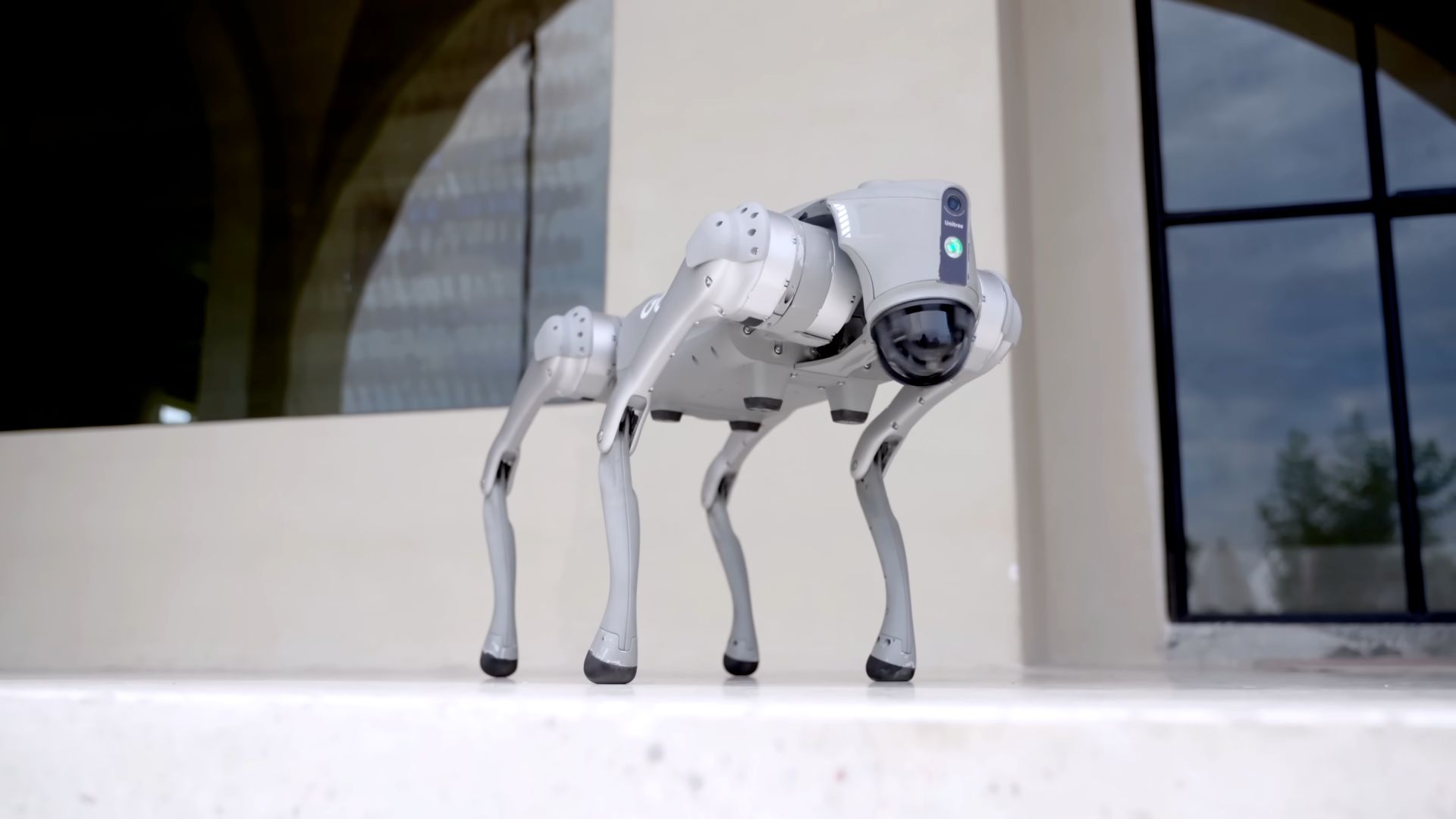
China’s Alibaba unveils AI brains designed to power the next generation of robots
Alibaba, the Chinese technology giant, has unveiled its inaugural family of embodied AI models, marking a significant advancement in artificial intelligence technology. This launch, which took place recently, aims to enhance the interaction between humans and machines by integrating large language models with physical embodiments. The initiative is part of Alibaba's broader strategy to innovate and lead in the AI sector, responding to the growing demand for more intuitive and responsive AI systems. By leveraging its extensive data resources and expertise in machine learning, Alibaba seeks to revolutionize user experiences across various applications, from customer service to entertainment. The company plans to continue developing these models to further improve their capabilities and expand their use cases in the coming months.
AI and Robotics
Elephant trunk skin’s dual-zone design offers blueprint for advanced robotic grippers
An elephant's trunk, a remarkable adaptation of the species, showcases its strength and versatility as it can effortlessly transport heavy logs across open spaces. This impressive ability not only highlights the physical prowess of elephants but also serves a crucial role in their daily activities, such as foraging and building shelters. Observations of these behaviors contribute to a deeper understanding of elephant intelligence and their interactions with the environment. The trunk's dexterity allows elephants to manipulate objects with precision, demonstrating their complex problem-solving skills and social behaviors. As researchers continue to study these magnificent creatures, they uncover insights into their ecological impact and the importance of preserving their habitats.
AI and Robotics
Elephant trunk skin reveals design that could reshape soft robotics
Researchers from Zurich University have conducted a study on the unique properties of an elephant's trunk, which is known for its strength and dexterity. The team, led by Lucia Beccai, examined the skin of the trunk to gain insights that could inform the development of advanced soft robotics. This investigation was made possible by the acquisition of a trunk from an adult Asian elephant, which had died of natural causes at the Zurich Zoo in 2020. The study aims to explore how the trunk's muscular and boneless structure allows for both heavy lifting and delicate movements, potentially leading to innovations in robotic design that mimic these capabilities.
Robotics
Robotics Summit panel explores the state of humanoid robot design
At the Robotics Summit & Expo, industry experts gathered to discuss advancements in humanoid robotics, focusing on the potential to reach a price point of $20,000 for these technologies in the near future. The panel highlighted current design innovations and the challenges that remain in making humanoid robots more accessible. This event, held today, served as a platform for sharing insights on the future of robotics and its implications for various sectors. The discussions underscored the growing interest in humanoid robots and the ongoing efforts to enhance their affordability and functionality.
Actuators / Motors / Servos Arms / Manipulators Artificial Intelligence Cameras / Imaging / Vision Design / Development Events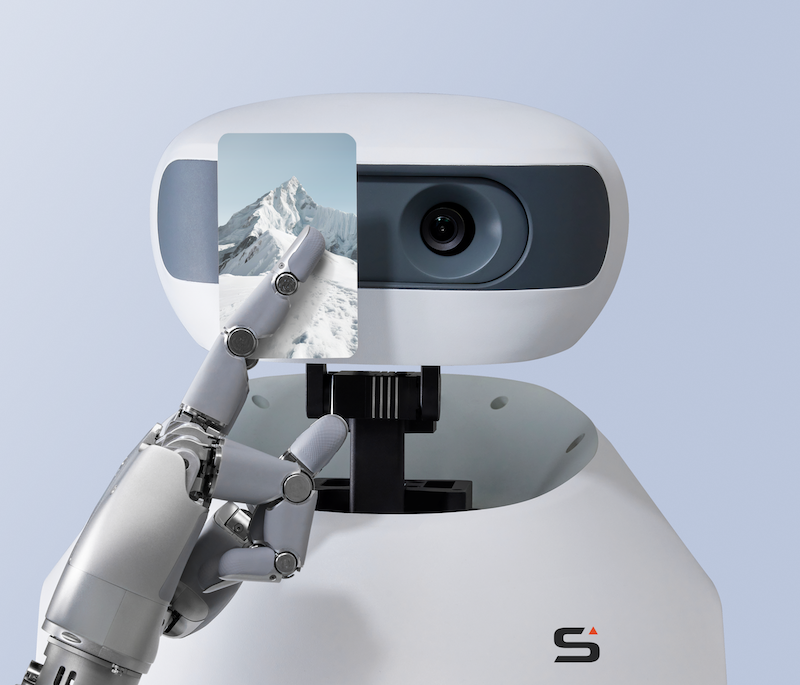
Sharpa brings dexterous robot hands to Nvidia and Unitree humanoid reference design
Sharpa has unveiled the integration of its Wave tactile robot hands into the Unitree H2 Plus humanoid robot reference design, marking a significant advancement in robotics technology. This collaboration makes the Unitree H2 Plus the first dexterous humanoid platform to utilize Sharpa's tactile manipulation technology within Nvidia’s Isaac GR00T development framework. The companies aim to enhance the capabilities of robotics developers and researchers by providing a sophisticated platform that combines advanced tactile feedback with humanoid robotics. This integration is expected to facilitate innovative developments in the field, enabling more nuanced and effective interactions between robots and their environments.
Humanoids News automation news dexterous manipulation humanoid robots nvidia
Jumping spider’s layered retina drives design of low-power 3D camera for AR and robotics
A team of engineers has conducted an in-depth study of the vision capabilities of jumping spiders, leveraging this unique biological model to inspire innovative technological advancements. This research, which took place over several months, aims to enhance the design of visual systems in robotics and artificial intelligence. By examining the spiders' exceptional ability to perceive depth and motion, the engineers have developed new algorithms that could significantly improve the performance of machines in complex environments. The findings were presented at a recent conference focused on biomimicry and robotics, highlighting the potential for nature-inspired solutions to address modern technological challenges. This interdisciplinary approach not only showcases the intricate relationship between biology and engineering but also opens new avenues for creating smarter, more adaptive robotic systems.
A Design Specifications Template for Wearable Haptic Interfaces: A Case Study for Robotic Gripper Applications
A recent study published in the Journal of Field Robotics highlights advancements in autonomous robotic systems designed for agricultural applications. Researchers from various institutions collaborated to explore the integration of artificial intelligence and machine learning in enhancing the efficiency of farming practices. The study, released in early October 2023, emphasizes the growing need for innovative solutions in agriculture due to increasing global food demands and labor shortages. The research team conducted extensive field tests in multiple agricultural settings to evaluate the performance of these autonomous systems. By employing advanced algorithms, the robots demonstrated improved capabilities in tasks such as planting, harvesting, and monitoring crop health. The findings suggest that these technologies could significantly reduce labor costs and increase productivity, addressing critical challenges faced by the agricultural sector. This initiative aims to provide farmers with reliable tools that can adapt to various environmental conditions and crop types, ultimately contributing to sustainable farming practices. The study's outcomes are expected to influence future developments in agricultural robotics, paving the way for more efficient and environmentally friendly farming solutions.
RESEARCH ARTICLERobotics needs a service framework.
RSF defines a common language for robot service capability, lifecycle operations, certification pathways, and service-provider networks.
Join the RobotToday community on LinkedIn
Daily robotics news, in-depth analysis, conference highlights, and discussions with professionals worldwide.