Industry Briefing
A single destination for timely, editor-curated robotics news from around the world.

Intermittent Swimming Enhances Energy Efficiency in Fish-Inspired Robotic Movements
A collaborative research team from EPFL, Duke University, and Instituto Superior Tecnico has developed a robotic platform named ZBot, inspired by larval zebrafish, to explore the energy efficiency of intermittent swimming. This study highlights the advantages of bout-and-glide swimming, which alternates active propulsion with passive gliding, potentially optimizing energy use in robotic systems. The significance of this research lies in its potential to extend operational time for robots while reducing battery load, leading to lighter and more durable designs. By mimicking natural locomotion strategies evolved over billions of years, the ZBot aims to replicate the energy-saving mechanisms observed in aquatic organisms, making it a valuable tool for future robotic applications. Future developments will focus on further refining the ZBot's capabilities and understanding the neural control mechanisms behind intermittent swimming. No further timeline was disclosed at the time of publication.

Porous 3D-Printed Feet Enhance Energy Efficiency in Quadruped Robots
Quadruped robots, designed to walk on four legs, are gaining traction in various applications including inspection, transportation, and search-and-rescue missions. Despite their versatility, these robots face significant energy consumption challenges due to the repetitive leg movements, which are less efficient compared to the rolling motion of wheeled robots. The development of porous 3D-printed feet aims to address this energy efficiency issue. By optimizing the design of the feet, engineers are working to reduce the overall power usage of quadruped robots, making them more viable for extended operations in demanding environments. Looking ahead, advancements in 3D printing technology and materials could further enhance the performance of quadruped robots. Continued research and development in this area will be crucial for improving energy efficiency and expanding the operational capabilities of these robots in various sectors.
Robotics
Starmind's Satellite Technology Achieves 880 Billion Liters in Annual Water Savings
Starmind has announced that its satellite technology can save approximately 880 billion liters of cooling water annually at full scale. This figure is equivalent to the annual household water use of around 6.5 million Americans. The technology operates by utilizing a closed-loop liquid cooling system that eliminates the need for water during its operational life, contrasting sharply with traditional ground data centers that consume vast amounts of water for cooling. The significance of this achievement lies in the growing water consumption crisis faced by data centers, particularly as AI expansion drives demand. In 2025, U.S. data centers consumed nearly one trillion liters of water, highlighting the urgent need for sustainable solutions. Starmind's approach not only addresses direct water usage but also avoids indirect water consumption associated with electricity generation, marking a substantial shift in how computing can be conducted in a resource-efficient manner. Looking ahead, Starmind's deployment strategy includes a projected buildout of 100 GW of orbital compute per year, which could displace an additional 735 billion liters of ground water demand annually. The first tranche of 10,000 satellites is already operational, offsetting approximately 8.8 billion liters of water per year. No further timeline was disclosed at the time of publication.

How Motor Controllers Influence Robot Accuracy and Energy Efficiency
As the robotics sector rapidly evolves, industries including manufacturing, healthcare, logistics, and agriculture are increasingly reliant on advanced motion control technologies. This surge in demand is largely driven by the need for precise and energy-efficient solutions to enhance operational efficiency. Central to many of these modern robotic systems are Brushless DC (BLDC) motors, which are celebrated for their high efficiency, reliability, and extended lifespan. However, the optimal performance of these motors is contingent upon effective control strategies and integration within robotic frameworks. As companies seek to leverage the advantages of BLDC motors, ongoing innovations in motion control technology are expected to further enhance the capabilities of robotic systems across various sectors.
Components Engineering amrs autonomous mobile robots BLDC motor controllers BLDC motors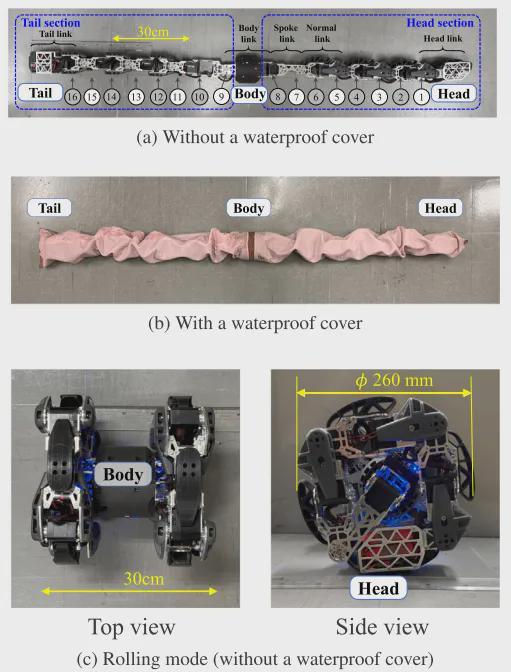
Japanese Team Develops Snake Robot with New Rolling Motion, Achieving 10x Energy Efficiency
A research team at Osaka Metropolitan University has made significant advancements in robotics by training a snake-like robot to roll forward, which has notably improved its energy efficiency. By employing deep reinforcement learning techniques, the robot is able to maintain a nearly straight trajectory while achieving energy consumption reductions of up to tenfold compared to conventional crawling methods. This breakthrough not only showcases the potential for more efficient robotic movement but also opens avenues for further developments in energy-efficient robotic applications.
Snake Robots Energy Efficiency Deep Reinforcement Learning Robotics Motion Control
Efficiency at Scale: NVIDIA, Energy Leaders Accelerating Power‑Flexible AI Factories to Fortify the Grid
At CERAWeek, often referred to as the "Davos of energy," industry leaders, policymakers, and technology innovators convened last week to explore the future of global energy solutions. Among the notable presentations, NVIDIA and Emerald AI introduced a groundbreaking approach that leverages artificial intelligence to enhance energy efficiency and sustainability. This initiative aims to address the pressing challenges of energy production and consumption in a rapidly changing world. By integrating advanced AI technologies, the companies seek to optimize energy systems, reduce waste, and promote cleaner energy alternatives, aligning with global efforts to combat climate change and transition to more sustainable practices. The discussions at CERAWeek highlight the critical role of collaboration among various stakeholders in shaping a resilient energy future.
Robotics needs a service framework.
RSF defines a common language for robot service capability, lifecycle operations, certification pathways, and service-provider networks.
Join the RobotToday community on LinkedIn
Daily robotics news, in-depth analysis, conference highlights, and discussions with professionals worldwide.