


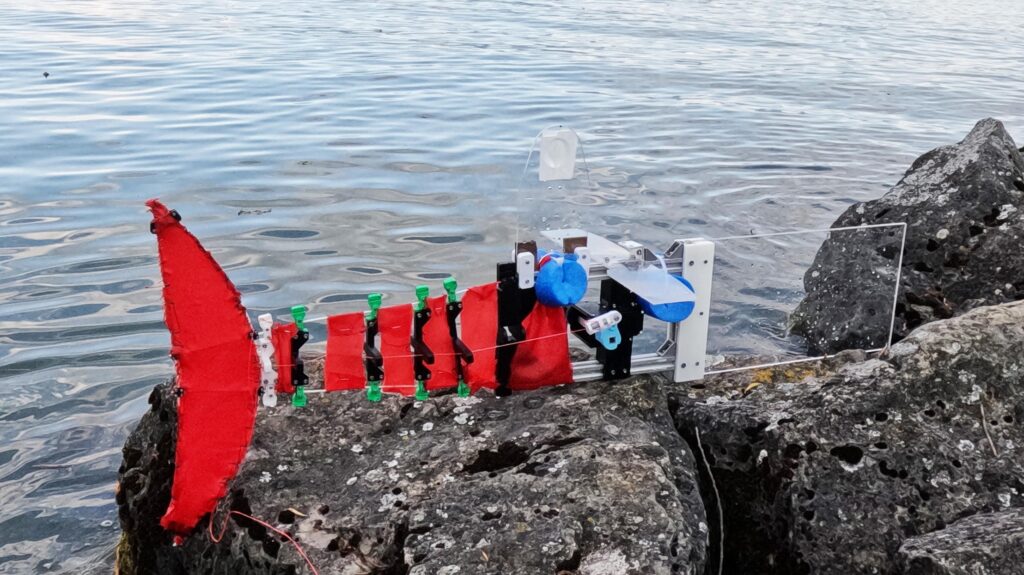
A collaborative research team from EPFL, Duke University, and Instituto Superior Tecnico has developed a robotic platform named ZBot, inspired by larval zebrafish, to explore the energy efficiency of intermittent swimming. This study highlights the advantages of bout-and-glide swimming, which alternates active propulsion with passive gliding, potentially optimizing energy use in robotic systems.
The significance of this research lies in its potential to extend operational time for robots while reducing battery load, leading to lighter and more durable designs. By mimicking natural locomotion strategies evolved over billions of years, the ZBot aims to replicate the energy-saving mechanisms observed in aquatic organisms, making it a valuable tool for future robotic applications.
Future developments will focus on further refining the ZBot's capabilities and understanding the neural control mechanisms behind intermittent swimming. No further timeline was disclosed at the time of publication.
Editor's Note
The exploration of energy-efficient locomotion strategies is crucial for advancing robotics, particularly in applications requiring prolonged operation. The insights gained from bioinspired designs like the ZBot could significantly influence the development of next-generation robotic systems, enhancing their adaptability and performance in various environments.
Copyright Notice
This briefing is an independently written summary based on publicly available reporting and is provided for industry information and news discovery. The original report and source publication are credited and linked where applicable. RobotToday does not claim ownership of third-party source material.
Rights concerns? If you believe any material in this briefing infringes your copyright or other rights, please contact [email protected] with the relevant URL and details. We will review the matter and take appropriate action where warranted.

































Leave a comment