

Industry Briefing
A single destination for timely, editor-curated robotics news from around the world.
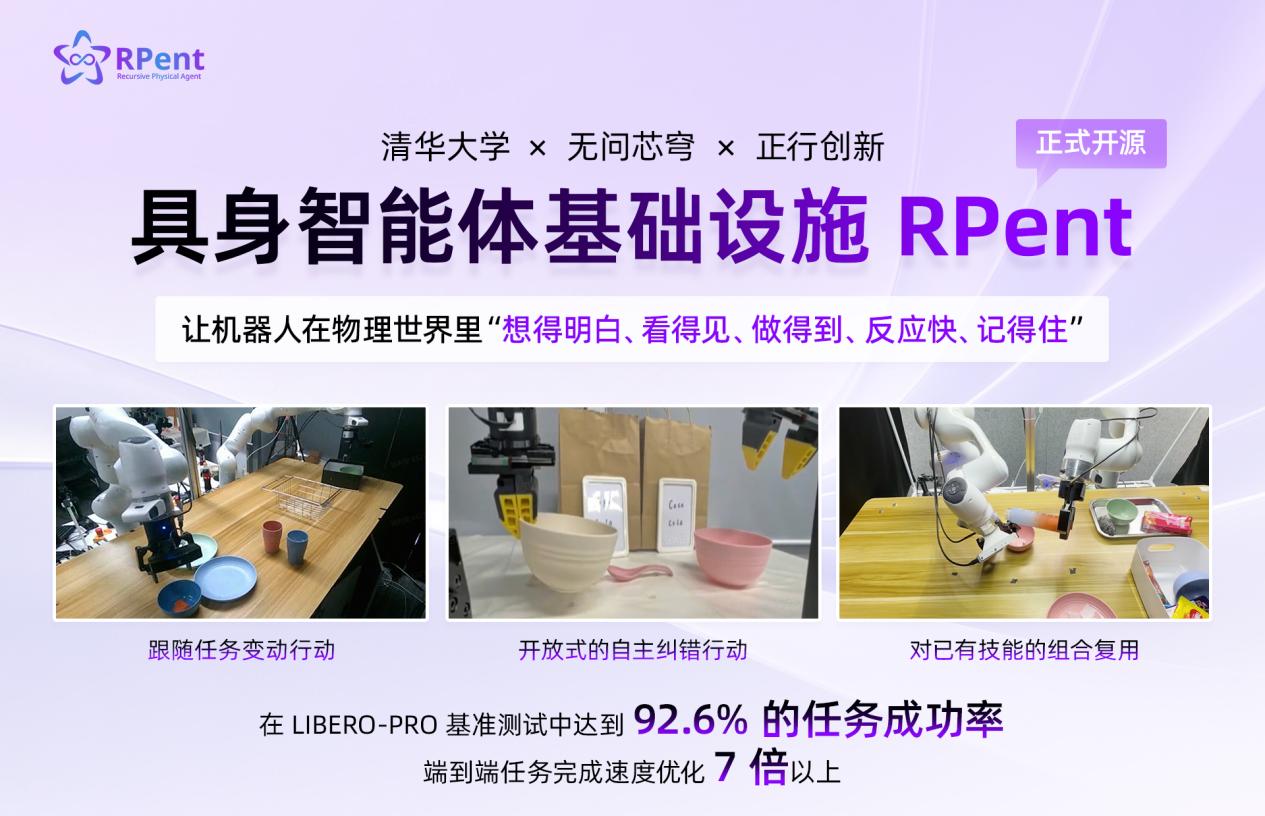
Embodied Intelligence Advances with GPT-6 Astra's Robotics Testing and RPent Launch
As GPT-6 Astra begins real-world robotic operations, the paradigm of intelligent agents is transitioning from the digital realm to physical applications. This shift raises a critical question: can general large models serve as the 'brain' for robots, enabling them to perform complex tasks in the real world? Physical agents must not only understand but also perceive, act, react quickly, and retain information. The RPent infrastructure, initiated by Tsinghua University, Wuyuan Xinqiong, and Zhengxing Innovation, has been officially open-sourced. RPent connects the task understanding and planning capabilities of general large models with the fine operational skills of expert models like VLA, creating a complete feedback loop from perception to decision-making, execution, and error correction. This allows agents to adapt continuously to environmental changes and to accumulate verified experiences into reusable capabilities, achieving a 92.6% task success rate in the LIBERO-PRO benchmark and optimizing end-to-end task completion speed by over seven times. The release includes a series of RPent real-machine demos showcasing various open-ended tasks. Notably, these tasks do not require separate strategies for each scenario. The significant change in robots is their shift from merely executing learned actions to understanding tasks, invoking capabilities, and adjusting actions based on environmental changes. The ability to reorganize existing skills to tackle new tasks is crucial as robots navigate an open world filled with new challenges.
Robotics Embodied Intelligence AI Machine Learning Automation
Kingsoft Cloud Advances Robotics Innovation with Embodied Intelligence Solutions
The 2026 World Robot Conference was successfully held in Beijing, focusing on embodied intelligence and humanoid robot technologies. Kingsoft Cloud participated, showcasing its advancements in embodied intelligence and cloud services. Song Ye, General Manager of Internet Solutions at Kingsoft Cloud, emphasized that cloud computing is essential for industrial intelligence, helping manufacturers innovate in core robotics applications. Kingsoft Cloud addresses challenges in the robotics sector, such as high R&D costs and slow deployment, by offering a comprehensive computing cluster platform and simulation services tailored for various robot enterprises. Their robust computing resources support model development and real-time inference, ensuring efficient and stable cloud-based services for robotics. The company is committed to enhancing its presence in the embodied intelligence sector, providing essential support for the high-quality development of the domestic industry. As the field of embodied intelligence and humanoid robots continues to grow, Kingsoft Cloud's contributions are crucial for accelerating innovation and efficiency in this evolving market.
Embodied Intelligence Robotics Innovation Cloud Computing AI Model Development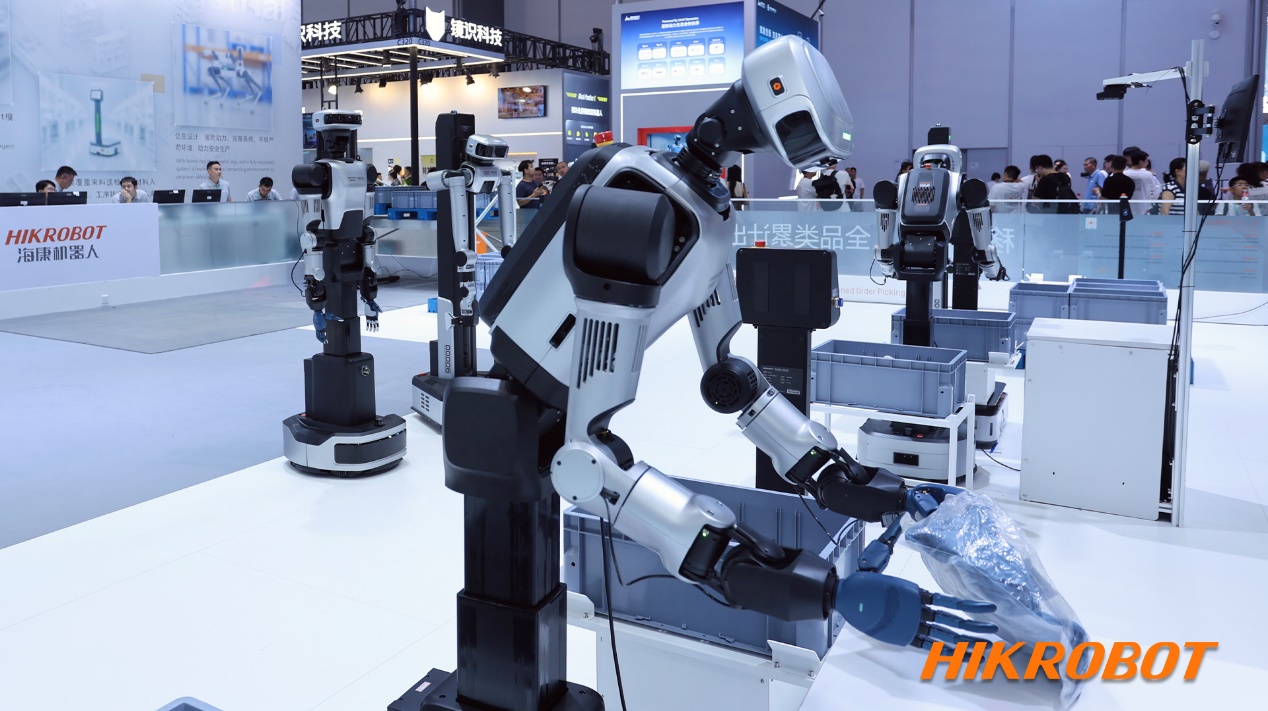
Hikvision Robotics Showcases Advanced Embodied Intelligence Solutions at WRC 2026
Hikvision Robotics has unveiled its latest advancements in embodied intelligence at the World Robot Conference 2026 in Beijing. The company presented three major scene solutions focusing on industrial logistics, commercial services, and intelligent patrolling, showcasing the integration of AI and robotics across various applications. This development is significant as Hikvision Robotics has established itself as a leader in mobile robotics, holding the top global market share with over 200,000 units produced. Their machine vision products have also seen substantial success, with over 10 million units shipped and a market share exceeding 50% in domestic industrial cameras. Looking ahead, Hikvision Robotics continues to emphasize the dual approach of deep technological development and practical application. No further timeline was disclosed at the time of publication.
Mobile Robots Industrial IoT Smart Logistics AI Machine Vision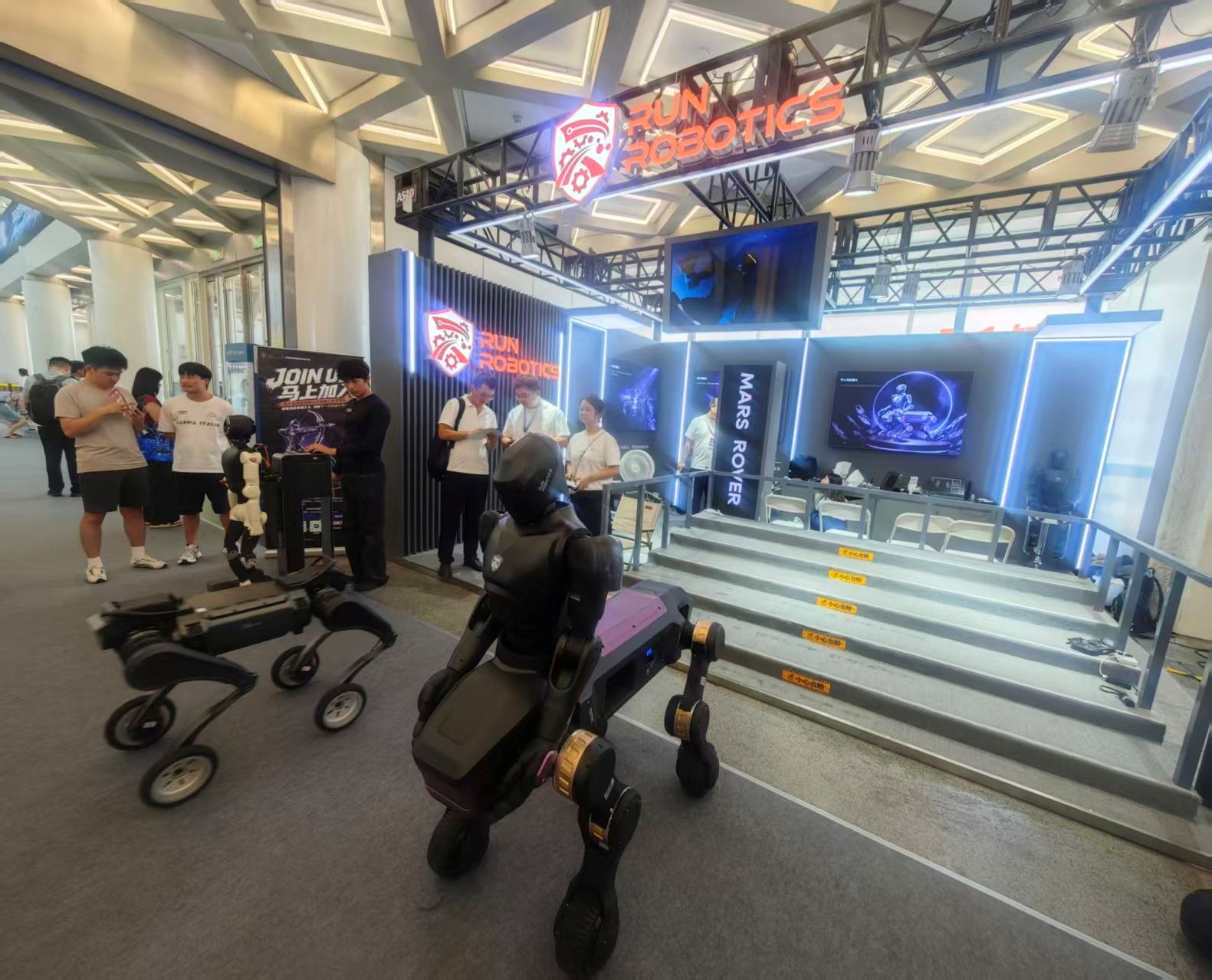
Runke Robotics Unveils Embodied Intelligence 2.0 at the 2026 World Robot Conference
The 2026 World Robot Conference (WRC) took place from August 19 to 23 at the Beijing Yichuang International Exhibition Center. Runke Robotics showcased its full range of embodied intelligence hardware, with CEO Zhou Bin delivering a keynote speech on the core concept of 'Embodied Intelligence 2.0.' The event featured live demonstrations of multiple robot models, including the debut of new robotic products and self-developed tactile perception hardware, highlighting the integrated technology system built around specialized robotic forms, spatial intelligence, and multimodal touch. This exhibition marked a departure from traditional single-unit displays, as Runke Robotics deployed multiple centaur and Mars rover robots for collaborative operation demonstrations. The centaur robot showcased its enhanced capabilities, able to climb obstacles up to 60 cm and carry loads of up to 150 kg, while the Mars rover demonstrated its adaptability to complex terrains. Both models utilize motion control algorithms based on reinforcement learning, allowing for stable operation even with shifting center of gravity. Looking ahead, the centaur robot is positioned for high-risk applications such as underground inspections and disaster rescue, while the Mars rover serves as a versatile mobile platform. Both models have undergone extensive field training and proof-of-concept validation. Runke Robotics also introduced two core new products: a dual-arm robot and self-developed electronic skin tactile gloves, further enhancing the embodied intelligence 2.0 framework. No further timeline was disclosed at the time of publication.
Embodied Intelligence Robotics AI Tactile Sensing Industrial Automation
Bao'an Accelerates Development of Embodied Intelligence in Robotics Industry
In western Shenzhen, an artificial intelligence and robotics industry cluster valued at nearly 60 billion yuan is rapidly emerging. Bao'an, leveraging the Qianhai-Bao'an Embodied Intelligence Port, is establishing a complete ecosystem for embodied intelligence, from 'brain' to 'body'. The region's core advantage lies in a supply chain system that allows entrepreneurs to bring designs and see prototypes within three days. This ecosystem facilitates rapid development for robotics startups, with core components available within five kilometers. The first national AI application pilot base for mobile terminals is located here, along with a global robotics development service center. Companies can seamlessly transition from selection to mass production, significantly reducing time and costs. Bao'an has opened over 500 application scenarios across various industries, providing real-world environments for robotics testing. Companies like Valeo and Xiwangda have reported substantial improvements in production efficiency and defect rates. With over 600 AI and robotics firms, Bao'an is not just chasing trends but transforming the 'robot craze' into industrial capability, focusing on practical applications before expanding further.
Robotics Artificial Intelligence Supply Chain Industrial Automation
Xiaomi Open-Sources Its Embodied-AI Foundation Model Xiaomi-Robotics-1 for Developers
Xiaomi has announced the open-source release of its embodied-AI foundation model, Xiaomi-Robotics-1, on August 5. This release encompasses the entire process from real-robot post-training to model deployment, along with code for benchmark evaluations. The model was pretrained on over 100,000 hours of UMI data and underwent post-training on more than 10,000 hours of cross-embodiment data. The significance of this release lies in its potential to enhance the development of embodied AI applications. By providing access to the full training and deployment process, Xiaomi aims to foster innovation and collaboration within the AI community. The model, first introduced in July as an “out-of-the-box” solution, is designed to streamline the integration of AI into robotic systems. Looking ahead, developers and researchers will likely explore the capabilities of Xiaomi-Robotics-1 in various applications. The open-source nature of the project, which includes links to the project website, GitHub repository, and Hugging Face page, is expected to encourage widespread adoption and experimentation. No further timeline was disclosed at the time of publication.
News Feed
Ace Robotics Secures Hundreds of Millions in Financing for Embodied AI Development
Chinese robotics company Ace has announced the debut of its embodied AI technology. This development marks a significant step forward in the integration of artificial intelligence within robotics, showcasing Ace's commitment to innovation in this field. The introduction of embodied AI is crucial as it enhances the capabilities of robots, allowing them to interact more effectively with their environments. This advancement could lead to broader applications across various sectors, positioning Ace as a key player in the robotics industry. Looking ahead, Ace has secured several hundred million US dollars in financing in the first half of 2026, which will likely support further research and development in embodied AI. No further timeline was disclosed at the time of publication.
Artificial Intelligence News Robotics Ace Robotics China embodied AI
China's Collaborative Efforts in Advancing Embodied Intelligence for Robotics
The development of embodied intelligence is shifting from creating individual robots to establishing collaborative ecosystems. At this year's WAIC, the industry is exploring whether new models and skills can be rapidly integrated into robots for practical applications. A partnership between Leju and Ant Group's Lingbo has led to the release of logistics sorting results, emphasizing the importance of industry collaboration in scaling humanoid robotics. Leju believes that the growth of the humanoid robot industry relies on collective efforts rather than individual companies. The collaboration features Lingbo's general embodied base model, LingBot-VLA, while Leju focuses on post-training and motion control. This partnership has created a comprehensive technological chain that connects models, data, and computational power, marking a significant step in the industry. As embodied intelligence enters a critical phase, the ability to effectively translate models into real-world applications becomes paramount. Leju's advancements in post-training capabilities and the OpenLET community's support for developers are crucial for accelerating the deployment of new skills in various industries. No further timeline was disclosed at the time of publication.
Embodied Intelligence Robotics Logistics Automation AI Development
Xiaomi Launches Xiaomi-Robotics-U0 Foundation Model for Embodied AI Applications
Xiaomi has introduced the Xiaomi-Robotics-U0, a multimodal autoregressive foundation model featuring 38 billion parameters for embodied AI. This innovative model integrates four essential capabilities: embodied scene generation, embodied transfer, robot interaction video generation, and general-purpose image generation and editing. The significance of the Xiaomi-Robotics-U0 lies in its ability to create robot-ready environments from text prompts, adapt robot trajectories to new scenes while maintaining motion, and generate robot interaction videos based on task instructions. This advancement leverages extensive visual knowledge from the internet, enhancing the potential for embodied AI applications. Looking ahead, the impact of the Xiaomi-Robotics-U0 on the robotics and AI landscape will be closely monitored. Its capabilities could pave the way for more sophisticated robotic systems and applications, although no further timeline was disclosed at the time of publication.
News Feed
Zhongke Fifth Era Launches FAM 2.0, a Breakthrough in Embodied Action Flow Modeling
Zhongke Fifth Era has introduced FAM 2.0, the first embodied action flow-based model in the robotics industry. This model incorporates optical flow into action representation, addressing the limitations of traditional coordinate point systems. The FAM 2.0 model has demonstrated significant success rates in various robotic tasks, achieving over 80% in single-arm operations and exceeding 97% in dual-arm industrial applications. The introduction of FAM 2.0 is crucial as it marks a shift in how robotic actions are represented and executed, moving away from rigid coordinate systems that require extensive retraining for different robotic bodies. By using action flow and heatmap technologies, the model allows for more efficient data utilization and cross-body action representation, which could accelerate the development of embodied intelligence in robotics. Looking ahead, the industry will be watching how FAM 2.0 performs in real-world applications and whether it can overcome the existing challenges in embodied intelligence. No further timeline was disclosed at the time of publication.
Embodied Intelligence Robotics Technology Motion Representation Data Efficiency AI
SAP's First Embodied AI Jam Accelerates Progress in Robotics Integration
SAP recently hosted its inaugural Embodied AI Jam at the Swiss Smart Factory in Biel, where clients experienced firsthand the collaboration between robots and SAP software to tackle real business challenges. Embodied AI refers to AI agents that interact with the world through a physical body, enabling machines to autonomously perceive, understand, reason, and act in real environments. The event showcased how integrating these agents with the Joule and SAP Business AI Platform brings business context into physical execution. This integration allows robots to not only perform tasks but also understand the business decisions behind them. Various applications, such as warehouse automation and asset inspection, highlight the potential value of embodied intelligence, which requires more than just robots—it necessitates business context from SAP applications and expertise in system integration. Looking ahead, SAP's Swiss CTO Alexander Finger emphasized the importance of hands-on experiences in demonstrating the business value of embodied intelligence. The Swiss Smart Factory will continue to host future events, fostering collaboration among clients, robot manufacturers, and SAP experts. No further timeline was disclosed at the time of publication.
Embodied AI Warehouse Automation Robotics SAP Business Solutions
Xiaomi Releases Open-Source Robotics-U0 Model and Training Tools with Significant Speedups
Xiaomi has open-sourced the Xiaomi-Robotics-U0, an autoregressive embodied world foundation model featuring approximately 4 billion parameters and full-scale weight lines of around 38 billion. This release includes training and inference tools designed to enhance robotic applications. The significance of this development lies in Xiaomi's claim of achieving FlashAR+ speedups nearing 83 times, which positions the Robotics-U0 model at the forefront of robot-centric scene, transfer, and video synthesis tasks, as evidenced by its top ranking in WorldArena. Looking ahead, the impact of Xiaomi-Robotics-U0 on the robotics landscape will be noteworthy, particularly in applications requiring advanced scene understanding and video synthesis capabilities. No further timeline was disclosed at the time of publication.
Understanding the Distinction Between Embodied Intelligence and Generalization in Robotics
Recent discussions at technology forums have highlighted the disparity between demonstrations of robotic capabilities and the reality of embodied intelligence. While large models can achieve a 50% task success rate, physical robots struggle to deliver similar results, revealing a fundamental gap between digital and physical realms. Xu Huazhe, founder of Breakthrough Robotics, emphasized two distinct commercialization paths: the post-training route, which offers short-term cash flow but limited generalization, and the large model approach, which aims for broader capabilities but lacks immediate economic returns. The significance of these insights lies in understanding that successful demonstrations in controlled environments do not equate to the commercial viability of general embodied intelligence. The post-training approach can yield high success rates in specific scenarios but requires extensive reconfiguration for new tasks, while the large model route faces challenges in achieving acceptable performance in the unpredictable physical world. This highlights a critical misconception: achieving near-perfect results in closed environments does not guarantee success in open, real-world applications. Moving forward, it is essential to recognize the resource conflicts between these two paths. Companies often find themselves in a dilemma, trying to balance short-term revenue from customized projects with the long-term goal of developing general intelligence. The industry must focus on advancing foundational models to handle diverse, non-predefined tasks, rather than relying solely on tailored solutions for immediate survival. No further timeline was disclosed at the time of publication.
Embodied Intelligence Robotics Automation AI Machine Learning
AGIBOT Unveils Embodied AI Robotics at IFA 2026 with New Models and Certifications
AGIBOT presented its newest embodied AI robotics innovations at IFA 2026, including the AGIBOT A3 humanoid and AGIBOT X2 Ultra. These robots are designed for various applications, such as retail, industrial operations, and commercial cleaning. The significance of this showcase lies in AGIBOT's commitment to enhancing robotic capabilities in practical environments. The announcement of TÜV Rheinland certifications for its robots further underscores the company's dedication to safety and quality standards in robotics. Looking ahead, AGIBOT's partnership with Tekpoint aims to strengthen its foothold in the European market. No further timeline was disclosed at the time of publication.
AI Robotics Humanoid Robots Commercial Cleaning Retail Technology European Market Expansion
JAKA Robotics Addresses Patent Claims, Highlights Self-Development in Robotics Technology
On September 2, JAKA Robotics issued an official statement regarding overseas patent litigation, asserting that it does not infringe on the opposing party's patents based on comprehensive technical tracing and patent comparison analysis. This confidence stems from over a decade of the company's full-stack self-developed technology system. The performance of a robot is rooted in hundreds of precision components, including reducers, servo systems, and controllers, which directly influence the machine's accuracy, load capacity, and reliability. As Chinese robotics companies accelerate their entry into the global market, the originality of technology and intellectual property rights are becoming critical competitive factors, making JAKA's self-development path significant in this context. Looking ahead, JAKA Robotics aims to enhance its general intelligent robot capabilities, evolving from collaborative robots to embodied intelligent robots. The company has successfully integrated core components and developed over 60 self-developed collaborative robots in its production base, achieving a closed-loop verification of its technological strength. No further timeline was disclosed at the time of publication.
Collaborative Robots Humanoid Robots AI Robotics Technology
Lumos Robotics Unveils MOS2 as an AI Worker for Industrial Applications
Lumos Robotics has officially launched the Lumos MOS2, a next-generation heavy-duty mobile manipulator aimed at industrial applications. This innovative device is already deployed at Mitsubishi Electric's PLC production lines, where it performs inspection, material handling, and assembly tasks. The introduction of the Lumos MOS2 signifies a significant advancement in embodied intelligence within the robotics sector. By integrating AI capabilities into a mobile manipulator, Lumos Robotics enhances operational efficiency and productivity on the factory floor, addressing the growing demand for intelligent automation solutions. Looking ahead, the performance and adaptability of the Lumos MOS2 in real-world industrial settings will be crucial to its success. As companies increasingly seek to optimize their manufacturing processes, the effectiveness of this new technology will be closely monitored. No further timeline was disclosed at the time of publication.
Beijing Humanoid Robotics Dominates World Humanoid Robot Games; CEO Highlights AI's Pre-ChatGPT Era
Beijing Humanoid Robotics Innovation Center has triumphed at the World Humanoid Robot Games, showcasing its advanced capabilities in humanoid robotics. CEO Xiong Youjun emphasized that the industry is on the brink of a significant transformation, likening the current state of embodied AI to a pre-ChatGPT moment. This achievement is crucial as it highlights the advancements in humanoid robotics and the potential for embodied AI to revolutionize various sectors. The success at the World Humanoid Robot Games positions Beijing Humanoid Robotics as a leader in the field, potentially influencing future developments and investments in AI technologies. Looking ahead, industry stakeholders should monitor the evolution of embodied AI technologies and their applications. Xiong Youjun's comments suggest that significant breakthroughs may be imminent, which could reshape the landscape of AI and robotics. No further timeline was disclosed at the time of publication.
HumanoidRobotics
Xpeng's Dogotix Secures $900 Million to Compete with Tesla in Humanoid Robotics
Xpeng's subsidiary, Dogotix, has successfully raised $900 million in its latest financing round, valuing the company at $6.3 billion. This funding, which includes $600 million from investors like Alibaba and Tencent, marks the largest private-equity deal for a Chinese robotics firm. The capital infusion positions Xpeng to compete against Tesla in the humanoid robotics market, aiming to leverage global interest in embodied AI. The significance of this funding lies in Xpeng's ambition to establish itself as a leader in physical AI and humanoid robotics. He Xiaopeng, co-founder and CEO, expressed confidence that Xpeng will not only become one of China's most valuable humanoid robotics companies but also lead the commercialization of advanced humanoid robots and autonomous driving technologies both domestically and internationally. Looking ahead, Xpeng's recent financial performance shows a widening net loss of 1.34 billion yuan ($199.4 million) in Q2, alongside a rise in R&D costs. As Xpeng embarks on this new venture, industry watchers will be keen to see how effectively it can leverage this funding to innovate and compete in the rapidly evolving robotics landscape. No further timeline was disclosed at the time of publication.

Galileo Robotics Introduces Next-Generation Galileo X at WRC 2026 with Innovative Mobility System
Galileo Robotics has unveiled the Galileo X at the 2026 World Robot Conference, introducing a revolutionary 'Embodied Ground Mobility System'. This launch signifies a significant advancement in product design and technology, setting a new standard for future ground robots. The introduction of the Galileo X is crucial as it redefines the existing paradigms in robotics, particularly in ground mobility. This innovation positions Galileo Robotics as a leader in the field of embodied intelligence, potentially influencing the development of next-generation robotic solutions. Looking ahead, industry stakeholders will be keen to observe how the Galileo X performs in practical applications and its impact on the robotics market. No further timeline was disclosed at the time of publication.
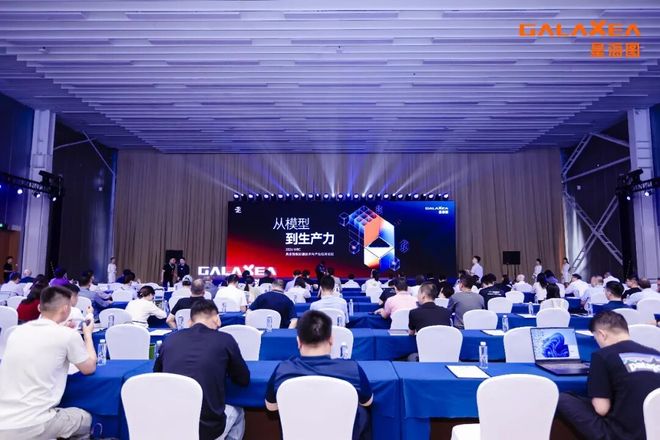
StarSeaTech Advances Embodied Intelligence at World Robotics Conference 2026
During the 2026 World Robotics Conference, StarSeaTech hosted a forum titled 'From Models to Productivity' at the Beiren Yichuang Exhibition Center. The event gathered experts from academia, developers, and corporate executives to discuss innovations in embodied intelligence models, machine evolution, commercialization, and technological boundaries, showcasing the latest thoughts on technology iteration and industrial application. StarSeaTech's Chief Scientist Zhao Xing highlighted the evolution of embodied intelligence technology through instinctive, operational, and evolutionary intelligence levels. The industry is transitioning from isolated technological breakthroughs to systemic competition involving models, data, entities, infrastructure, and applications. StarSeaTech has established a comprehensive productivity flywheel for embodied intelligence, focusing on real machine data, model iteration, and physical task execution supported by infrastructure for continuous optimization. Key announcements included the upgrade of the G0.5 foundational model, the introduction of the Fast-WAM world model pre-training plan, and the launch of the G-Fleet distributed reinforcement learning system. These developments aim to enhance model capabilities, speed up inference times, and support continuous learning in real robot clusters. No further timeline was disclosed at the time of publication.
Embodied Intelligence Robotics AI Technology Model Innovation Industrial Automation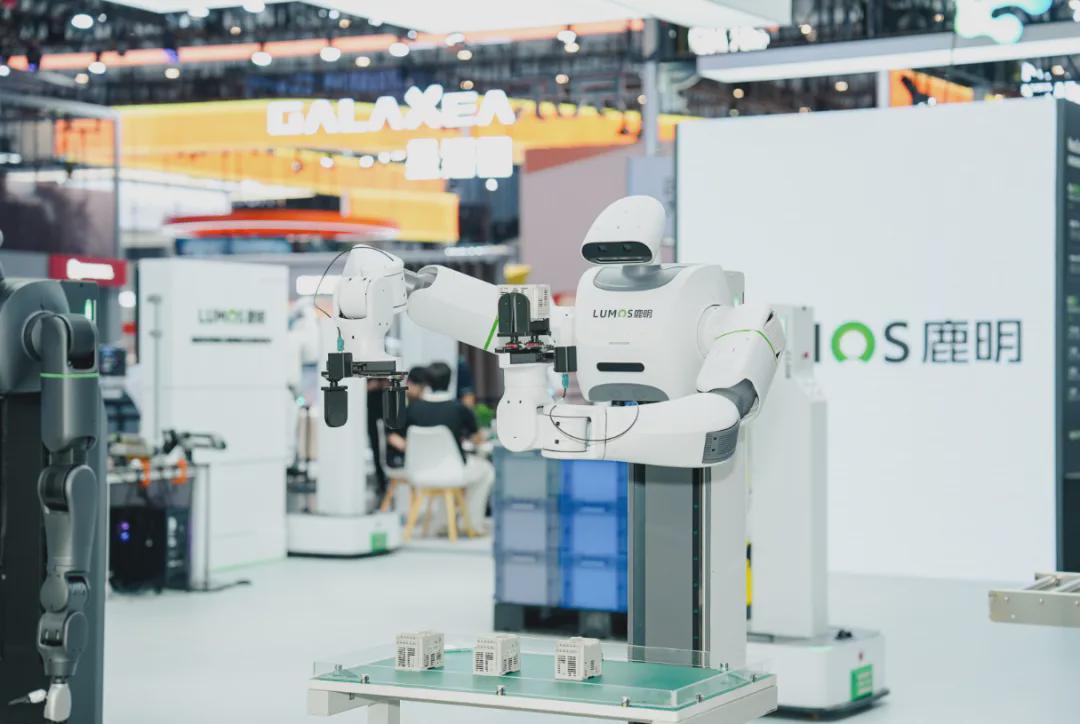
NexCore Aims to Enhance Embodied Intelligence and Task Closure in Robotics
In the first half of 2026, Chinese manufacturers are projected to account for 97% of global humanoid robot shipments, with domestic deliveries expected to reach 62,500 units, a 3.5-fold increase from the previous year. As the number of robots grows, the focus shifts from quantity to their capabilities and learning potential, marking a significant phase for embodied intelligence in the industry. The Chinese robotics sector is experiencing rapid growth, with revenues from major enterprises exceeding 90 billion yuan in the first five months of the year, reflecting a 26.9% year-on-year increase. Notably, the number of financing rounds in the embodied intelligence sector reached 288, totaling 46 billion yuan. The surge in orders, which increased over ninefold compared to 2024, indicates that clients are eager to validate robots in real-world applications, prioritizing ROI over investment timelines. As the industry evolves, key founders emphasize that the next phase will focus on the ability of robots to perform tasks effectively rather than merely demonstrating capabilities. The development of skills through data, training, and real-world validation is crucial for creating a skill closure loop, enabling robots to continuously evolve and improve their performance in practical scenarios.
Humanoid Robots Embodied Intelligence Robotics Development Skill Management Automation Solutions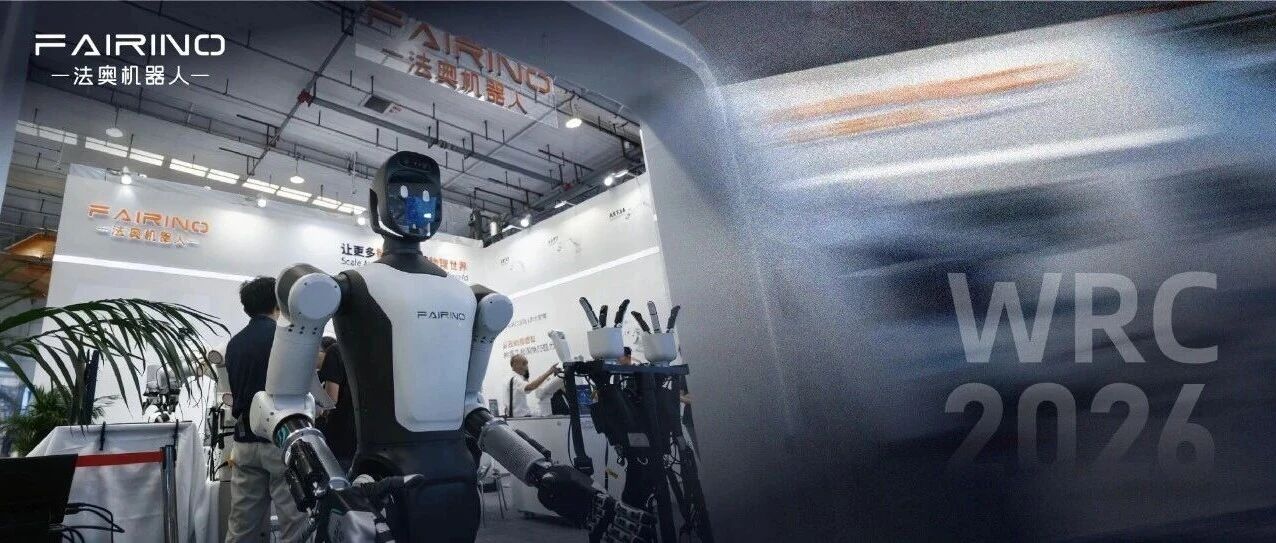
WRC 2026: Fao Showcases Innovations in Embodied Intelligence and Robotics
On August 19, the 2026 World Robotics Conference (WRC) took place in Beijing, showcasing advancements in robotics and embodied intelligence. Fao presented its ART series industrial-grade humanoid force control arms and various applications, highlighting the development path from technical exploration to industrial application. This event is significant as it serves as a key platform for observing industry trends, with Fao's vision of enabling large-scale industrial embodied intelligence. The company aims to provide modular robotic solutions for intelligent manufacturing, demonstrating the capabilities of its wheeled humanoid robots in dynamic environments. Looking ahead, Fao is exploring the construction of a Data Factory system to meet the data needs of embodied intelligence development. The company also showcased its ART series arms, including the ART7 and ART14, which feature impedance control for enhanced safety and adaptability in operations. No further timeline was disclosed at the time of publication.
Industrial Robotics Embodied Intelligence AI Integration Smart Manufacturing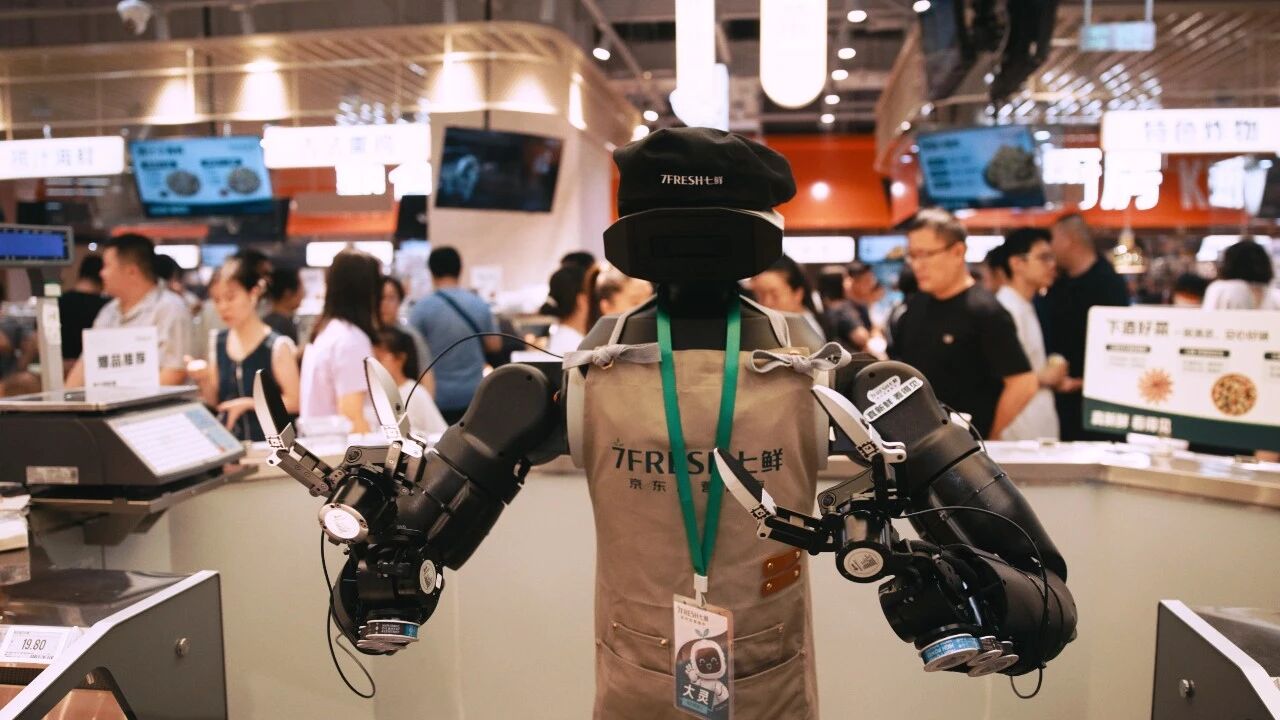
Challenges in Real-World Implementation of Embodied Intelligence and Robotics
The robotics industry faces significant challenges in transitioning from simulation to real-world applications. While new models and capabilities are frequently demonstrated, many teams struggle with engineering tasks such as kinematics adaptation, sensor calibration, and data synchronization. This gap highlights the need for a unified, stable, and reusable physical validation platform to prevent resource wastage in development. The importance of real-world validation cannot be overstated, as complex factors like collisions and sensor noise cannot be fully modeled in simulations. A reliable physical platform is essential for ensuring consistent kinematic models and control responses, allowing teams to focus on algorithm improvements rather than hardware adjustments. The industry requires a robust platform that is stable, reliable, and open to support various research teams. The TA2 platform from Lingyu Intelligent is a noteworthy example, having demonstrated its capabilities in a competitive setting. It combines remote operation with validated performance in real-world tasks, proving its reliability as a physical base for algorithm testing. This platform could serve as a dependable benchmark for model teams, providing a consistent foundation for performance evaluation and innovation.
Embodied Intelligence Robotics Physical Platforms Data Collection Automation
58.com Partners with Woan Robotics to Enhance Robot Training in Real Homes
In August, Woan Robotics signed a strategic cooperation agreement with 58.com’s subsidiary, Xingxing Kexing Technology. This partnership aims to bridge the gap between AI-driven home robots and real-world living scenarios. Woan Robotics' AI brain, OneModel, requires practical household experiences to function effectively, which 58.com can provide through its extensive local service platform. The collaboration will initially focus on health and commercial environments, with plans to expand into real home applications. With over 90 countries served and more than 5 million households impacted by Woan's products, the partnership is set to enhance the post-sale service network for robots, utilizing 58.com’s talent pool for maintenance and support. Future developments will explore human-robot collaboration, using real-life job processes from 58.com’s platform as training material for robots. This innovative approach positions 58.com not just as an information intermediary but as a supplier of training data for robots, potentially reducing error rates in household robots by leveraging real-world practice before deployment.
Home Robotics AI Training Robot Maintenance Human-Robot Collaboration
Yuejiang's Financial Report Emphasizes Embodied Intelligence for Robotics Industry Advancement
Yuejiang Technology (02432.HK) recently released its half-year financial report, showcasing significant revenue growth in collaborative robots and embodied intelligence-related businesses. This increase reflects not only the company's successful strategic transformation but also the industry's shift from technological accumulation to commercial realization. The growth drivers stem from an optimized product structure, with traditional industrial collaborative robots maintaining steady growth while a new generation of embodied intelligence products emerges as a key growth engine. By integrating perception, decision-making capabilities, and reinforcement learning technologies, Yuejiang is carving out a unique competitive path distinct from traditional industrial robot manufacturers, redefining the value boundaries of robotics. Yuejiang's practices offer valuable insights for similar companies facing homogenization pressures in the robotics sector. The company's integrated model of hardware, software, and services may become the mainstream paradigm in the future. Positive feedback from the capital market, reflected in rising stock performance and investor interest, supports Yuejiang's strategic transformation, paving the way for further R&D investments and market expansion. No further timeline was disclosed at the time of publication.
Collaborative Robots Embodied Intelligence Robot Industry AI Solutions
Zhejiang IPLUSMOBOT Technology Launches NERA Robotics Product Line for Industrial AI
Zhejiang IPLUSMOBOT Technology has introduced the NERA-P omnidirectional chassis and NERA-C controller at the WAIC. This launch aims to standardize navigation and control for autonomous mobile robots (AMRs), establishing a reusable embodied intelligence infrastructure for both humanoid wheeled and quadruped robots. The significance of this development lies in its potential to enhance the capabilities of robots in various industrial applications. By providing a standardized platform, IPLUSMOBOT is positioning itself to facilitate the integration of advanced navigation and control systems across different robotic platforms, which can lead to improved efficiency and versatility in automation. Looking ahead, industry stakeholders should monitor how the adoption of the NERA product line influences the robotics landscape. The focus on embodied AI infrastructure may drive further innovations in robot design and functionality. No further timeline was disclosed at the time of publication.
Industry
Chinese Internet Companies Expand into Robotics with Delivery Drones and Robotaxis
Chinese internet companies are increasingly investing in robotics, deploying technologies such as robotaxis, delivery drones, and warehouse robots. This strategic move into the physical world is aimed at enhancing their logistics and service capabilities. The expansion into robotics is significant as it allows these companies to diversify their operations beyond digital services, tapping into the growing demand for automation in transportation and logistics. By integrating embodied AI agents and physical-world AI infrastructure, they aim to improve efficiency and customer service. As these companies continue to innovate, it will be important to monitor their advancements in robotics and AI technologies. The competitive landscape may shift as they establish their presence in the physical realm, potentially leading to new partnerships and market dynamics. No further timeline was disclosed at the time of publication.
Industry
Yujian's 'Embodied Ecology' Advances Robotics Beyond Traditional Biomimicry
In the past two years, the robotics industry has reached a consensus that the next phase of robotics is to become increasingly human-like. Companies are focusing on developing robots that can mimic human bodies and movements, aiming for integration into human production and daily life. Yujian's foray into hyper-biomimetic creatures, showcased at CES, includes lifelike models like a walking Chinese dinosaur and a breathing dinosaur hatchling, emphasizing interaction and realism. This shift is significant as it moves beyond traditional biomimicry, which primarily addresses appearance and movement fluidity, to a new paradigm that emphasizes the replication of life behaviors. Yujian aims to redefine hyper-biomimetic organisms as embodied intelligent agents capable of perception, decision-making, and action, rather than mere mechanical constructs. This approach opens up new markets and applications beyond consumer toys, targeting larger intellectual property opportunities. Looking ahead, Yujian's focus on cognitive reenactment raises questions about what qualifies as a hyper-biomimetic organism. Their innovative approach integrates embodied cognition, allowing these creatures to respond dynamically to their environment, thus creating a closed loop of perception, understanding, decision-making, and action. No further timeline was disclosed at the time of publication.
Bio-inspired Robotics Embodied Cognition Consumer Robotics Educational Technology
Tencent Open-Sources Three Embodied Foundation Models for Enhanced Robot Performance
Tencent has announced the open-source release of three embodied foundation models during the WAIC 2026 event. These models include a Visual Language Model (VLM) designed for scene understanding, the RxBrain cognitive model that facilitates planning with visual states, and the VLA model, which supports continuous action at frequencies between 500 to 1000Hz. This development is significant as it aims to enhance robot reaction speed and cognitive capabilities, addressing critical challenges in robotic performance. The introduction of these models is expected to advance the field of robotics by providing developers with powerful tools to improve the efficiency and effectiveness of robotic systems. Looking ahead, the industry will be keen to observe how these open-source models are adopted and integrated into various robotic applications. No further timeline was disclosed at the time of publication.
Technology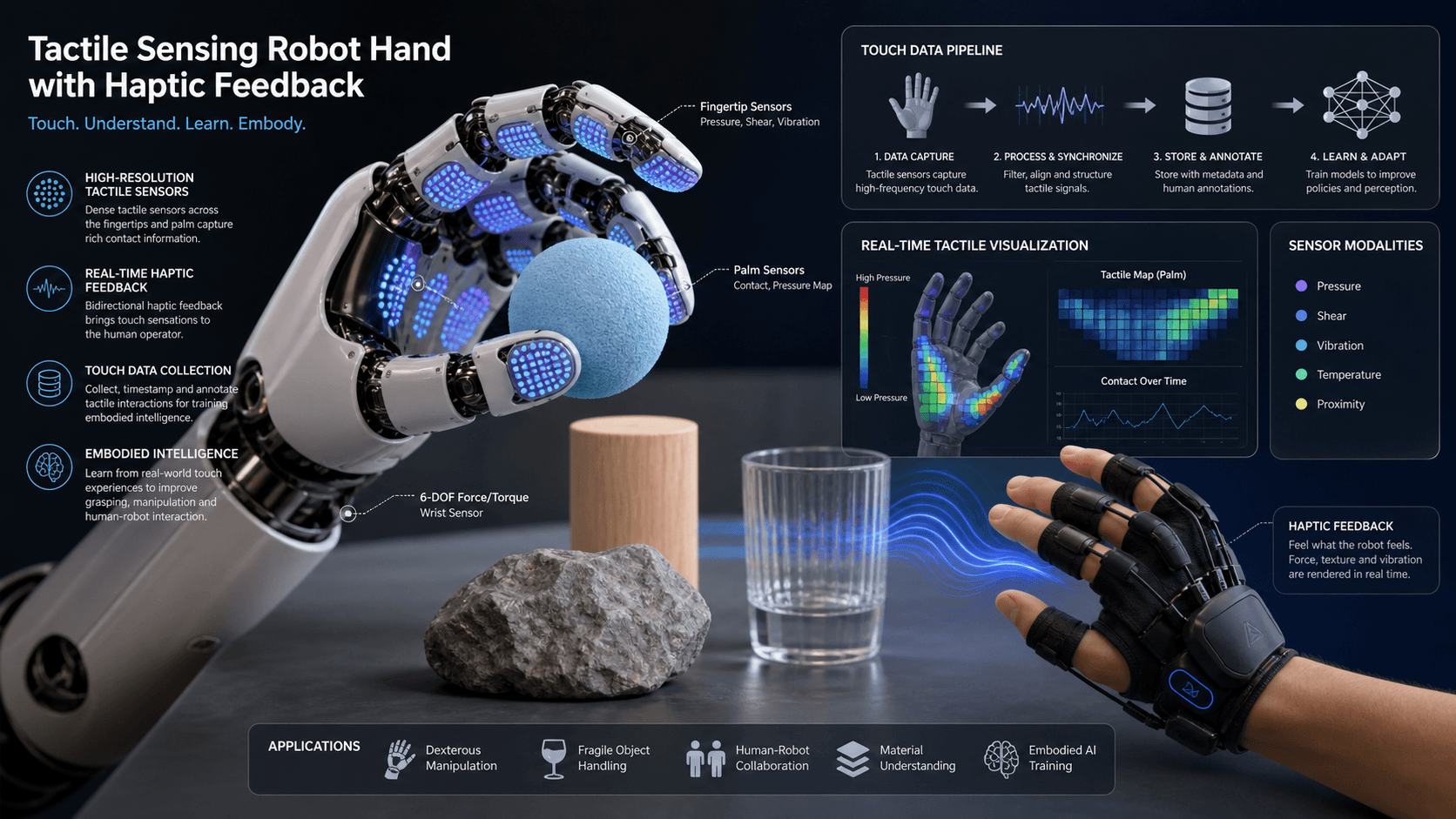
XinZhi Embodied and Fudan University Release Reports on 30,000 Hours of Tactile Data for Robotics
XinZhi Embodied and Fudan University have published three technical reports that detail 30,000 hours of tactile data aimed at enhancing embodied intelligence in robotics. This research addresses the critical gap in touch sensing capabilities that has hindered effective robot manipulation. The significance of this development lies in its potential to improve the interaction between robots and their environments, enabling more sophisticated manipulation tasks. By providing extensive tactile data, the reports contribute to the advancement of haptic sensing technologies, which are essential for robots to perform tasks that require a nuanced understanding of touch. Looking ahead, the industry will be watching how this research influences future robotics applications and the integration of haptic feedback in robotic systems. No further timeline was disclosed at the time of publication.
Technology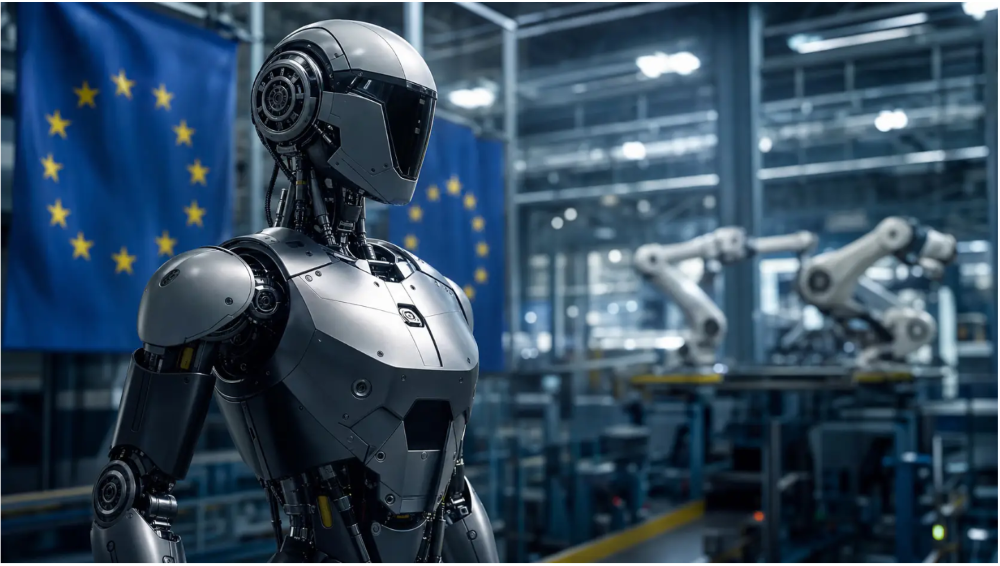
Europe's Critical Moment in Robotics: Facing Competition from China and the US
As humanoid robots from China surge with over 100,000 units produced annually, Europe finds itself at a pivotal crossroads. Despite having a strong foundation in industrial robotics, Europe risks losing its chance to define the next generation of robots. In the past two years, China has advanced humanoid robots from concept to mass production, with over 400 models developed, dominating global shipments with an 80% market share. The implications are significant; while Europe boasts traditional industrial giants like ABB and KUKA, it lacks competitive players in the general humanoid robot sector. Funding remains a critical weakness, with Europe accounting for only 14% of global robotics investment by 2025, compared to 52% for the US and 25% for China. The acquisition of KUKA by China's Midea Group exemplifies the trend of European companies being overshadowed by foreign capital. Looking ahead, the European Union's AI Act and revised Machinery Directive aim to establish a legal framework for autonomous robots, which could both protect and constrain the industry. While companies like Neura Robotics and Franka Emika show promise, the global humanoid robot market is expected to grow significantly in the next decade. Europe must act swiftly to avoid being left behind in defining the future of robotics.
Humanoid Robots Industrial Robotics AI Robotics Investment
RoboScience Unveils First Cloud-Based Large Model for Robotics at WAIC
At the WAIC, RoboScience showcased a groundbreaking cloud-based embodied large model named Visics, capable of controlling multiple robotic hands. This innovation allows for seamless switching between different robotic hands while maintaining operational efficiency, demonstrating the ability to recognize and grasp various objects autonomously within 30 seconds. The significance of this development lies in its potential to revolutionize robotic operations across diverse applications. By enabling a single model to adapt to various hand configurations, Visics enhances the versatility of robotic systems, allowing them to perform complex tasks without the need for extensive retraining when hardware changes occur. Looking ahead, the industry will be keen to observe how Visics performs in real-world scenarios and its ability to execute long-term tasks by integrating multiple actions. No further timeline was disclosed at the time of publication.
Robotics Cloud Computing AI Automation Object Recognition
Xiaomi Launches Robotics-U0: A Unified 38B-Parameter Generative Model for Robotics
Xiaomi has unveiled Robotics-U0, an advanced embodied generative model featuring 38 billion parameters. This innovative model is designed to perform multiple tasks, including scene generation, embodied transfer, video generation, and text-to-image capabilities, all within a single unified architecture. The introduction of Robotics-U0 is significant as it represents a leap forward in the integration of various robotic functions into one cohesive system. By unifying these four tasks, Xiaomi aims to enhance the efficiency and versatility of robotic applications, potentially transforming how robots interact with their environments and process information. Looking ahead, industry observers will be keen to see how Robotics-U0 is adopted across different sectors and its impact on the development of future robotic technologies. No further timeline was disclosed at the time of publication.
Technology
WAIC 2026 Preview: Highlights of Embodied Intelligence and Robotics
The WAIC 2026 is set to commence on July 17, featuring embodied intelligence and intelligent computing as its two main themes. Embodied intelligence has emerged as a focal point of the event, attracting significant attention from government, capital, industry, and the public. Over 200 companies are expected to showcase their innovations in this field. This year's exhibition marks a shift from demonstration effects to practical application capabilities, indicating a notable maturity in the industry chain. Attendees can expect to see an increase in complete machine categories, active large model solutions, and accelerated domestic component replacements. The H3 pavilion will highlight key exhibitors and trends, providing insights into the practical applications of embodied intelligence in various sectors. Notable companies such as Zhiyuan and UBTECH will present their latest humanoid robots and technologies, emphasizing production delivery capabilities over technical demonstrations. The event will also feature a demonstration of a robot factory and various innovative robotic solutions, showcasing the potential of embodied intelligence in real-world applications. No further timeline was disclosed at the time of publication.
Embodied Intelligence Humanoid Robots Robotics AI Industrial Automation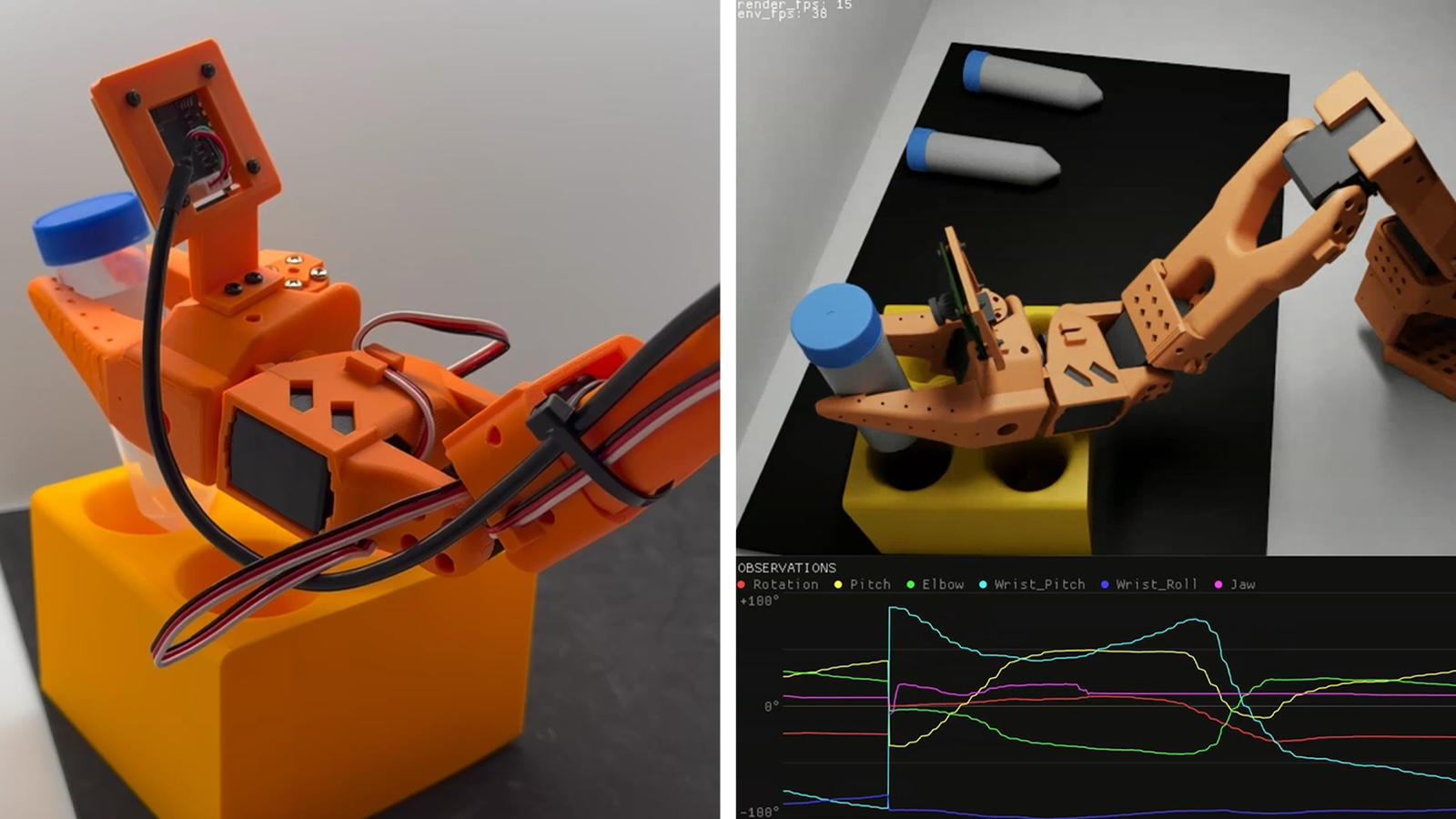
NVIDIA Open Sources Embodied Intelligence Toolchain to Enhance Robotics Development
On July 6, NVIDIA integrated three key components into Hugging Face's open-source robotics library, LeRobot: the GR00T N1.7 model, Isaac Teleop framework, and the upcoming Cosmos 3. This collaboration connects NVIDIA's 3 million robot developers with Hugging Face's 16 million AI builders, facilitating access to pre-trained models and data. This initiative is significant as it shifts NVIDIA's focus from merely creating models to building an ecosystem that addresses data bottlenecks in embodied intelligence development. The Isaac Teleop framework standardizes data collection, allowing for easier sharing and reuse within the community, which is crucial for advancing robotics. Looking ahead, the integration of GR00T N1.7 and Isaac Teleop into the LeRobot workflow marks a pivotal moment for robotics developers. No further timeline was disclosed at the time of publication.
Robotics Open Source AI Development Data Collection Machine Learning
Robbyant Launches LingBot-VA 2.0, the First Embodied-Native AI Model for Robotics
Robbyant, a company under China's Ant Group, has introduced LingBot-VA 2.0, touted as the first embodied-native video-action world model specifically designed for robotics. Unlike traditional models adapted from digital content, LingBot-VA 2.0 is built from the ground up for physical-world tasks, enhancing physical accuracy and execution efficiency through its autoregressive architecture. This innovation is significant as it marks a departure from conventional robotics models that often compromise real-world performance by relying on video generation systems. Robbyant's approach allows for better prediction of how robot actions affect their environment, thus improving generalization and operational effectiveness in real-world applications. Looking ahead, Robbyant's LingBot-VA 2.0 is expected to advance the capabilities of robots in various tasks, demonstrated through its performance in complex scenarios such as preparing breakfast and unpacking deliveries. No further timeline was disclosed at the time of publication.
AI and Robotics
Advancements in Embodied Intelligence: Robots Learning Through Experience
A robot in a warehouse near Austin has fallen for the 4,000th time without assistance, showcasing the progress of embodied intelligence. This technology allows machines to physically interact with the world, fundamentally changing how they learn. Instead of merely processing information, these robots learn through experience, such as understanding gravity by knocking over objects. Embodied intelligence is gradually integrating into daily life, with humanoid robots working on assembly lines and assisting police in Hangzhou. In Malaysia, the Prime Minister introduced an AI digital twin to handle citizen inquiries autonomously. However, in Europe, there is growing concern about job displacement, with unions negotiating wage structures in anticipation of humanoid robot deployment. The societal divide is evident: while Asian countries view robots as helpful assistants, Europeans express fears of job loss. The future of embodied intelligence will depend on societal acceptance, highlighting a complex relationship between technology and human values. No further timeline was disclosed at the time of publication.
Embodied Intelligence Robotics AI Technology Human-Robot Interaction
Pudu Robotics unveils next-gen semi-humanoid "PUDU D7," featuring embodied AI for autonomous evolution through tasks.
Pudu Robotics, a leading Chinese robotics company, has announced the launch of its next-generation semi-humanoid robot, the PUDU D7, designed specifically for manufacturing and industrial environments. This innovative robot aims to enhance operational efficiency and productivity within various sectors by automating tasks that traditionally require human intervention. The announcement was made recently, highlighting the company's commitment to advancing robotic technology in industrial applications. The PUDU D7 is expected to streamline workflows, reduce labor costs, and improve safety in workplaces, reflecting the growing trend of automation in the industry.
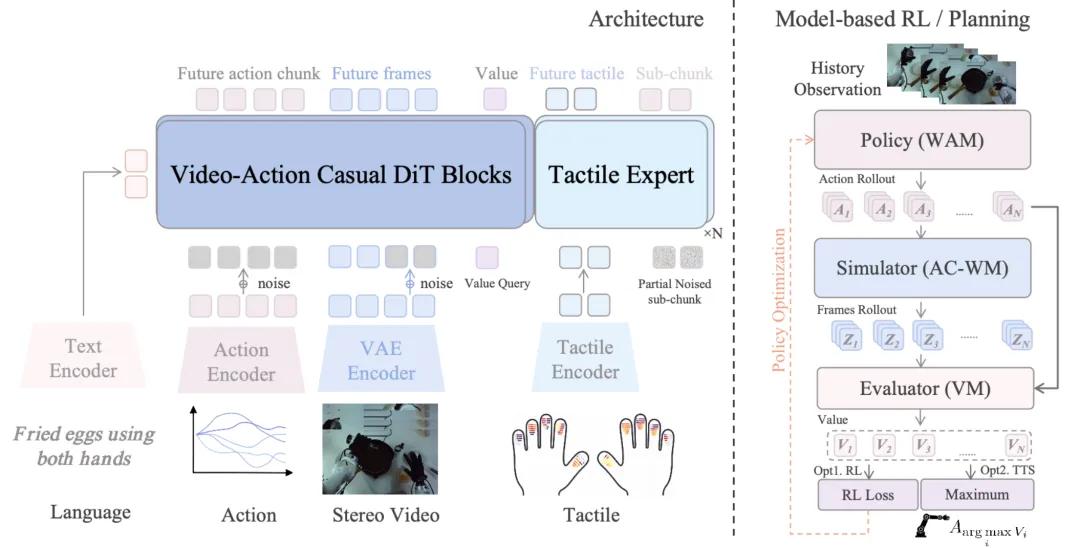
Lifelong Learning in Robotics: Launch of Motus2 Self-Evolving World Model
On September 10, at the Bund Conference, Luo Yihang, co-founder and CEO of Shengshu Technology, unveiled Motus2, a self-evolving general world model aimed at robotic dexterous manipulation. Unlike traditional robots that rely on explicit instructions, Motus2 enables robots to learn autonomously from their actions and outcomes, marking a significant advancement in embodied intelligence. The importance of this development lies in the growing interest in world models, with over 55 companies in China publicly claiming to work on them, 12 of which have reached unicorn status. In the first half of the year alone, funding in the embodied intelligence sector exceeded 46 billion yuan, with 70% directed towards the top 20 companies. However, despite the surge in interest, many existing world models struggle with physical adherence and controllability, raising concerns about their practical applications. Looking ahead, the 2026 CVPR WorldArena Track1 will evaluate world models based on various criteria, including visual quality and physical adherence. Motus2 aims to bridge the gap between action, prediction, and evaluation, allowing robots to not only predict outcomes but also assess their desirability, thereby enhancing their decision-making capabilities. No further timeline was disclosed at the time of publication.
Robotics Artificial Intelligence World Models Machine Learning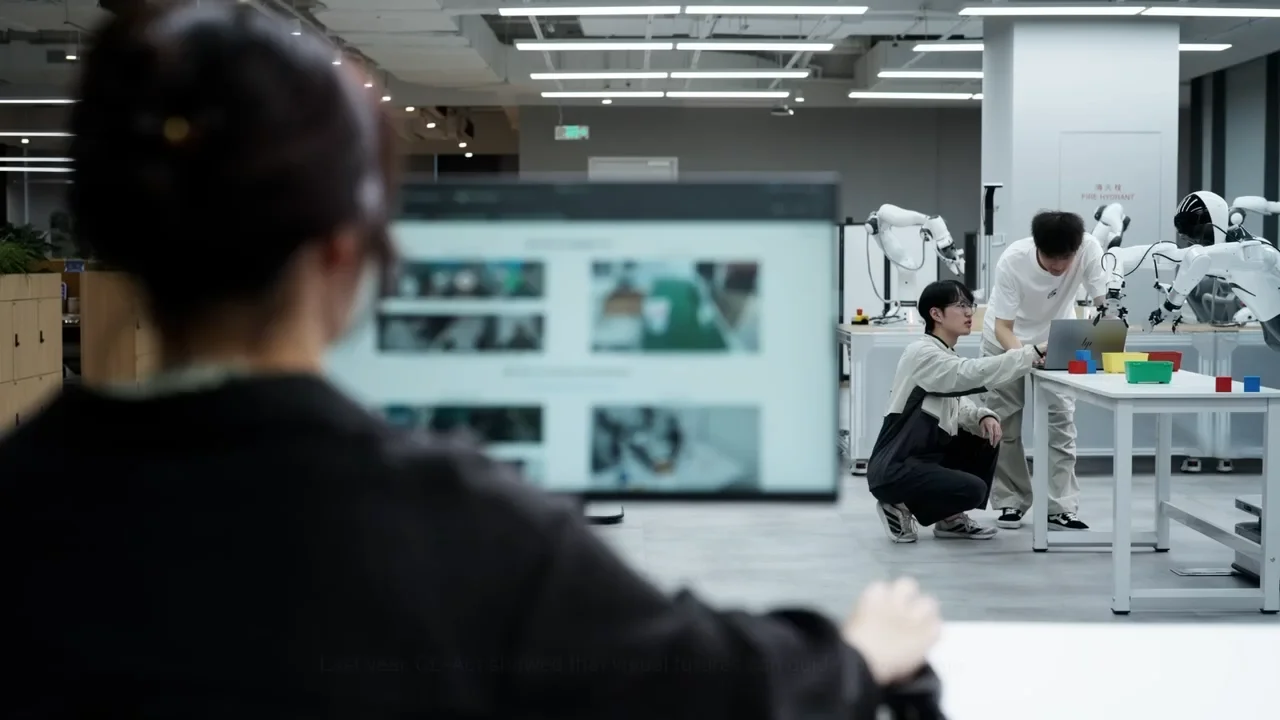
AGIBOT Launches Open-Source GE-Act 2.0, Competing with Unitree in Humanoid Robotics
AGIBOT has officially released Genie Envisioner Act 2.0 (GE-Act 2.0), an open-source World-Action Model designed for training generalist manipulation policies. This release comes just after Unitree Robotics open-sourced its UnifoLM-WLA-1.0, marking a significant shift in the humanoid robotics landscape towards open-source models. The introduction of GE-Act 2.0 highlights a competitive dynamic between AGIBOT and Unitree, particularly as AGIBOT recently achieved a manufacturing milestone of 15,000 units and leads in global shipments for the first half of 2026. Both companies are now focused on establishing a dominant open operating stack for robotic intelligence, moving away from traditional proprietary systems. As AGIBOT's GE-Act 2.0 aims to enhance real-time robot control through modular stages, it addresses the limitations of existing Vision-Language-Action models. The methodology allows for faster processing and independent training of visual and action systems, which could redefine how robots learn from physical interactions. No further timeline was disclosed at the time of publication.
open-source China AGIBOT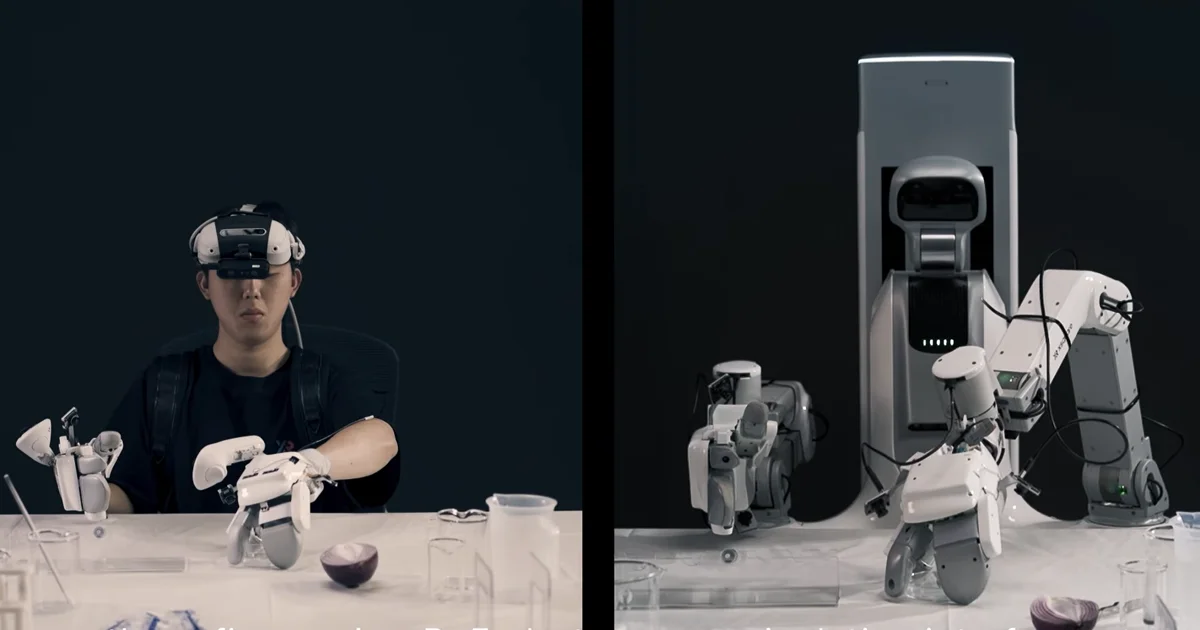
X Square Launches TwinDEX to Address Data Challenges in Embodied AI Robotics
X Square Robot, based in Shenzhen, has unveiled TwinDEX, a new manipulation platform designed to bridge the data gap in embodied artificial intelligence. This innovative system connects a wearable exoskeleton to a robotic end effector, ensuring identical geometry and functionality, which enhances data fidelity and collection efficiency. The introduction of TwinDEX is significant as it addresses the limitations of traditional data collection methods, which often struggle with the embodiment gap. By utilizing a three-finger, nine-degree-of-freedom architecture, TwinDEX allows for versatile manipulation capabilities while maintaining mechanical reliability and cost-effectiveness. Looking ahead, X Square's approach could redefine how data is gathered for robotic applications, particularly in complex tasks requiring precision. The company has demonstrated TwinDEX's capabilities through a continuous chemistry experiment, showcasing its potential to operate effectively without relying on conventional teleoperation data. No further timeline was disclosed at the time of publication.
Data Collection China XSquare
Mech-Mind Robotics Advances Towards Hong Kong IPO with Major Share Offering
Mech-Mind Robotics has officially passed the listing hearing with the Hong Kong Stock Exchange and published its post-hearing prospectus. The company plans to issue up to 27,479,850 overseas listed shares, with 89,924,180 domestic unlisted shares converting to H-shares. The co-sponsors are CITIC Securities and CITIC International. Founded by Tianlan Shao, who has a background in software from Tsinghua University and a master's in robotics from the Technical University of Munich, Mech-Mind has gained recognition in the industry. The team includes experts from top institutions like Tsinghua University and MIT, focusing on AI and 3D vision solutions for robotics, with over 27,000 units deployed globally. The prospectus reveals significant financial growth, with projected revenue increasing from 180.8 million yuan in 2023 to 388.8 million yuan by 2025, reflecting a compound annual growth rate of 46.6%. The company aims to initiate its Hong Kong IPO roadshow soon, marking a significant step in its expansion strategy.
Embodied Intelligence AI Robotics 3D Vision Solutions IPO Market Growth
AgiBot Transforms from Robotics to AI Company, Redefining Competition Landscape by 2026
AgiBot is evolving from a traditional robotics company into an AI-focused entity, redefining competition in the industry by 2026. The company has advanced its products, including the Expedition A3 and the newly released GO-2 embodied foundation model, which enhances robots' task execution capabilities. Additionally, AgiBot's Genie Sim 3.0 generates extensive training data through simulation, further integrating data, models, and hardware. This shift in focus from hardware to intelligent systems highlights the growing importance of data in robotics. As companies like AgiBot accumulate vast amounts of real-world and simulated data, the competition is increasingly centered on learning capabilities rather than manufacturing prowess. AgiBot's Hive Data Co-Creation Initiative aims to scale data production to tens of millions of hours, establishing a complete data loop that enhances model iteration and robot performance. Looking ahead, the competition among robotics companies will pivot from hardware specifications to the quality and volume of data, the robustness of AI models, and the speed of innovation. AgiBot's developments signal a significant transformation in the robotics landscape, emphasizing the need for companies to adapt to these emerging challenges and opportunities. No further timeline was disclosed at the time of publication.
On the Cusp AI Highlight News Robotics
Feagine Robotics Unveils Fi0: A Versatile Foundation Model for Biomimetic Manipulators
Feagine Robotics has introduced Fi0, a cross-embodiment foundation model designed to maintain a robot's task knowledge despite changes in its physical structure. This innovative model was launched alongside three tendon-driven biomimetic manipulators, the FEAGINE A series A01, A02, and A03, which cater to various lengths, segment counts, and degrees of freedom. The significance of Fi0 lies in its ability to provide researchers and developers with a unified model that adapts to different robotic bodies while preserving essential task knowledge. This advancement could streamline the development process in robotics, allowing for greater flexibility and efficiency in designing robots that can perform a wide range of tasks across diverse applications. Looking ahead, the impact of Fi0 on the robotics landscape will be noteworthy, particularly in how it influences the design and functionality of future robotic systems. No further timeline was disclosed at the time of publication.
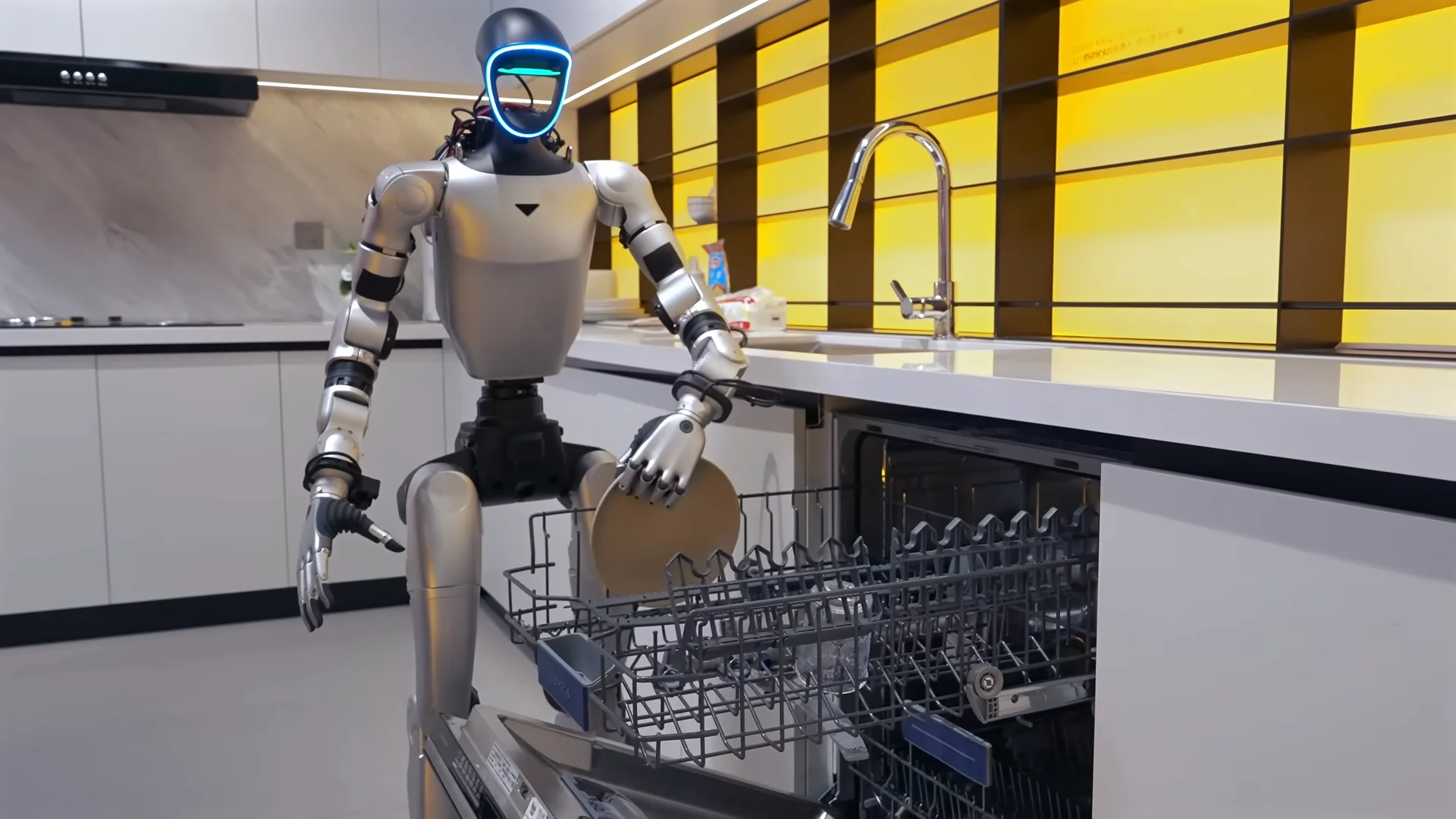
Unitree Robotics Completes Successful IPO, Raising $904 Million for Humanoid AI Development
Unitree Robotics has successfully launched its initial public offering (IPO) on the Shanghai Stock Exchange's STAR Market, raising approximately 6.1 billion yuan ($904 million) by offering 40.45 million shares at 150.8 yuan ($22.35) each. This IPO has propelled the company's valuation to around 61 billion yuan, reflecting a significant retail interest in physical artificial intelligence companies. The overwhelming demand for Unitree's shares, with online subscriptions reaching 8,288.82 times the offered amount, underscores the growing appetite for embodied AI technologies, which are prioritized by Beijing. The IPO exceeded the company's initial fundraising target of 4.2 billion yuan, validating its aggressive hardware strategy and signaling a robust market for humanoid robotics. Looking ahead, Unitree's strategic partnership with DeepSeek, which invested 140.8 million yuan ($20.8 million) for a 2.31 percent stake, aims to develop AI models for humanoid machines. This collaboration addresses key challenges in robotics, particularly in translating AI reasoning into physical actions. No further timeline was disclosed at the time of publication.
Unitree Robotics Market China IPO
Tsinghua University Professor Leads Startup with Innovative 'White Box World Model' for Robotics
A startup named 'Xindu Qiyuan' has successfully utilized a 'white box world model' based on 'uncertain differential geometry' to enable a humanoid robot to perform a complete task from voice command to cup retrieval without prior calibration or pre-training. This achievement is particularly significant in the field of embodied intelligence, which is currently dominated by end-to-end large model narratives. The technology proposes a radically different approach, termed the 'third path,' which is theoretical rather than data-driven or rule-based. It emphasizes a 'white box' methodology that directly derives physical world boundaries from mathematical axioms, contrasting with mainstream practices that rely on statistical correlations. This innovation could potentially reduce the customization cycle for production lines from months to immediate deployment, as the team has reported. Looking ahead, the startup is entering a new round of financing to further develop its technology. The core of their approach, rooted in uncertainty theory, is still under academic scrutiny, and its acceptance may evolve as the industry continues to explore the implications of this new mathematical framework in robotics.
Embodied Intelligence Robotics Mathematical Modeling AI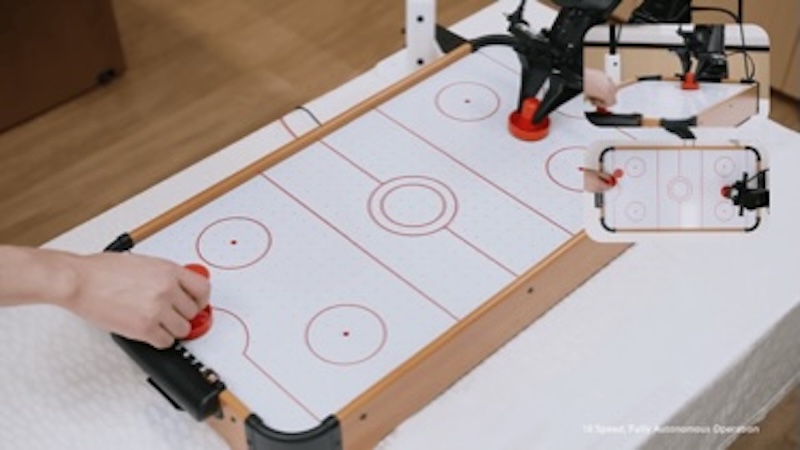
Robbyant Launches Upgraded LingBot-VLA 2.0 AI Model for Advanced Robotics
Robbyant, a company specializing in embodied AI under Ant Group, has unveiled the upgraded LingBot-VLA 2.0 model. This next-generation vision-language-action model enhances morphological generalization, degrees of freedom support, and deployment efficiency, addressing a critical gap in the embodied AI industry. The significance of LingBot-VLA 2.0 lies in its extensive pre-training on 60,000 hours of real-world data, which includes interactions from 20 different robot morphologies. This upgrade allows for improved whole-body control and dual-arm manipulation, achieving leading scores on benchmarks, thus demonstrating its effectiveness in industrial-scale deployment. Looking ahead, the introduction of a version optimized for efficient post-training and a threefold increase in inference efficiency positions LingBot-VLA 2.0 as a strong contender for real-time commercial applications. No further timeline was disclosed at the time of publication.
Computing Robot simulation artificial intelligence dual-arm robots embodied ai humanoid robots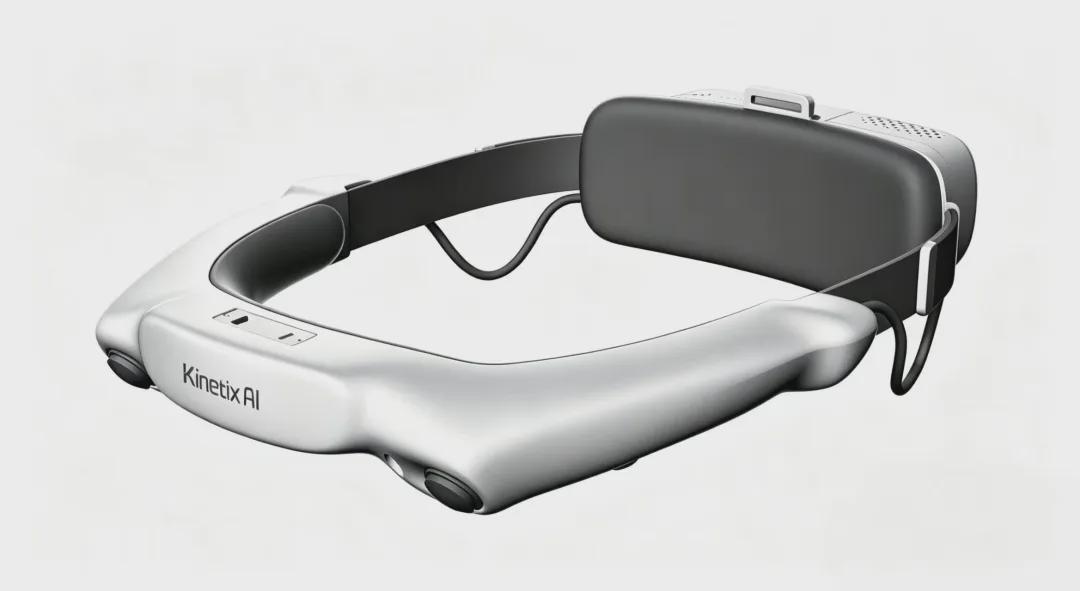
Kinetix AI Introduces KAI Halo to Enhance Data Infrastructure for Robotics
As the robotics industry enters a phase of large-scale development, a critical question arises: how long does it take for newly collected real-world data to translate into actionable capabilities for robots? The data journey, from collection to deployment, is complex and any delays can hinder progress. Kinetix AI is addressing this challenge by connecting every stage of data production rather than simply expanding data volume. The Kai Ego Dataset has amassed over 100,000 hours of first-person multimodal data, covering more than 2,000 atomic skills across various real-world scenarios such as homes, retail, hotels, and factories. This dataset captures the nuances of continuous tasks, allowing robots to learn complex behaviors rather than isolated actions. It integrates diverse information, including visual data, body posture, and motion semantics, providing a unified data foundation for cross-domain transfer. KAI Halo, a standardized data collection tool developed by Kinetix AI, addresses common issues encountered in real data production, such as occlusion and data quality fluctuations. By employing a four-way fisheye global shutter RGB camera and a 200Hz IMU, KAI Halo synchronizes multiple perspectives, enabling a comprehensive reconstruction of human actions and interactions with the environment. No further timeline was disclosed at the time of publication.
Embodied Intelligence Data Infrastructure Robotics AI Data Processing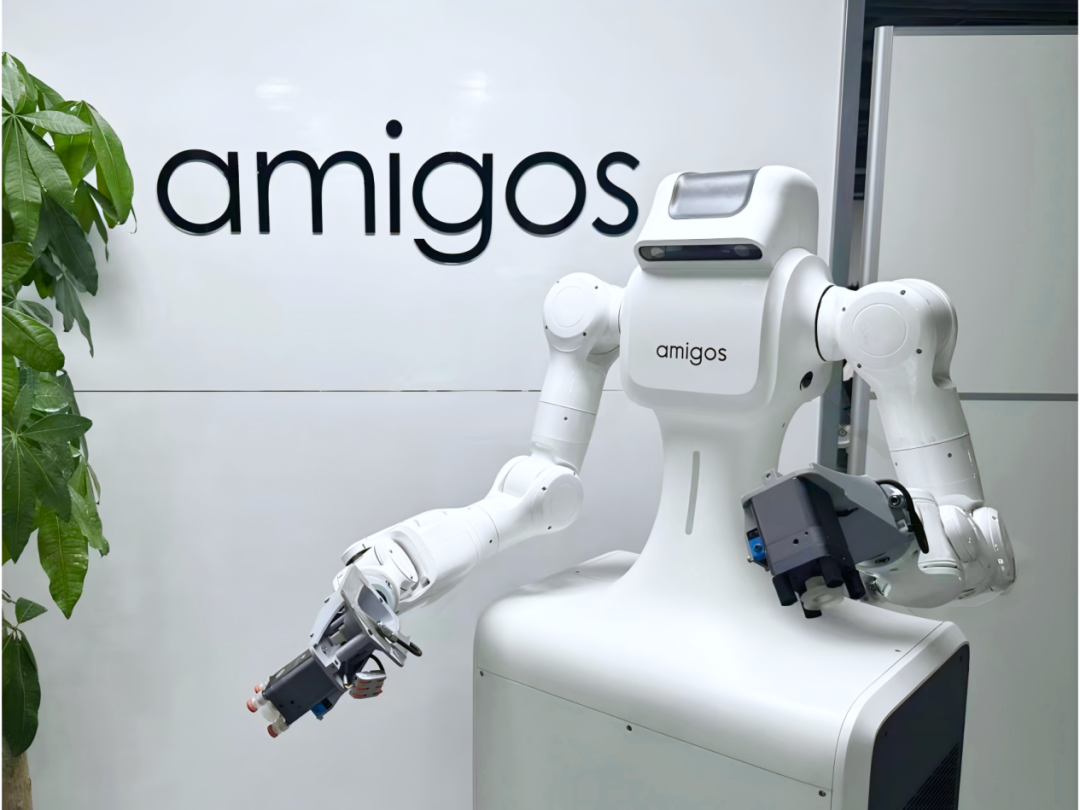
Amiro Robotics' Liu Fang: Embodied Intelligence is Not Just Large Models or Autonomous Driving
Liu Fang, the founder of Amiro Robotics, has presented a new perspective on embodied intelligence, distinguishing it from large models and autonomous driving. During a recent discussion, he emphasized that the true essence of embodied intelligence lies in enhancing labor capabilities within industrial environments. Liu argued that robots should be designed to provide consistent and reliable outputs, which is crucial for their integration into real-world applications. To further this discussion, he introduced a novel metric called Hours Per Intervention (HPI), aimed at evaluating robotic performance in production settings. This metric underscores the significance of building trust in robotic labor, as reliable performance is essential for widespread adoption in various industries. Liu’s insights reflect a growing recognition of the need for practical and dependable robotic solutions in the workforce, marking a shift towards more effective and measurable applications of robotics in industrial operations.
Embodied Intelligence Industrial Robotics Automation HPI Metric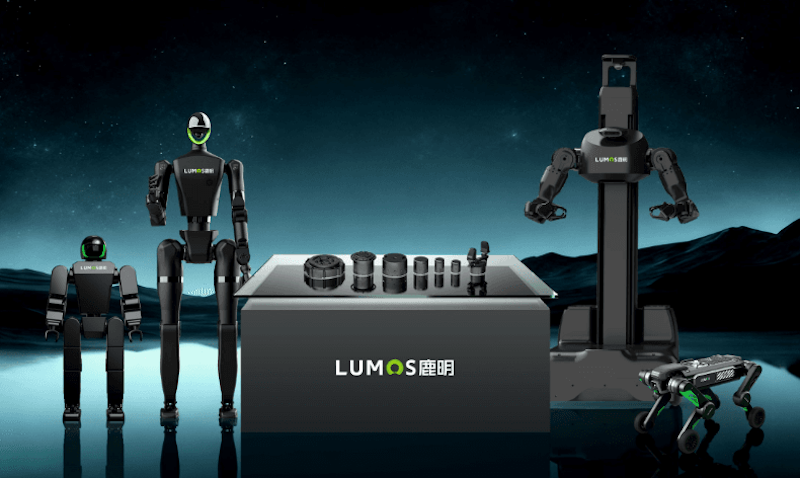
Lumos Robotics tops global benchmark test for zero-shot embodied AI
Lumos Robotics says its Prime R0 industrial embodied AI model has achieved the highest overall score on the latest MolmoSpaces leaderboard, outperforming larger models from competitors including Nvidia and research teams from the United States. The Chinese robotics company said its 2.8-billion-parameter model ranked first across both single-arm fine manipulation and dual-arm collaboration tasks in […]
Artificial Intelligence Computing News Robotics AI models embodied aiRobotics needs a service framework.
RSF defines a common language for robot service capability, lifecycle operations, certification pathways, and service-provider networks.
Join the RobotToday community on LinkedIn
Daily robotics news, in-depth analysis, conference highlights, and discussions with professionals worldwide.







